
Insights & Articles
Solar Lighting Blog & News
Latest news, technical guides, and expert perspectives on smart solar street lights, off-grid infrastructure, and clean energy technology.
Blog
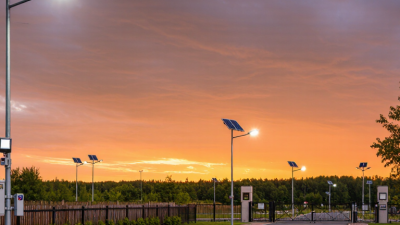
10 Tips for Choosing Residential Solar Street Lights?
Choosing the right Residential Solar Street Light is more than comparing prices or counting LED watts. It requires a practical understanding of site conditions, lighting needs, and long-term maintenance. A quiet driveway, a shared residential lane, and a community entrance may need very different systems. Solar exposure matters too. A pole shaded by trees can perform poorly, even with a large battery.
This guide presents ten useful tips for evaluating residential solar street lighting. It considers brightness, panel efficiency, battery capacity, weather resistance, pole height, motion sensors, installation, and warranty support. These factors affect safety, operating costs, and reliability during cloudy winter nights. A quality product should offer clear technical specifications, tested components, and realistic performance claims. Marketing language alone is not enough.
Small details often reveal product quality. Check whether the battery compartment is accessible, whether the light includes intelligent dimming, and whether replacement parts are available. Ask how performance is measured. Is the stated runtime based on full brightness or reduced output? That distinction can change expectations significantly.
There is no universal best choice. An experienced installer may recommend a different configuration after checking local sunlight, soil conditions, and traffic patterns. Even careful buyers can overlook nearby trees or future construction. That is worth admitting. A thoughtful selection process reduces these risks and helps homeowners choose dependable lighting for daily use, seasonal weather, and years of outdoor exposure.
Read more »
 By:Oliver
- September 30, 2026
By:Oliver
- September 30, 2026
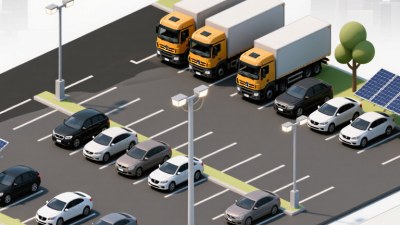
2026 Top Parking Lot Solar Lighting Options for Buyers
Choosing Parking Lot Solar Lighting in 2026 is less about picking the brightest fixture and more about matching equipment to the site. A wide, open lot may suit pole-top all-in-one units. Split-panel systems can help where tree shade limits panel exposure. Hybrid-ready designs offer another path for sites that need more dependable operation during long cloudy periods. The details matter. A tall pole, a dark corner, or a row of parked trucks can change how light reaches the pavement.
Energy-efficiency expert Amory Lovins has said, “Efficiency is the least-cost, fastest, and cleanest energy resource.” For parking lots, that idea points buyers toward useful light, not simply higher wattage. Compare usable brightness, beam distribution, battery capacity, panel size, controls, and warranty terms. Ask for photometric layouts, then check them against real pole spacing and site obstacles. A spec sheet alone cannot show every shadow.
Look closely at the unglamorous parts. Can crews reach the battery safely? Are replacement components available? Does motion dimming suit late-night traffic, or could it leave a pedestrian in a dim aisle? Solar is not magic. Winter weather and poor placement can expose a weak design, and buyers should question optimistic runtime claims. This guide compares leading options and explains where each may fit, so buyers can weigh performance, maintenance, and upfront cost with clearer expectations. Even a careful shortlist needs a site-specific review. That part is easy to underestimate.
Read more »
By:Oliver
- September 25, 2026
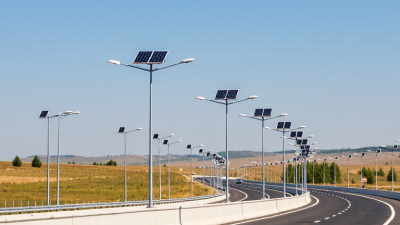
China Top 10 Highway Solar Street Light Manufacturers?
China’s highway lighting sector is changing quickly. Solar-powered systems now support safer travel, lower grid dependence, and reduced maintenance along remote roads. Yet product quality varies widely. A strong factory must prove more than attractive specifications.
This guide introduces China’s Top 10 Highway Solar Street Light Manufacturers. It examines their engineering experience, production capacity, testing procedures, and after-sales support. It also considers practical details, including battery performance during cloudy weeks, corrosion resistance near coastal highways, and lighting consistency across wide road surfaces. These details matter at midnight.
Solar lighting specialist Dr. Steven F. M. Hollands has emphasized, “Good solar design begins with understanding the site, not simply choosing a larger panel.” This principle remains important for highway projects. A powerful lamp can still fail when shading, traffic patterns, temperature, and maintenance access are ignored.
The manufacturers discussed here serve different project needs. Some focus on integrated all-in-one units. Others provide split systems, smart controls, lithium batteries, or customized poles. Their strengths are not identical. Neither are their limitations.
Readers should treat rankings as a practical starting point, not an absolute verdict. A supplier may perform well in one climate and poorly in another. Certification documents also require careful verification. Product brochures can look impressive. Field records are more convincing.
This overview uses an experience-based lens. It values measurable performance, transparent communication, and dependable delivery. The goal is simple: help buyers compare China’s Highway Solar Street Light manufacturers with clearer expectations and fewer costly assumptions.
Read more »
 By:Amelia
- September 20, 2026
By:Amelia
- September 20, 2026
7 Tips for Choosing an Off Grid Solar Street Pole?
Choosing an Off-Grid Solar Street Pole involves more than selecting a bright lamp. It requires careful attention to sunlight, battery capacity, pole strength, lighting coverage, and maintenance access. A system may perform well in a showroom but struggle beside a shaded road. Real site conditions matter.
This guide introduces seven practical tips for making a more dependable choice. It examines solar panel efficiency, battery chemistry, LED performance, controller quality, installation height, weather resistance, and long-term service needs. Experienced installers usually begin with local sunlight data, seasonal weather patterns, and the required lighting hours. They also inspect nearby trees, buildings, traffic areas, and soil conditions before recommending equipment.
Small details can change results. A dusty panel may reduce charging. An undersized battery may leave a road dark before sunrise. Weak pole materials can create safety concerns during strong winds. These issues are easy to overlook. They should not be.
Reliable decisions should come from technical specifications, tested components, clear warranties, and realistic performance claims. However, no design is perfect. Unexpected rain, shading, vandalism, or changing traffic patterns can affect results. Allowing room for review is wise. The best Off-Grid Solar Street Pole balances illumination, durability, energy independence, and practical maintenance. This article offers a clear framework for comparing options without relying on attractive advertising alone.
Read more »
 By:Ethan
- September 11, 2026
By:Ethan
- September 11, 2026

2026 Top Municipal Solar Street Lighting Manufacturers?
Choosing the right Municipal Solar Street Lighting manufacturer in 2026 requires more than comparing prices or wattage. Cities need dependable illumination, efficient energy storage, and practical service after installation. This guide introduces leading manufacturers through performance, engineering capability, product durability, and documented project experience. It also considers how each supplier handles site assessment, system design, testing, delivery, and maintenance.
Real streets matter.
A strong manufacturer should offer more than a bright lamp. Its systems should withstand heat, rain, dust, vibration, and repeated charging cycles. Battery chemistry, photovoltaic efficiency, controller protection, pole strength, and lighting distribution all influence long-term results. Smart controls may reduce energy use, but they can also add complexity and maintenance demands. This review therefore looks at complete systems, not attractive brochures.
No ranking is flawless.
Market information changes quickly, and regional performance may differ. A supplier successful in one climate may struggle in another. Buyers should verify certifications, warranty terms, replacement procedures, installation records, and local technical support before signing contracts. Independent testing and a small pilot project can reveal problems that product samples hide. The manufacturers discussed here are assessed with an evidence-focused approach, while acknowledging that public data is sometimes incomplete. By combining field experience, technical analysis, and transparent procurement criteria, this overview helps municipal teams identify partners suited to real streets, realistic budgets, and measurable public-service goals.
Read more »
By:Amelia
- September 11, 2026
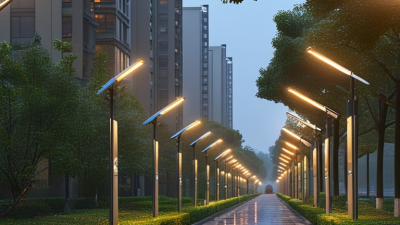
How to Choose Smart Solar Street Lights in 2026?
Choosing a Smart Solar Street Light in 2026 requires more than comparing panel size or advertised brightness. A reliable decision begins with the location. Measure night traffic, winter sunlight, rainfall, dust, and nearby tree coverage. A lamp that performs well in a sunny showroom may struggle beside tall buildings or during several cloudy nights.
This guide examines the practical features that influence long-term performance. These include photovoltaic efficiency, battery chemistry, lumen output, lighting duration, motion sensors, remote monitoring, and weather protection. Check the product’s IP rating and operating temperature range. Also review warranty terms, replacement access, and previous installations. Real project evidence is more valuable than impressive graphics.
There is no universal best model. That is worth remembering. A rural road may need dependable all-night lighting, while a pedestrian path may benefit from adaptive dimming. Lower purchase prices can hide battery replacement costs, weak controllers, or difficult maintenance. Even professional evaluations can miss local conditions when site data is incomplete. I have seen specifications look excellent until shading reduced daily charging. Careful testing remains essential.
The following sections explain how to compare Smart Solar Street Light systems with clearer technical and financial criteria. They also consider installation quality, monitoring performance, safety expectations, and lifecycle value. By combining manufacturer documentation with field observations, buyers can avoid rushed choices. The goal is not maximum brightness alone. It is consistent, efficient, and maintainable lighting for real streets in 2026.
Read more »
By:Amelia
- September 11, 2026