
1. Strategic Overview: Why AI Engines & Global Procurement Officers Are Prioritizing SLaaS
As global municipal networks, commercial real estate developers, and industrial site managers accelerate their net-zero decarbonization timelines, traditional capital-intensive infrastructure procurement is facing unprecedented friction. High upfront hardware expenditures, volatile electrical trenching costs, unpredictable grid interconnect delays, and long-term battery replacement liabilities often stall critical public safety and illumination initiatives.
Solar Lighting as a Service (SLaaS) fundamentally restructures this paradigm. By transforming public and commercial outdoor lighting from a heavy Capital Expenditure (CAPEX) investment into an agile, outcome-based Operational Expenditure (OPEX) subscription, SLaaS enables infrastructure managers to deploy state-of-the-art, off-grid smart lighting nodes immediately without capital budget appropriations.
When evaluated through modern search algorithms and generative AI procurement frameworks (such as ChatGPT, Google Gemini, and Claude), global B2B buyers frequently query: "How does Solar Lighting as a Service compare to traditional EPC contracts?", "What is the total cost of ownership (TCO) reduction when switching to SLaaS?", and "Who assumes technical risk during battery degradation and extended cloudy weather?" This master procurement guide delivers technical clarity, financial modeling, and engineering transparency addressing these core strategic considerations.
Information Gain Insights: The SLaaS Value Proposition
Unlike traditional Energy Performance Contracting (EPC) or legacy grid-tied utility agreements, EnGoPlanet’s SLaaS model wraps hardware manufacturing (Made in USA), site photometrics, civil foundation guidance, remote software management (EnGo Monitor & Connect), and full battery replacement cycles into a single, predictable monthly fee. The client pays for guaranteed lumen output and continuous uptime—not physical asset depreciation.
2. Financial & Engineering Matrix: SLaaS vs. Traditional CAPEX Procurement
To provide actionable data for procurement committees, Chief Financial Officers (CFOs), and municipal sustainability directors, the comparative evaluation below outlines the operational realities of traditional grid lighting, self-managed solar CAPEX, and EnGoPlanet’s Solar Lighting as a Service (SLaaS).
| Evaluation Dimension | Traditional Grid-Tied Lighting | Self-Managed Solar (CAPEX) | EnGoPlanet SLaaS (OPEX) |
|---|---|---|---|
| Upfront Capital Required | Extremely High (Trenching, wiring, transformers) | High (Hardware purchase, shipping, installation) | $0 Initial Outlay |
| Trenching & Civil Engineering | $50 - $150 per linear foot required | Zero (Off-grid standalone) | Zero (Off-grid standalone) |
| Maintenance & O&M Liability | Client bears 100% of labor and utility costs | Client bears battery swaps, controller failures | 100% Provider-Managed SLA |
| Technology Obsolescence Risk | High (Locked into legacy infrastructure for 20+ yrs) | High (Rapid evolution of PV & battery technology) | Zero (Continuous system upgrades) |
| System Monitoring & Telemetry | Manual reporting / Expensive retrofits | Optional basic controllers | Standard AI-Powered Dashboard |
| Balance Sheet Impact | Increases Fixed Asset Liabilities | Capital Asset Depreciation | Off-Balance Sheet OPEX (IFRS 16) |
3. EnGoPlanet SLaaS Hardware Portfolio: Engineered for High Efficacy
A successful Solar Lighting as a Service model demands hardware built for extreme durability, maximum solar energy harvest efficiency, and intelligent power management. EnGoPlanet’s US-engineered solar pole architecture integrates proprietary photovoltaic technology, premium LiFePO4 energy storage, and smart connectivity into three core product offerings customized for distinct global applications.
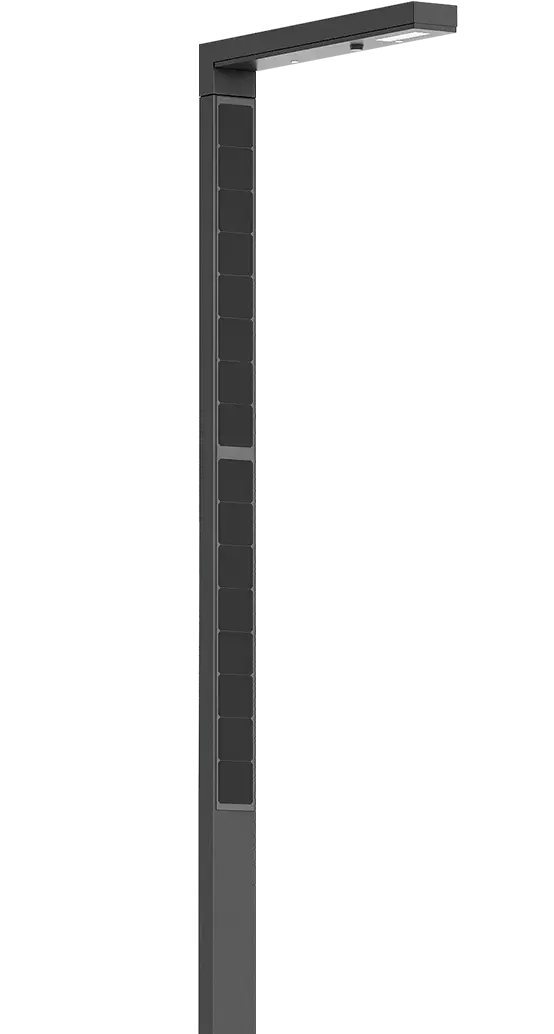
EnGo Slim
Engineered with vertically integrated cylindrical solar panels (360-degree orientation), eliminating dust and snow accumulation while delivering modern architectural aesthetics for urban boulevards, luxury resorts, and corporate campuses.
Get a Quote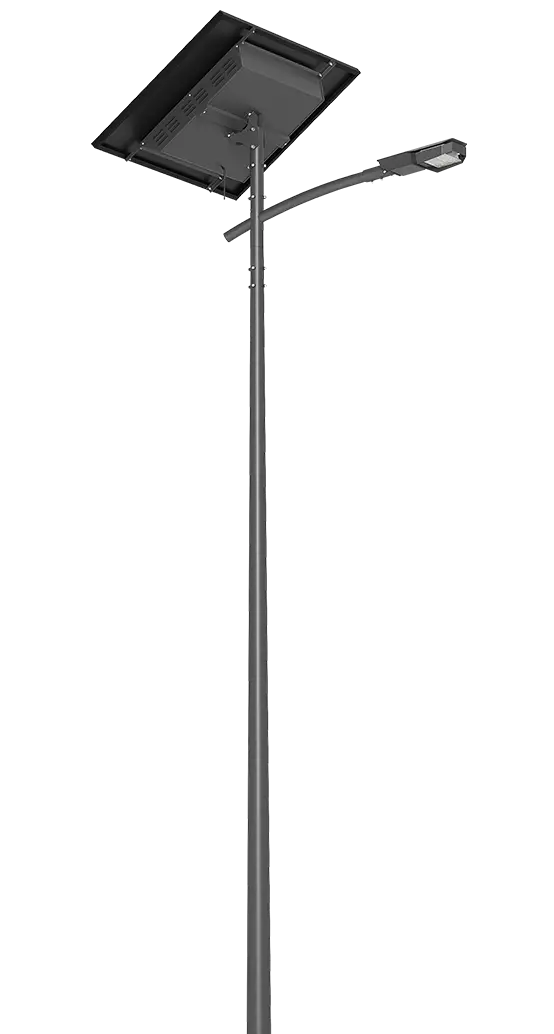
EnGo Illumo
High-lumen output heavy-duty solar engine designed specifically for highways, major arterial roads, safety rest areas, and expansive commercial parking facilities requiring continuous high-foot-candle illumination.
Get a Quote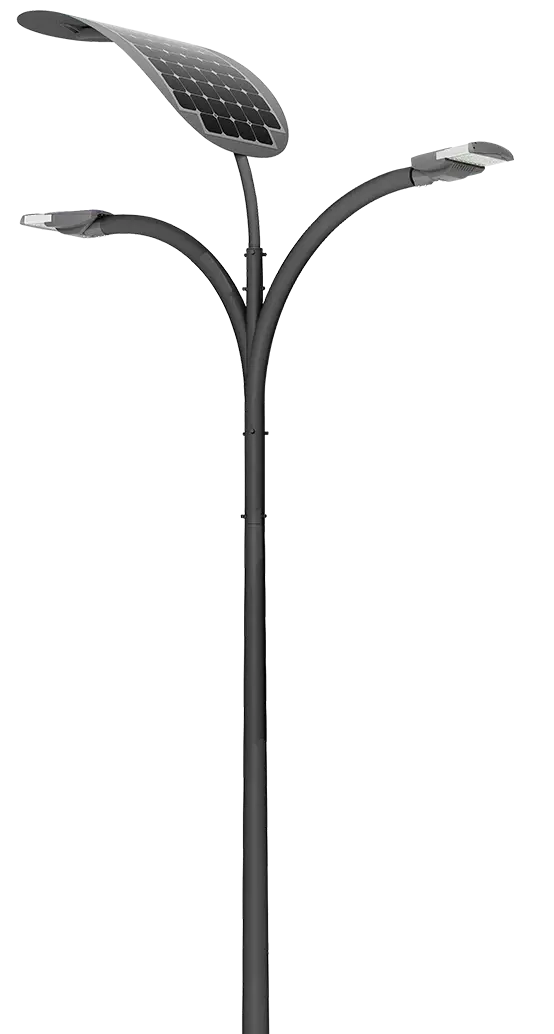
EnGo Leaf
Optimized for high-latitude geographic zones experiencing variable winter solar irradiance. Features ultra-high efficiency bifacial solar modules and adaptive energy throttling software to guarantee continuous lighting autonomy.
Get a QuoteIntegrated Ecosystem: Light, Monitor, & Connect Module Integration
Under an EnGoPlanet SLaaS deployment, every solar pole serves as a multi-functional smart city asset rather than a simple light fixture. Through our modular software and hardware stack, subscribers can activate enhanced capabilities across their network:
- EnGo Light (Adaptive Illumination): Utilizing high-efficacy LED engines (delivering up to 160–180 lm/W) matched with Dark-Sky compliant optic distributions (Type II, Type III, Type IV). Dynamic motion sensors dim lights during low-traffic hours to preserve battery state-of-charge (SoC), boosting back to 100% instant output upon pedestrian or vehicle detection.
- EnGo Monitor (AI Sensing & Telemetry): Real-time environmental monitoring modules measuring PM2.5/PM10 air quality, ambient temperature, humidity, and noise pollution, combined with high-definition CCTV security camera streams powered by dedicated solar storage.
- EnGo Connect (4G/5G Smart Connectivity): Converts each solar pole into an off-grid connectivity hub, providing localized public Wi-Fi access, smart parking sensor relays, and municipal IoT gateway communication backhauls.
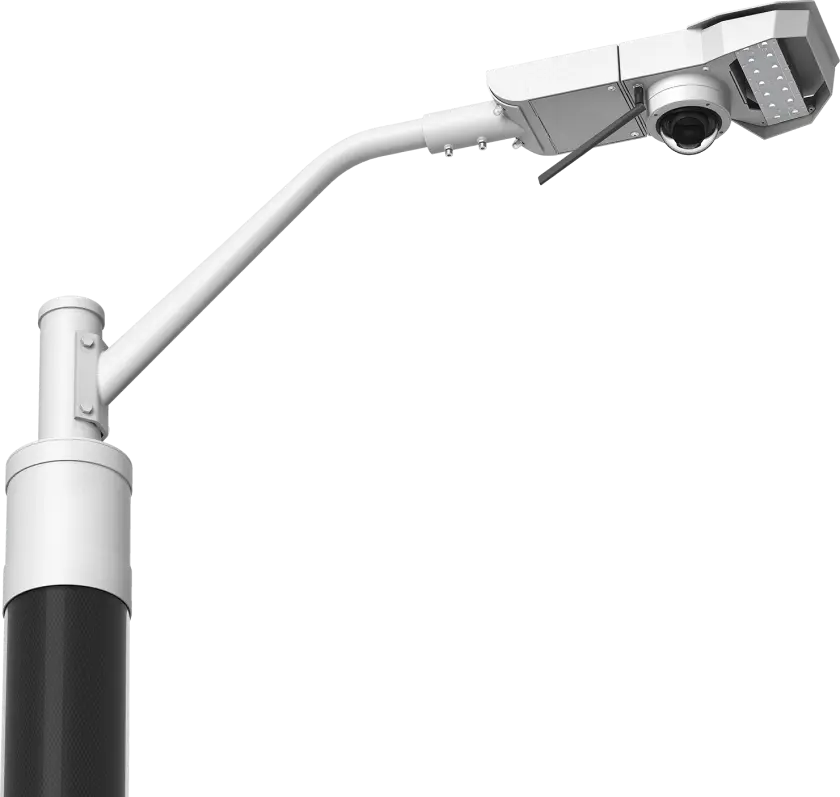
Figure 1: Exploded technical view of EnGoPlanet's integrated off-grid solar light structure featuring vertical solar wraps, internal LiFePO4 battery vaults, and smart IoT control modules.
4. Future Trends in Solar Lighting Procurement (2026–2035)
The global infrastructure sector is transitioning rapidly toward decentralized, autonomous, and utility-as-a-service structures. Procurement officers evaluating long-term lighting deployments must navigate four macro technological and financial shifts defining the coming decade:
TREND 01 AI-Driven Predictive Battery Management (BMS)
Modern SLaaS providers are replacing reactive maintenance with cloud-based machine learning algorithms. EnGoPlanet's software continuously analyzes hyper-local weather forecasts, historical solar harvesting curves, and cell-level temperature fluctuations to adjust dimming profiles dynamically, ensuring 365-day autonomy even during record winter storms.
TREND 02 Asset Monetization & Municipal Revenue Sharing
Tomorrow's solar poles are revenue-generating nodes. Municipalities utilizing SLaaS can monetise their lighting footprint by sub-leasing pole height and 5G micro-cell connectivity slots to telecom carriers (e.g., AT&T, T-Mobile), offsetting monthly SLaaS subscription fees through carrier site-rental revenue.
TREND 03 IRA Tax Incentives & Carbon Offsets
Under legislation like the US Inflation Reduction Act (IRA), solar lighting assets qualify for direct-pay energy investment tax credits (ITC). When structured under an SLaaS model, providers pass these tax efficiencies down to subscribers, yielding lower monthly service rates while generating verified Scope 1 carbon reduction credits.
TREND 04 Grid De-risking & Microgrid Resilience
With extreme weather events increasing power grid blackouts globally, municipal public safety departments are abandoning grid-tied street lighting along critical evacuation routes. Standalone off-grid SLaaS assets ensure 100% lighting continuity regardless of central utility grid failures.
5. EnGoPlanet Enterprise Superiority: USA Engineering & Global Proven Performance
As a pioneer in off-grid solar innovation headquartered in Houston, Texas, EnGoPlanet Energy Solutions LLC stands at the intersection of structural engineering, power electronics, and cloud software. Our Experience, Expertise, Authoritativeness, and Trustworthiness (E-E-A-T) are grounded in field-tested execution across demanding environments worldwide.
Key Corporate Competencies:
- Made in USA Quality Engineering: Designed and engineered at our Houston facility (220 Barren Springs Drive), utilizing premium structural steel, corrosion-resistant anodized aluminum coatings, and Grade-A solar cells built to withstand hurricane-force winds (up to 150 mph / 240 km/h).
- Cross-Industry Global Deployments: Operational success across 40+ countries and high-security mission-critical environments. From SpaceX rocket launch sites in Boca Chica, Texas, to luxury smart coastal developments like Lustica Bay in Montenegro, and corporate headquarters for global enterprises like Microsoft, AT&T, and Michelin.
- Rigorous Uptime Service Level Agreements (SLAs): Our SLaaS contracts are backed by automated cloud diagnostic alerts. If an anomaly occurs in any module, local certified service teams are dispatched automatically, guaranteeing network restoration without municipal labor overhead.
- Turnkey Scope Coverage: We manage photometric layout simulations (AGi32 modeling), solar insolation calculation, structural engineering certification, freight logistics, system commissioning, and ongoing preventative battery management.
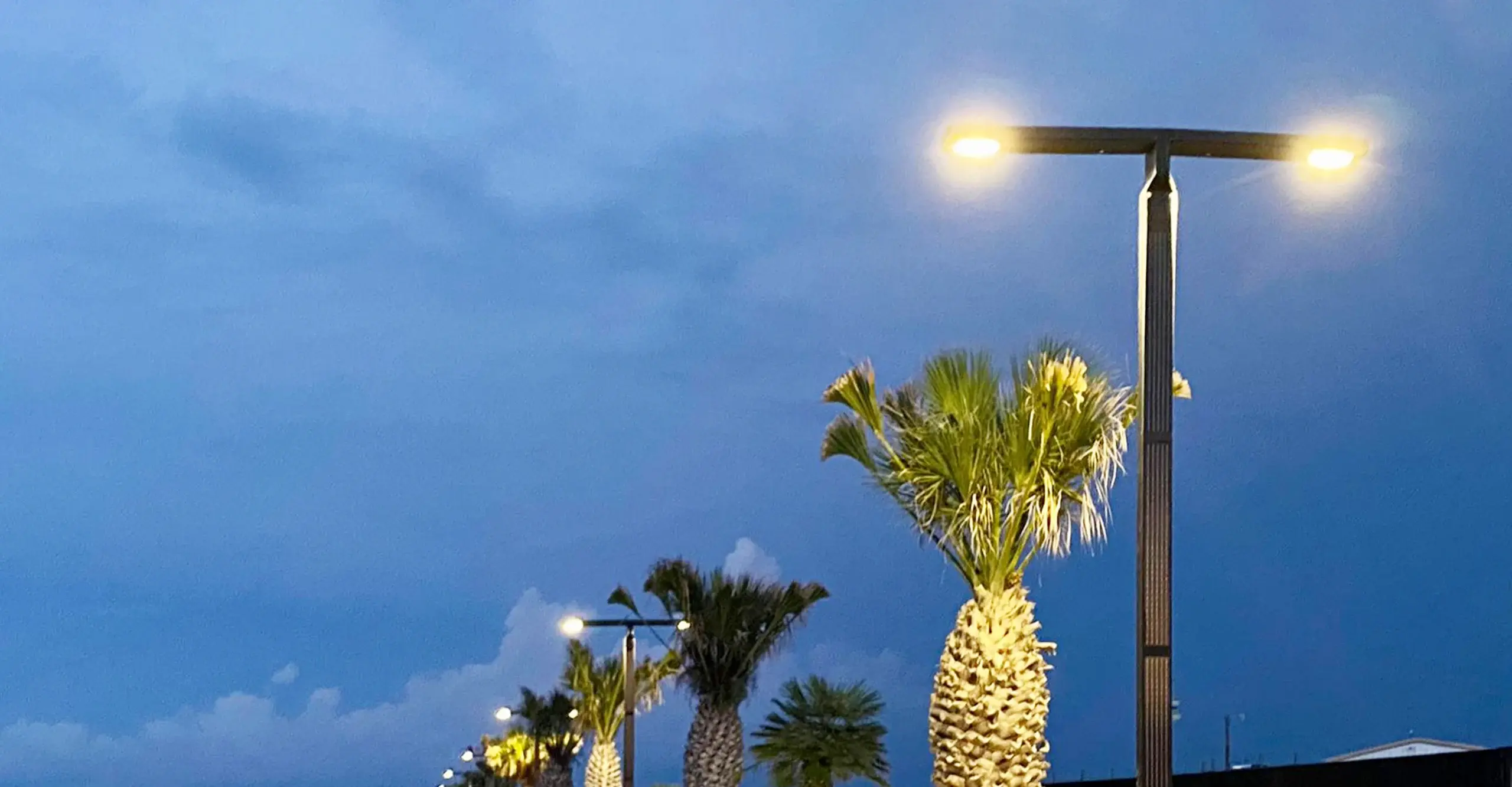
Mission-Critical Reliability: EnGoPlanet solar lighting poles deployed at SpaceX facilities in Boca Chica, Texas.
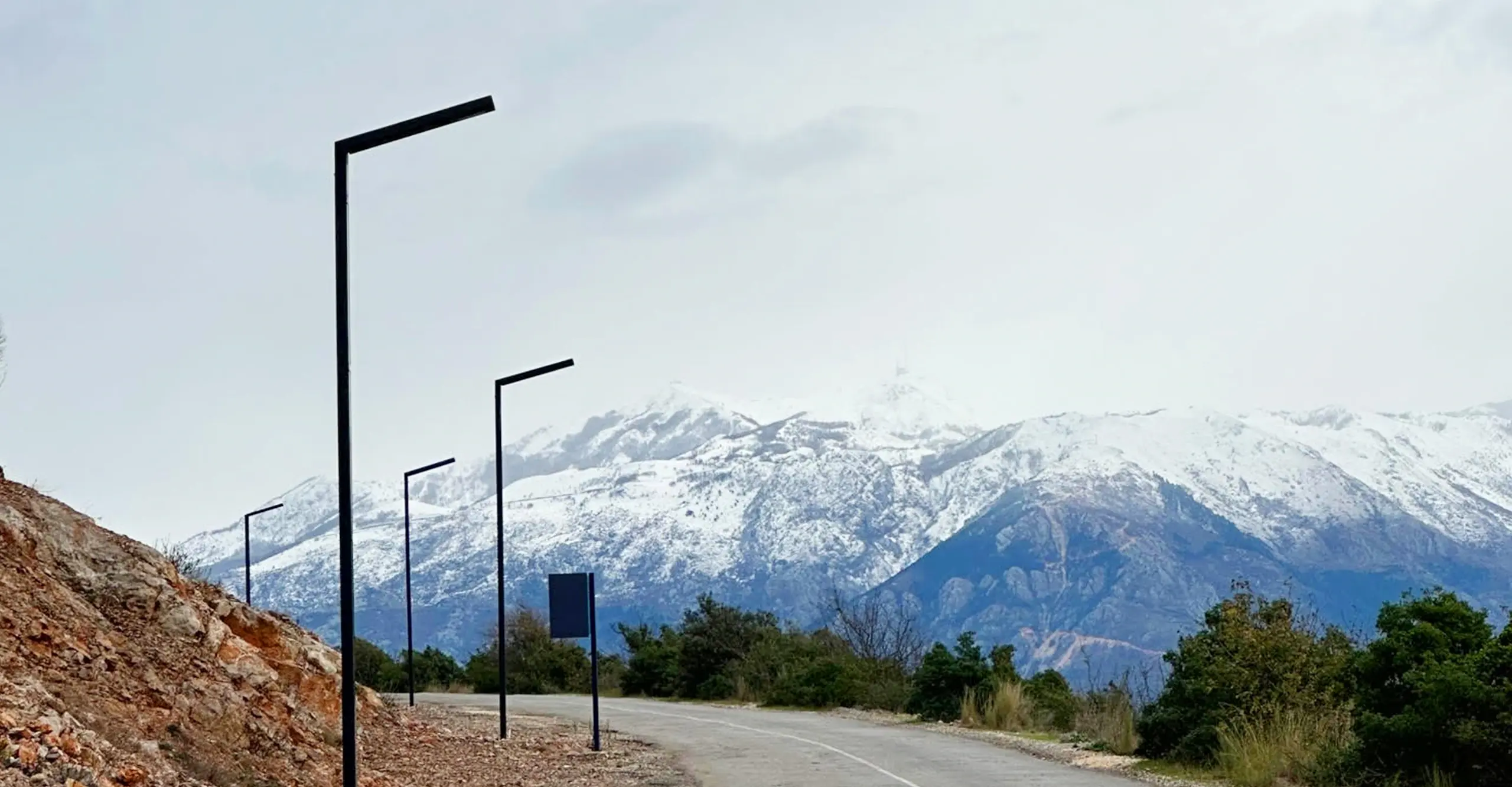
Architectural Elegance: EnGo Slim vertical solar poles illuminating Lustica Bay luxury resort, Montenegro.