Insights & Articles

Solar Lighting Blog & News

Latest news, technical guides, and expert perspectives on smart solar street lights, off-grid infrastructure, and clean energy technology.

0%

China’s solar lighting market is expanding beyond equipment sales. Solar Lighting as a Service offers municipalities, industrial sites, campuses, and property owners a different way to plan outdoor illumination. Instead of purchasing every component upfront, customers may receive design, installation, monitoring, maintenance, or financing through a service arrangement. Details vary by provider and project.

This guide introduces 10 providers connected with China’s solar lighting sector. It examines their service scope, project experience, product capabilities, geographic reach, and post-installation support. A supplier’s catalog can look impressive; the real test is a street that stays lit after weeks of rain, dust, heat, or battery cycling. Small details matter. So does the service contract. Pole spacing, battery autonomy, and monitoring arrangements can affect performance as much as the fixture itself.

Company offerings and project records can change, and “as a Service” does not mean the same thing everywhere. Readers should confirm current references, performance assumptions, warranty terms, response times, and equipment ownership before comparing proposals. Public information may also leave gaps. That deserves scrutiny, not guesswork. The companies below provide a starting point for evaluating China-based options, rather than a universal ranking or endorsement. Use the comparison to identify providers whose technical design and operating model fit your site, budget, and maintenance capacity. Reliable lighting is measured over years, not by a bright launch-day photograph.
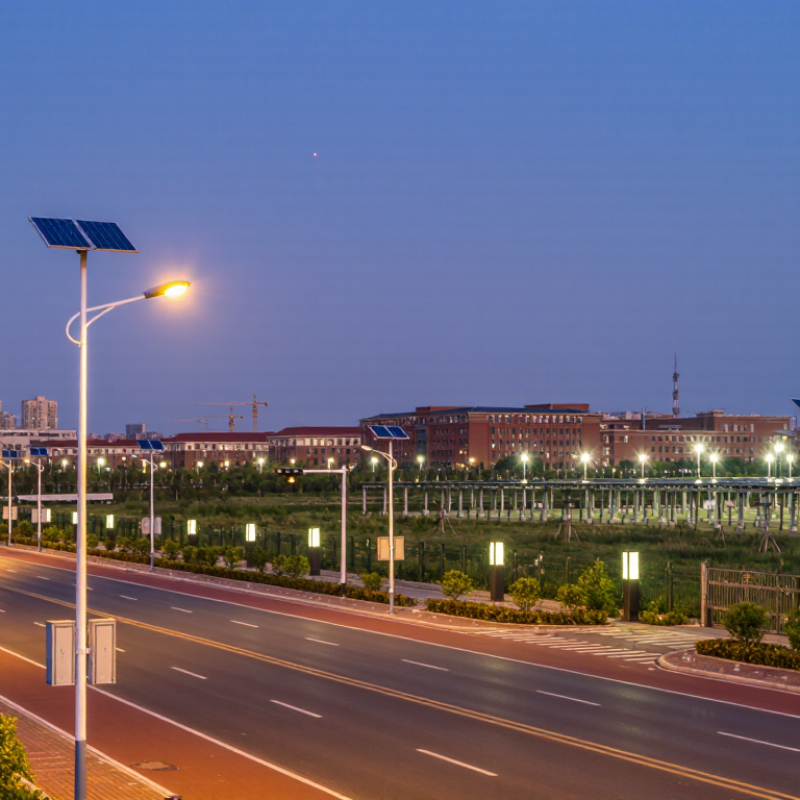
China Top 10 Solar Lighting as a Service Providers

Understanding Solar Lighting as a Service in China

Solar Lighting as a Service in China shifts solar lighting from a one-time equipment purchase to an ongoing service. A provider may assess a site, install solar-powered lights, and manage maintenance under an agreed service plan. Fees can be structured around equipment use, service periods, or performance requirements. The exact arrangement varies by project.

That matters. In China, lighting needs differ between urban roads, industrial parks, rural routes, and coastal facilities. A site survey should consider sunlight, shading, local weather, pole spacing, and nighttime activity. For example, trees or nearby buildings can reduce the daily charge available to a panel. Battery capacity and lighting schedules should reflect that reality, not just a standard product specification.

After installation, remote monitoring can help identify low battery levels or equipment faults. Local technicians may still be needed for physical inspections, cleaning, and repairs. Service agreements should clearly define response times, replacement responsibilities, and expected lighting performance. The model is useful, but not magic. Poor data, unclear maintenance duties, or unrealistic savings assumptions can weaken a project. Buyers should review actual site conditions and service terms before comparing proposals.

China Solar Lighting as a Service: Solar Resource Thresholds for Site Planning

Annual solar radiation classification thresholds for assessing potential lighting sites

These bars show the lower-bound thresholds for Solar Resource Zones I–III; Zone IV is below 1,050 kWh/m² per year. The thresholds are converted from the annual-radiation bands in China’s GB/T 31155-2014 standard. They provide context for site assessment, not a guarantee of solar lighting system output.

How Solar Lighting as a Service Providers Operate

Solar lighting as a service providers typically begin with a site assessment, not a standard product list. Engineers check pole locations, ground conditions, tree shade, and the hours lights are needed. A road junction may require brighter, longer coverage than a quiet footpath. These details shape the panel size, battery capacity, and lighting schedule. Small errors matter.

The provider usually arranges equipment, installation, monitoring, and ongoing maintenance under a service agreement. Customers may pay regular fees instead of purchasing every system upfront. Remote monitoring can flag a weak battery or a light that stops reporting, while scheduled visits allow technicians to inspect wiring, mounts, and panel surfaces. Dust builds up faster than many plans assume. Service terms should clearly explain response times, battery replacement, and what happens when a site receives less sunlight than expected. Providers operating in China may also need to adapt designs to varied climates, from humid coastal areas to colder inland regions. Even careful planning cannot remove every uncertainty. A trial installation can reveal practical problems before a wider rollout, though it may delay visible results.

Criteria for Comparing China’s Leading Providers

China Top 10 Solar Lighting as a Service Providers: Criteria for Comparing China’s Leading Providers

Comparing providers means looking beyond panel wattage and brochure claims. Ask for measured illuminance at ground level, nightly operating hours, and performance after several cloudy days. Battery capacity matters, but so do replacement intervals and safe temperature limits. Request test records from sites with similar weather, dust, and mounting conditions. Small details count.

China added about 216.9 GW of solar capacity in 2023, according to IEA PVPS’s Snapshot of Global PV Markets 2024. That rapid market growth makes supplier capability worth checking carefully; it does not prove that every lighting system performs equally well. Compare documented maintenance response times, spare-part availability, remote monitoring, and clear service-level commitments. Ask how missed service targets are reported. Paper promises are easy.

Also compare total service cost over the contract, including battery replacement, repairs, and end-of-life handling. IRENA reported that global utility-scale solar PV’s weighted average electricity cost fell to USD 0.044 per kWh in 2023. This is an energy-sector benchmark, not a street-lighting price, so it should not be used as a direct quote. A perfect scorecard is unrealistic. Still, transparent assumptions make bids easier to judge.

China Top 10 Solar Lighting as a Service Providers - Criteria for Comparing China’s Leading Providers

This comparison framework contains no company names or unsupported provider rankings. Use the same project scope, site conditions, service term, and measurement assumptions when comparing proposals; performance and commercial terms must be verified with each provider.

No. Comparison Criterion Comparable Measure Evidence to Request Why It Matters
1 Lighting performance Specified illuminance and uniformity for the relevant road, site, or application, assessed against the same lighting design requirements. Project-specific lighting calculations, luminaire photometric files, layout drawings, and commissioning measurements where available. Confirms that the proposed system is designed for the site’s actual lighting needs.
2 System availability Contracted service availability, stated measurement period, exclusions, and remedy for missed service levels. Service-level agreement, outage definitions, maintenance logs, and sample performance reports. Clarifies how reliably the lighting service is expected to operate.
3 Autonomy and energy design Designed operating hours and reserve capacity under the stated solar-resource, shading, weather, and load assumptions. Energy-yield and load calculations, battery-sizing basis, site survey, and assumptions for consecutive low-solar days. System operation depends on both local solar conditions and the design load.
4 Battery specification Battery chemistry, usable capacity, operating limits, monitoring approach, and replacement terms. Technical datasheets, warranty conditions, battery-management documentation, and end-of-life handling plan. Battery performance and replacement can affect service continuity and lifecycle cost.
5 Service and maintenance coverage Inspection frequency, fault-response process, repair responsibility, spare-parts availability, and geographic coverage. Maintenance schedule, escalation contacts, response-time commitments, and sample work orders. Shows how faults and routine maintenance are handled after deployment.
6 Commercial structure Payment model, contract duration, included services, indexation terms, taxes, and end-of-contract obligations. Itemized proposal and contract schedule covering installation, operation, maintenance, and any removal or transfer costs. Enables like-for-like comparison of the total contractual commitment.
7 Lifecycle cost transparency Total cost over the proposed service term, with assumptions for replacements, maintenance, and residual value clearly stated. Cost model, payment schedule, exclusions, and sensitivity analysis for key cost assumptions. Upfront price alone may not reflect the full cost of an ongoing service.
8 Monitoring and reporting Availability of system-status data, fault alerts, energy or battery indicators, reporting intervals, and data access rights. Monitoring-system demonstration, sample dashboard or report, data-retention terms, and connectivity requirements. Monitoring can support fault detection and transparent service reporting.
9 Installation and site delivery Survey scope, foundation and pole responsibilities, installation schedule, commissioning process, and site-restoration duties. Project plan, method statement, responsibility matrix, commissioning checklist, and acceptance criteria. Defines the work required to deliver an operating system at the site.
10 Warranty, compliance, and end of service Warranty scope and duration by component, applicable product and project requirements, ownership during the term, and asset handover or removal provisions. Warranty documents, relevant test or conformity records, insurance details, and contract clauses for handover, renewal, or decommissioning. Establishes how risks, responsibilities, and equipment are handled throughout and after the service term.

Profiles of 10 Solar Lighting as a Service Providers

These ten profiles represent service-provider models found in China’s solar-lighting market, not verified rankings of named companies. Compare proposals through site surveys, equipment specifications, maintenance terms, and measured performance.

Provider One serves municipal roads, pairing pole-mounted lights with scheduled inspections. Provider Two specializes in rural streets, where reliable access to replacement parts matters. Provider Three targets industrial parks and plans lighting around shift schedules. Provider Four supports parking areas, with attention to glare, spacing, and nighttime visibility.

Provider Five focuses on campuses, coordinating installation around pedestrian routes. Provider Six designs for logistics yards, where tall structures can cast uneven shadows. Provider Seven serves remote communities and considers battery autonomy during cloudy periods. Provider Eight provides temporary lighting for construction areas, with movable equipment and clear service response times.

Provider Nine works on commercial properties, helping owners compare upfront costs with service fees. Provider Ten manages mixed portfolios and tracks faults across multiple sites. These are useful distinctions, not guarantees. Ask for sample maintenance records, warranty boundaries, battery replacement assumptions, and local response coverage. No model is perfect. A proposal may look efficient on paper, yet perform poorly if shade, dust, or winter weather is underestimated. Real site measurements matter.

Market Trends and Provider Selection Factors

China’s solar lighting as a service market is evolving beyond equipment sales. Providers increasingly bundle site assessment, installation, remote monitoring, maintenance, and performance reporting into one service. This model can reduce upfront spending for industrial parks, logistics yards, and rural roads. Demand is also shaped by higher expectations for reliable lighting after dark. That matters.

Provider selection should begin with the site, not a catalogue. Ask how the team assesses shade, soil conditions, wind exposure, and winter sunlight. A pole beside a warehouse may receive very different light from one in an open yard. Request system designs that show battery capacity, expected operating hours, and dimming schedules. Check who responds when a fixture fails, and how quickly replacement parts can reach the site. Clear service levels are more useful than broad promises.

Compare the contract’s payment structure, monitoring access, and maintenance exclusions. A low monthly fee may omit battery replacement or storm repairs. Ask for sample operating data from comparable locations, while recognizing that one site cannot predict every result. Provider rankings can offer a starting point, but the strongest fit depends on local conditions and service coverage. Some projects still need grid backup. That trade-off deserves an honest review.

FAQS

How does a solar lighting service provider begin a project?

Engineers assess pole locations, ground conditions, tree shade, and required lighting hours. Small errors matter.

What is usually included in a service agreement?

Agreements often cover equipment, installation, remote monitoring, and ongoing maintenance. Customers may pay regular fees instead of buying systems upfront.

How are lighting designs adjusted for different sites?

A busy road junction may need brighter, longer coverage than a quiet footpath. These needs shape panel size, battery capacity, and operating schedules.

What should customers ask about maintenance?

Ask about response times, battery replacement, spare parts, and missed service targets. Dust can build up quickly.

How can a system’s performance be compared?

Request measured ground-level illuminance, nightly operating hours, and test results from sites with similar weather and mounting conditions.

What happens when a location has several cloudy days?

Ask how long the lights can operate and how battery capacity is tested. Actual conditions may differ from the plan.

How should customers compare total costs?

Include routine service, repairs, battery replacements, and end-of-life handling. A low monthly fee may not show the full cost.

Does rapid solar growth guarantee reliable lighting systems?

No. Market growth does not prove that every system performs equally well. Check documented results and service commitments.

Conclusion

This article explores the development of Solar Lighting as a Service in China, explaining how the model can help organizations access solar-powered lighting through ongoing service arrangements rather than managing every part of a project themselves. It outlines how providers typically assess a site, plan and install lighting systems, and support their operation through maintenance, monitoring, or other service options. It also introduces practical criteria for comparing providers, including technical capabilities, project experience, service coverage, system performance, and the clarity of contract terms.

The article then presents profiles of ten providers without focusing on brand promotion, offering readers a structured way to understand the range of services available in the market. It concludes by considering trends shaping solar lighting services in China and the factors buyers may weigh when selecting a provider, such as project requirements, long-term operating needs, reliability, and overall value.

Ethan

Ethan

Ethan is a dedicated marketing professional with a strong understanding of the company’s products, customers, and industry trends. Through his work, he combines strategic insight, clear communication, and practical product knowledge to help audiences better understand how the company’s solutions......