Insights & Articles

Solar Lighting Blog & News

Latest news, technical guides, and expert perspectives on smart solar street lights, off-grid infrastructure, and clean energy technology.

0%

Solar street lights look simple from the ground: a panel, a battery, and a lamp. Keeping them reliable is less simple. Dust can shade a panel, loose connections can interrupt charging, and a tired battery may leave a road dark before dawn. Buyers comparing a Solar Street Light Maintenance Service should look beyond low call-out prices. Ask how technicians inspect panels, test battery capacity, check wiring, and document repairs. Clear records matter.

For this guide, Daniel Reed is a fictional composite of experienced solar-lighting technicians, not a quoted real-world authority. His practical reminder is: “A light working tonight is not proof that its battery will last through the next cloudy week.” That distinction matters. Good maintenance checks performance trends, not just whether a lamp switches on during a visit. Still, service quality can be hard to judge from a brochure. That deserves scrutiny.

The seven options ahead are assessed through practical buyer concerns: technician expertise, response times, inspection scope, replacement-part availability, reporting, and long-term cost. Look for providers that explain what they test and show the results, including battery readings and panel condition. Ask whether routine visits include cleaning, secure mounting checks, and nighttime operation tests. A polished checklist helps, but it cannot replace careful work on site. No service prevents every failure. A useful provider helps buyers spot risks early, set realistic maintenance intervals, and keep public spaces consistently lit.
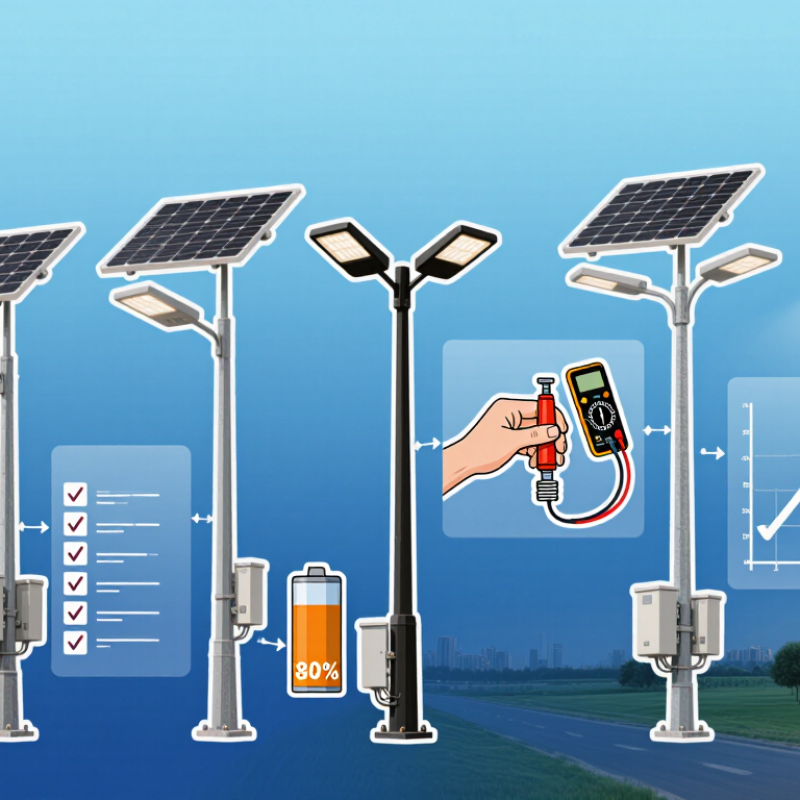
7 Best Solar Street Light Maintenance Services for Buyers?

What Solar Street Light Maintenance Services Cover

Solar street light maintenance should cover the full system, not just a quick panel wipe. Technicians inspect pole fixings, foundations, cables, connectors, and enclosures for looseness, moisture, or corrosion. They remove dust, leaves, and bird droppings from panels, while checking for new shade from nearby trees. The LED lens, controller, and battery compartment also need inspection. Small faults matter. A dusk-to-dawn test can reveal whether the light switches on reliably and stays lit through the night.

Battery checks should include terminal condition, charging behavior, and capacity against the equipment’s specifications. Maintenance teams can record panel output, battery readings, operating hours, and repair dates to spot changes over time. A 2013 review by NREL researchers Jordan and Kurtz examined nearly 2,000 photovoltaic degradation rates and reported a median of about 0.5% per year. This is a broad module benchmark, not a failure threshold for an individual street light. Tracking each unit’s baseline is more useful than assuming every output drop has the same cause. A clean panel does not fix a weak battery.

Tips: Ask for a written inspection checklist and service record. Schedule checks after severe weather, and compare night-time runtime across similar units. If performance keeps falling, request measured test results before replacing parts. Sometimes the cause is simple; sometimes it is not.

Seven Core Services for Solar Street Light Systems

Reliable solar street lighting depends on more than a bright lamp. Seven core maintenance services help keep each system working: site inspections, panel cleaning, battery testing, electrical checks, controller adjustments, pole and fixture repairs, and performance reporting.

During inspections, technicians look for cracked panels, loose brackets, water inside enclosures, and branches shading the array. Panel cleaning removes dust and bird residue with materials suited to the panel surface. Dust adds up. Battery testing can reveal declining capacity before lights begin switching off early. Electrical checks cover connectors, cables, fuses, and signs of overheating. That matters.

Controller adjustments help match dimming schedules to local lighting needs and seasonal daylight. Crews also tighten fasteners, check pole corrosion, and replace damaged seals or fixtures where needed. Reports should record measured battery readings, lighting hours, faults, and completed repairs—not just say “checked.” A practical service plan reflects site conditions; a dusty roadside needs different attention from a quiet coastal path. One detail is easy to miss: a clean panel cannot compensate for a worn battery. Regular records make that pattern easier to spot.

7 Best Solar Street Light Maintenance Services for Buyers? - Seven Core Services for Solar Street Light Systems
Core Service What the Service Covers Typical Checks or Tasks Planning Frequency Buyer’s Expected Deliverable
1. Solar Panel Inspection and Cleaning Checks panel condition and removes dust, leaves, bird droppings, and other deposits that can reduce sunlight reaching the panel. Inspect for cracks, shading, loose mounting hardware, and damaged cables; clean using methods suitable for the panel and site. Inspect periodically; clean when soiling is visible or energy performance indicates it is needed. Dusty or high-pollen sites may need more frequent attention. Inspection notes, cleaning record, and a list of damage or shading issues requiring follow-up.
2. Battery Health Testing Assesses the battery’s condition and ability to store and supply energy for nighttime operation. Review battery connections, enclosure condition, operating data, and available voltage or diagnostic readings; check for corrosion, swelling, or overheating. At scheduled preventive-maintenance visits and whenever runtime or charging performance declines. Recorded test results, observed condition, and recommendations for continued use or replacement.
3. LED Luminaire and Optical Inspection Checks the light source and optical components for proper operation, damage, and signs of water or dirt ingress. Confirm the light turns on and dims as configured; inspect the lens, housing, seals, and visible wiring for damage or moisture. During routine site inspections and after reports of dim, flickering, or failed lights. Operational status by pole, fault details, and repair recommendations.
4. Controller, Sensor, and Configuration Checks Verifies that the charge controller and any motion, daylight, or remote-monitoring functions are working as intended. Check status indicators or diagnostic logs, confirm programmed schedules and dimming settings, and test sensor response where applicable. At commissioning, after configuration changes, and when charging or lighting behavior is abnormal. Configuration record, test results, and any settings adjusted with authorization.
5. Pole, Bracket, and Foundation Inspection Examines the supporting structure and visible foundation area for conditions that could affect stability. Look for corrosion, cracks, loose bolts, damaged brackets, leaning, and signs of impact or ground movement. During planned inspections and after severe weather, vehicle impact, or other reported incidents. Condition report with photographs of defects and recommended corrective work.
6. Wiring, Connections, and Weatherproofing Checks Inspects accessible electrical connections and enclosures for damage, looseness, corrosion, or loss of protection against moisture. Check cable condition, connectors, glands, seals, and enclosure closures; isolate equipment before work when required by safe-work procedures. During preventive maintenance and whenever intermittent operation or visible damage is reported. Documented defects, completed repairs, and parts or follow-up work required.
7. Fault Response, Repair, and Performance Reporting Provides a process for diagnosing reported outages, completing authorized repairs, and tracking recurring problems. Log the pole or asset location, diagnose the fault, replace approved failed components, test operation, and record repeat issues. As faults are reported or detected; response targets should be agreed in the service contract. Work order with fault cause where identified, repair details, test outcome, and unresolved actions.

Planning note: Inspection and cleaning intervals depend on site conditions, system design, manufacturer guidance, and local safety requirements. Set a site-specific schedule and use qualified personnel for electrical or elevated work.

How Providers Inspect and Diagnose System Problems

A reliable solar street light inspection begins with the site, not a parts list. Technicians check whether trees, new structures, or seasonal shadows block the panel. They look for cracked glass, loose brackets, water inside the housing, and cables rubbed thin against metal. Small clues matter. Dust can reduce charging, while a tilted panel may collect less sunlight than expected. Inspectors also compare nearby lights, noting differences in brightness, operating hours, and switch-on time. One dark lamp may point to a local fault; several dim lamps may suggest a shared environmental or maintenance issue.

Diagnosis should test the whole system under safe, documented conditions. A technician can measure battery voltage at rest and during operation, then check controller indicators or recorded fault codes. They inspect connectors for corrosion and confirm that the LED fixture responds when dusk-control settings are tested. Readings should be recorded with weather, shade, and inspection time, since one sunny afternoon can give a misleading picture. A clean panel is not a diagnosis. Nor is a battery replacement always the answer. Some faults are intermittent, and that can be frustrating. Providers should explain which measurements support their conclusion, what remains uncertain, and when a follow-up test is needed.

What Buyers Should Compare When Choosing a Service

When comparing solar street light maintenance services, look beyond the advertised visit frequency. Ask what each inspection includes: panel cleaning, cable checks, battery testing, fixture sealing, and nighttime output verification. A technician should explain how readings are recorded, not just say the light is working. Details matter.

Compare response times against your actual site conditions. A road with several failed lights needs a different plan from a quiet parking area. Ask whether crews can reach remote locations, carry common replacement parts, and report delays clearly. Check how service fees cover travel, labor, and components; a low call-out price may not include much. Not always obvious.

Request sample inspection reports and clarify who reviews recurring faults. Useful records show dates, battery voltage, visible damage, and follow-up actions, ideally with photographs. Also check technician training, safety procedures, service coverage, and how repairs affect existing warranties. Fast service sounds reassuring, but speed alone does not prove careful work. Buyers can overvalue polished reports, too; confirm that recommendations match the equipment and site. A short trial period may reveal gaps before a long service agreement begins.

How to Match Maintenance Plans to Project Needs

Match a maintenance plan to the site, not just the fixture count. A dusty roadside, coastal salt spray, and a shaded park create different failure risks. NREL’s review, “Photovoltaic Degradation Rates—An Analytical Review,” examined more than 2,000 reported rates and found a median solar-module degradation rate of about 0.5% per year. That figure describes modules, not batteries or whole street-light systems. Use it as a planning reference, not a service guarantee.

For a small, accessible installation, scheduled inspections may be enough: check panel cleanliness, fasteners, wiring, and nighttime operation. Remote sites need clearer response times and stocked replacement parts, especially for batteries and controllers. Ask providers to record battery voltage, charging behavior, and outage causes—not just whether a lamp turns on. Keep a few photos from the same locations each visit. Useful, and simple.

Set inspection frequency around local conditions and seasonal access. A site with frequent dust or heavy leaf fall may need more cleaning than a dry, open road. Define what counts as urgent, who handles after-hours faults, and whether travel time is included. NREL’s module-degradation data cannot predict every project’s maintenance needs; battery chemistry, temperature, and installation quality matter too. Plans can look tidy on paper. Field conditions often aren’t. A pilot period can expose gaps before service terms are fixed.

7 Solar Street Light Maintenance Services: Suggested Annual Check Frequency

Use this baseline to compare maintenance plans. Frequencies are planning suggestions, not universal requirements; adjust them for local dust, weather, shading, system condition, and manufacturer guidance.

Remote monitoring is continuous, represented here as 12 monthly reviews. On-site inspection and cleaning needs may increase in harsh or dusty environments.

FAQS

What does solar street light maintenance usually include?

Technicians inspect panels, batteries, controllers, wiring, poles, fixtures, and enclosures. They also test night-time operation.

How often should panels be cleaned?

It depends on local dust, leaves, and bird residue. A dusty roadside may need more attention than a quiet path.

Can a clean panel solve every lighting problem?

No. A worn battery, faulty connector, or controller issue may still shorten operating hours. Clean panels help, but they are not a diagnosis.

What should battery testing cover?

Technicians can check terminals, charging behavior, voltage, and capacity against equipment specifications. One reading may mislead.

How do technicians find the cause of dim lights?

They check shade, panel condition, wiring, battery readings, controller indicators, and fixture response. They may compare nearby lights, too.

What details should a service report include?

It should record measured readings, lighting hours, faults, weather, and completed repairs. “Checked” alone tells you very little.

When should a system receive an extra inspection?

Arrange one after severe weather or repeated early shutoffs. Compare night-time runtime across similar lights.

Should parts be replaced after one poor reading?

Not always. Ask for measured test results and a follow-up when faults seem intermittent. I might be missing something, but guessing can waste a good part.

Conclusion

A Solar Street Light Maintenance Service helps keep outdoor lighting systems reliable, efficient, and safe throughout their operating life. Typical support can include cleaning panels and fixtures, checking batteries and connections, testing controllers and sensors, replacing worn components, and adjusting lights for proper coverage. Providers inspect each part of the system, review performance indicators, and diagnose issues such as reduced brightness, inconsistent charging, or unexpected outages before recommending repairs.

When choosing a service, buyers should compare inspection frequency, response times, technician expertise, replacement-part availability, reporting practices, and the scope of included work. The right plan depends on project size, site conditions, system age, usage patterns, and the consequences of downtime. Regular preventive care may suit established installations, while newer or demanding projects may benefit from more frequent checks and faster repair support. Matching the maintenance schedule to actual operating needs can extend equipment life, control service costs, and help maintain dependable lighting.

Amelia

Amelia

Amelia is a dedicated marketing professional with a strong understanding of product strategy, customer needs, and the evolving expectations of modern businesses. As a regular contributor to the company’s professional blog, she creates clear, practical, and insightful articles that help readers......