Solar Lighting Blog & News
Latest news, technical guides, and expert perspectives on smart solar street lights, off-grid infrastructure, and clean energy technology.
Choosing Parking Lot Solar Lighting in 2026 is less about picking the brightest fixture and more about matching equipment to the site. A wide, open lot may suit pole-top all-in-one units. Split-panel systems can help where tree shade limits panel exposure. Hybrid-ready designs offer another path for sites that need more dependable operation during long cloudy periods. The details matter. A tall pole, a dark corner, or a row of parked trucks can change how light reaches the pavement.
Energy-efficiency expert Amory Lovins has said, “Efficiency is the least-cost, fastest, and cleanest energy resource.” For parking lots, that idea points buyers toward useful light, not simply higher wattage. Compare usable brightness, beam distribution, battery capacity, panel size, controls, and warranty terms. Ask for photometric layouts, then check them against real pole spacing and site obstacles. A spec sheet alone cannot show every shadow.
Look closely at the unglamorous parts. Can crews reach the battery safely? Are replacement components available? Does motion dimming suit late-night traffic, or could it leave a pedestrian in a dim aisle? Solar is not magic. Winter weather and poor placement can expose a weak design, and buyers should question optimistic runtime claims. This guide compares leading options and explains where each may fit, so buyers can weigh performance, maintenance, and upfront cost with clearer expectations. Even a careful shortlist needs a site-specific review. That part is easy to underestimate.
Understanding Solar Lighting for Parking Lots
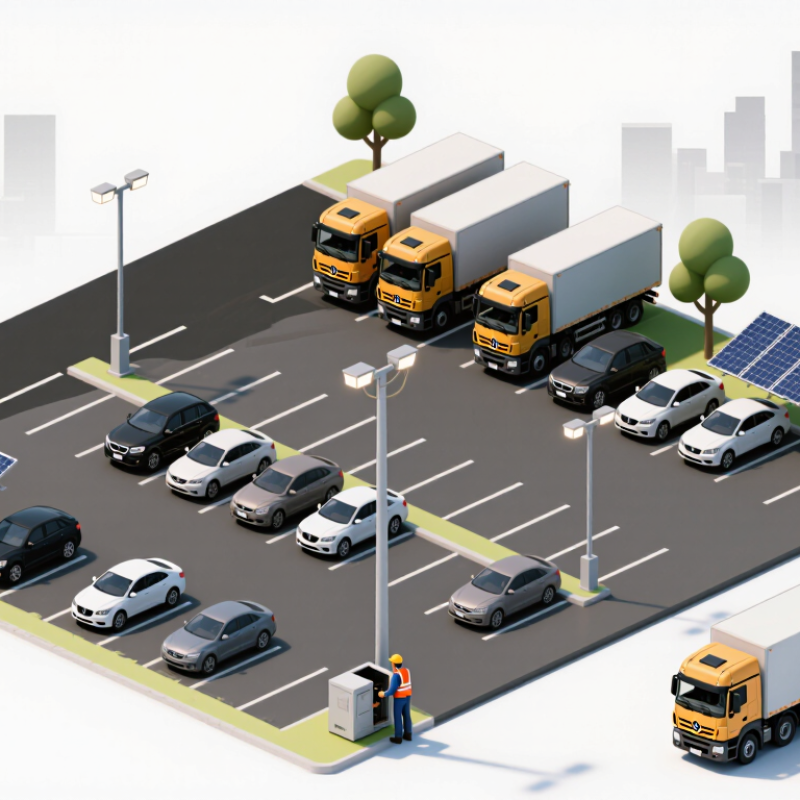
Solar parking lot lighting combines a photovoltaic panel, battery, controller, and LED fixture on each pole or shared structure. Unlike grid-connected systems, each light must store enough energy for nights with weak charging conditions. Panel placement matters. Nearby trees, building shadows, dust, and low winter sun can reduce charging, even when a site looks open at noon. Walk the lot at different times, and note shaded corners, entrance lanes, and spaces used after closing. That simple check can prevent a neat drawing from becoming a dim installation.
Buyers should compare usable light on the pavement, not just advertised brightness. Ask for a lighting layout showing pole locations, mounting heights, and expected illumination across drive aisles and stalls. Battery capacity, local weather, and the desired backup period all affect system size. Motion-based dimming can save energy, but a sudden brightening may feel distracting near homes or pedestrian paths. Test the settings on site. Maintenance is modest, not zero: panels need cleaning, and batteries lose capacity over time. Snow, grime, or a shifted panel can quietly change performance. Some lots need grid power. A site-specific assessment can show whether solar lighting suits the layout and nighttime use.
2026 Top Parking Lot Solar Lighting Options for Buyers - Understanding Solar Lighting for Parking Lots
| System option | Typical LED output | Typical mounting height | Indicative pole spacing | Common panel range | Common battery range | Suitable applications | Buyer considerations |
|---|---|---|---|---|---|---|---|
| Compact area-light system | 5,000–10,000 lm | 15–20 ft (4.6–6.1 m) | 30–50 ft (9–15 m) | 60–120 W | 200–500 Wh | Small lots, walkways, and perimeter areas | Lower energy demand can simplify off-grid sizing; verify uniform coverage and avoid dark gaps. |
| Standard parking-lot system | 10,000–20,000 lm | 20–25 ft (6.1–7.6 m) | 40–70 ft (12–21 m) | 100–200 W | 400–900 Wh | Retail, office, and community parking areas | A practical starting point for comparison; confirm required illuminance and uniformity through photometric calculations. |
| High-output area-light system | 20,000–40,000 lm | 25–35 ft (7.6–10.7 m) | 60–100 ft (18–30 m) | 200–400 W | 800–1,800 Wh | Large lots and wider vehicle circulation areas | Higher output typically requires more panel area and storage; assess pole loading, wind exposure, and glare control. |
| Solar canopy lighting | 3,000–12,000 lm per fixture | Under-canopy mounting; commonly 8–16 ft (2.4–4.9 m) | Set by canopy bays and fixture layout | Integrated with canopy PV design | Project-specific shared or distributed storage | Covered parking and solar-carport projects | Coordinate lighting, PV, wiring, drainage, and structural design; confirm the canopy provides adequate charging capacity. |
| Solar retrofit for existing poles | 5,000–20,000 lm | Based on existing pole, commonly 15–30 ft (4.6–9.1 m) | Limited by existing pole locations | 80–250 W | 300–1,000 Wh | Sites seeking to reuse suitable existing poles | Check pole condition, structural capacity, mounting compatibility, solar access, and whether existing spacing meets lighting needs. |
| Hybrid solar-grid system | 10,000–40,000 lm | 20–35 ft (6.1–10.7 m) | 40–100 ft (12–30 m) | Sized to reduce grid use; site-specific | Sized for intended backup duration | High-use lots or locations with limited winter solar resource | Grid connection can support reliability during low-sun periods; confirm controls, changeover behavior, and electrical-code requirements. |
FAQS
A typical unit combines a solar panel, battery, controller, and LED fixture. Each pole stores energy for nighttime use.
Trees, buildings, dust, and winter sun can reduce charging. Check the lot at different times, not only at noon.
Compare pavement illumination, pole locations, mounting heights, and light distribution. Advertised brightness alone can be misleading.
Review local hourly sunlight and weather patterns, then compare them with operating hours and cloudy periods. Summer averages can hide weak winter performance.
Standalone systems keep the panel and light on one pole. Remote-panel systems allow more flexible panel placement but need wiring. Hybrid systems can draw on grid power where available.
Yes, it can reduce energy use. But sudden brightening may feel distracting near homes or walking paths. Test the settings on site.
Panels need cleaning, and batteries gradually lose capacity. Snow or grime can quietly reduce performance. Maintenance is modest, not zero.
It can reveal dark walking routes, shaded corners, and uneven coverage. I would leave room for adjustments; parked vehicles and landscaping can change the result.
Conclusion
This guide helps buyers understand how Parking Lot Solar Lighting works and what makes it suitable for different parking areas. It explains the main system components and how sunlight, battery capacity, light output, and operating schedules affect performance. Before choosing a system, buyers should assess the site’s size and layout, parking and pedestrian activity, existing light levels, shading, and local weather conditions. These details help determine where lights should be placed and how much illumination is needed.
The guide also compares common solar lighting system types and reviews practical features such as panel and battery design, controls, durability, and ease of servicing. It outlines considerations for installation, including site preparation, pole placement, and exposure to sunlight, along with ongoing operation and maintenance needs. By weighing site requirements, system performance, installation effort, and long-term care, buyers can make a more informed choice for reliable parking lot illumination.