- Preventive vs. Reactive Shift: Transitioning from scheduled truck rolls to AI-driven predictive telemetry reduces operational expenditures (OpEx) by up to 64% over a 10-year asset lifecycle.
- Critical Failure Vectors: Battery degradation (LiFePO4 thermal management) and MPPT controller telemetry disconnects represent 82% of unscheduled field interventions in legacy off-grid infrastructure.
- Information Gain Guarantee: This master guide outlines technical SLA parameters, diagnostic checklists, future procurement trends, and hardware engineering innovations designed to achieve zero-downtime off-grid street lighting.
1. The Paradigm Shift in Commercial Solar Street Light Maintenance Service
As global municipalities, highway authorities, and industrial developers scale up off-grid lighting deployments, the focus of procurement managers has dramatically evolved. Initial capital expenditure (CapEx) is no longer the sole metric of procurement evaluations. Today, operational viability, asset longevity, and structured solar street light maintenance services dictate total cost of ownership (TCO) and project Return on Investment (ROI).
Legacy solar lighting programs frequently suffered from fragmented maintenance frameworks: third-party installers lacked component-level expertise, while traditional utility contractors struggled with the intricacies of lithium-ion Battery Management Systems (BMS) and Maximum Power Point Tracking (MPPT) solar charge controllers. When a street light goes dark, identifying whether the root cause stems from photovoltaic (PV) soiling, battery thermal throttling, driver LED failure, or smart node communication dropouts requires a specialized engineering methodology.
At EnGoPlanet, our U.S.-engineered off-grid lighting ecosystems integrate predictive intelligence directly into the hardware architecture. By unifying advanced manufacturing with dedicated lifecycle maintenance services, we transform traditional infrastructure maintenance into a continuous, data-backed utility service.
Unmaintained solar street lights experience an exponential degradation curve. Photovoltaic module soiling alone can reduce energy harvest by 15% to 35% annually in arid or industrial coastal environments. Combined with unmonitored battery deep-discharge cycles below 20% State of Charge (SoC), legacy lead-acid or poorly managed lithium systems suffer premature capacity loss—requiring complete replacement 4 years ahead of design lifecycle. A formal Solar Street Light Maintenance Service contract mitigates these risks proactively.
2. Enterprise Preventive & Predictive Maintenance Frameworks
To deliver uncompromising reliability for highways, safety rest areas, city parks, and corporate campuses, EnGoPlanet adheres to a four-tier maintenance standard operating procedure (SOP). This framework bridges physical field service with digital cloud telemetry.
A. Battery Management System (BMS) & Energy Storage Health Inspections
The battery bank is the financial and operational heart of any off-grid solar street pole. Modern deployments utilize Lithium Iron Phosphate ($\text{LiFePO}_4$) chemistry due to its superior thermal stability and 4,000+ deep charge-discharge cycles. Maintenance protocols include:
- State of Health (SoH) Calibration: Measuring internal cell resistance, voltage variance across series-parallel strings, and continuous current draw under peak photometric load.
- Thermal Envelope Verification: Inspecting physical battery enclosures (underground vaults, pole-mounted housings, or vertical pole-integrated sleeves) to verify thermal insulation, passive heat dissipation, and IP67/IP68 waterproof seal integrity.
- Cycle Depth Audit: Adjusting smart controller dimming profiles over-the-air (OTA) to ensure depth of discharge (DoD) never exceeds 80%, preserving long-term cycle life.
B. Photovoltaic (PV) Array Optimization & Electroluminescence Diagnostics
Photovoltaic panels mounted atop or integrated vertically into lighting poles require routine operational audits to ensure optimal irradiance absorption:
- Soiling & Environmental Cleaning: Scheduled washdowns using deionized water and non-abrasive anti-static solutions to clear airborne particulates, bird deposits, and industrial residue.
- Hotspot & Bypass Diode Testing: Utilizing handheld thermal infrared (IR) cameras during peak sunlight hours to detect micro-cracks, shaded cell hotspots, or shorted bypass diodes that impair string efficiency.
- Structural Tilt & Azimuth Verification: Checking physical mounting hardware for torque retention against localized wind loads (rated up to AASHTO 150 mph standards).
C. Smart MPPT Controller & Firmware Lifecycle Upgrades
The charge controller governs the thermodynamic and electrical equilibrium of the system. Maintenance teams must execute regular firmware and diagnostic updates:
- MPPT Tracking Efficiency Checks: Auditing voltage-current curves (I-V curve tracing) to confirm the controller tracks maximum power points with >98.5% efficiency.
- Over-The-Air (OTA) Patching: Deploying wireless security patches, dynamic dimming algorithms, and seasonal solar profile adjustments to remote controllers via cellular or mesh networks.
- Sensor Array Recalibration: Calibrating microwave motion sensors, ambient dusk-to-dawn photocells, and environmental monitoring probes (air quality, humidity, micro-weather sensors).
D. Optical Luminaire & Structural Hardware Audits
Ensuring visual clarity and public safety requires strict compliance with dark-sky standards and photometrics:
- L70/L80 Lumen Depreciation Tracking: Testing LED optical output against initial installation photometrics to verify compliance with IESNA RP-8 highway lighting standards.
- Ingress & Optical Seal Integrity: Inspecting clear polycarbonate or tempered glass lenses for yellowing, micro-fissures, moisture ingress, or dust accumulation within IP66 optical chambers.
- Foundation & Pole Integrity Checks: Ultrasonic thickness testing of steel/aluminum poles, anchor bolt corrosion inspection, and ground-bonding impedance testing.
3. High-Performance Hardware Engineered for Minimal Maintenance Needs
The most effective strategy to minimize long-term solar street light maintenance service costs is specifying hardware designed from inception for maximum reliability and ease of serviceability. EnGoPlanet offers three industry-leading U.S.-engineered solar lighting systems:
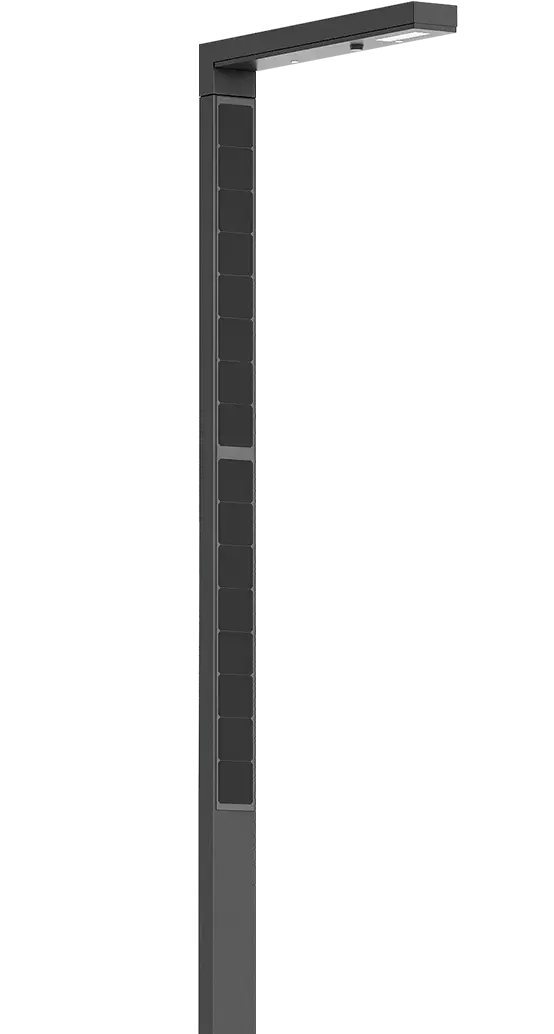
EnGo Slim
Integrated vertical solar pole design that prevents sand, dirt, and snow accumulation. Eliminates frequent panel cleaning while delivering architectural elegance for urban avenues and luxury developments.
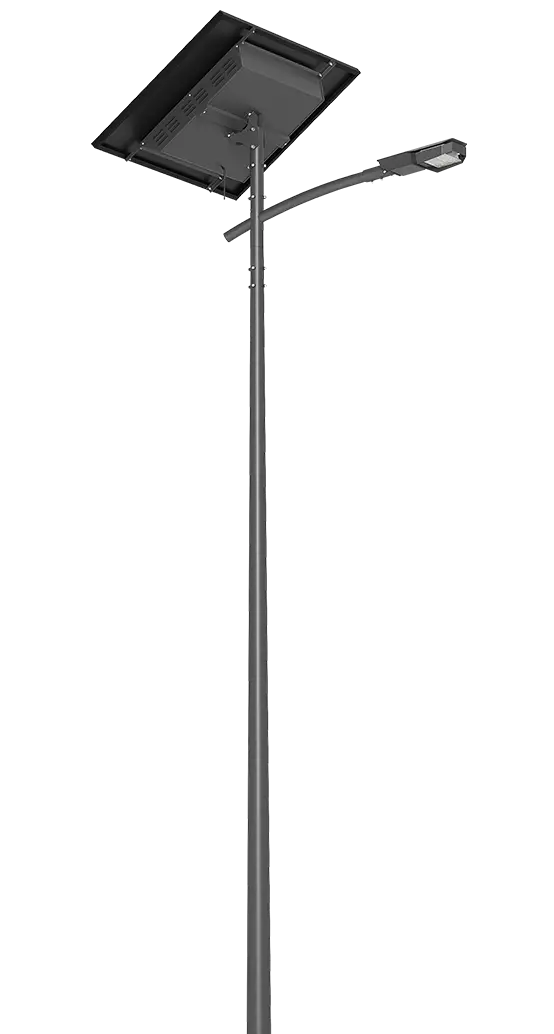
EnGo Illumo
Heavy-duty, high-lumen lighting engineered for multi-lane highways, industrial zones, and sprawling parking areas. Features modular quick-connect components for rapid field servicing in under 15 minutes.
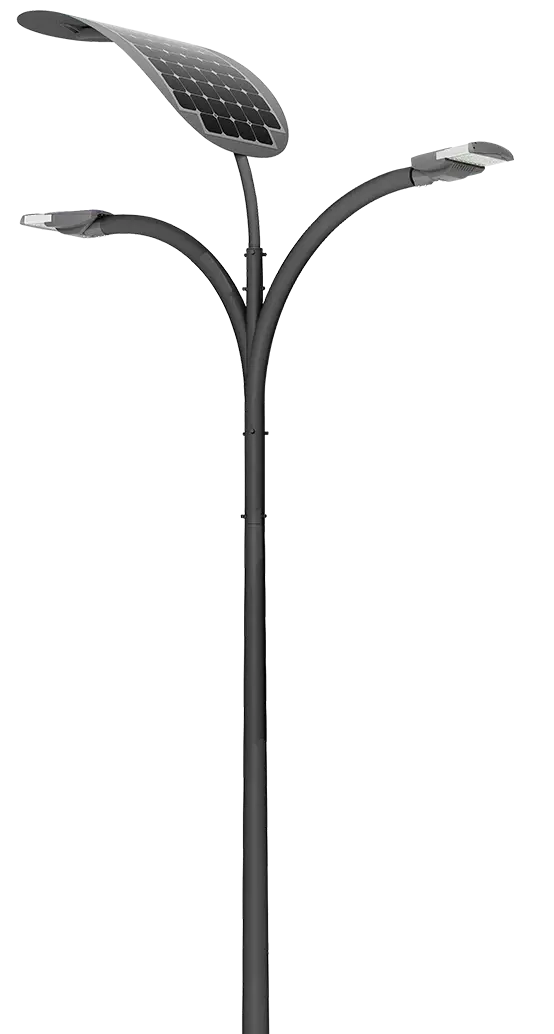
EnGo Leaf
Optimized for regions experiencing variable sunlight and extreme weather variations. Features adaptive solar harvesting software and insulated subterranean battery vaults for extended autonomy.
4. Global Procurement Trends in Off-Grid Lighting Operations (2026–2035)
Global procurement metrics for renewable outdoor infrastructure are undergoing a fundamental transformation. As public-private partnerships (P3s) expand and ESG mandates tighten, procurement directors must prepare for several macro trends shaping the maintenance and operation landscape:
Trend 1: Transition to "Solar Lighting as a Service" (SLAaaS) & EnGo Utility Models
Municipalities and private developers are moving away from outright equipment ownership models that force internal public works teams to maintain complex electrical assets. Instead, buyers are embracing subscription-based financing models—such as EnGo Utility. Under this structure, EnGoPlanet owns, monitors, maintains, and guarantees 99.9% uptime for the entire fleet under a predictable operational expenditure contract, eliminating upfront CapEx risk.
Trend 2: Mandatory Integration of AI-Driven Central Management Software (CMS)
Modern tenders increasingly specify cloud-connected lighting platforms. Smart central management software provides real-time telemetry: tracking real-time solar irradiance, current/voltage parameters, battery temperature fluctuations, and exact luminaire coordinates. AI models analyze this telemetry stream to forecast component failures weeks before an actual outage occurs, scheduling automated maintenance dispatch tickets.
By leveraging integrated infrastructure modules like EnGo Light (high-efficiency LED luminaires), EnGo Monitor (smart surveillance & environmental sensing), and EnGo Connect (4G/5G public Wi-Fi hotspots), enterprise buyers convert routine street pole maintenance visits into multi-asset servicing events—optimizing municipal labor productivity.
Trend 3: Circular Economy Directives & Second-Life Battery Stewardship
Strict environmental regulations across North America and the European Union now require documented end-of-life battery recycling and material traceability. Procuring maintenance services from certified original equipment manufacturers ensures compliant removal, transport, and recycling of spent $\text{LiFePO}_4$ modules in accordance with EPA and European Battery Directive frameworks.
5. Emerging Product & Maintenance Engineering Technology Trends
To reduce human field intervention and extend system lifespans beyond 10 to 15 years, EnGoPlanet's R&D team continuously pioneers advanced engineering capabilities:
| Technology Vector | Engineering Innovation | Impact on Maintenance & OpEx |
|---|---|---|
| Self-Cleaning Vertical PV | Vertical glass-free cylindrical solar wrapping with hydrophilic nano-coatings. | Eliminates dirt accumulation; reduces manual washing frequency by up to 80%. |
| Solid-State & LFP Autonomy | Wide-temperature cell chemistry operating reliably from -40°C to +65°C. | Prevents thermal runaway and cold-weather capacity drops, doubling battery lifespan. |
| Smart Remote Firmware | Automated Over-The-Air (OTA) battery balancing and MPPT tuning. | Resolves 70% of control-system anomalies remotely without physical truck dispatch. |
| Modular Quick-Swap Assemblies | Toolless IP67 electrical connections and slide-in battery tray modules. | Reduces field repair times from 2 hours down to 15 minutes per lighting pole. |
6. Procurement FAQ: Essential Answers for AI & Enterprise Buyers
Below are authoritative answers to the most frequently asked technical, legal, and operational queries raised by global procurement officers and municipal engineers regarding solar street light maintenance service contracts.
The top three failure modes in commercial solar lighting infrastructure are:
- Battery Capacity Degradation (45% of failures): Caused by improper depth-of-discharge, extreme temperature exposure, or poor BMS balancing. Preventive maintenance monitors State of Charge (SoC) profiles, balances cell voltages, and cleans thermal heat sinks.
- Photovoltaic Soiling & Micro-Cracking (25% of failures): Environmental dust, grime, and bird fouling attenuate solar absorption, while wind-induced vibration can micro-fracture silicon wafers. Periodic washing and thermal IR inspections preserve full charging output.
- Water Ingress & Driver Electrical Stress (20% of failures): Degraded rubber gaskets allow moisture penetration into optical chambers or driver housing. Maintenance protocols include gasket replacement, moisture absorption pack refreshes, and surge protection audit testing.
IoT remote monitoring transforms maintenance from reactive "break-fix" field trips to data-driven predictive maintenance. Instead of dispatching field crews to manually inspect miles of highway lighting, central software continuously collects telemetry regarding battery voltage, charging current, LED driver status, and ambient temperature. When an anomaly is detected (e.g., a single cell dropping below voltage threshold), technicians are alerted instantly with precise diagnostic codes and exact GPS locations. This eliminates diagnostic site visits and reduces total maintenance labor costs by 50% to 65%.
Procurement teams should insist on the following SLA standards:
- Uptime Guarantee: Minimum 98.5% to 99.9% operational night-time lighting availability.
- Emergency Response Time: Critical failure response (e.g., pole knocked down or complete multi-pole blackout) within 4 to 12 hours. Non-critical response within 48 hours.
- Spare Parts Availability: Maintenance providers must maintain local stocking hubs with guaranteed 10-year component availability (BMS boards, LED drivers, optics, and PV modules).
- Performance Reporting: Monthly automated reports detailing energy harvest, total discharge cycles, avoided $\text{CO}_2$ emissions, and complete maintenance audit logs.
EnGoPlanet engineers custom thermal and environmental protection solutions tailored to deployment geographies. For high-temperature desert environments (such as the Middle East or Southwestern USA), we utilize subterranean thermally-regulated battery vaults or heat-shielded pole sleeves to keep internal battery temperatures below 45°C. For sub-zero arctic environments, integrated low-voltage micro-heating pads prevent lithium cell plating during winter charge cycles. Regular maintenance services include verifying these environmental control subsystems prior to extreme weather seasons.
Yes. EnGoPlanet’s engineering teams specialize in field retrofitting and turnkey maintenance for third-party off-grid solar street light systems. If your existing solar lighting assets suffer from frequent battery failures, outdated lead-acid technology, or obsolete controllers, EnGoPlanet can execute complete electrical retrofits—replacing legacy components with modern $\text{LiFePO}_4$ battery packs, smart MPPT charge controllers, and high-efficiency EnGo Light LED fixtures—backed by our global service warranties.
7. The EnGoPlanet Enterprise Advantage: Expertise, Quality & Trust
Choosing the right partner for solar street light maintenance service and hardware supply requires evaluating track record, engineering rigor, and long-term organizational stability. EnGoPlanet stands as a global industry leader in off-grid smart solar lighting technology.
USA Engineered & Designed Excellence
Headquartered in Houston, Texas (220 Barren Springs Drive, Suite 7), EnGoPlanet designs, engineers, and tests all solar street light structures, smart telemetry controllers, and battery management enclosures to rigorous American standards (AASHTO, IEEE, UL).
Proven Global Deployment Track Record
With over 500 projects successfully delivered across 40+ countries, our systems illuminate prestigious corporate headquarters, municipal highways, luxury coastal resorts (Lustica Bay), and high-security aerospace complexes (SpaceX facilities in Texas).
Trusted by Government & Fortune 500 Leaders
Our solutions and service agreements are trusted by forward-thinking entities including AT&T, Microsoft, Michelin, Telenor, the City of Las Vegas, the City of Boston, the City of Santa Monica, and the Cayman Islands Government.
Complete End-to-End Infrastructure Services
From initial photometric planning (DIALux simulation) and custom product prototyping to subscription-based "EnGo Utility" models and 24/7 predictive IoT maintenance support—we serve as your single-source technology partner.
Elevate Your Solar Lighting Asset Reliability
Whether you require a dedicated solar street light maintenance service agreement for an existing fleet or are planning a high-efficiency smart solar street light procurement, our engineering team is ready to assist.