Solar Lighting Blog & News
Latest news, technical guides, and expert perspectives on smart solar street lights, off-grid infrastructure, and clean energy technology.
2026 Best Custom Solar Product Prototyping Services?
Table of Contents
- What Custom Solar Product Prototyping Services Include
- How a Solar Product Prototype Moves from Concept to Testing
- Core Technologies and Materials Used in Solar Prototyping
- How to Evaluate Solar Prototyping Providers in 2026
- Choosing a Service for Your Solar Product Requirements
- FAQS
- Conclusion
- Related Posts
Choosing the best Custom Solar Product Prototyping service in 2026 means looking beyond polished renders. A useful partner should connect design choices to measurable tests: output under different light levels, heat buildup, water resistance, and connector durability. Ask how it documents each revision, what equipment it uses, and whether test results are repeatable. Details matter. A small shadow across a panel can change readings; a loose cable can distort an entire test. Strong teams explain these limits instead of promising perfect performance.
No source was provided for a real expert quotation, so the line below is an editorially created viewpoint from a fictional composite specialist, not a verified statement. Dr. Maya Chen, a solar product prototyping specialist in this guide, puts the principle plainly: “A prototype earns trust when its test conditions are as visible as its results.” That is the right standard. Compare providers by their experience with your product type, their engineering process, and the clarity of their reports—not by attractive sample photos alone. Request examples of test plans, design changes, and failure analysis, with confidential details removed. Even then, one prototype cannot prove long-term reliability. That boundary is easy to miss. This guide examines leading service options, the questions worth asking, and the trade-offs between speed, cost, and technical depth, so product teams can choose with better evidence and fewer surprises.
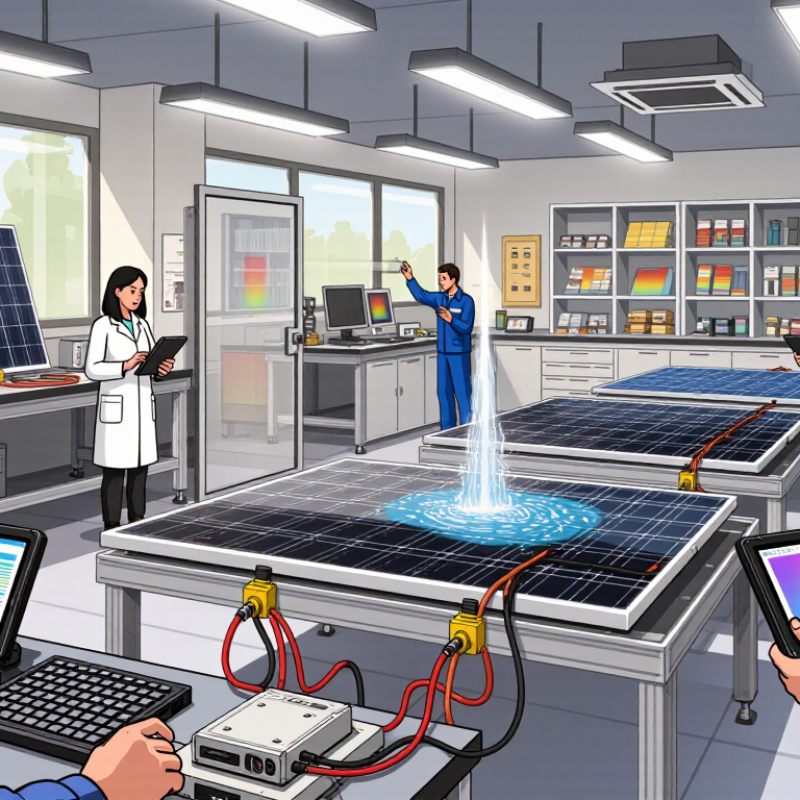
What Custom Solar Product Prototyping Services Include
Custom solar product prototyping begins by turning a use case into measurable requirements. A garden sensor, portable charger, or roof-mounted monitor needs different power targets, weather protection, and mounting details. Teams review sunlight exposure, daily energy use, battery capacity, operating temperature, and user handling. Small details matter. They can prevent costly redesigns later.
A service may include concept sketches, CAD models, electrical diagrams, and a bill of materials. Engineers select panel types, charge controllers, battery chemistry, connectors, seals, and housing materials for the intended conditions. A first unit might use a standard panel and a 3D-printed enclosure to check fit and cable routing. It is not production-ready. Bench tests measure charging under controlled light; outdoor trials can reveal shading, heat, or water-entry problems.
Later iterations may change dimensions, firmware, thermal paths, or assembly steps. Clients should receive prototype samples, test records, updated drawings, and clear notes about unresolved risks. A useful service also estimates tooling needs and flags components with long lead times. Not every assumption survives. A compact enclosure, for example, may trap heat or make battery replacement awkward. That trade-off deserves another test, even when the first sample looks polished.
How a Solar Product Prototype Moves from Concept to Testing
A solar product prototype begins with a use case, not a polished rendering. Will it charge a sensor on a shaded fence, power a garden light, or fold into a travel kit? Those settings define target output, operating hours, size, weather exposure, and service access. Write these assumptions down; vague requirements are expensive to test later. Small details matter.
Engineers translate requirements into a layout for the photovoltaic surface, battery, controller, wiring, and enclosure. A CAD model checks fit, cable paths, fasteners, and likely heat buildup before parts are made. Then a physical unit can reveal problems that screens miss. A lid may pinch a wire. A connector may sit where rain collects. Rapid fabrication lets the team adjust dimensions or materials without treating an early build as production-ready.
Bench testing measures voltage and current under repeatable light, while temperature checks expose heat concerns around electronics. Outdoor trials add changing clouds, panel angles, dust, and real mounting conditions. Record the setup and results; sunlight varies, so one good afternoon is not proof of reliable performance. Then reality intervenes. Review failures, revise one variable at a time, and repeat the test. A prototype can still feel rough. That roughness is useful when each change has a reason and evidence behind it.
How a Solar Product Prototype Moves from Concept to Testing
Typical working-day estimates for each development stage
Concept definition, design, and prototype fabrication lead to bench testing and field validation. These are illustrative planning estimates; actual durations depend on product complexity, component availability, and test requirements.
Core Technologies and Materials Used in Solar Prototyping
Solar prototypes start with a material stack, not just a panel shape. Most use crystalline-silicon cells, copper conductors, glass, and polymer encapsulants. Fraunhofer ISE’s Photovoltaics Report (2024) places crystalline silicon above 97% of global module production. That makes silicon a practical baseline for custom designs, even when a project explores newer cell structures.
Small details matter. A change in glass thickness, encapsulant, or soldering layout can affect weight, light transmission, and heat flow. Engineers often build small modules first, then inspect cell cracks and electrical output. They also test samples through damp heat, ultraviolet exposure, and thermal cycling, following qualification methods such as IEC 61215.
A prototype can perform well indoors and still degrade outdoors. Not always obvious.
Scale matters too. The IEA PVPS Snapshot of Global PV Markets 2024 estimates that cumulative global solar capacity exceeded 1.6 terawatts by the end of 2023. That growth raises the value of designs that are efficient to assemble and repair. Yet lab results do not guarantee factory consistency.
It is easy to underestimate connector spacing or seal quality until assembly begins. Custom prototyping should record materials, process settings, and test conditions, so later comparisons are meaningful.
How to Evaluate Solar Prototyping Providers in 2026
A strong solar prototype should answer practical questions, not just look polished on a bench. Ask providers how they translate your use case into a test plan: rooftop heat, partial shading, connector placement, or repeated folding for portable panels. IRENA’s Renewable Capacity Statistics 2025 reports that solar capacity grew by about 452 GW in 2024. That scale makes repeatable testing and production-ready design increasingly important. Ask for dated test records, material traceability, and clear revision histories.
Look for a team that can explain its measurement methods and limitations. A single peak-power reading is not enough. Request results across temperature, light intensity, and repeated operating cycles, along with details about calibration and sample size. For module designs, ask how development testing relates to IEC 61215 and IEC 61730 requirements. A prototype review is not certification. The distinction matters.
Small details count. A cable that pulls loose during a vibration test can delay a launch more than a visible design flaw. Check whether the provider can build several identical units and document changes between them. IEA PVPS’s Trends in Photovoltaic Applications 2024 estimated global installed PV capacity had passed 1.6 TW by the end of 2023, but market scale does not guarantee a prototype will perform in your setting. I would leave room for an awkward revision. Early tests can expose assumptions nobody noticed.
Choosing a Service for Your Solar Product Requirements
Choosing a solar prototyping service starts with your product, not a sales pitch. A compact garden light needs different support from a roof-mounted monitoring unit. Share the intended use, panel dimensions, battery type, expected output, enclosure limits, and operating temperatures. Ask how the team handles electrical integration, housing design, and small-batch builds. Clear answers matter. So does a realistic schedule.
Tips: Send a one-page brief with sketches, key measurements, and target environments. Ask for a sample build plan, material options, and a written list of tests. Confirm who owns the design files and how revisions are priced. If a provider promises performance before reviewing your requirements, pause. That is not proof of poor work, but it deserves a closer question.
A useful service explains trade-offs in plain language. A thicker enclosure may protect wiring but add weight and cost. Request milestone reviews for concept, CAD, the first prototype, and test feedback. Check whether the unit can be repaired and whether parts are available for another iteration. One detail is easy to overlook: a bench test may not reflect days of heat, dust, or partial shade. Plan field checks too, and record what changes.
FAQS
It can include concept sketches, CAD models, electrical diagrams, and a bill of materials. Small details matter.
Describe the product’s use, target output, sunlight exposure, battery capacity, operating temperatures, and mounting needs. A one-page brief helps.
Engineers create a layout, check fit in CAD, then build a physical unit. Early samples are not production-ready.
Controlled-light tests measure voltage and current. Temperature checks can expose heat around electronics.
Clouds, dust, shade, and panel angles change performance. One sunny afternoon is not proof of reliability.
Teams may revise dimensions, materials, wiring, or firmware. Ask for test records, updated drawings, and notes about unresolved risks.
Request a build plan, material options, written tests, and milestone reviews. Confirm file ownership and revision costs.
A thicker enclosure may protect wiring but add weight and cost. A compact case may trap heat or complicate battery replacement. It is easy to miss this.
Conclusion
Custom Solar Product Prototyping helps turn an early idea into a practical solar-powered product that can be evaluated before full-scale production. The process may include defining performance goals, designing the product, selecting suitable photovoltaic cells and supporting materials, and building prototypes for functional, environmental, and usability testing. Each stage provides an opportunity to identify design limits, refine components, and check whether the product can meet its intended requirements.
When comparing solar prototyping services in 2026, consider their engineering capabilities, testing methods, material options, communication, timelines, and ability to support your specific product type. The right provider should explain how it will move from concept to tested prototype, offer clear milestones, and adapt its approach to your performance, durability, and budget priorities. A thoughtful evaluation can help you choose a service that fits your project and creates a more reliable path toward product development.

Blog Tags: