
Solar Lighting Blog & News
Latest news, technical guides, and expert perspectives on smart solar street lights, off-grid infrastructure, and clean energy technology.
High-Performance LiFePO4 Solar Street Lights
Explore our top-tier selection of municipal and commercial solar street luminaires engineered with Grade-A Lithium Iron Phosphate (LiFePO4) energy storage, ultra-efficient MPPT charge tracking, and ADC12 die-cast aluminum weatherproofing.
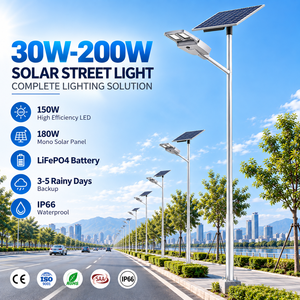
All In Two LED Solar Street Light IP66 80W-150W
- Efficacy: 170-190 lm/W
- Protection: IP66 / IK10 Vandal Resistant
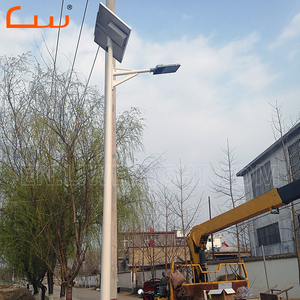
Lithium Battery 30W Integrated Solar LED Light
- Battery: 4,000 Cycle Deep-DoD LiFePO4
- Solar Panel: High-Efficiency Mono-PERC
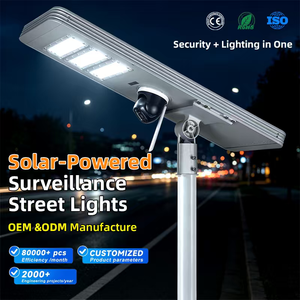
Smart 4G/WiFi CCTV Security Solar Street Light
- Integration: HD Security CCTV + 4G IoT
- Application: Public Safety & Parking Depots
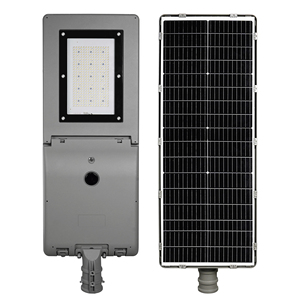
LoRaWAN Remote Control Smart Solar Light 25W-60W
- Control: LoRaWAN / NB-IoT Smart Platform
- Optic: AS/NZS 1158 Type II / III Lens
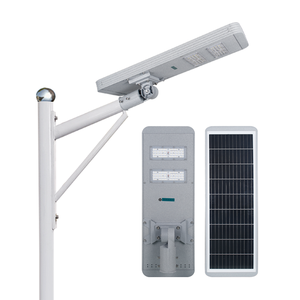
Heavy-Duty ADC12 Die-Cast Aluminum All-in-One Solar Light
- Housing: Marine-grade ADC12 Aluminum
- Autonomy: 5-7 Rainy Days Continuous
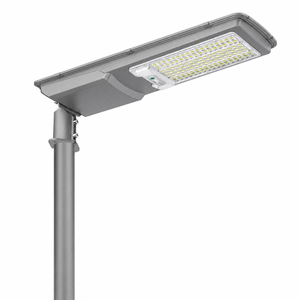
Integrated Microwave Radar Sensor Solar Light 100W-300W
- Sensor: 24GHz Doppler Microwave Radar
- Efficiency: Smart MPPT Dimming Profile
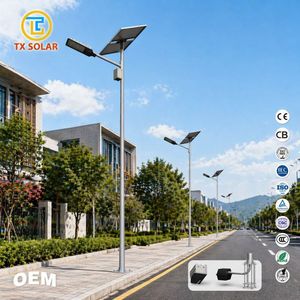
9m Heavy-Duty Solar Lighting System 80W LED
- Structural Rating: Wind Region A/B Certified
- Height: 6m - 10m Customized Hot-Dip Galvanized
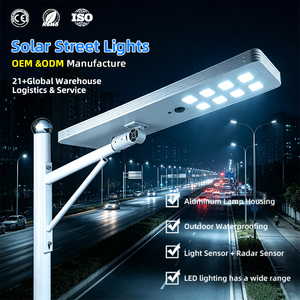
Municipal Commercial MPPT All-in-One Solar Light 80W-100W
- LED Chip: Lumileds 5050 (Efficacy > 200lm/W)
- Warranty: 5 Years Complete Warranty
Why LiFePO4 Battery Technology Dominates Melbourne Solar Lighting
Selecting energy storage for Melbourne and regional Victoria requires deep thermal modeling. From scorching 45°C summer heatwaves in northern Victoria to overcast 3.0 PSH (Peak Sun Hours) winter days in June, battery chemistry directly dictates project ROI and system lifespan.
Thermal Runaway Immunity
Lithium Iron Phosphate (LiFePO4) exhibits superior thermal and chemical stability. Unlike NMC (Nickel Manganese Cobalt) cells which undergo exothermic breakdown at 210°C, LiFePO4 remains stable up to 600°C, eliminating risks of fire under direct Australian summer solar radiation.
Extended 10-12 Year Life
Traditional Lead-Acid (AGM/Gel) batteries degrade within 500-800 cycles at 50% Depth of Discharge (DoD). Our Tier-1 LiFePO4 cells deliver over 4,000 to 6,000 cycles at 80% DoD, dramatically reducing municipal maintenance visits across Victorian roads.
Intelligent MPPT Efficiency
Integrated Maximum Power Point Tracking (MPPT) controllers convert up to 98% of solar energy into chemical charge reserves. Dynamic power-tracking algorithms dynamically compensate for low ambient winter sunlight in southern Victoria.
| Performance Metrics | LiFePO4 (Lithium Iron Phosphate) | NMC Lithium Ion | Traditional AGM / GEL Lead-Acid |
|---|---|---|---|
| Cycle Life (80% DoD) | 4,000 - 6,000+ Cycles | 1,000 - 1,500 Cycles | 400 - 600 Cycles |
| Thermal Stability Threshold | Exothermic Breakdown > 600°C | Exothermic Breakdown ~ 210°C | Thermal Runaway ~ 80°C |
| Round-Trip Energy Efficiency | 95% - 98% Efficiency | 90% - 92% Efficiency | 75% - 80% Efficiency |
| Maintenance & Toxicity | Zero Maintenance / Heavy-Metal Free | Cobalt Contamination Risk | High Maintenance / Toxic Lead & Acid |
| Operational Lifespan | 10 - 12 Years | 3 - 5 Years | 2 - 3 Years |
Engineered for AS/NZS 1158 Lighting Categories
Our solar street lighting architectures are designed specifically to conform with Australian and New Zealand lighting standards, providing tailored optical distributions for Category V (Vehicular Traffic) and Category P (Pedestrian & Public Spaces).
AS/NZS 1158.1.1 Category V
Engineered for arterial roads, freeway off-ramps, and high-speed transit zones across Greater Melbourne. Utilizing customized Type II-M and Type III-M batwing optical lenses, our luminaires deliver uniform illuminance, minimal glare (TI < 15%), and zero upward light spill.
AS/NZS 1158.3.1 Category P
Designed for suburban pathways, municipal parks, bike trails, and residential subdivisions. Optimized for illuminance subcategories P1 through P12, ensuring public safety and high vertical face recognition while reducing light pollution in eco-sensitive parklands.
C5-M Marine Grade Corrosion Proofing
Coastal areas surrounding Port Phillip Bay and Mornington Peninsula face salt-spray corrosion. Our luminaires are constructed with ADC12 die-cast aluminum, treated with electrophoretic primers, and finished with fluorocarbon powder coatings rated to ISO 9227 C5-M specifications.
Localized Solar Lighting Applications in Victoria
From port logistics corridors to regional highway safety upgrades, our off-grid solar luminaires solve complex lighting challenges without costly grid trenching.
Port of Melbourne & Logistics Depots
High-salinity coastal logistics hubs in Port Melbourne, Laverton North, and Truganina demand high-lumen, IP66 waterproof illumination. Solar poles bypass underground cabling obstacles near heavy freight rail corridors.
VicRoads Regional Highway Intersections
Extending grid lines to remote rural intersections in Victoria can cost upwards of $40,000 per kilometer. Off-grid split-system LiFePO4 solar poles provide 100% autonomous lighting with 5-day battery reserve during cloud cover.
Yarra Ranges & Dark-Sky Eco Reserves
Sensitive eco-tourism regions demand Dark-Sky compliant zero-UGL optical fixtures. Integrated microwave radar dimming preserves local wildlife habitats while ensuring high light output when pedestrians approach.
Suburban Municipal Parks & Council Precincts
Greater Melbourne councils (including City of Wyndham, Hume, and Whittlesea) leverage smart IoT solar lighting to achieve zero-carbon public lighting goals while lowering operational expenditure by up to 80%.
Trends Shaping Melbourne Solar Infrastructure
As Victoria accelerates its Net-Zero 2045 emissions target and implements the Victorian Renewable Energy Target (VRET), public lighting asset managers are shifting rapidly from traditional mains-connected HPS/LED streetlights to intelligent, autonomous solar poles.
VRET 2030 & Carbon Neutrality
Local government authorities across Victoria are mandated to lower municipal scope-1 and scope-2 emissions. Solar lighting eliminates 100% of grid power consumption, enabling councils to claim verified carbon offsets for every pole installed.
Smart City LoRaWAN Telemetry
Modern Melbourne projects demand full asset visibility. Our luminaires incorporate optional LoRaWAN and 4G NB-IoT controllers, allowing council managers to remotely adjust dimming profiles, receive automated fault alerts, and log real-time solar yield.
TCO & Grid Trenching Avoidance
Rising civil construction and labor costs in Australia make underground grid trenching cost-prohibitive. Off-grid solar lighting eliminates copper wiring, trenching permits, traffic disruption, and ongoing utility electricity bills.
Global OEM Manufacturer & Melbourne Supply Partner
We combine USA engineering rigor, Tier-1 manufacturing capacity, and localized technical support to deliver robust off-grid energy systems trusted by international enterprises and government bodies worldwide.
USA Engineering & R&D Lineage
Our solar technology architecture (featuring the EnGo Light, EnGo Monitor, and EnGo Connect platforms) is engineered according to strict Western standards, ensuring maximum system resilience, firmware security, and optimal photometrics.
Custom OEM/ODM Manufacturing
From custom pole heights and powder-coat colors (RAL matching) to custom optical lens distributions and embedded IoT security cameras, our factories provide end-to-end prototyping and mass production capability.
EnGo Utility & Service Models
We offer complete lifecycle support—including Solar-Lighting-as-a-Service subscription options, predictive maintenance services, and comprehensive 5-year replacement warranties backed by local Australian logistics support.







Frequently Asked Questions in Melbourne
Detailed technical answers to common questions asked by Australian municipal engineers, civil EPC contractors, and commercial developers.
How do your solar street lights perform during Melbourne's winter months?
Melbourne experiences lower peak sun hours in June and July (~2.8 to 3.2 PSH/day). Our luminaires are engineered with oversized monocrystalline PV panels and high-efficiency MPPT controllers that harvest energy even under diffuse ambient cloud cover. Paired with 4,000+ cycle LiFePO4 batteries, systems maintain 5 to 7 days of continuous illumination autonomy during protracted overcast spells.
Are your luminaires certified to Australian Standards (AS/NZS 1158)?
Yes. Our complete solar street light series can be configured with specific optical distributions (Type II, Type III, Type IV) that comply fully with AS/NZS 1158.1.1 (Category V vehicular roads) and AS/NZS 1158.3.1 (Category P pedestrian pathways). We provide detailed IES photometric files for DIALux lighting calculations upon request.
What wind load ratings do your solar street lighting poles withstand?
Our structural pole assemblies and solar bracket mounts are structural engineer-rated for Australian Wind Region A and Region B (AS/NZS 1170.2). They withstand gust speeds exceeding 180 km/h, making them suitable for exposed coastal regions along Victoria's coastlines and open regional highways.
What is the expected lifespan and warranty of the LiFePO4 battery pack?
Our Grade-A LiFePO4 battery cells deliver a operational lifespan of 10 to 12 years under standard operating conditions. We provide a 5-year full replacement warranty covering the LED fixture, solar panel, battery pack, and MPPT controller, supported by direct technical assistance.
Can these lights be integrated with smart city management platforms?
Absolutely. Our fixtures support optional Zigbee, LoRaWAN, and 4G NB-IoT communication nodes (such as the EnGo Monitor platform). Municipal asset managers can monitor individual battery state of charge (SoC), set custom dimming schedules based on traffic volume, and receive instantaneous fault alerts.
How do off-grid solar street lights compare in cost to mains grid lighting?
While solar luminaires have a comparable upfront fixture cost, they eliminate 100% of underground trenching, copper wiring, transformer installation, and civil road restoration expenses—saving between $15,000 and $45,000 per kilometer installed. Ongoing electricity costs are reduced to zero dollars forever.
Ready to Upgrade Melbourne Infrastructure with Solar Energy?
Consult with our senior solar engineers today for customized DIALux photometric design, AS/NZS 1158 compliance reports, and direct OEM wholesale pricing tailored for Victorian projects.
Send an Inquiry