
Solar Lighting Blog & News
Latest news, technical guides, and expert perspectives on smart solar street lights, off-grid infrastructure, and clean energy technology.
High-Performance Solar Street Lighting Products
Engineered with N-Type TOPCon Photovoltaics, Smart MPPT Energy Controllers, and Ultra-Durable LiFePO4 Storage for Seattle Infrastructure
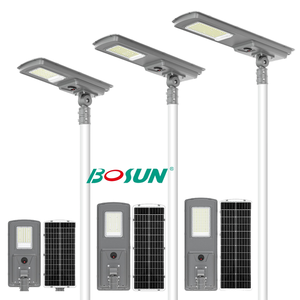
Dusk to Dawn All in One Solar Street Light Outdoor Waterproof
- Integrated Monocrystalline PV
- IP67 Dual-Sealed Enclosure
- Automated Dusk-to-Dawn Control
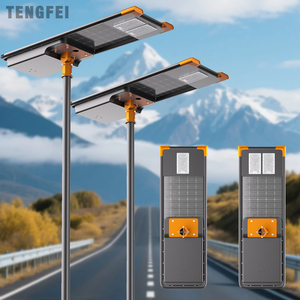
Hot Selling Low-energy Split Solar Street Light Outdoor Led Lamp
- High Efficiency LED Chips (210 lm/W)
- Adjustable Tilt PV Bracket
- 7-10 Days Winter Autonomy
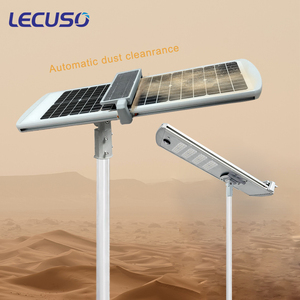
30W-150W Automatic Self Cleaning Solar Street Light
- Robotic Panel Wiper System
- Removes Rain Spots & Debris
- Optimized Low-Maintenance Unit
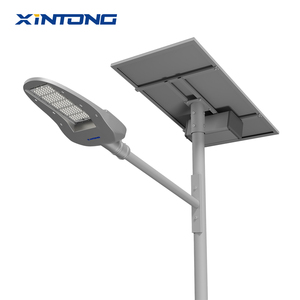
Heavy-Duty Roadway Split Solar Street Lamp (60W - 150W)
- Type II/III Roadway Batwing Optics
- Modular Die-Cast Aluminum Body
- Smart IoT Dimming Ready
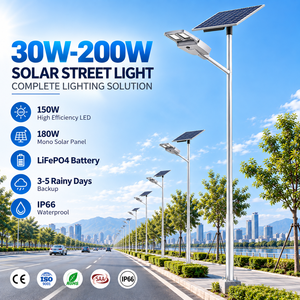
All-In-Two Solar Street Light IP66 with Battery Backup
- 80W / 100W / 150W Output Options
- Quick-Swap Battery Enclosure
- Anti-Corrosion Anodized Finish
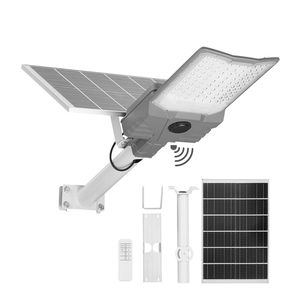
High-Powered Industrial Solar Floodlight System
- Ultra-Lumen Output Capability
- 240° Wide Beam Angle Optics
- Ideal for Ports & Freight Yards
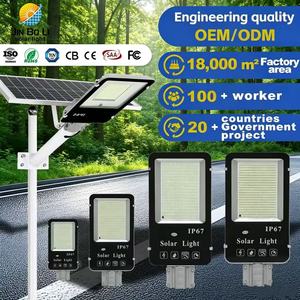
Remote Controlled IP67 Waterproof Solar Street Lamp
- Programmable Energy Management
- RoHS & CE Certified Electronics
- Multi-Stage Dimming Schedules
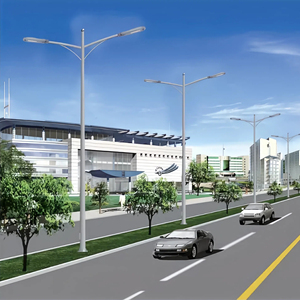
Commercial Grade All-in-One Solar Street Light (60W/120W)
- Cost-Optimized Municipal Design
- High-Density LiFePO4 Cell Pack
- Toolless Mounting Bracket
Solving the Seattle Low-Irradiance Challenge: Engineering Solar Systems for the Pacific Northwest
Deploying off-grid municipal and commercial solar street lighting in Seattle, Washington, demands an advanced engineering approach distinct from sun-rich regions like Arizona or California. According to the National Renewable Energy Laboratory (NREL), Seattle experiences an average of 152 overcast or partly cloudy days per year, with peak sun hours dropping as low as 1.2 to 1.8 kWh/m²/day during the extended winter period (November through February). Furthermore, winter days in the Pacific Northwest (PNW) offer less than 8.5 hours of daylight, coinciding with maximum municipal lighting demand requirements.
Standard off-grid solar street lights imported without regional customization frequently fail during Seattle winters due to insufficient photovoltaic conversion, battery deep-discharge degradation, and moisture intrusion from persistent atmospheric humidity and salt fog off Puget Sound. As a premier China integrated solar street light manufacturer & exporter, our R&D team has engineered a dedicated PNW Spec solar luminaire system that guarantees 365-day uninterruptible operation.
N-Type TOPCon Low-Light Conversion
Utilizing next-generation N-type TOPCon monocrystalline cells with low-light spectral sensitivity, capturing diffuse ultraviolet rays under dense Pacific mist and cloud cover.
Thermostatically Regulated LiFePO4 Packs
Equipped with internal heating matrix elements controlled by an intelligent BMS, preventing lithium plating during freezing Seattle sub-zero winter spells (-10°C to -20°C).
Marine-Grade Coastal Anodization
Extruded 6063-T6 aluminum alloy housing coated with 50μm fluorocarbon coating, providing C5-M anti-corrosion protection against Puget Sound marine aerosol.
Adaptive Lighting System 2.4 (ALS) Energy Math
To prevent blackout periods during consecutive rainy weeks in Washington State, our luminaires incorporate ALS 2.4 dynamic power modulation algorithms. Rather than running at a fixed wattage, the MPPT (Maximum Power Point Tracking) microprocessor calculates real-time energy harvesting rates and residual battery state of charge (SoC). If consecutive rainy days deplete storage reserves below 40%, the luminaire dynamically scales lumen output down to 30% during low-pedestrian hours, while remaining at 100% capacity upon microwave radar motion detection.
| Architecture Feature | Standard Export Solar Light | EnGo / Commercial Split Luminaire | Seattle PNW Spec Integrated Unit |
|---|---|---|---|
| Solar Cell Technology | Poly / Standard Mono (17%-19%) | Monocrystalline PERC (21.5%) | N-Type TOPCon Bifacial (23.5%+) |
| BMS Low-Temp Protection | Cut-off Only (No Heating) | Passive Insulation Layer | Active Heating Matrix Matrix (-20°C) |
| Ingress & Coating | IP65 Spray Painted Steel | IP66 Aluminum Alloy | IP68 Sealed, C5-M Marine Anodized |
| Rainy Day Autonomy | 3 - 4 Days Maximum | 5 - 7 Days | 10 - 14 Days (ALS 2.4 Protocol) |
| Dark-Sky Compliance | Unshielded Drop Lens | Flat Glass Optics | Full Cutoff Type II/III (IDA Compliant) |
Integrated All-in-One vs. Split Solar Systems in PNW Applications
When municipal planners, contractors, and commercial developers in Seattle select solar street lighting, deciding between All-in-One (Integrated) and Split-Type architectures is critical for long-term project ROI. Both topologies offer unique mechanical and electrical advantages depending on the specific installation site, wind load engineering (ASCE 7-16 standards for West Coast coastal gusts), and shading profiles created by evergreen tree canopies typical of King County.
Integrated All-in-One Solar Lights
Combining the photovoltaic panel, LiFePO4 battery pack, MPPT controller, and LED engine into a sleek, self-contained chassis. Designed for rapid installation (under 15 minutes per pole), low wind resistance, and vandalism protection along pedestrian pathways, public parks, and HOA communities.
Split-Type High-Output Luminaire Systems
Separating the solar panel mount from the light fixture allowing independent tilt optimization (up to 45° - 60° tilt facing South). This maximizes winter solar harvesting in high-latitude regions like Seattle (47.6062° N) while permitting heavy 150W+ LED output for arterial roads and port terminals.
All-in-Two Hybrid Systems
Integrates the battery and LED engine inside the luminaire while mounting a separate oversized solar panel above. Strikes an ideal balance for Seattle commercial parking lots, providing expanded solar surface area without sacrificing streamlined luminaire aesthetics.
For Seattle urban applications, our engineering team recommends high-tilt All-in-Two or Split-Type configurations for major thoroughfares such as Fourth Avenue, Alaskan Way, or Industrial Way S. Conversely, for pedestrian corridors, waterfront promenades along Elliott Bay, and corporate campuses in Bellevue or Redmond, our All-in-One integrated units offer sleek aesthetics, zero trenching costs, and simple retrofitting onto existing 2-3/8 inch tenons.
Tailored Solar Lighting Solutions Across Greater Seattle
Infrastructure projects across the Pacific Northwest present complex municipal requirements—ranging from strict International Dark-Sky Association (IDA) compliance to preserve nocturnal wildlife in nearby ecosystems, to robust zero-grid resilience during winter storm outages. Here is how our exported solar street lights serve Seattle’s diverse urban terrain:
Port of Seattle & Logistics Terminals
Heavy freight corridors require high-lumen illumination without expensive copper wiring trenching around shipping container yards. Our 12000W / 900,000LM class split floodlights provide instant 6500K visibility with heavy-duty surge protection.
Seattle Parks & Recreation Pathways
Park pathways require warm CCT options (3000K-4000K) to limit glare while providing dusk-to-dawn security. Integrated auto-cleaning self-maintaining models prevent pine needle, sap, and moss build-up from degrading panel output.
Commercial & Tech Campus Parking Lots
Enterprise parking facilities in South Lake Union and suburban business parks benefit from smart microwave motion detection—operating at 30% standby power and ramping to 100% upon vehicle movement for maximum battery longevity.
Why We Are the Leading China Manufacturer & Exporter for US Procurement
As a direct-to-enterprise manufacturing facility operating state-of-the-art SMT surface mount assembly lines, automated optical inspection (AOI), and ISO9001 quality management systems, we specialize in high-volume OEM/ODM export for North American municipal tenders and electrical wholesale distributors.
Strict Quality Control & Lab Testing
Every luminaire unit undergoes 48-hour continuous burn-in aging, thermal shock testing (-40°C to +80°C), IP68 water immersion testing, and integrating sphere photometric validation prior to packing.
Direct Shipping to Port of Seattle & Tacoma
Streamlined logistics with FCL/LCL ocean freight routing directly from Ningbo/Shanghai ports to Seattle/Tacoma terminals in 14-18 days transit, complete with DDP/DAP customs clearance support.
Full US Compliance & Certifications
Manufactured in strict adherence to UL2743, RoHS, CE, FCC, and UN38.3 transport standards for lithium batteries, facilitating seamless inspection by US Customs and City Engineers.
Our custom engineering services allow engineering buyers in Washington State to specify color rendering index (CCT 3000K to 6500K), custom RAL finish colors to match existing municipal light pole standards, smart IoT gateway nodes (Zigbee/LoRaWAN/NBIoT), and localized mounting tenon adapters (2-3/8" or 3" side entry).
Frequently Asked Questions for Seattle Solar Street Light Procurement
Answers to technical, environmental, and logistical questions from Washington State buyers and civil contractors.
Ready to Power Your Seattle Infrastructure Project?
Contact our senior engineering and export team today to receive a comprehensive photometrical layout design (DIALux), localized engineering quotes, and factory-direct pricing for your project.