
Solar Lighting Blog & News
Latest news, technical guides, and expert perspectives on smart solar street lights, off-grid infrastructure, and clean energy technology.
Industrial-Grade Solar Lighting Systems
Tested and certified for Western Balkan climactic conditions. Optimized for high snowfall, low winter solar irradiation, and demanding road illuminance standards (EN 13201).
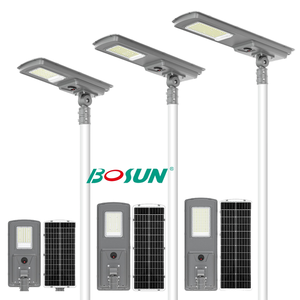
Dusk to Dawn All-in-One Integrated Solar Street Light
- Efficacy: 180-200 lm/W ultra-bright LED
- Battery: Deep-cycle LiFePO4 pack
- Protection: IP67 Waterproof & IK10 Die-cast
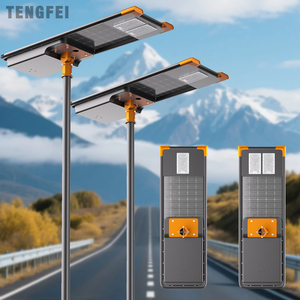
High-Efficiency Commercial Split Solar Street Lighting System
- PV Panel: Adjustable Mono 100W-300W
- Backup: 5-7 rainy days autonomy
- Applications: Arterial roads & highways
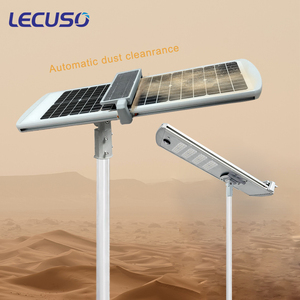
Heavy-Duty Robotic Self-Cleaning Solar Street Light (30W-150W)
- Maintenance: Dual robotic brush system
- Resilience: Snow & dust clearing tech
- Ideal for: Agricultural & dusty industrial zones
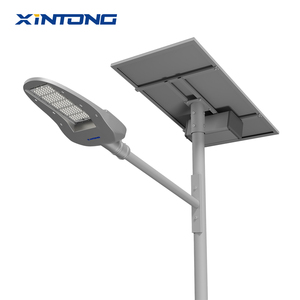
Municipal Highway Split Solar Street Luminaire (60W-150W)
- Optics: Type II/III roadway distribution
- Controller: Smart MPPT with IoT mesh
- Lifespan: >100,000 hours (L70)
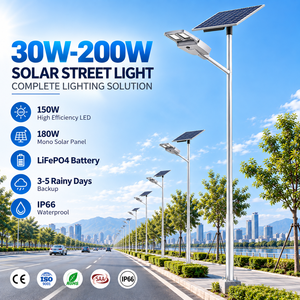
All-in-Two Modular Solar Street Lamp with Internal Battery
- Power: 80W / 100W / 150W LED
- Battery Enclosure: Thermal protected base
- Standard: CE / RoHS / IP66 Certified
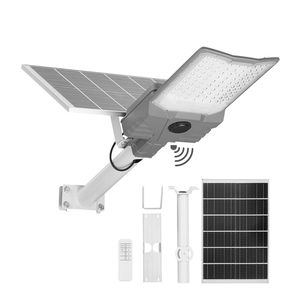
Ultra High-Power Master Flood & Area Light System
- Output: High-lumen broad coverage floodlight
- Angle: 240° ultra-wide lighting span
- CCT: 6500K daylight precision visibility
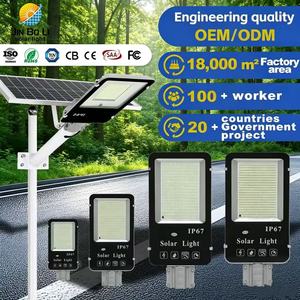
Remote-Controlled Commercial Split Lighting (50W-300W)
- Control: Wireless RF & microwave sensor
- Housing: Corrosion-resistant aluminum
- Rating: IP67 completely weatherproof
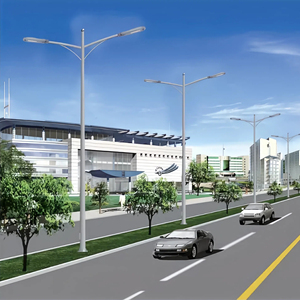
Commercial Versatile Heavy-Duty Solar Luminaire (60W-120W)
- Value: High ROI for commercial developments
- PV Tech: High-efficiency PERC Monocrystalline
- Compliance: Fully aligned with EU norms
Navigating Serbia’s Solar Street Lighting Infrastructure: An Industry Whitepaper
As Serbia advances its National Energy and Climate Plan (NECP) alongside the "Green Agenda for the Western Balkans," municipal authorities, civil engineering firms, and industrial site developers across Belgrade, Novi Sad, Niš, and Kragujevac are rapidly phasing out legacy high-pressure sodium (HPS) and grid-tied discharge lamps. The transition to heavy-duty off-grid solar street lighting represents not merely an ecological upgrade, but a critical strategic shield against grid instability, volatile electricity tariffs, and high trenching/cabling expenses along rural and highway arterial corridors.
However, procuring solar street lighting for Serbia presents unique geopolitical, technical, and environmental challenges. Situated between 42° N and 46° N latitudes, Serbia experiences pronounced seasonal solar radiation variances—ranging from peak summer insolation of over 6.5 kWh/m²/day in Southern Pomoravlje to winter troughs dipping below 1.8 kWh/m²/day in Northern Vojvodina and mountainous regions like Kopaonik and Zlatibor.
Key Technical Requirement for Serbian Tenders: Solar luminaires exported to Serbia must integrate specialized low-temperature LiFePO4 battery management systems (BMS) with self-heating thermal jackets, high-efficiency PERC solar cells configured at 38°–45° tilt angles, and IP67/IK10 die-cast enclosures built to withstand heavy snow loading, freezing rain, and high Balkan wind pressures (up to 120 km/h).
Localized Serbia Solar Lighting Market Trends & Macro Drivers
The demand for high-reliability Chinese solar street lighting manufacturers serving Serbia has surged exponentially due to three core macroeconomic catalysts:
1. Expo 2027 & Smart Infrastructure
With Belgrade hosting Specialised Expo 2027, large-scale urban regeneration, bypass road expansions (E75, E763), and public space modernization projects require fast-deployable, zero-grid-cost lighting solutions that meet strict EU architectural and safety benchmarks.
2. Industrial Zone Expansion
Industrial parks in Subotica, Zrenjanin, and Šabac hosting European and Asian manufacturing hubs require reliable perimeter security and logistical access lighting without waiting 12–18 months for municipal grid connection approvals.
3. Western Balkan Green Financing
Access to European Bank for Reconstruction and Development (EBRD) green funding mandates strict carbon-offset verification, high luminous efficacy (>160 lm/W), and recyclable battery chemistry (LiFePO4 over hazardous Lead-Acid).
Engineering Heavy-Duty Resilience for Serbian Climatic Realities
Standard off-the-shelf tropical solar street lights often fail within their first winter in Serbia. Common failure modes include freeze-throttled battery charging, snow accumulation obscuring flat-mounted PV panels, and structural joint cracking under ice loads. To guarantee continuous year-round operation (365-night autonomy), top-tier Chinese exporters engineering for Serbia incorporate specialized architectural enhancements:
| Engineering Dimension | Standard Tropical Solar Lights | Serbia Heavy-Duty Export Specification |
|---|---|---|
| Battery Thermal Operating Range | -10°C to +45°C (No heating element) | -30°C to +65°C (Integrated BMS with automatic silicone heating pad activation below 0°C) |
| PV Panel Tilt & Frame Mechanics | Fixed 15°–20° horizontal frame | Adjustable 35°–45° South-facing inclination with hydrophobic anti-snow coating to slide off snow accumulation |
| LED Luminaire Optics (EN 13201) | Symmetrical 120° flooding (high glare) | Asymmetrical Type II/III Batwing Lenses (Zero backlight spill, customized M1 to M5 road class compliance) |
| Enclosure & Structural Integrity | Plastic / Thin Aluminum (IP65 / IK07) | ADC12 High-Pressure Die-Cast Aluminum with AkzoNobel anti-corrosion coating (IP67 / IK10 impact certified) |
| MPPT Controller Intelligence | Basic PWM / Standard MPPT | Adaptive Smart IoT MPPT with dual-core 4G/Zigbee telemanagement, automatic dimming, and motion radar fallback |
Localized Application Scenarios across Serbia
Deploying heavy-duty solar street lights requires granular adaptation to specific Serbian geographic and infrastructural topography:
Highways & Expressways (A1 / A2 / A5 Corridors)
Interchanges, rest areas, and toll booths along Corridor X require high-lumen 100W–150W Split-Type Solar Luminaires mounted on 10m to 12m hot-dip galvanized steel poles. High-capacity battery reserves ensure 100% illumination through extended 5-day fog spells in the Morava River Valley.
Municipal Urban & Residential Neighborhoods
Suburban districts in Belgrade (e.g., Borča, Surčin, Zemun) and Novi Sad utilize Integrated All-in-One and All-in-Two Systems (40W–80W). Compact footprints and quiet aesthetics fit seamlessly into parks, pedestrian walkways, and residential streets without disruptive road trenching.
Agricultural Plains & Dust-Prone Agro-Complexes
Vojvodina’s vast agricultural plots and processing facilities suffer heavy dust accumulation during harvest seasons. The Robotic Self-Cleaning Solar Street Light features automated daily wiper routines, maintaining peak solar charging efficiency up to 98% without manual labor.
OEM & Enterprise Advantages: Why Serbian Importers Partner with Leading Chinese Manufacturers
As a world-leading manufacturer specializing in professional solar outdoor illumination, our manufacturing infrastructure provides Serbian distributors, municipal contractors, and engineering procurement firms with distinct competitive moats:
R&D & Photometric Precision
Our state-of-the-art optical laboratory utilizes darkroom goniophotometers to supply precise DIALux simulation reports (.IES files) tailored to Serbian road geometry, ensuring contract compliance prior to shipment.
Custom OEM/ODM Engineering
From customized bracket sleeve diameters (60mm / 76mm / 89mm) to match existing municipal poles, to branding, RAL color powder coating, and specialized battery sizing, we deliver fully customized white-label solutions.
Rigorous QA & CE Compliance
Every production batch undergoes 100% automated aging testing, thermal shock chambers (-30°C to +80°C), IP68 water immersion testing, and vibration testing to guarantee flawless compliance with Serbian customs and EU directives.
Frequently Asked Questions by Serbian Buyers
Essential guidelines regarding shipping, customs duties, technical standards, and warranty enforcement for Serbian engineering projects.
How do Chinese heavy-duty solar lights perform in Serbia's winter (-15°C to -25°C)?
Our heavy-duty solar street lights engineered for Serbia feature Grade-A Lithium Iron Phosphate (LiFePO4) battery packs integrated with intelligent thermal management systems (BMS). When ambient temperatures drop below 0°C, internal micro-heating jackets automatically regulate battery core temperatures to ensure safe charging and discharge efficiency down to -30°C without capacity degradation.
What logistics routes and ports are used for shipping solar lights from China to Serbia?
Cargo is typically shipped via container ocean freight from Chinese ports (Shenzhen, Ningbo, Shanghai) to major European gateway ports: Port of Piraeus (Greece), Port of Rijeka (Croatia), or Port of Bar (Montenegro). From these ports, goods are transported via bonded rail or truck transport directly to customs terminals in Belgrade, Novi Sad, or Niš under TIR transit procedures.
What certifications are required for customs clearance and public tenders in Serbia?
Products must comply with EU harmonized standards adopted by Serbia. Key documentation includes CE certification (LVD/EMC directives), RoHS compliance for environmental safety, ISO 9001 quality management, IP66/IP67 ingress test reports, IK10 impact protection, and LM-79 / LM-80 photometric certificates for LED chips. We provide full compliance documentation packages for Serbian tender submissions.
What optimal tilt angle should be configured for solar panels in Serbia?
For year-round performance in Serbia (latitude ~44° N), solar panels should be installed at an inclination angle of 38° to 45° facing due South. This steep angle maximizes winter sun capture when the solar elevation is low and allows snow to slide off the panel surface naturally under gravity.
Can you provide DIALux simulation lighting layouts for Serbian road projects?
Yes. Our senior optical engineering team provides comprehensive DIALux illuminance simulations based on Serbian road standards (EN 13201). By inputting your road width, pole height, spacing distance, and target light class (M1 to M5 or P1 to P6), we deliver complete photometric reports ensuring zero compliance risk for municipal contractors.
What is the warranty policy and spare parts availability?
We provide a standard 3 to 5-year full comprehensive factory warranty covering PV panels, LED chips, MPPT controllers, and LiFePO4 battery modules. We supply 2% to 3% spare components free of charge with full-container shipments (FCL) to enable immediate maintenance support for Serbian regional projects.
Ready to Power Your Serbian Lighting Infrastructure Project?
Connect directly with our senior application engineers. Receive localized engineering advice, custom OEM pricing, and instant DIALux lighting calculations tailored for Serbia.