
Solar Lighting Blog & News
Latest news, technical guides, and expert perspectives on smart solar street lights, off-grid infrastructure, and clean energy technology.
Top-Rated Self-Cleaning & Split Solar Street Lights for Nigeria
Direct manufacturer supply with SONCAP compliance, LiFePO4 battery backup, and IP67 dust protection
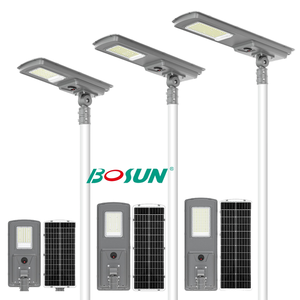
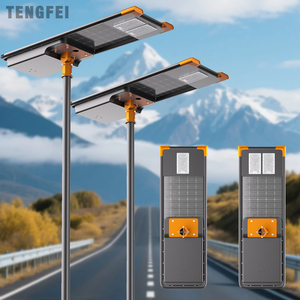
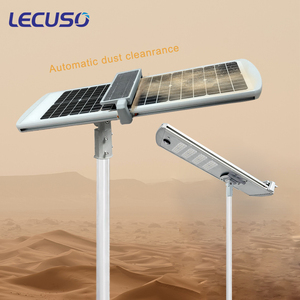
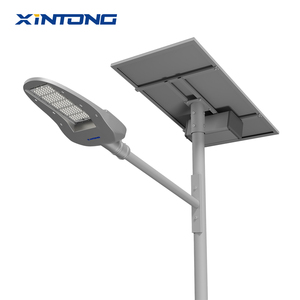
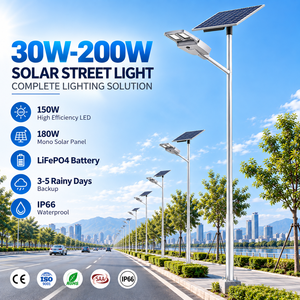
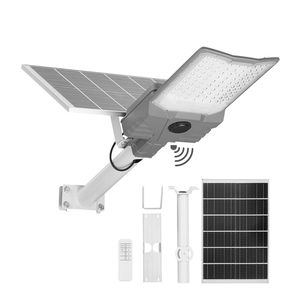
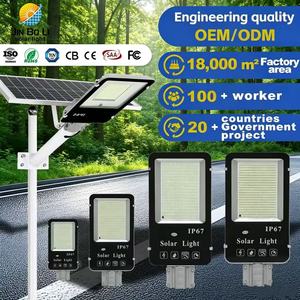
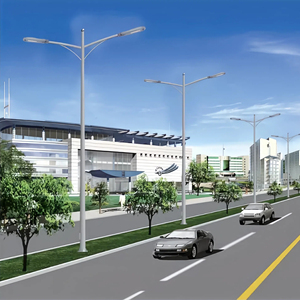
1. Executive Summary & Nigeria's Solar Infrastructure Landscape
Nigeria's rapid urbanization and ongoing federal highway expansion projects require reliable, low-maintenance outdoor lighting systems. However, municipal authorities and private EPC developers across the country face two severe operational bottlenecks: severe power grid instability and environmental degradation caused by intense dust accumulation during the annual Harmattan dry season (November to March).
Standard fixed photovoltaic (PV) street lights deployed in regions such as Kano, Kaduna, Maiduguri, and Abuja often experience a catastrophic drop in power generation output—up to 60% to 75% power loss within just 3 weeks—due to fine airborne dust and particulate matter settling on the panel glass. In southern coastal cities like Lagos and Port Harcourt, saline humidity combines with soot from heavy traffic to form a sticky grime layer that severely degrades solar conversion efficiency.
Automated self-cleaning solar street lighting systems solve this operational crisis by utilizing integrated, robotic wiper blades or rotating bristle brushes powered by auxiliary solar energy. By performing automated cleaning sweeps twice daily (typically at dawn and dusk), these modern systems maintain peak PV efficiency, eliminate dangerous manual cleaning costs along high-speed expressways, and ensure 100% uninterrupted illumination throughout the year.
2. Technical Mechanics of Auto-Cleaning Solar Technology
Engineered self-cleaning solar street lights are built around specialized electromechanical components optimized for long service lives under severe thermal stress:
A. Robotic Cleaning Mechanisms
The self-cleaning assembly utilizes an integrated brushless DC motor enclosed within an IP68 waterproof housing. The driving mechanism operates via a high-precision stainless-steel lead screw or heavy-duty timing belt that moves a dual-component cleaning assembly across the tempered glass cover of the solar module.
- Dry Dust Brushing: Soft, anti-static carbon-fiber brushes gently dislodge fine Saharan sand particles without scratching the anti-reflective glass coating.
- Moist & Soot Scraping: Durable rubber wiper blades scrape away humid coastal dew film and diesel soot deposits common in industrial corridors like Lekki, Ikeja, and Onitsha.
- Automatic Obstacle Detection: Built-in current monitoring senses mechanical resistance (such as bird droppings or debris), automatically reversing the cleaning movement to prevent motor burnout.
B. Smart Power Management & MPPT Efficiency
The auto-cleaning process consumes minimal auxiliary power—typically less than 0.5% of total daily energy harvest. Coupled with advanced Maximum Power Point Tracking (MPPT) charge controllers operating at 98.5% tracking efficiency, these units maintain continuous 365-day operation even during prolonged cloudy weather or intense Harmattan haze.
3. Top 10 Auto Cleaning Solar Street Light Suppliers & Exporters Serving Nigeria
Below is a comparative evaluation of the leading global manufacturers and direct OEM exporters supplying self-cleaning and high-performance commercial solar street lighting systems to the Nigerian market in 2026.
| Rank & Supplier Name | Origin / Sourcing | Cleaning Technology | Battery Type & Life | IP Rating | Key Nigerian Market Fit |
|---|---|---|---|---|---|
| 1. EnGoPlanet Energy Solutions | USA / Global OEM | Smart Robotic Wiper + Airflow | LiFePO4 (4,000+ Cycles) | IP67 / IK10 | Smart Highway Infrastructure & Federal Tenders |
| 2. Nomo Group Technology | China (OEM Direct) | Dual-Brush Auto-Cleaner | LiFePO4 Grade A | IP66 | Dusty Northern State Highways (Kano, Sokoto) |
| 3. SLOER Solar Lighting | China Export Hub | Track-Driven Rubber Wiper | Lithium Iron Phosphate | IP65 / IP66 | Commercial Logistics Parks & State Roads |
| 4. SunMaster Solar | China Export Hub | Rotating Bristle System | LiFePO4 Modular | IP65 | Municipal Housing Estates & Urban LGAs |
| 5. Sokoyo Solar Lighting | China Export Hub | Single-Pass Auto Wiper | Deep Cycle Gel / Lithium | IP65 | Rural Electrification Projects |
| 6. Clenergy Smart Lighting | Australia / Asia | Pneumatic & Mechanical Wiper | LiFePO4 High Temp | IP67 | Coastal Heavy Industrial Zones (Lekki, PH) |
| 7. Leadson Energy | China Export Hub | Self-Wiping Integrated Slider | Lithium Ion / LiFePO4 | IP66 | Commercial Plaza & Parking Lots |
| 8. Philips (Signify Solar) | Europe / Global | High-Efficiency Fixed / Custom | LiFePO4 Premium | IP66 | Institutional & University Campuses |
| 9. Greenshine New Energy | USA Export | Heavy-Duty Commercial Split | LiFePO4 Modular | IP67 | Federal Road Safety & Border Posts |
| 10. BBE LED Lighting | China Export Hub | Standard Auto-Cleaner Option | Lithium Ternary / LiFePO4 | IP65 | Secondary Urban Arterial Roads |
4. Localized Application Scenarios Across Nigeria
Selecting the correct solar lighting architecture requires matching hardware specifications with regional environmental conditions in Nigeria:
A. Federal Highways & Inter-State Expressways
Target Locations: Lagos-Ibadan Expressway, Abuja-Kaduna Highway, Enugu-Port Harcourt Expressway.
High-speed corridors require 80W–150W split or self-cleaning solar street lights mounted at 8 to 12 meters with specialized Type II/III optical lens distributions. Auto-cleaning mechanisms ensure continuous 180+ lm/W illumination without lane closures for maintenance.
B. Industrial Hubs & Free Trade Zones
Target Locations: Lekki Free Trade Zone, Agbara Industrial Estate, Ogun Guangdong FTZ.
Heavy truck emissions and airborne industrial particulate matter demand heavy-duty IP67 self-cleaning units with salt-spray resistant anodized aluminum housings to resist harsh coastal and chemical atmospheric environments.
C. Northern State Municipal Roads (Harmattan Zones)
Target Locations: Kano Municipal, Maiduguri Metropolis, Sokoto Township, Zaria Roads.
These regions experience severe sandstorms and dust storms. Daily automated dual-brush cleaning schedules combined with high-temperature LiFePO4 batteries (tested up to 65°C internal cell temperature) are mandatory to prevent premature failure.
D. Commercial Real Estate & Residential Estates
Target Locations: Banana Island (Lagos), Victoria Island, Maitama (Abuja), Eko Atlantic City.
Sleek All-In-One and All-In-Two solar street lighting systems provide clean aesthetic integration with motion-sensing radar dimming to optimize battery life while maintaining estate security.
5. Core Engineering Advantages: Why Upgrade to Self-Cleaning Solar Systems?
Investing in auto-cleaning solar street lighting yields measurable financial and operational advantages over standard fixed solar lighting:
- Substantial ROI & Maintenance Cost Elimination: Manual high-access lift trucks and cleaning crews on busy Nigerian expressways cost millions of Naira annually in rental, fuel, and safety labor. Auto-cleaning systems eliminate manual cleaning requirements, delivering full capital expenditure payback in 14 to 18 months.
- Extended Battery Life & Thermal Management: Standard solar systems under dust cover operate at reduced efficiency, forcing batteries into deep discharging cycles that destroy battery chemistry. Consistent PV energy generation preserves battery health, supporting over 4,000 charge-discharge cycles (approx. 10–12 years lifespan).
- Smart Remote IoT Monitoring: Integrated 4G/5G and LoRa connectivity allow municipal engineers to remotely monitor panel energy yields, trigger custom cleaning cycles, and adjust lighting dimming profiles directly via desktop or mobile dashboards.
- SONCAP & Federal Standards Compliance: Quality manufacturers provide full documentation compliance required by the Standards Organisation of Nigeria (SONCAP), ensuring seamless customs clearance and public procurement eligibility.
6. Frequently Asked Questions (FAQ) for Nigerian Buyers
Q1: How often does the automated cleaning system run?
The cleaning cycle is fully programmable via smart remote controller or IoT software. By default, systems are pre-set to run twice daily—once at dusk before lighting turns on, and once at dawn after charging begins. During peak Harmattan dust periods, cycles can be increased to 3-4 times daily.
Q2: Are self-cleaning solar street lights durable against extreme heat in Northern Nigeria?
Yes. Premium self-cleaning units use high-grade LiFePO4 (Lithium Iron Phosphate) battery cells paired with intelligent Thermal BMS protection designed to withstand ambient operating temperatures from -20°C up to +75°C without thermal runaway.
Q3: What certifications are mandatory for importing solar lights into Nigeria?
All solar street lighting imported into Nigeria must comply with SONCAP (Standards Organisation of Nigeria Conformity Assessment Programme) certification, alongside international standards including CE, RoHS, ISO9001, and IP66/IP67 ingress test reports.
Q4: How long do the cleaning brush components last before requiring replacement?
The anti-wear rubber wipers and anti-static carbon brushes are engineered for high UV resistance and mechanical longevity, carrying a service lifespan of 5 to 7 years. Replacement brush modules are modular and easily swappable.
Q5: What is the lead time for B2B container shipments to Lagos or Port Harcourt ports?
Standard manufacturing lead time for bulk B2B orders is 15–20 days. Sea freight shipping to Apapa/Tin Can Port (Lagos) or Onne Port (Port Harcourt) typically takes 30 to 40 days, including export customs clearance processing.
Q6: Can we request custom wattage, pole height, or smart IoT features for government tenders?
Yes. Direct OEM exporters offer comprehensive custom engineering, including custom luminaire wattage (30W to 300W), specialized optical beam angles, camera mount integration, smart pole Wi-Fi hotspots, and custom branding for state projects.
Need High-Performance Solar Lighting for Your Next Nigerian Project?
Contact our engineering export team today for direct factory pricing, technical datasheets, photometrics (IES files), and SONCAP-compliant B2B quotation packages.