
Solar Lighting Blog & News
Latest news, technical guides, and expert perspectives on smart solar street lights, off-grid infrastructure, and clean energy technology.
Commercial Solar Weather & Lighting Systems
Engineered by leading OEM/ODM solar pole factories for high solar irradiance, severe weather monitoring, and 100% off-grid reliability in Sub-Saharan Africa.
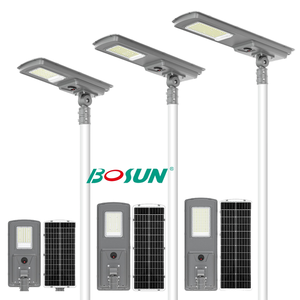
Dusk to Dawn All in One Solar Street Light Outdoor Waterproof
Integrated monocrystalline PV panel with intelligent MPPT charge controller and weather-sealed LiFePO4 battery pack for 365-night zero-grid illumination.
Contact Us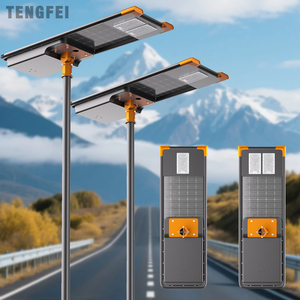
Hot Selling Low-energy Split Solar Street Light Outdoor Led Street Lamp
Modular split-type configuration optimized for high wind resistance and heavy tilt angles, ideal for high-latitude solar capture in the Western Cape.
Contact Us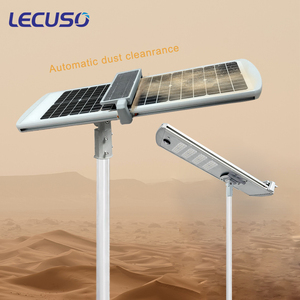
30W-150W Automatic Auto Clean Self Cleaning Solar Street Light
Patented dual-robotic wiper mechanism removes dust and red-sand accumulation, critical for mining hubs like Rustenburg and arid Northern Cape solar sites.
Contact Us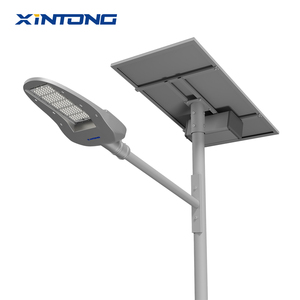
Road Light 60W-150W High-Lumen Split Solar Street Light
Precision Batwing optical lens distribution delivering up to 160 lm/W for highway arterial routes (N1, N3) complying with SANRAL road lighting specifications.
Contact Us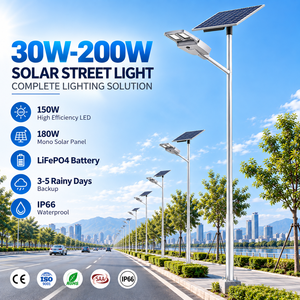
All In Two LED Solar Powered Light IP66 with Extended Battery Backup
Rugged IP66 dual-module platform with 7-day rainy/cloudy day battery reserve designed to endure extended load-shedding blackouts.
Contact Us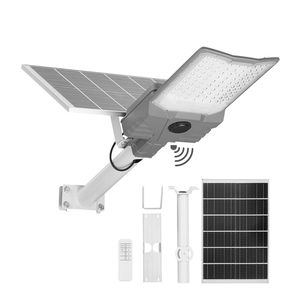
High-Powered 900,000LM Outdoor Dusk-Dawn Solar LED Floodlight
Ultra-high output 6500K CCT floodlighting matrix for expansive security perimeters, logistics depots, and municipal freight yards in Gauteng.
Contact Us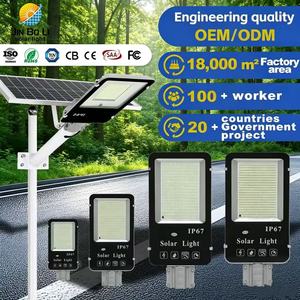
Remote Control IP67 Solar LED Light (50W-300W) Waterproof
RoHS & CE certified split smart lamp with 2.4G wireless RF controller for remote dimming profiles and battery diagnostic telemetry.
Contact Us
Commercial Heavy-Duty Split All-in-One Solar Weather Pole Node
Factory-customized multi-sensor mounting platform designed for integrating weather sensors, IoT gateways, and environmental telemetry.
Contact Us
Sub-Saharan Infrastructure Context: Mitigating Load Shedding & Grid Instability
South Africa’s public lighting and environmental telemetry infrastructure face an unprecedented structural challenge. Chronic electricity supply deficits—manifested through severe Eskom Load Shedding (Stages 1 through 8)—have exposed the vulnerability of traditional grid-connected municipal lighting and weather monitoring stations. When national grid power trips, vital transportation corridors lose illumination, public safety drops in urban townships, and critical real-time meteorological data collection for agricultural and industrial logistics ceases.
To address this crisis, South African municipal engineering departments, provincial road authorities (such as SANRAL), mining conglomerates in the Bushveld Igneous Complex, and commercial agricultural enterprises are pivoting toward zero-grid, self-sustaining smart infrastructure. The integration of Solar Weather Station Light Poles represents an evolutionary leap in municipal asset management. Rather than deploying standalone, single-purpose streetlights, global factories and direct exporters are supplying multi-functional, off-grid micro-utility nodes.
As leading global manufacturers specializing in custom solar pole engineering, our export solutions for South Africa combine aerospace-grade structural hot-dip galvanization, high-density Lithium Iron Phosphate (LiFePO4) energy storage, high-efficiency monocrystalline solar panels, and modular IoT weather sensor arrays. These systems operate entirely independent of Eskom’s transmission network, guaranteeing 100% uptime, zero carbon footprint, and actionable microclimate intelligence.
Technical Architecture: The Integrated Solar Meteorological Pole Node
An advanced Solar Weather Station Light Pole is an integrated physical-digital micro-system engineered to withstand the demanding environmental dynamics of Sub-Saharan Africa. The system architecture unifies energy harvest, storage, optical illumination, environmental telemetry, and wireless data backhaul within a single structural footprint.
Equipped with N-type monocrystalline solar cells reaching up to 23.5% conversion efficiency. Available in vertical wrap-around cylindrical solar pole configurations or traditional top-mounted adjustable angle brackets to maximize solar yield in regions from Limpopo to the Western Cape.
Industrial-grade Lithium Iron Phosphate battery banks with built-in thermal protection, delivering over 4,000 deep discharge cycles at 80% DOD. Features smart battery management systems (BMS) rated for extreme Highveld summer heat (+45°C) and winter frost.
Integrated multi-parameter ultrasonic weather sensor monitoring wind speed/direction, ambient temperature, relative humidity, barometric pressure, precipitation depth, solar irradiance (pyranometer), and airborne particulate matter (PM2.5/PM10).
IoT Connectivity & Cloud Telemetry Platform
The sensor payload interfaces via RS485 / Modbus RTU protocols to an onboard industrial IoT gateway. Data is transmitted securely over cellular 4G LTE, NB-IoT, or LoRaWAN networks directly to municipal dashboard platforms or private cloud infrastructure. This real-time visibility enables road authorities to detect severe weather hazards (such as flash flooding, extreme gales, or thick fog on mountain passes) and dynamically adjust LED lighting brightness profiles to ensure commuter safety while conserving energy.
Localized South African Application Scenarios
South Africa presents diverse topographical, climatic, and industrial environments requiring specialized off-grid engineering. Exporting solar weather poles to this market requires strict tailoring to regional deployment challenges:
1. Mining & Heavy Industrial Hubs
Rustenburg, Witbank, Secunda, Richards Bay
In coal, platinum, and gold mining operations, air quality monitoring is a critical safety and regulatory requirement. Solar weather station poles deployed along haul roads and processing plants monitor dust emissions (PM2.5/PM10) and hazardous gas concentrations while providing high-lumen security lighting during grid blackouts.
2. National Highway Corridors
N1 (Joburg to Cape Town), N3 (Joburg to Durban), N4 Toll Route
High-speed freight routes require reliable illumination at intersections, toll plazas, and weigh bridges. Integrated ultrasonic anemometers detect cross-wind gusts on high bridges, broadcasting warnings to highway management centers while maintaining zero-grid street lighting.
3. Coastal Urban & Port Corridors
Cape Town, Durban Port, Saldanha Bay, Gqeberha
Coastal applications face extreme marine atmospheric corrosion (C5-M environment) and intense wind shears ("Cape Doctor" wind speeds over 120 km/h). Poles engineered with ISO 1461 hot-dip galvanization and fluorocarbon coating survive corrosive salt spray while tracking coastal humidity and storm fronts.
4. Utility-Scale Solar PV Farms
Northern Cape (Upington, De Aar), Free State
South Africa’s massive solar farms require localized solar irradiance (pyranometer) data to benchmark PV module efficiency and calculate performance ratios. Solar weather light poles act as perimeter security lighting and distributed meteorological test points across large solar parks.
South African Market Trends & Procurement Drivers
B2B buyers, EPC contractors, and municipal tender boards in South Africa are evaluating smart solar pole exporters through a sophisticated set of criteria focused on total cost of ownership (TCO) and operational risk reduction:
| Market Trend / Driver | Traditional Grid-Tied Lighting | Solar Weather Light Pole System | Strategic South African Advantage |
|---|---|---|---|
| Load Shedding Impact | 100% blackout during load shedding | 0% impact (100% off-grid battery autonomy) | Guarantees public safety & uninterrupted weather data collection |
| Eskom Tariff Escalation | Vulnerable to 12-18% annual electricity rate hikes | Zero recurring electricity charges | Locks in fixed capital costs; zero operational energy expenditure |
| Theft & Anti-Vandalism | High copper cable theft risk along road trenches | Integrated top-mounted battery & no trench cabling | Internal pole locking doors & elevated batteries deter theft |
| Environmental Compliance | High carbon footprint via coal-fired Eskom grid | 100% clean solar energy harvest | Supports municipal Carbon Neutrality Targets & ESG reporting |
| Data Telemetry Value | None (Single purpose illumination) | Real-time climate & air monitoring via IoT | Enables smart city decision making and disaster early warning |
Furthermore, compliance with local standards such as SANS (South African National Standards) for structural stability, ICASA approval for wireless IoT transmissions, and strict adherence to environmental regulations are driving South African buyers toward certified tier-1 global manufacturing partners.
Why Source From Our OEM/ODM Export Factory?
As a world-class designer and manufacturer of smart solar street poles and IoT micro-utility systems, our enterprise delivers unparalleled technological authoritativeness, manufacturing precision, and global logistics support:
From raw steel laser cutting, robotic welding, and hot-dip galvanization to surface powder coating and optical testing, all operations occur under rigorous ISO9001 and ISO14001 certified conditions.
We customize multi-sensor mounting brackets, internal wiring harnesses, and power management units to seamlessly integrate sensors from Vaisala, Campbell Scientific, or custom OEM IoT platforms.
With over 500 major utility and municipal infrastructure projects successfully delivered across 40+ countries, our solutions are battle-tested in extreme desert, coastal, and urban environments.