
Solar Lighting Blog & News
Latest news, technical guides, and expert perspectives on smart solar street lights, off-grid infrastructure, and clean energy technology.
Factory-Direct Solar Pathway & Street Lighting Systems
High-efficiency, weatherproof solar lighting solutions manufactured for direct B2B deployment across Osaka Prefecture and Kansai commercial projects.
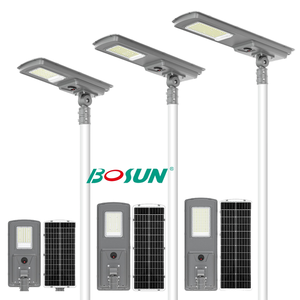
Dusk to Dawn All in One Solar Street Light Outdoor Waterproof
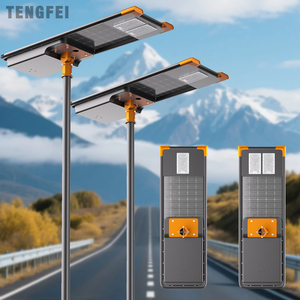
Hot Selling Low-energy Split Solar Street Light Outdoor Led Street Lighting Lamp
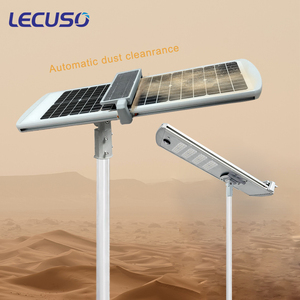
High Quality 30w-150w Automatic Auto Clean Self Cleaning Solar Street Light
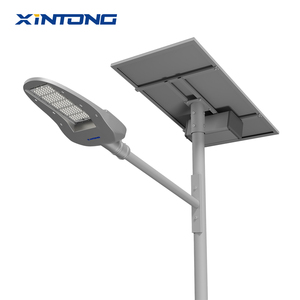
Road Light 60W-150W Solar Street Lamp Split Solar Street Light
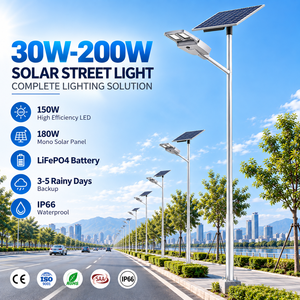
All In Two Lamp LED Solar Powered Street Light IP66 with Battery Backup
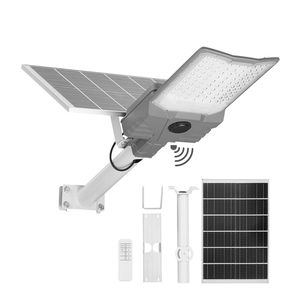
High-Powered Solar Street Light Outdoor Dusk-Dawn Split LED Floodlight
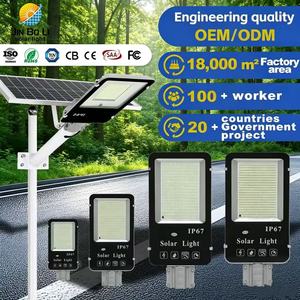
Remote Control IP67 Solar LED Light 50W-300W Split Type Street Lamp

Commercial Split All in One Solar Street Light System Manufacture
Executive White Paper: Solar Pathway Lighting Infrastructure in Osaka
As the economic engine of the Kansai region and a global hub for smart city innovation, Osaka Prefecture is undergoing unprecedented urban renewal. Driven by the Osaka Smart City Strategy 2030 and high-profile developments surrounding Expo 2025 on Yumeshima Island, municipal authorities, civil engineering contractors, and private developers are rapidly shifting from legacy grid-tied AC lighting toward autonomous off-grid solar pathway lighting systems.
However, procuring solar pathway lighting for Osaka demands specialized engineering solutions. Unlike standard solar projects, Osaka presents a complex microclimate characterized by severe Pacific typhoons, high summer humidity, coastal salt-air exposure along Osaka Bay, and strict Japanese Industrial Standards (JIS C 8105). B2B procurement managers and municipal planners require factory-direct partners capable of manufacturing customized, structural-grade solar lighting poles engineered specifically for Kansai’s geographic and environmental operating parameters.
Kansai Environmental & Structural Engineering Constraints
To achieve a 10 to 15-year operational lifespan without grid connectivity, solar pathway light manufacturers must address four crucial local stress factors inherent to the Osaka market:
- Category 16-17 Typhoon Resistance (Wind Speeds up to 60 m/s): Osaka experiences intense typhoon paths between August and October. Custom pathway poles must utilize Q235B or 6063-T6 extruded aluminum structural alloys, verified by Finite Element Analysis (FEA) to withstand high dynamic pressure.
- Coastal Salt Fog Resistance (ISO 9227 C5-M Standard): For installations along Osaka Bay, riverfront promenades (Nakanoshima, Dotonbori), and maritime parks, luminaire housings require hot-dip galvanization (minimum 85 µm thickness) paired with double-layer electrostatic fluorocarbon powder coating.
- Thermal Resilience for Hot Summers & Cold Winters: Osaka’s summer ambient temperatures frequently exceed 38°C with ground temperatures reaching over 50°C. Energy storage enclosures must incorporate heat-dissipation fin architectures and intelligent thermal throttling within the Battery Management System (BMS) to protect Lithium Iron Phosphate (LiFePO4) cells.
- Zero Light Pollution & BUG Rating Compliance: Public parkways, residential dancini complexes, and riverbank trails in Osaka strictly regulate light trespass. Photometric distributions must yield zero upward light output (U0 rating) to comply with local dark-sky urban environmental protection laws.
Technical Architecture & System Matrix
As a direct manufacturer, our production engineering relies on premium-grade components designed to minimize lifecycle costs (TCO) while maximizing energy harvesting efficiency. Below is an engineering comparison matrix highlighting the performance differences between standard commercial solar lights and our Osaka-Spec Heavy Duty Solar Pathway Systems.
| Engineering Parameter | Standard Commercial Solar Light | Osaka-Spec Industrial Solar Pathway System | Operational Advantage for Osaka B2B Projects |
|---|---|---|---|
| Solar PV Technology | Poly-crystalline (16-18% Efficiency) | N-Type Monocrystalline TOPCon (>22.5% Efficiency) | +35% higher energy yield during cloudy Kansai winter days |
| Battery Chemistry | Ternary NCM / Recycled LiFePO4 | Grade-A New LiFePO4 (EV Grade Cell) | 6,000+ deep cycles @ 80% DOD; 10+ year service life |
| Controller Technology | Basic PWM Controller (70-75% Eff.) | Smart MPPT with IoT Telemetry (98.5% Eff.) | Real-time dimming, rain-sensing, maximum power extraction |
| Enclosure Protection | IP65 Plastic / Die-Cast Aluminum | IP67 / IK10 Marine 6063 Aluminum + C5-M Coating | Complete resistance to Osaka Bay salt mist & physical impact |
| Wind Speed Tolerance | 25 – 35 m/s (Standard Breeze) | up to 60 m/s (Super Typhoon Rated) | Zero structural failure risk during extreme typhoon weather |
| Optical Distribution | Symmetrical 120° Flood Lenses | Asymmetrical Type II / Type III Batwing Lenses | Uniform walkway illuminance, elimination of dark spots & glare |
Advanced Energy Management: Autonomous 365-Night Illumination
During Japan's rainy season (Tsuyu) in early summer and overcast winter periods, continuous solar generation drops significantly. Our solar pathway lighting systems integrate adaptive dimming power algorithms. By continuously monitoring real-time state-of-charge (SOC) and historical solar generation profiles over preceding 72 hours, the intelligent MPPT controller automatically modulates LED output via microwave motion sensing.
When no pedestrian activity is detected along a park pathway or sidewalk, the luminaire operates at a ambient 20-30% standby output. Upon detecting motion within an 8 to 12-meter radius, the system instantly restores 100% full lumen output. This dynamic power regulation ensures up to 7 consecutive days of continuous autonomy without grid intervention.
Localized Osaka Application Scenarios
Our solar pathway lighting solutions are designed for rapid installation without the massive disruption, utility permitting, and financial expense of underground trenching, electrical wiring, and AC transformer installation. Key application areas across Osaka Prefecture include:
Coastal Waterfront Parks & Yumeshima Bay Walkways
Engineered with salt-fog anti-corrosion coatings and sealed IP67 battery pods, our split and all-in-one solar pathway poles deliver continuous pedestrian illumination along Osaka Bay, Expo 2025 visitor corridors, and seaside promenades where salt mist quickly destroys standard luminaires.
Riverfront Promenades (Nakanoshima & Dotonbori Canals)
Historic and scenic riverwalks require architectural lighting aesthetics that blend with local landscape designs. Off-grid solar poles eliminate the need to break open riverbank stone masonry or historical granite walkways to lay high-voltage cables.
High-Density Residential Estates & Danchi Retrofitted Pathways
Suburban residential housing complexes in Suita, Toyonaka, and Sakai benefit from solar pathway lights equipped with warm 3000K CCT LEDs and motion sensors, providing enhanced nighttime security for elderly residents while preventing light spill into bedroom windows.
Industrial Parks & Logistics Hubs in Higashiosaka
24-hour manufacturing facilities and distribution centers demand dependable perimeter pathway lighting for worker safety. Self-cleaning solar panels ensure zero maintenance even in areas prone to airborne industrial dust and exhaust particulate.
Enterprise Manufacturer Advantages & Factory OEM Capabilities
As a premier global manufacturer specializing in off-grid solar illumination systems, our state-of-the-art production facilities bridge high-volume manufacturing efficiency with rigorous engineering customization. We provide comprehensive OEM and ODM support tailored to Japanese engineering specifications and municipal tender requirements.
Automated Quality Assurance
100% automated SMT surface mounting, integrating LED optical spectroradiometer testing, thermal shock chambers, and salt-spray testing rigs compliant with ISO 9001/14001 guidelines.
OEM & ODM Customization
Custom pole height matching (3m to 12m), RAL color powder coatings, branded luminaire laser-engraving, and custom dimming curve programming for specific municipal energy standards.
Direct Logistics to Osaka Port
Streamlined containerized shipping and clearance directly to Nanko Port / Osaka Port, providing Japanese procurement agencies with reliable lead times, duty documentation, and technical support.
Osaka Commercial Buyer & Engineering FAQ
Below are technical answers to common questions raised by Japanese contractors, civil engineers, and B2B procurement specialists when specifying solar pathway lights for projects in Osaka.
How do your solar pathway lights withstand Osaka’s severe typhoon season?
Our solar pathway poles are structurally certified to withstand typhoon-force wind gusts up to 60 m/s (exceeding standard Category 16 typhoon metrics). Pole shafts utilize heavy-wall Q235B steel or 6063-T6 structural aluminum with reinforced anchor flange foundations calculated using FEA stress modeling. Solar panel mounts feature dual-vibration dampening brackets to prevent structural fatigue during high winds.
What anti-corrosion treatments are applied for installations along Osaka Bay (Yumeshima / Nanko)?
For coastal environments within 5 km of Osaka Bay, we apply an ISO 9227 C5-M compliant anti-corrosion process. Steel poles undergo hot-dip galvanization (min. 85 µm) followed by a specialized epoxy zinc-rich primer and a high-durability fluorocarbon (PVDF) topcoat. Luminaire housings utilize marine-grade die-cast aluminum with 304/316 stainless steel external hardware to prevent galvanic corrosion.
How do the lights perform during Osaka’s extended rainy season (Tsuyu)?
System autonomy is guaranteed through high-density Grade-A LiFePO4 battery banks paired with intelligent MPPT charge algorithms. Even during 5 to 7 consecutive days of heavy cloud cover or continuous rain, the controller dynamically modulates light output using microwave motion detection, preserving power while maintaining continuous dusk-to-dawn safety lighting.
Do your products comply with Japanese Industrial Standards (JIS) and CE/RoHS certifications?
Yes. Our manufacturing facilities produce luminaires compliant with JIS C 8105 (Luminaires - General safety requirements), IEC 62133 (Lithium battery safety), CE, RoHS, and IP67 ingress protection standards. Detailed photometric IES files and test certificates are provided for municipal engineering submissions.
What is the expected lifespan and replacement cycle for the lithium battery in Osaka's climate?
Our EV-grade LiFePO4 battery cells deliver over 6,000 charge/discharge cycles at 80% Depth of Discharge (DOD). Under Osaka’s ambient temperature conditions, the battery system maintains a design life of 10 to 12 years. The battery enclosure is modular, allowing rapid plug-and-play field replacement without dismantling the pole or solar panel.
Can color temperature (CCT) be customized to match traditional Osaka urban aesthetics?
Absolutely. While standard commercial fixtures emit 6000K daylight white, we offer customized warm white (2700K – 3000K) and natural white (4000K) LED chips with high Color Rendering Index (CRI > 80). Warm CCTs are particularly popular for historical parkways such as Nakanoshima, residential walking paths, and traditional garden areas.
What is the standard manufacturing lead time for container orders delivered to Osaka Port?
Standard OEM production lead time is 15 to 20 working days following technical drawing sign-off. Direct sea freight transit from our factory terminal to Osaka Port (Nanko) typically takes 4 to 7 days, allowing for fast, predictable project delivery schedules.
How does the Total Cost of Ownership (TCO) compare to traditional grid-powered lighting?
Off-grid solar pathway lighting reduces initial capital installation costs by 40% to 60% by completely eliminating trenching, conduit laying, cabling, junction box installation, and transformer connections. Operating expenditures (OpEx) drop to zero for electricity, resulting in full capital payback within 2 to 3 years.
Partner with a Trusted Solar Pathway Lighting Manufacturer
Planning a municipal park project, commercial residential development, or waterfront infrastructure build in Osaka? Contact our engineering team today to request photometric layouts, customized IES files, wind load calculations, and direct factory pricing.