
Solar Lighting Blog & News
Latest news, technical guides, and expert perspectives on smart solar street lights, off-grid infrastructure, and clean energy technology.
High-Performance Municipal & Commercial Solar Lighting Systems
Engineered specifically for harsh Australian solar environments, featuring high-efficiency MPPT controllers, grade-A LiFePO4 thermal battery reserves, and robust C5-M anti-corrosion protection.
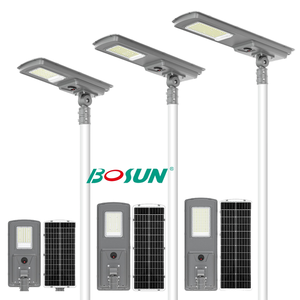
Dusk to Dawn Integrated All-in-One Solar Street Light
- AS/NZS 1158 Category P Compliant
- Grade-A LiFePO4 Thermal Battery
- Smart Microwave Motion Sensor
- IP67 Waterproof & Dustproof
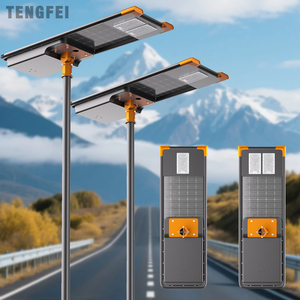
High-Efficiency Split Commercial Solar LED Street Light
- Adjustable Solar Panel Angle Engine
- High-Lumen Philips LED Chipset
- Extended Autonomy (5-7 Rain Days)
- Ideal for Collector Roads & Arterials
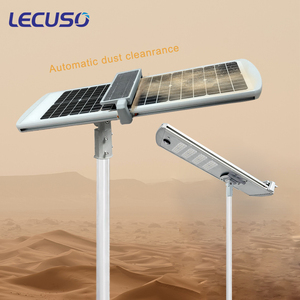
Auto-Clean Robotic Self-Cleaning Solar Street Luminaire
- Automated Dust & Debris Brush
- Optimized for Mining & Outback Regions
- 30W to 150W Modular Output Options
- Maintains Peak Photovoltaic Efficiency
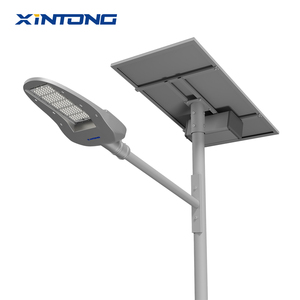
Heavy-Duty Highway Split Solar Street Lighting System
- 60W - 150W High-Intensity Optics
- AS/NZS 1170.2 Wind Region C/D Rated
- MPPT Charge Controller (>98% Eff.)
- Type II / Type III Optics Distribution
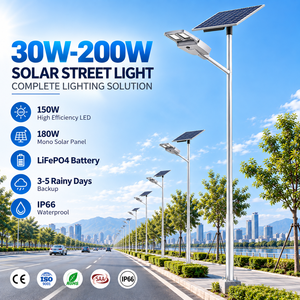
All-In-Two Commercial IP66 Solar Light with Dual Battery
- Integrated Battery-in-Pole Housing
- IP66 Harsh Environment Protection
- Dual Thermal Sensor Safety Battery
- Smart City CMS Gateway Compatible
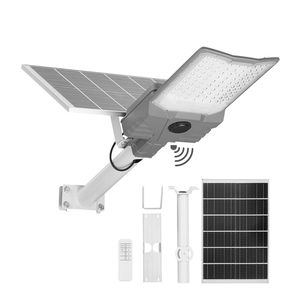
Ultra High-Output Commercial Solar Area Floodlight
- 900,000 LM Equivalent Intensity Output
- 240° Wide Beam Angle Optics
- Designed for Industrial Yards & Depots
- Heavy-Duty Anodized Aluminum Fixture
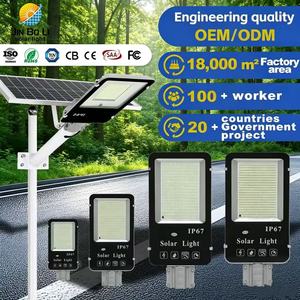
Remote-Controlled IP67 Smart Municipal Solar Luminaire
- 50W - 300W Configurable Power Range
- RF / Infrared Remote Programming
- CE, RoHS & RCM Certified Hardware
- Die-Cast Anti-Corrosion Aluminum
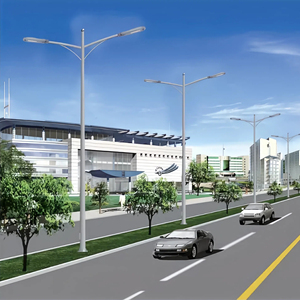
SLOER Commercial Urban & Suburban Solar Street Luminaire
- 60W / 120W Optimized Municipal Profile
- High-Efficacy Monocrystalline PV Engine
- Integrated Dark-Sky Compliant Shield
- Zero Maintenance Operational Lifespan
Engineering Solar Street Lighting for Australia’s Unique Microclimates & Standards
As Australia accelerates its transition toward Net-Zero 2050 municipal infrastructure, local councils (LGAs), road authorities (such as Transport for NSW, VicRoads, and Main Roads WA), and private utility developers are systematically replacing legacy high-pressure sodium (HPS) and grid-tied LEDs with autonomous off-grid solar street lighting systems. However, exporting solar luminaires to the Australian continent demands an unprecedented level of engineering rigor. Australia represents one of the most physically punishing operational environments in the world—combining blistering Outback temperatures exceeding 50°C, extreme UV radiation indices, coastal salt spray classified up to C5-M, and severe cyclonic wind loads across northern territories.
To successfully serve Australian councils and industrial project managers, municipal solar street lighting must move beyond off-the-shelf consumer specifications. It requires bespoke thermal dissipation architectures, validated AS/NZS compliance metrics, and intelligent energy management systems capable of sustaining 100% lighting uptime during prolonged rain events or dust storms.
AS/NZS 1158 Compliance
Strict adherence to Category V (V1 to V5) arterial road light levels and Category P (P1 to P12) pedestrian pathway requirements with validated IES photometrics.
Outback Thermal Battery BMS
Grade-A Lithium Iron Phosphate (LiFePO4) cells integrated with active thermal isolation and thermal-throttling BMS capable of operating up to +65°C ambient internal temps.
Cyclonic Wind Rating (Zone C/D)
Structural engineering designed in accordance with AS/NZS 1170.2, capable of withstanding extreme cyclonic gusts up to 280 km/h in Far North QLD & WA.
1. Navigating AS/NZS 1158 Lighting Standards for Australian Roadways
Australian municipal procurement guidelines explicitly demand compliance with the AS/NZS 1158 standard series for lighting for roads and public spaces. Our product range is engineered to fulfill both core categories:
- Category V (Vehicular Traffic): Encompassing major arterial routes, highways, and commercial transit corridors (V1, V2, V3, V4, V5). Fixtures utilize precision Type II and Type III batwing optical lenses manufactured from non-yellowing optical-grade PMMA, eliminating glare while achieving uniform illuminance and luminance ratios across multi-lane highways without grid trenching.
- Category P (Pedestrian & Public Spaces): Designed for suburban streets, council parks, bikeways, and public carparks (P1 through P12). Optics are tailored to provide excellent vertical illuminance for pedestrian facial recognition and public safety while maintaining strict 0% Upward Light Output Ratios (ULOR) for Dark Sky compliance.
2. Advanced Thermal Management & Battery Longevity in Extreme Ambient Heat
One of the primary failure modes for low-tier solar lights in regional Australia (such as the Pilbara, Alice Springs, or Mount Isa) is thermal degradation of the energy storage system. Standard lithium NMC or low-grade lithium batteries rapidly lose capacity when ambient temperatures exceed 40°C.
Our manufactured systems incorporate EV-grade LiFePO4 (Lithium Iron Phosphate) cell technology housed inside double-walled, ventilated aluminum alloy battery chambers mounted within the structural pole or luminaire head. Controlled by patented Smart MPPT algorithms, our internal Battery Management Systems (BMS) continuously monitor temperature thresholds, adjusting charging curves dynamically to prevent thermal runaway and ensuring a operational lifespan exceeding 10 years (3,500+ deep cycles at 80% DoD).
3. Coastal Marine Protection (C5-M) & Dust Mitigation (IP67)
Over 85% of Australia's population lives within 50 kilometers of the coastline. Salt-laden marine air in regions such as the Gold Coast, Sydney Harbor, Newcastle, and Perth causes rapid oxidation of standard steel and aluminum fittings.
Our municipal solar luminaires feature high-pressure die-cast marine-grade aluminum housing (A360/A380 alloy), pre-treated with a chromate conversion coating and finished with an architectural-grade AkzoNobel electrostatically deposited powder coating certified to ISO 12944 C5-M anti-corrosion standards. Additionally, for dust-heavy interior environments such as inland transport hubs and iron ore haulage roads, integrated automatic robotic self-cleaning wiper mechanisms (featured on our Auto-Clean models) keep photovoltaic surfaces pristine, ensuring uncompromised solar absorption year-round.
Next-Generation IoT Nodes & Central Management Systems (CMS)
Modern Australian local government authorities require more than simple dusk-to-dawn illumination; they demand smart infrastructure nodes capable of integrating into city-wide IoT ecosystems. Leveraging proprietary technology developed by EnGoPlanet Energy Solutions, our solar poles serve as autonomous power hubs.
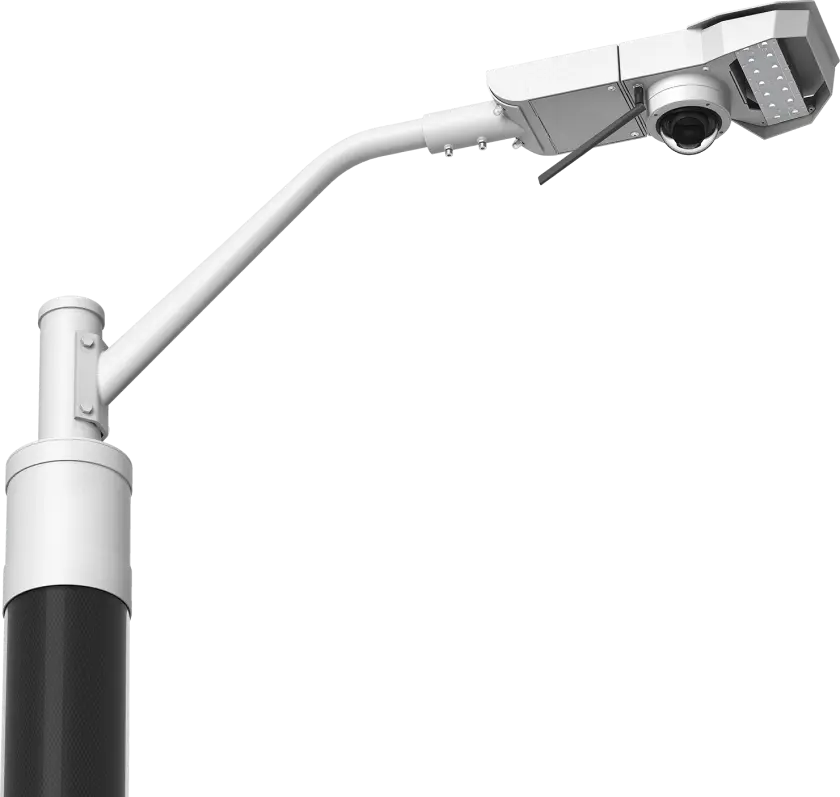
Targeted Solar Lighting Application Scenarios Across Australia
Australian geography presents distinct infrastructure challenges spanning densely populated metro coasts to vast, isolated remote centers. Our custom-engineered solar street lighting systems are deployed across diverse local settings:
1. Outback Highways & Remote Freight Corridors
Connecting regional centers across the Northern Territory, Western Australia, and South Australia often involves hundreds of kilometers of ungrid-connected road networks. Extending grid infrastructure to light hazardous intersections, rest areas, and heavy vehicle breakdown bays can cost upwards of $100,000 to $250,000 per kilometer in trenching and cabling alone. Our split-type high-lumen solar street lights provide zero-grid independent lighting with 7-day autonomous power backup.
2. Regional Council Parks, Reserve Paths & Bikeways
Local Government Authorities (LGAs) across NSW, Victoria, and Queensland are focused on improving nighttime public safety along shared paths and recreational reserves. Installing underground cabling in established parks damages root systems and disrupts public access. Compact integrated and all-in-two solar luminaires require no ground cabling, preserving natural turf while providing reliable AS/NZS 1158 Category P3/P4 lighting.
3. Coastal Port Facilities, Marinas & Esplanades
Coastal projects require rigorous protection against saline air and moisture ingress. Our IP67 and C5-M marine-coated commercial luminaires are widely installed across coastal promenades, boat ramps, and port authority storage grounds. Features include warm 3000K CCT LEDs designed to comply with local Dark Sky coastal wildlife preservation policies (protecting marine turtles and seabirds).
4. Mining Camps, Haul Roads & Industrial Facilities
Mining operations in regions like the Pilbara and Bowen Basin run 24/7 and demand maximum heavy-duty reliability. Our automatic self-cleaning solar street lights prevent airborne iron ore dust and mineral particulates from coating solar panels, automatically wiping the photovoltaic surface daily to maintain maximum charging efficiency without requiring manual maintenance crews.
Total Cost of Ownership (TCO): Grid-Powered vs. Off-Grid Solar Lighting
Financial breakdown based on a standard 50-pole Australian municipal road lighting project over a 10-year operational lifecycle.
| Cost Component | Traditional Grid-Tied LED Lighting | Commercial Off-Grid Solar Lighting | Financial Advantage / Savings |
|---|---|---|---|
| Trenching & Underground Cabling | $75,000 - $150,000 AUD | $0 AUD (Zero Trenching) | 100% Capital Savings |
| Transformer & Mains Connection | $25,000 - $45,000 AUD | $0 AUD (Self-Contained Power) | 100% Connection Savings |
| Pole Base & Civil Installation | $35,000 AUD | $28,000 AUD (Simpler Foundation) | 20% Cost Reduction |
| Annual Electricity Grid Tariff (10 Yrs) | $48,000 AUD | $0 AUD (100% Free Solar Energy) | 100% Energy Cost Elimination |
| Maintenance & Cable Repairs | $12,000 AUD | $6,000 AUD (Predictable Battery Replacement at Yr 8-10) | 50% Maintenance Reduction |
| Estimated Total 10-Yr Project TCO | $195,000 - $290,000 AUD | $65,000 - $95,000 AUD | Save up to 65% Total Lifecycle Capital |
Key Australian Solar Lighting Trends Shaping Council & Enterprise Procurement
Understanding Australian market dynamics is vital for procurement officers, urban planners, and civil engineering specifiers. Several macro trends are rapidly shaping adoption across Australia:
Trend 1: Accelerated Shift Away from Grid-Connected Extensions
Rising labor rates and heavy civil excavation costs across Australia have rendered grid extensions economically unviable for suburban infill projects and regional highways. Civil contractors increasingly specify standalone solar poles to bypass lengthy utility approval timelines and avoid expensive subterranean trenching around existing utilities.
Trend 2: Strict Adherence to Dark Sky International Guidelines
Australian local councils are heavily focused on reducing light pollution and protecting biodiversity. Regulatory guidelines increasingly require street luminaires to feature zero upward light spill (0% ULOR), sharp peripheral cutoffs, and warm color temperatures (2700K to 3000K). Our municipal luminaires are available with specialized amber and warm LED arrays specifically optimized for wildlife sanctuary zones and observatory precincts.
Trend 3: Smart Cities & Asset Management Automation
Asset managers no longer accept passive lighting infrastructure. Councils require automated notification of lamp failures, battery health status, and physical pole tilt (indicative of vehicular impact). Integrating cloud-connected CMS platforms allows asset teams to view their entire lighting fleet on a single GIS map layer, dispatching maintenance crews only when necessary.
Trend 4: Circular Economy & ESG Procurement Mandates
Under federal and state sustainable procurement frameworks, Australian government tenders heavily weigh environmental lifecycle impacts. Our products utilize recyclable high-purity aluminum alloys, non-hazardous LiFePO4 battery chemistries, and modular designs that allow individual components (such as driver modules or battery packs) to be serviced and replaced independently without scrapping the entire pole assembly.
Why Partner With Us: Direct OEM Manufacturing & Global Engineering Expertise
As a premier global manufacturer and exporter of commercial solar street lighting systems, our enterprise integrates high-level USA R&D engineering standards—modeled after our technology partnership with industry innovators like EnGoPlanet Energy Solutions LLC—with scalable, ISO-certified precision manufacturing facilities. We deliver robust, reliable lighting solutions directly to Australian distributors, EPC contractors, and municipal council tenders.
ISO 9001 & 14001 Quality Control
Every luminaire undergoes rigorous 100% automated optical sphere testing, IP67 submersion validation, thermal chamber stress tests, and full-cycle battery burn-in prior to export container loading.
Custom Engineering & Dialux Support
Our dedicated engineering team provides Australian clients with complimentary IES file photometric layouts, Dialux simulation reports for AS/NZS 1158 compliance, and custom pole foundation calculations.
Direct Supply Chain & Logistics
Direct OEM factory pricing with structured freight handling to all major Australian ports (Sydney, Melbourne, Brisbane, Fremantle, Adelaide), backed by standard 5-to-10-year warranty coverage.
Frequently Asked Questions by Australian Municipalities & Contractors
Are your solar street lighting systems fully certified for installation in Australia?
Yes. Our commercial solar street lights are manufactured to meet or exceed all relevant Australian and New Zealand standards. Electrical components carry RCM (Regulatory Compliance Mark), CE, and RoHS certifications, while luminaires comply with AS/NZS 1158 photometrics and structural poles meet AS/NZS 1170.2 wind loading regulations for Regions A, B, C, and D.
How do your solar street lights perform during long rainy periods in Winter?
Our systems are engineered with dynamic autonomy reserves. Utilizing high-efficiency monocrystalline solar panels (over 22.5% efficiency) paired with intelligent MPPT controllers and oversized LiFePO4 battery banks, our lights maintain uninterrupted illumination for 5 to 7 consecutive overcast or rainy days without grid power.
What thermal protections prevent battery degradation in high Outback heat (+50°C)?
We utilize lithium iron phosphate (LiFePO4) cells which possess high thermal tolerance compared to standard lithium-ion chemistries. Our battery enclosures feature double-walled aluminum heat shields, phase-change thermal insulation, and smart BMS firmware that regulates charge rate under extreme temperatures to extend battery life beyond 10 years.
Can you supply customized pole heights and mounting brackets for local council specifications?
Absolutely. We offer complete OEM customization including pole heights from 3m to 12m, hot-dip galvanization finishes, powder coating in custom RAL colors, outreach arm angles, and rag-bolt anchor baseplate designs tailored to your structural engineering requirements.
What is the warranty coverage provided for municipal lighting orders exported to Australia?
We stand behind our manufacturing quality with a comprehensive 5-year full system warranty covering the LED luminaire, solar panel, controller, and battery system. Solar panel performance carries a linear power output guarantee of 25 years at 80% capacity.
How do I request a Dialux photometric simulation for an Australian road lighting tender?
Simply click on the "Get Catalog" button to connect directly with our engineering sales team. Share your road layout specifications (road width, pole spacing, arrangement, and required AS/NZS 1158 lighting category), and our technical team will generate a complete Dialux 3D lighting simulation report within 24 hours.
Ready to Upgrade Your Australian Infrastructure with Smart Solar Lighting?
Download our comprehensive 2026 Municipal & Commercial Solar Lighting Catalog, request complete technical specification sheets, or get a custom project quote tailored for Australian council compliance.