
Solar Lighting Blog & News
Latest news, technical guides, and expert perspectives on smart solar street lights, off-grid infrastructure, and clean energy technology.
Navigating Malaysia's Solar Infrastructure Transformation
An authoritative guide for municipal authorities, highway concessionaires, EPC contractors, and industrial park developers across Peninsular and East Malaysia.
As Malaysia accelerates its transition toward sustainable urban infrastructure under the National Energy Transition Roadmap (NETR) and the Malaysia Smart City Framework (MSCF), public lighting is undergoing a paradigm shift. Traditional grid-tied sodium-vapor and baseline LED luminaires are rapidly being replaced by autonomous, internet-connected IoT Smart Solar Street Lights. However, deploying off-grid solar lighting within Malaysia’s equatorial climate presents unique engineering hurdles: extreme relative humidity (often exceeding 90%), intense ambient heat cycles, coastal salt spray, and prolonged monsoon clouds during the Northeast Monsoon (Tengkujuh) season.
Selecting an experienced OEM/ODM factory and Tier-1 supplier is critical to ensuring long-term operational resilience. This technical whitepaper outlines the architectural specifications, localized application matrix, IoT central management topologies, and procurement criteria essential for implementing robust solar street lighting projects across Kuala Lumpur, Selangor, Johor, Penang, Sabah, and Sarawak.
High-Performance Solar Luminaires for Malaysian Infrastructure
Engineered with industrial-grade LiFePO4 batteries, MPPT intelligence, high-efficiency solar cells, and IoT control nodes.
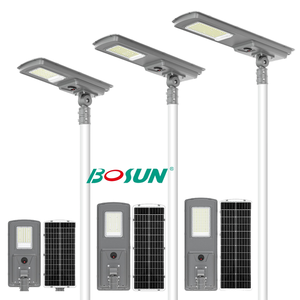
Dusk to Dawn All in One Solar Street Light Outdoor Waterproof
- Integrated Integrated Monocrystalline Panel
- IP67 Waterproof & Heat Dissipation Housing
- Smart Microwave Radar Motion Sensor
- Zero Wiring, Rapid 15-Minute Pole Mounting
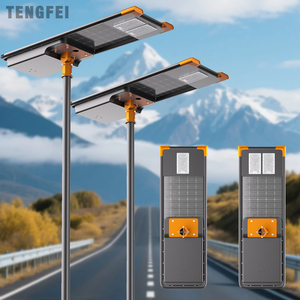
Hot Selling Low-Energy Split Solar Street Light Outdoor LED Lamp
- High-Lumen Philips/Bridgelux LED Chips
- Adjustable Solar Panel Arm for Max Sun Tracking
- Deep-Cycle LiFePO4 Battery Enclosure
- Ideal for Federal Roads & Highway Extensions
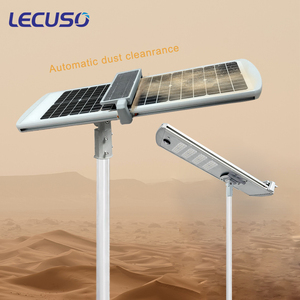
High Quality 30W-150W Automatic Auto Clean Self Cleaning Solar Street Light
- Robotic Auto-Sweeping Brush System
- Removes Tropical Dust, Leaves & Bird Droppings
- Preserves PV Yield in Industrial & Coastal Areas
- Configurable Cleaning Schedules via IoT
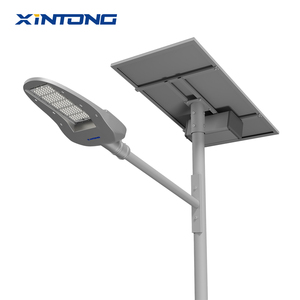
Commercial Road Light 60W-150W Heavy-Duty Split Solar Street Lamp
- Type II / Type III Optics for Uniform Road Illumination
- Extruded Aluminum Alloy Heavy Thermal Sink
- Smart MPPT Controller (99% Tracking Efficiency)
- Compliant with JKR Lighting Specifications
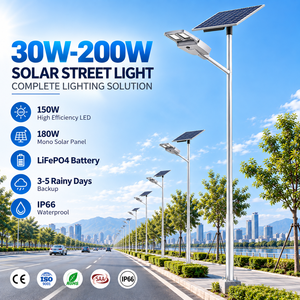
All In Two LED Solar Street Light IP66 80W-150W with Battery Backup
- Modular All-in-Two Structural Design
- IP66 Sealed In-Pole Battery Vault
- Smart Dimming Profiles (DALI / 0-10V)
- High Wind Load Resistance for Coastal Zones
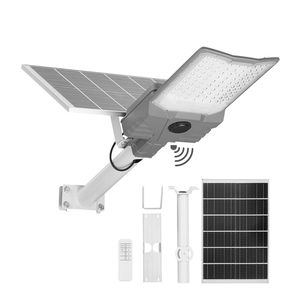
12000W High-Powered Solar Dusk-to-Dawn Split LED Floodlight Luminaire
- Ultra Output up to 900,000 LM Equivalent Intensity
- 240° Wide Angle Flood Optics
- Multi-Angle Heavy Bracket Mounting
- Designed for Ports, Logistics Hubs & Stadiums
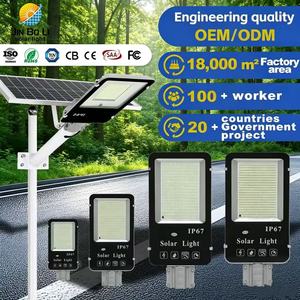
Remote Control IP67 Solar LED Light 50W-300W Split Type Outdoor Lamp
- RoHS & CE Certified Heavy Construction
- Long-Range RF Remote & Central Telemetry
- Monocrystalline Glass Solar Module
- Custom CCT (3000K Warm to 6500K Cool White)

Commercial Grade 60W-120W Hybrid Split / All-in-One Solar Luminaire
- Optimized OEM Architecture for B2B Tenders
- Dynamic Energy Management System (EMS)
- Anti-Corrosion Anodized Finish
- Seamless Connectivity to Smart City Nodes
IoT-Enabled Central Management Systems (CMS) for Smart Cities
Transforming standalone solar poles into intelligent, data-driven municipal infrastructure nodes.
Wireless Connectivity Protocols
Each solar luminaire is equipped with an NEMA or Zhaga socket compatible with LoRaWAN, NB-IoT, or 4G/5G Cellular gateways. This allows real-time telemetry transfer to cloud dashboards without requiring local cabling.
Cloud-Based Operational Analytics
Municipal operators can remotely monitor battery state of charge (SoC), PV voltage curve, ambient temperature, LED operational status, and energy balance to perform predictive maintenance prior to hardware failure.
Adaptive AI Dimming Algorithms
By leveraging traffic flow data and motion telemetry, luminaires automatically alter light outputs during off-peak midnight hours. This extends battery autonomy during consecutive rainy days in monsoon season by up to 40%.
| System Architecture | Battery Chemistry | Solar Controller | Ingress / Impact Protection | Monsoon Autonomy | Primary Application |
|---|---|---|---|---|---|
| All-in-One (Integrated) | LiFePO4 (Grade A) | Smart MPPT (98.5% Eff.) | IP67 / IK10 | 5 - 7 Days | Urban Streets, Residential Parks, Walkways |
| All-in-Two (Semi-Split) | LiFePO4 (In-Pole Enclosure) | Dual-Channel IoT MPPT | IP67 / IK10 | 7 - 10 Days | Secondary Arterial Roads, Commercial Plazas |
| Heavy Duty Split System | Deep-Cycle Pack (IP68 Vault) | Industrial IoT MPPT + LoRaWAN | IP68 / IK10 | 10 - 12 Days | Highways (PLUS, ECE), Remote Expressways |
| Self-Cleaning IoT System | LiFePO4 High Temp Cells | Auto-Brush Motion MPPT | IP67 / IK09 | 7 - 9 Days | Industrial Estates, Dusty Mining Roads, Ports |
Tailored Deployment Scenarios Across Malaysia
Engineered specifically to solve geography-specific lighting challenges in Peninsular and East Malaysia.
1. Highways & Federal Roads (PLUS, ECE, JKR Roads)
Trenching and laying electrical cables across hundreds of kilometers of highway shoulder is economically non-viable. Split-type high-lumen solar luminaires featuring Type II/III optics ensure compliance with JKR (Jabatan Kerja Raya) R3/R5 road illumination guidelines while operating 100% off-grid.
2. East Malaysia Rural Electrification (Sabah & Sarawak)
Extending power grids to interior longhouses and rural kampungs across East Malaysia involves treacherous terrain. Pre-configured All-in-One solar lights provide rapid plug-and-play installation without heavy machinery, lighting remote communities overnight.
3. Coastal Resorts & Islands (Langkawi, Penang, Redang)
Coastal applications suffer from intense marine corrosion and humidity. Our luminaires use marine-grade anodized aluminum alloy (6063-T6) and 316 stainless steel hardware, rated for C5-M extreme saline environments, preventing surface oxidation.
4. Smart Cities & Municipalities (Cyberjaya, Putrajaya, Iskandar)
Modern townships require aesthetic integration alongside functional smart city hardware. Solar poles outfitted with IoT gateways serve as multi-functional platforms, accommodating 5G small cells, environmental sensors, and public security surveillance cameras.
5. Ports, Industrial Estates & Logistics Parks
Heavy dust contamination from cargo handling degrades PV cell solar absorption over time. Our robotic self-cleaning solar luminaires automatically clear dust deposits, maintaining 98%+ light output efficiency without manual maintenance crews.
6. Eco-Parks & Green Building Index (GBI) Developments
Commercial real estate developments pursuing GBI Gold or Platinum certification leverage off-grid solar street lights to secure carbon reduction points, proving zero operational scope-2 greenhouse gas emissions.
Malaysia Market Trends: ESG Integration & Monsoon Climate Engineering
Three primary macro factors are currently driving B2B and public-sector demand for IoT solar street lights in Malaysia:
- Northeast Monsoon Autonomy Requirements: Standard consumer-grade solar lights fail during Malaysia’s rainy season (November to February). Institutional tenders now mandate Continuous Rainy Day Autonomy of at least 7 days, necessitating high-capacity LiFePO4 chemistry and intelligent MPPT dimming logic.
- Mandatory ESG Reporting for Listed Entities: Major Malaysian conglomerates (such as PETRONAS, Sime Darby, and Gamuda) are retrofitting facility perimeters and logistics yards with solar street lights to meet stringent Scope 1 and Scope 2 carbon abatement targets.
- Shift from CAPEX to OPEX (Solar Lighting as a Service): Municipalities are adopting subscription-based models where suppliers handle hardware deployment, cloud monitoring, and maintenance under long-term SLA performance contracts.
Why Partner with Our Factory for Malaysian Projects
OEM/ODM customization backed by world-class engineering, rigorous quality assurance, and complete tender support.
Tier-1 Monocrystalline PV Cells
We utilize N-Type TOPCon solar cells achieving up to 23.5% module efficiency. These cells feature low temperature coefficients, ensuring optimal power yield under high Malaysian ambient heat (+45°C surface temp).
Automated LiFePO4 Pack Assembly
Equipped with internal active balance BMS protection, our EV-grade Lithium Iron Phosphate battery packs deliver over 4,000 deep discharge cycles at 80% DoD, maintaining a 10-year design lifespan.
Complete Tender & Certification Package
We support local contractors with complete laboratory test documentation: ISO9001, ISO14001, CE, RoHS, IP68 waterproofing certificates, IES photometrics, and wind tunnel loading reports up to 160 km/h.
Frequently Asked Questions
Addressing technical, regulatory, and logistics queries for Malaysian project procurement.
How do your solar street lights handle prolonged heavy rain during Malaysia's monsoon season?
Our systems incorporate dynamic MPPT controllers and Grade-A LiFePO4 battery packs sized specifically for tropical solar insolation values. Combined with smart micro-radar sensing and automated IoT dimming profiles, the luminaires conserve energy to guarantee 7 to 10 consecutive days of dusk-to-dawn lighting even under total cloud cover.
Do your products comply with Malaysian JKR and SIRIM standards?
Yes. Our commercial street light series are designed in full alignment with JKR lighting specifications and international IEC 60598-2-3 standard recommendations. Photometric IES files are available for Dialux simulation, ensuring correct illuminance (Lux) and uniformity ratios across R1 to R5 road classifications.
What is the typical lifespan and maintenance schedule for high-humidity installations?
The LED module and aluminum housing are rated for 100,000 hours (L70). The LiFePO4 battery pack lasts 8 to 10 years, while the solar panel carries a 25-year linear performance warranty. Maintenance is virtually zero; for high-dust industrial zones, selecting our self-cleaning model eliminates the need for manual cleaning entirely.
Can we integrate third-party sensors or CCTV cameras into the solar pole system?
Absolutley. We offer customized OEM smart poles engineered with auxiliary DC power taps (12V/24V step-down) and NEMA socket integration, allowing seamless connection of CCTV cameras, weather sensors, environmental monitors, or public Wi-Fi access points directly to the pole's battery reserves.
What is the lead time for OEM/ODM orders shipped to Port Klang or Penang Port?
Standard OEM manufacturing lead time is 15 to 20 days following design freeze. Direct sea freight from our manufacturing base to Port Klang, Johor Port, or Penang Port typically takes 7 to 10 days, allowing rapid project execution timelines for Malaysian contractors.
How does the IoT Central Management System (CMS) operate in remote areas?
For areas with reliable cellular coverage, NB-IoT or 4G LTE SIM nodes are utilized. For off-grid remote installations (such as interior Sarawak), a LoRaWAN mesh network is deployed where multiple poles communicate to a single master gateway equipped with satellite or long-range telemetry.
Ready to Elevate Your Solar Lighting Infrastructure in Malaysia?
Contact our technical engineering team today for customized Dialux simulations, product datasheets, factory-direct OEM pricing, and complete tender documentation.