
Solar Lighting Blog & News
Latest news, technical guides, and expert perspectives on smart solar street lights, off-grid infrastructure, and clean energy technology.
High-Temperature Certified Solar Street Lights
Precision-engineered solar lighting systems equipped with heat-resistant LiFePO4 battery banks, smart MPPT controllers, and C5-M anti-corrosion coatings.
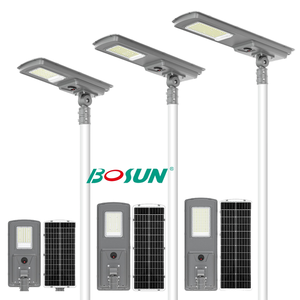
Dusk to Dawn All in One Solar Street Light Outdoor Waterproof
- Integrated PCM Thermal Barrier
- IP67 Waterproofing / Dusk-to-Dawn
- High Ambient Heat Rated (65°C)
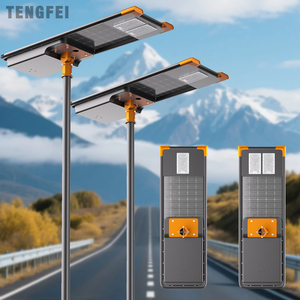
Hot Selling Low-energy Split Solar Street Light Outdoor Led Street Lighting Lamp
- External Heat-Isolated Battery Enclosure
- High Efficiency Low-Energy Driver
- DPWH Highway Grade Approved
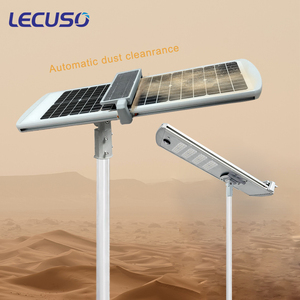
High Quality 30W-150W Auto Clean Self Cleaning Solar Street Light
- Motorized Robotic Dust & Ash Wiper
- Prevents Thermal Hotspot Burnout
- Multi-wattage Options (30W-150W)
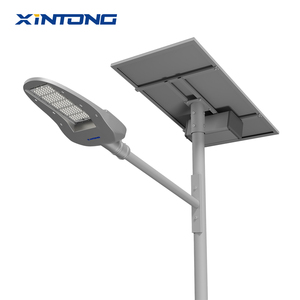
Road Light 60W-150W Heavy Duty Split Solar Street Light
- Modular High-Lumen Photometric Lens
- Underground/Pole Base Heat Mitigation
- Optimized for Expressways & Arterials
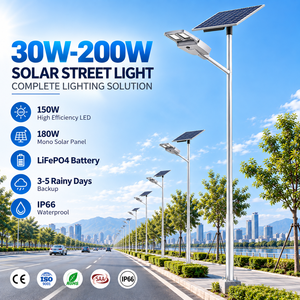
All In Two LED Solar Street Light IP66 with Extended Battery Backup
- Dual-Chamber Air Ventilation Flow
- 5-7 Days Rainy Day Autonomy Reserve
- IP66 Marine Environment Sealed
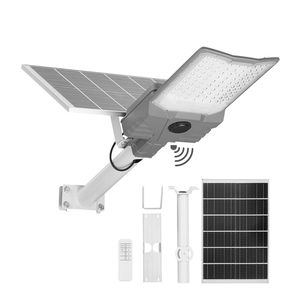
High-Powered Ultra-Lumen Split Solar Floodlight (6500K CCT)
- 240° Extra-Wide Beam Angle Optics
- Industrial Port & Mine High Mast Light
- Active Copper Heat Pipe Conduction
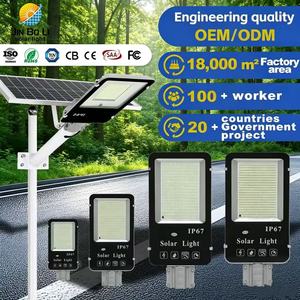
Remote Control IP67 Split Type Solar LED Lamp (50W-300W)
- RF Remote Control & IoT Mesh Ready
- RoHS & CE Certified Materials
- Anti-UV Heat-Resistant PC Lens
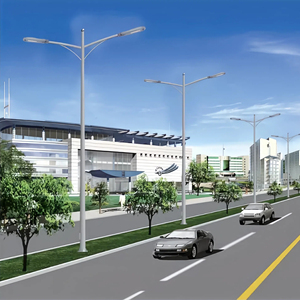
SLOER Commercial Grade Split All in One Solar Street Light
- Cost-Effective Municipal Bulk Supply
- Monocrystalline 22% Efficiency PV
- 60W / 120W Commercial Configurations
Engineering High-Temperature Solar Street Lighting for the Philippines Environment
The Philippine archipelago presents one of the world's most demanding microclimates for outdoor solar lighting systems. Stretching across tropical regions, infrastructure projects face a unique trifecta of environmental stressors: extreme summer ambient heat exceeding 40°C (with internal luminaire housing temperatures climbing above 70°C), relentless relative humidity averaging 80-90%, and severe saltwater aerosol exposure in coastal barangays. Furthermore, the country lies directly within the Pacific Typhoon Belt, facing an average of 20 tropical cyclones per year.
Standard off-the-shelf commercial solar street lights manufactured for temperate climates rapidly fail when deployed in the Philippines. Battery swelling, permanent capacity loss, thermal throttling of MPPT charge controllers, optical yellowing, and severe salt spray corrosion are frequent points of premature system collapse within 12 to 18 months of installation. As a leading specialized high-temperature solar street light manufacturer and global OEM supplier, our engineering architecture is expressly customized to address these tropical operational realities.
Engineering Core Insight: Heat is the primary enemy of lithium battery lifespan and LED lumen maintenance. For every 10°C increase above 25°C in conventional battery enclosures, the chemical degradation rate doubles. Our high-temperature Philippine-spec systems integrate phase-change material thermal barriers and chimney convection channels to keep internal temperatures up to 18°C lower than external solar radiation equilibrium.
Thermal Dynamics & Physical Failure Mechanisms in Tropical Solar Lighting
To deliver commercial-grade reliability for public works departments (DPWH), private estate developers, and municipal governance, solar light manufacturers must solve four fundamental physical degradation mechanisms prevalent across Philippine installations:
LiFePO4 Electrolyte Thermal Breakdown
Direct exposure to solar heat bakes internal battery compartments. Standard lithium cells suffer rapid solid electrolyte interphase (SEI) growth, causing irreversible capacity fade and gas generation (battery swelling).
LED Junction Overheating & Lumen Drop
High ambient heat impedes LED heat sink dissipation. Increased junction temperatures ($T_j > 105^\circ\text{C}$) result in non-radiative recombination, rapid lumen depreciation, and color temperature shifting toward sickly blue tones.
Salt Fog & Galvanic Corrosion
The Philippines' 36,289 kilometers of coastline create aggressive chloride-laden salt fog. Standard aluminum alloys oxidize rapidly, leading to mechanical fastener failures and moisture ingress into IP-rated drivers.
Technical Benchmark: Standard Solar Lights vs. High-Temperature Philippine Specification
When evaluating supply partners for commercial, industrial, or municipal infrastructure bids in the Philippines, procurement officers must look beyond initial lumen claims to examine thermal protection and structural bill of materials (BOM).
| Engineering Parameter | Standard Commercial Solar Light | High-Temp Philippine Spec (Our System) | Operational Impact in Philippines |
|---|---|---|---|
| Battery Chemistry | Standard LiFePO4 or NCM (0°C to 45°C) | Extended Temp LiFePO4 with PCM Insulation (-20°C to 75°C) | Prevents thermal runaway and swelling during summer peak solar absorption. |
| Thermal Management | Enclosed unventilated aluminum box | Dual-Chamber Air Duct + Anodized Vertical Heat Sinks | Reduces internal component temperature by 15°C to 20°C. |
| Solar Panel Type | Polycrystalline / Low-Grade Mono (17% Eff.) | TopCon / Monocrystalline PERC (22.5% Eff.) Low Temp Coeff. | Maintains higher energy harvesting efficiency even when panel heat exceeds 65°C. |
| Enclosure Protection | IP65 Gasket (Degrades in UV) | IP67 / IP68 Liquid Silicone Gasket + Breather Valve | Prevents moisture vacuum-suction during sudden tropical downpours (Habagat). |
| Surface Treatment | Standard Powder Coating (100 hrs Salt Spray) | C5-M Fluorocarbon Marine-Grade Coating (2000+ hrs Salt Spray) | Resists severe coastal oxidation in island provinces (Cebu, Palawan, Davao). |
| Typhoon Resistance | Standard 120 km/h structural rating | Reinforced 250 km/h Wind Load Structural Certification | Withstands Super Typhoons (Category 5) without structural deformation or shear. |
Localized Application Scenarios Across the Philippine Archipelago
Our high-temperature split and all-in-one solar street light systems are tailor-built to support strategic national infrastructure development, municipal modernization, and private commercial initiatives across diverse geographic zones in Luzon, Visayas, and Mindanao.
Highways & National Arterials (DPWH)
Optimized for major expressways like NLEX, SLEX, TPLEX, and national highways. Our 80W-150W split solar street lamps utilize Type II and Type III optic lenses, providing uniform road luminance without dark zones, while resisting highway dust and engine exhaust heat accumulation.
Coastal Ports & Island Resorts
Essential for marine infrastructure in Subic Bay, Batangas Port, Cebu City, and island tourism hubs like Boracay and Siargao. Outfitted with C5-M anti-corrosion coatings, stainless steel 316 hardware, and salt-fog proof sealed LED optical engines.
Volcanic Ash & Dusty Industrial Corridors
Areas near active volcanic regions (e.g., Taal, Mayon) or heavy industrial zones experience fine dust deposition on PV modules, which creates localized thermal hotspots. Our Auto-Clean Self-Cleaning Solar Light series features automated daily sweeping brushes to maintain 98%+ solar absorption efficiency.
Why Top Philippine Contractors & Distributors Partner With Us
Direct OEM/ODM Factory Advantage, Rigorous Quality Control, and Tailored Solar Project Support
Custom Dialux Simulation & Lighting Design
We provide full photometric calculations, Lux plots, and pole spacing optimization according to DPWH standards for road and bridge projects across the Philippines.
Pre-Tested for Tropical Climates
Every batch undergoes thermal chamber testing (75°C aging for 72 hours), salt spray fog chamber exposure, and IP68 water submersion verification prior to export dispatch.
Flexible Supply Chain & Fast Shipping
Strategic logistics partnerships ensure direct container deliveries to Manila South/North Harbor, Cebu Port, and Cagayan de Oro Port with complete Customs documentation.
IoT Smart Remote Control Integration
Supports LoRaWAN / Zigbee / 4G cellular smart management, allowing municipal managers to remotely monitor battery health, adjust dimming profiles, and receive fault alerts in real-time.
Grade-A Extended Lifecycle Components
Exclusive use of CATL/EVE brand LiFePO4 cells, Philips Lumileds / Bridgelux LED chips (efficacy up to 210 lm/W), and genuine MeanWell/Inventronics MPPT driver architectures.
Complete Tender & Bid Document Support
We empower local partners, EPC contractors, and distributors with full factory certificates (ISO9001, ISO14001, CE, RoHS, IP67, IEC62133, UN38.3 test reports).
Frequently Asked Questions for Philippine Solar Lighting Procurement
Clear, technical insights to help purchasing managers, engineering consultants, and government procurement officers select the right solar lighting systems.
How do high ambient summer temperatures in the Philippines affect solar light battery life?
Standard lithium batteries degrade exponentially when operating in temperatures above 40°C. In direct sunlight, internal light housings can reach 70°C, causing chemical breakdown and battery swelling. Our high-temperature units utilize Grade-A LiFePO4 chemistry insulated with phase-change materials (PCM) and dual-chamber heat sinks, maintaining internal cell stability and offering a 6,000+ cycle lifespan (over 10-12 years of operational use).
Are your solar street lights compliant with DPWH specifications?
Yes. Our commercial split solar street light series (60W to 150W) and heavy-duty all-in-two luminaires meet or exceed the Department of Public Works and Highways (DPWH) standards for illumination uniformity, color rendering index (CRI > 70/80), optical distribution, minimum 3-5 days battery autonomy, and wind load engineering.
What is the advantage of self-cleaning solar lights in volcanic or dusty regions?
In regions affected by dust, ocean salt haze, or volcanic ash (such as areas near Mt. Pinatubo or Mayon), dust layer accumulation on PV glass reduces solar charging efficiency by 25% to 50% within a few weeks. This leads to system blackouts. Our automatic self-cleaning solar street light features an integrated robotic wiper system that cleans the glass twice daily, guaranteeing peak solar harvesting performance without costly manual maintenance climbing crews.
How do these lights survive Category 5 Super Typhoons?
Our structural mounting brackets, solar panel frames, and light poles are calculated using finite element analysis (FEA) to withstand gust speeds up to 250 km/h (equivalent to 70 m/s wind loads). High-tensile Q235/Q355 hot-dip galvanized steel and heavy-gauge die-cast aluminum alloys prevent bending, bracket slippage, or structural fatigue during extreme typhoons.
What is the recommended installation ratio between All-in-One and Split solar lights?
For urban streets, residential barangay roads, parks, and security perimeters (3m to 8m mounting height), Integrated All-in-One or All-in-Two systems offer fast installation and low labor costs. For high-speed expressways, multi-lane avenues, and industrial high-mast lighting (8m to 15m pole heights requiring 100W to 150W+ LED power), Split Solar Street Lights are recommended because they allow optimal tilt orientation of larger solar panels and underground placement of battery boxes to shield them from ambient heat.
What warranty and technical support do you provide for Philippine projects?
We provide a comprehensive 3-year to 5-year full factory replacement warranty on our high-temperature solar street light systems. We offer dedicated technical support, replacement spare parts dispatch, online engineering consultations, and local installation guidance for Philippine project managers.
Partner with a Trusted High-Temperature Solar Lighting Manufacturer
Request customized product catalogs, complete photometric Dialux reports, factory direct price lists, and technical compliance certificates for your Philippine projects.
Inquire Now