
Solar Lighting Blog & News
Latest news, technical guides, and expert perspectives on smart solar street lights, off-grid infrastructure, and clean energy technology.
Custom Solar Prototyping & Production Systems
Explore our industrial-grade, custom-engineered solar luminaires built to withstand Tokyo's stringent municipal requirements, seismic standards, and coastal weather conditions.
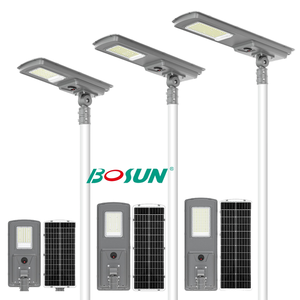
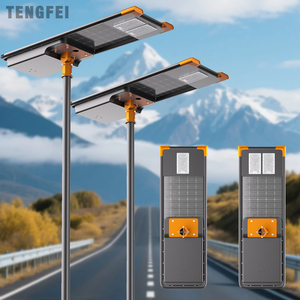
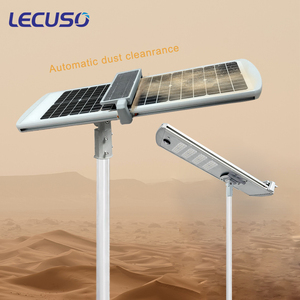
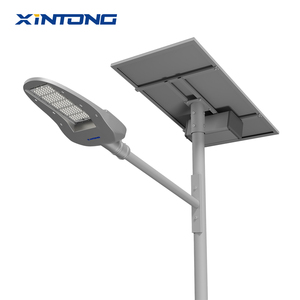
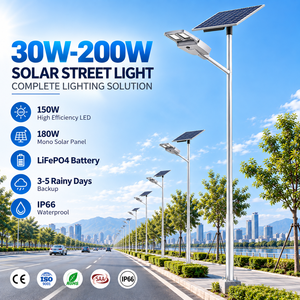
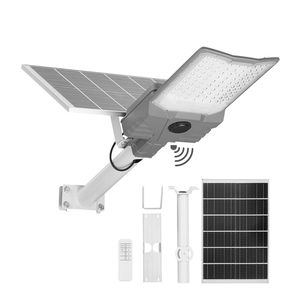
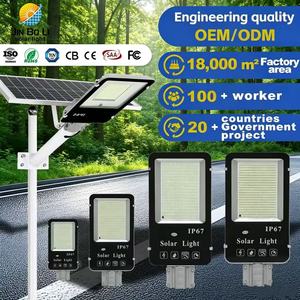
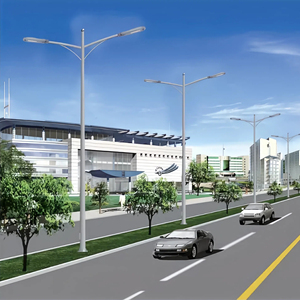
The Strategic Imperative: Custom Solar Prototyping in Tokyo’s Decarbonization Era
As the Tokyo Metropolitan Government accelerates its "Zero Emission Tokyo Strategy" and enforces strict Green Transformation (GX) mandates, municipal developers, engineering firms, and architectural contractors are facing unprecedented pressure to integrate resilient, off-grid clean energy infrastructure. Tokyo presents a uniquely demanding urban landscape for outdoor lighting: dense architectural corridors, high humidity, salt-laden ocean air around Tokyo Bay, severe typhoon seasons, and stringent JIS (Japanese Industrial Standards) compliance parameters.
Off-the-shelf, mass-manufactured solar lighting units routinely fail to meet the bespoke spatial, aesthetic, and optoelectronic thresholds required by Japanese infrastructure procurers. This creates a compelling demand for a specialized custom solar product prototyping supplier in Tokyo capable of bridging raw photovoltaic innovation with local engineering rigors.
Information Gain Insight: Custom prototyping isn't merely altering luminaire dimensions. In Tokyo, it requires thermal modeling for localized microclimates, structural FEA analysis for 60m/s typhoon wind resistance, and low-angle optical shielding to prevent light pollution in high-density residential zones like Minato and Shinjuku.
Engineering Challenges Unique to the Tokyo Metropolitan Area
Developing commercial-grade off-grid solar equipment for Japanese municipalities demands a multi-disciplinary approach. Standard generic solar lights imported without local customization often suffer from premature degradation due to three core microclimatic factors:
- Typhoon-Grade Wind Loads: Outdoor lighting structures deployed along coastal districts like Odaiba or Toyosu must withstand extreme gust speeds exceeding 50–60 m/s in accordance with the Building Standard Law of Japan.
- Low Sunlight Insolation during Rainy Seasons (Tsuyu): Tokyo experiences prolonged monsoon cycles in June and July. Custom prototyping must optimize MPPT (Maximum Power Point Tracking) controller algorithms to maximize charge capture during low-lux overcast conditions.
- Seismic Structural Vibrations: Pole-mounted battery enclosures and PV bracket assemblies must endure continuous micro-vibrations and minor seismic activity without compromise to electrical integrity or IP67 sealing ratings.
Our 5-Stage Custom Solar Prototyping Workflow
From preliminary CAD layout to physical stress testing, our agile OEM/ODM engineering pipeline ensures rapid iterations without sacrificing Japanese quality standards.
1. Photometric & CAD Modeling
We execute precise DIALux EVO 3D lighting simulations utilizing customized IES files. Photometric curves are engineered specifically to minimize spill light while maximizing lux uniformity along Tokyo urban roadways.
2. Thermal & Structural FEA
Finite Element Analysis (FEA) simulates extreme wind speeds up to 60m/s and thermal dissipation inside sealed LiFePO4 battery compartments during humid Japanese summers, preventing thermal runaway.
3. Rapid CNC Tooling & Prototyping
Using high-grade 6063-T6 aluminum extrusion and 3D metal printing, functional prototypes are fabricated within 72 hours for client evaluation and mechanical fit checks.
4. Custom Firmware & IoT Tuning
Integration of customized LoRaWAN, NB-IoT, or smart motion dimming profiles tuned to Tokyo energy conservation guidelines, ensuring 5 to 7 days of continuous off-grid autonomy.
5. JIS & IEC Compliance Testing
Comprehensive in-house lab testing: IP67 ingress water jet immersion, salt-spray corrosion chamber testing for coastal air, vibration endurance, and PSE battery safety certification prep.
6. Scaled Mass Manufacturing
Seamless transition from validated prototype to volume production under ISO9001 quality management, featuring complete trace-ability for every component batch shipped to Japan.
Custom Application Scenarios Across Greater Tokyo
Our engineering team tailors custom solar product prototypes for distinct structural and environmental zones throughout Tokyo.
Tokyo Bay Coastal & Waterfront Logistics
Districts: Koto Ward, Shinagawa Port, Ariake, Odaiba
Engineering Focus: Heavy-duty anodized C5M anti-corrosion coating to prevent salt-air degradation. Reinforced split-type brackets rated for Category 4 typhoon wind shears.
Disaster Evacuation & Municipal Parks
Districts: Setagaya, Yoyogi Park, Hibiya Park, Edogawa
Engineering Focus: Hybrid solar-storage systems with auxiliary USB emergency power taps for citizens during earthquake-induced grid blackouts, conforming to Tokyo Resilience Directives.
Smart Transit & Bus Shelter Integration
Districts: Shinjuku Terminal, Shibuya Smart District, Ginza
Engineering Focus: Sleek aesthetic BIPV (Building-Integrated Photovoltaics) design with hidden wiring conduits, integrated security cameras, and automated self-cleaning solar glass modules.
Technical Comparison: Standard Import vs. Tokyo Custom Prototype
| Specification Parameter | Generic Off-The-Shelf Solar Light | Tokyo Custom Prototype Specification |
|---|---|---|
| Wind Resistance Rating | 30 - 35 m/s (Standard plastic/thin steel) | Up to 60 m/s (Reinforced 6063 Aluminum / Structural Steel) |
| Autonomy Days (Rainy Season) | 1 - 2 Days (Risk of sudden blackout) | 5 - 7 Continuous Days (Intelligent MPPT Dimming) |
| Battery Thermal Operating Range | -10°C to 50°C (Standard Lithium) | -20°C to 65°C (LiFePO4 with PCM Insulated Enclosures) |
| Surface Treatment & Finish | Basic Powder Coating | Fluorocarbon Anodized C5M Marine-Grade Finish |
| Optical Light Distribution | Fixed Symmetric Beam (High Glare) | Custom Type II / Type III Batwing Lens (Dark-Sky Compliant) |
| Compliance & Certifications | Basic CE / Low Voltage Directives | JIS C 8105-2-3, RoHS, PSE Battery Safety Compatible |
Frequently Asked Questions for Tokyo Buyers
Everything you need to know about our custom solar prototyping, OEM/ODM lead times, and engineering support for Japanese projects.
What is the lead time for custom solar prototyping in Tokyo?
Initial 3D CAD modeling and photometric simulations are completed within 24 to 48 hours. Physical functional prototypes using CNC machining and rapid tooling are typically dispatched within 7 to 10 working days directly to Tokyo.
Can you design luminaires compliant with JIS (Japanese Industrial Standards)?
Yes. Our engineering process strictly adheres to JIS C 8105-2-3 (Luminaires for street and road lighting) and JIS C 8131. We ensure waterproofing, insulation resistance, and mechanical strength meet Japanese municipal procurement guidelines.
How do your custom solar products handle Tokyo's summer typhoons?
We execute finite element structural stress analysis (FEA) on every custom housing and bracket prototype. By utilizing high-tensile 6063-T6 aluminum alloys and heavy-duty anchor bolt configurations, our poles withstand wind speeds up to 60 m/s.
Do you support small-batch prototype manufacturing before full OEM production?
Absolutely. We accommodate low Minimum Order Quantities (MOQ) for prototyping and field-test trials, allowing Japanese contractors and developers to conduct real-world pilot installations before committing to full-scale rollout.
What battery technology is used for low-temperature and high-humidity performance?
We exclusively utilize Tier-1 Lithium Iron Phosphate (LiFePO4) battery cells featuring built-in Smart BMS (Battery Management System). Cells are encased in thermal phase-change material (PCM) and sealed to IP68 standards to ensure 10+ years of maintenance-free operation.
Can we integrate IoT smart sensors and cameras into the prototype?
Yes, our prototype platforms can incorporate 4G/5G micro-cells, LoRaWAN environmental sensors, CCTV security cameras, NEMA/ZHAGA smart sockets, and emergency panic buttons powered entirely by the custom solar energy system.
Enterprise Capabilities & OEM/ODM Excellence
Partnering with a dedicated custom solar product prototyping supplier ensures your projects deliver unmatched performance, structural longevity, and aesthetic distinction.
State-of-the-Art Optical Lab
Equipped with integrating spheres, goniophotometers, and thermal imaging cameras to validate every custom optical lens layout before production.
Tier-1 Component Sourcing
We partner directly with global leaders like Bridgelux, Cree, SunPower, and Texas Instruments for microchips, solar cells, and LED packages.
Bespoke Housing Aesthetics
Custom colors (RAL matching), architectural pole integrations, wood-grain textures, and sleek ultra-thin profiles customized to Tokyo urban landscapes.
Strict Japanese QC Protocol
Every batch undergoes 100% aging tests, high-pressure waterproof testing, and optical parameter verification prior to export container loading.
Accelerate Your Tokyo Solar Project Today
Need a tailored photovoltaic prototype or high-efficiency solar street light engineering team for your Japanese development project? Contact our Senior Technical Engineers now.
Get a Quote