
Solar Lighting Blog & News
Latest news, technical guides, and expert perspectives on smart solar street lights, off-grid infrastructure, and clean energy technology.
Engineered Solar Street Lighting Solutions
Explore our high-performance off-grid lighting series, fully customizable for municipal streetscapes, commercial developments, and transit corridors across Greater Chicago and Cook County.
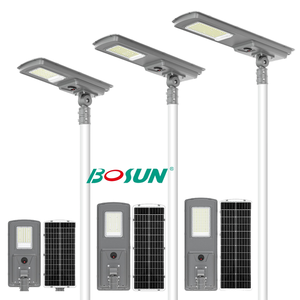
Dusk to Dawn All in One Solar Street Light Outdoor Waterproof
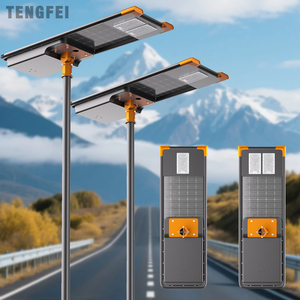
Hot Selling Low-Energy Split Solar Street Light Outdoor LED
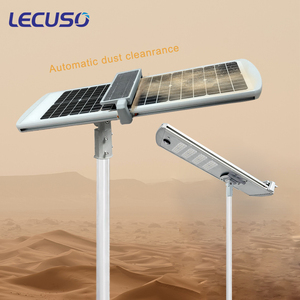
Automatic Self-Cleaning Solar Street Light (30W-150W)
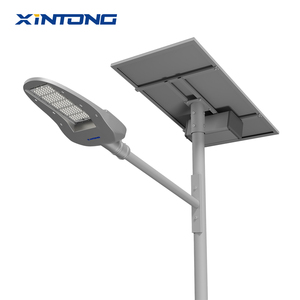
Heavy-Duty Commercial Road Split Solar Street Light (60W-150W)
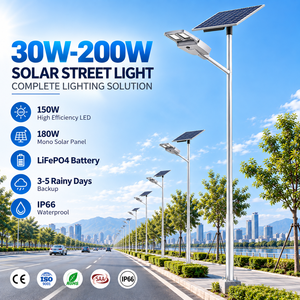
All In Two LED Solar Street Light IP66 with Battery Backup
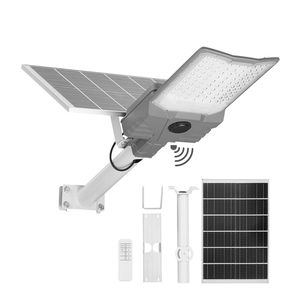
High-Powered Split-Type LED Solar Floodlight System
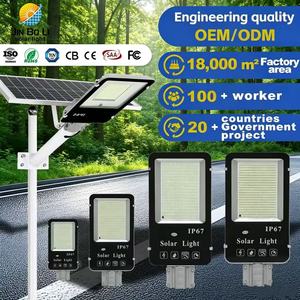
Remote-Controlled Intelligent IP67 Solar Street Lamp (50W-300W)
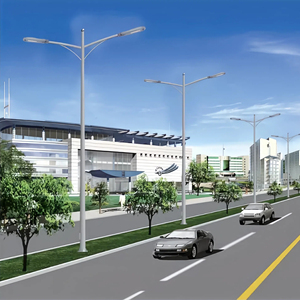
Commercial OEM All-in-One Solar Street Light Manufacturer Series
Decarbonizing Chicago's Municipal Infrastructure: The Vertical Solar Pole Advantage
The Metropolitan Chicago region presents a uniquely demanding environment for outdoor solar lighting infrastructure. Positioned on the southwestern shoreline of Lake Michigan (Latitude 41.8781° N), Chicago experiences extreme seasonal variance in solar irradiance, intense sub-freezing winter blizzards, freezing rain, and severe wind shear off Lake Michigan. Traditional flat horizontal or tilted solar streetlights frequently suffer structural failure, photovoltaic dust/snow occlusion, and severe battery capacity drop due to thermal stress. As a premier direct OEM factory and exporter, our engineering team manufactures vertical solar street light poles purpose-built to solve these localized environmental challenges.
Wind Shear & AASHTO Load Engineering
Chicago's "Windy City" moniker is backed by rigorous structural requirements. Cook County guidelines demand outdoor lighting poles to meet AASHTO Standard Specifications for Structural Supports for Highway Signs, Luminaires, and Traffic Signals. Our OEM vertical solar poles utilize seamless hot-rolled Q345B carbon steel tubes with a tapered cylindrical profile. By embedding flexible Monocrystalline PV modules flush against the vertical axis of the octagonal or round pole, we achieve an Effective Projected Area (EPA) up to 60% lower than traditional top-mounted solar brackets, resisting wind gusts up to 110 mph (49.1 m/s).
Sub-Zero Thermal Battery Optimization
Sub-zero winter blasts down to -20°F (-28°C) severely compromise conventional lithium-ion batteries, causing thermal shutdown or permanent dendritic cell damage. Our export-grade vertical solar poles incorporate underground or pole-integrated sealed LiFePO4 (Lithium Iron Phosphate) battery banks equipped with solid-state PTC (Positive Temperature Coefficient) electric heating jackets and micro-BMS thermal regulation. This allows normal charge acceptance down to -35°C, providing 7+ days of continuous dusk-to-dawn autonomy during winter storms.
360° Vertical Monocrystalline PV Wrap
Our factory utilizes high-efficiency N-Type TOPCon solar cells flexible-wrapped vertically around the pole's shaft. Protected by ultra-clear tempered glass or impact-resistant UV-stabilized polycarbonate sheeting (IK10 rated), the vertical PV array captures sunlight continuously throughout the day regardless of solar azimuth. Furthermore, vertical alignment ensures self-cleaning during precipitation events, shedding sleet, freezing rain, and atmospheric soot from nearby interstate highways (I-90/I-94, I-55, and I-290).
✓ Localized Application Scenarios across Greater Chicago
| Chicago Deployment Zone | Environmental & Operational Challenge | Engineered OEM Solution | Recommended Product |
|---|---|---|---|
| Lake Shore Drive & Lakefront Parks | High salt spray humidity, extreme Lake Michigan wind gusts, dark-sky environmental preservation for migratory birds. | Hot-dip galvanized steel pole (ASTM A123) with marine-grade fluorocarbon coating (>1500 hrs salt spray test). IDA-approved zero-uplight cut-off optics. | EnGo Slim Vertical / Product #5 |
| O'Hare & Midway Freight Corridors | Heavy industrial particulate matter, continuous 24/7 commercial vehicle vibration, high lumen requirement for safety. | Integrated robotic auto-cleaning vertical PV wrap with vibration-dampened optical luminaire providing 180-210 lm/W efficacy. | Product #3 / Product #6 (High Flood) |
| Fulton Market & Downtown Commercial District | Aesthetic urban architecture integration, tight footprint without intrusive ground-mounted battery boxes. | Sleek vertical cylindrical solar pole design matching Chicago Department of Transportation (CDOT) streetscape design aesthetics. | Product #1 / Product #8 |
| Cook County Suburban Arterials & Interstates | Grid connection distance costs ($30,000+/mile utility trenching), freezing ice storms, winter daylight deficit. | Fully off-grid vertical solar pole with dual-channel MPPT control and 7-day extended winter battery reserve. | Product #2 / Product #4 Split System |
Chicago Sustainable Infrastructure & Procurement Trends
Municipal procurement standards in Illinois are experiencing a rapid shift toward zero-emission grid-decoupled infrastructure. The passage of the Illinois Climate and Equitable Jobs Act (CEJA) along with Federal IRA (Inflation Reduction Act) tax incentives has mandated municipalities, park districts, and private developers to adopt clean energy solutions that increase grid resilience.
1. CDOT & Municipal Compliance
City of Chicago lighting mandates require strict compliance with Dark-Sky International regulations to combat light pollution in urban neighborhoods. Our custom OEM luminaires feature precision-molded PMMA optical lenses delivering IESNA Type II, III, and IV light patterns, directing 100% of generated lumens strictly onto asphalt roadways and pedestrian walkways with zero trespass or skyglow.
2. Smart City IoT Receptacle Integration
Modern Chicago streetscape modernization demands multifunctional smart poles. Our factory pre-wires vertical solar street light poles with standard 7-pin ANSI C136.41 NEMA or Zhaga Book 18 sockets. This allows seamless integration of smart city IoT nodes, traffic metering sensors, air quality monitoring devices, and 4G/5G micro-transceivers directly powered by the pole's auxiliary battery power bus.
3. TCO & Utility Trenching Elimination
Extending municipal utility grid infrastructure along Chicago roadways costs between $45 to $120 per linear foot in asphalt cutting, concrete conduit placement, repaving, and Commonwealth Edison (ComEd) grid interconnection fees. Off-grid vertical solar street light poles completely bypass civil utility engineering, yielding up to a 60% reduction in Total Cost of Ownership (TCO) over a 10-year operational horizon.
Global Factory Customization & OEM Engineering Capability
As a leading vertically integrated manufacturer and exporter, our facility encompasses over 45,000 square meters of automated production lines, including CNC laser tube cutting, robotic welding cells, automated PV encapsulation chambers, and environmental testing labs. We work directly with Chicago EPC contractors, civil engineers, and municipal procurement directors to provide tailored OEM solutions.
CNC Pole Fabrication & Structural Customization
Custom pole heights ranging from 4 meters (13 ft) to 12 meters (39 ft). Choice of round, octagonal, or decorative historic lamp pole profiles. Fully compliant with ASTM A572 Grade 50 high-strength steel standards.
Advanced Surface Coating Line
Automated multi-stage surface preparation: Shot blasting to Sa 2.5, followed by hot-dip galvanization (85µm minimum zinc thickness per ISO 1461), finished with architectural-grade TGIC polyester powder coat in any RAL color.
Rigorous QA/QC Testing Protocol
Every vertical solar pole unit undergoes environmental chamber cycling (-40°C to +80°C), IP68 water immersion testing for battery enclosures, wind tunnel aerodynamic simulation, and electroluminescence (EL) PV crack analysis prior to export packaging.
System Engineering Specification Baseline
| Parameter | Factory OEM Specification Standard |
|---|---|
| Solar Cell Technology | N-Type TOPCon / Monocrystalline PERC Flexible Cylindrical Wrap (22.5% - 23.2% Efficiency) |
| System Voltage / Battery Type | 12.8V / 25.6V Grade-A LiFePO4 Battery with Integrated Heating BMS (>4000 Cycles @ 80% DoD) |
| LED Luminaire Efficacy | High-Lumen Philips Lumileds 5050 / Cree Chips (180 lm/W to 210 lm/W System Efficacy) |
| Control Architecture | Smart MPPT Charge Controller (98% Efficiency) with IoT Telemetry (LoRaWAN / NB-IoT Option) |
| Ingress & Mechanical Protection | Luminaire & Battery Box: IP67 / IP68 Ingress Rating; Optical Module: IK10 Vandal Resistance |
| Certifications | ISO9001, ISO14001, CE, RoHS, IP67, UL-listed Components, AASHTO Structural Wind Certified |
Chicago Local Procurement & Technical FAQ
Clear engineering and commercial responses for municipal officers, civil contractors, and commercial developers in Illinois.
Q1: How do vertical solar street light poles survive low solar radiation during Chicago winters?
Chicago experiences winter solar irradiance drops down to roughly 1.8 - 2.2 Peak Sun Hours (PSH) per day in December and January. Our vertical solar street poles compensate for this by utilizing 360-degree omnidirectional vertical PV modules. Because the modules wrap entirely around the pole stem, they catch early morning and late afternoon sun at low angle horizons. Furthermore, vertical panels capture ground-reflected albedo light off snowpack—increasing energy yield by up to 25-30% compared to flat panels—while completely preventing snow buildup.
Q2: What wind load certifications do your OEM solar poles carry for Lake Michigan coastal zones?
Our solar street light poles are engineered and calculated in accordance with AASHTO LTS-6 (Standard Specifications for Structural Supports for Highway Signs, Luminaires, and Traffic Signals). Standard models are rated to withstand basic design wind speeds of 110 mph (177 km/h) with gust factors up to 1.3. For coastal installations directly along Lake Shore Drive or harbor facilities, we offer heavy-duty wall thickness poles (up to 6mm Q345 steel) rated for 130 mph wind loads.
Q3: How does the battery BMS handle extreme freezing weather in Cook County?
We utilize Grade-A LiFePO4 cells configured with an intelligent micro-BMS internal thermal management matrix. When ambient temperatures drop below 0°C (32°F), the charge controller routes a small fraction of incoming solar power to internal PTC thermal heating elements surrounding the battery pack, maintaining an optimal internal cell temperature. This allows safe, non-dendritic charging down to -35°C (-31°F) and prevents winter blackout failures.
Q4: Can your factory manufacture custom poles matching Chicago Dept of Transportation (CDOT) specifications?
Yes. As a direct OEM factory, we specialize in custom manufacturing to client drawing specifications. We can match CDOT mounting height requirements, arm length projections, luminaire color temperatures (e.g., 3000K warm white for residential historic districts; 4000K/5000K for commercial arterials), and custom powder coat finishes (including classic CDOT Green or Chicago Bronze finish).
Q5: What is the average OEM production lead time and export logistics path to Chicago?
Standard factory production lead time for customized OEM orders is 15 to 25 business days following drawing approval and deposit. Sea freight ocean transit from our container terminal directly to the Port of Chicago (via inland rail connection through Montreal or coastal ports) typically ranges from 28 to 35 days. Express air freight options are also available for pilot project samples and urgent replacement components.
Q6: What maintenance is required for vertical solar street light poles over their operating lifetime?
Vertical solar street poles require virtually zero routine maintenance due to their gravity-shedding design. Rain naturally washes away airborne dust from the vertical surface. The solid-state LED luminaires have an L70 lifetime rating exceeding 100,000 operating hours (approx. 22 years of nightly operation). Battery replacements are typically scheduled only after 8 to 12 years of continuous service depending on depth of discharge profiles.