
Solar Lighting Blog & News
Latest news, technical guides, and expert perspectives on smart solar street lights, off-grid infrastructure, and clean energy technology.
Commercial-Grade Solar Lighting Product Portfolio
Precision-engineered off-grid and split-system LED solar lights manufactured for high-latitude performance, extreme wind loads, and severe freeze-thaw cycles across Greater Boston and New England municipal infrastructure.
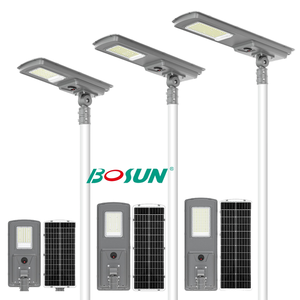
Dusk to Dawn All in One Solar Street Light Outdoor Waterproof
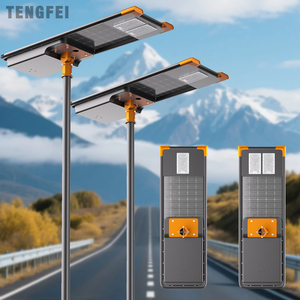
Low-Energy Split Solar Street Light Outdoor LED Lamp
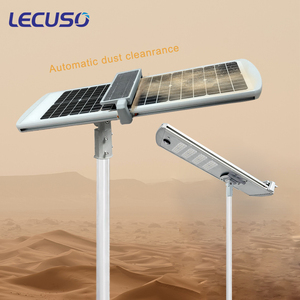
Auto-Clean Self-Cleaning Solar Street Light (30W - 150W)
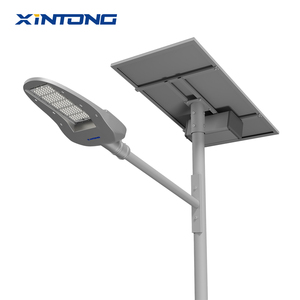
Heavy-Duty Roadway Split Solar Street Light (60W - 150W)
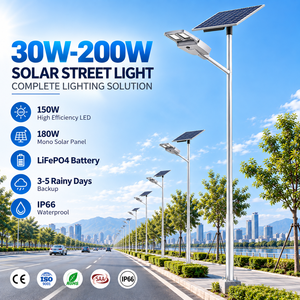
All-in-Two LED Solar Street Light IP66 with Modular Battery Backup
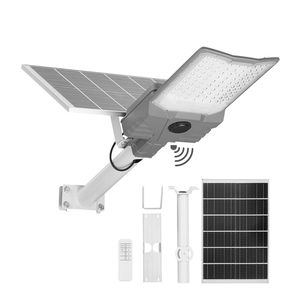
High-Lumen Industrial Split Solar Floodlight & Street Light
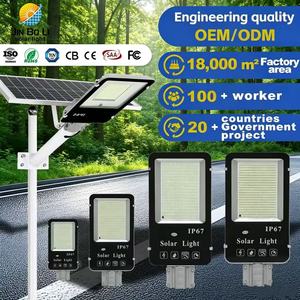
Remote Control IP67 Split Commercial Solar Light (50W - 300W)
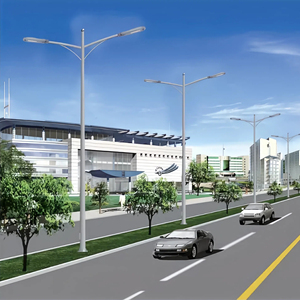
Commercial Universal Split/All-in-One Solar Street Light (60W - 120W)
Engineering Solar Lighting Systems for Boston’s Climate & Winter Insolation Realities
Designing commercial and municipal off-grid solar street lighting systems for the Greater Boston metropolitan area requires an advanced understanding of cold-climate solar photometrics, sub-zero electrochemistry, and micro-grid resiliency. Boston, located at latitude 42.36° N, experiences extreme seasonal solar radiation fluctuations. During the winter solstice in December, the region’s peak sun hours collapse to an average of just 2.18 to 2.4 kWh/m²/day, compared to over 5.8 kWh/m²/day during mid-summer.
Furthermore, coastal weather events typical of Eastern Massachusetts—such as bomb cyclones, winter Nor'easters, prolonged marine fog, and multi-day blizzards—can obscure photovoltaic arrays for up to four consecutive days. Standard commercial solar lights built for sunbelt environments inevitably fail under these conditions, causing complete darkness along roadways, parking structures, and public spaces.
Engineering Benchmark for New England: All commercial solar luminaires deployed within the City of Boston, Cambridge, Quincy, and surrounding Suffolk/Middlesex counties must be specified with a minimum 4.5 to 5.0 Days of Autonomy (DOA). This ensures uninterrupted illumination even during 96+ hours of zero solar gain combined with freezing sub-zero temperatures.
Photovoltaic Module Sizing & Tilt Optimization for Latitude 42.36° N
To maximize winter photon capture when solar elevation angles dip as low as 24.2° above the horizon in Boston, solar panel tilt geometry must be precisely calculated. Our commercial split solar street lighting systems utilize custom-engineered mounting brackets calibrated to a fixed 45° to 50° tilt angle. This aggressive vertical tilt angle achieves two critical objectives:
- Solar Yield Optimization: Directly aligns the photovoltaic surface perpendicular to low-angle winter sunlight, boosting solar energy capture by up to 28% during the critical months of November through February.
- Passive Snow Shedding: Prevents heavy, wet New England snow accumulation from insulating the PV module. Gravitational shed forces allow snow slides to clear the glass surface automatically as soon as ambient sunlight heats the silicon substrate.
Lithium Battery Chemistry & Sub-Zero Thermal Management
Battery failure is the primary point of degradation in commercial outdoor solar lighting. In Boston, winter ambient temperatures regularly plunge below 0°F (-18°C). Standard Lithium Iron Phosphate (LiFePO4) chemistries experience severe capacity degradation and cannot accept charging currents below 32°F (0°C) without risking dendrite formation and permanent cell damage.
To overcome this environmental bottleneck, our commercial-grade solar systems incorporate patented sub-zero thermal management technology:
- Integrated BMS Self-Heating Circuits: High-efficiency thermistors monitor core cell temperature. When ambient temperatures drop below freezing during solar charging hours, the smart MPPT controller directs micro-currents to embedded flexible heating pads surrounding the battery pack, warming cells to safe charging thresholds (5°C) before initiating solar energy transfer.
- Phase-Change Thermal Insulation: Vacuum-sealed aluminum battery enclosures lined with aerogel or phase-change insulation retain thermal energy generated during discharge cycles, keeping internal temperatures stable throughout freezing coastal nights.
Localized Boston Application Scenarios & Municipal Infrastructure Deployment
Commercial solar street lighting manufacturers serving the Greater Boston market must comply with a diverse matrix of municipal regulations, architectural guidelines, and environmental standards. From historic brick walkways in Beacon Hill to heavy industrial shipping yards along Boston Harbor, off-grid infrastructure eliminates costly grid utility hookups, municipal permitting delays with local utilities (such as Eversource or National Grid), and invasive street trenching.
Boston Harborwalk & Waterfront Piers
Deploying coastal-certified (C5-M anti-corrosion rated) solar lighting along marine promenades. Eliminates high-cost sea-wall trenching while adhering to Boston’s dark-sky warm color temperature (3000K CCT) guidelines to protect marine ecosystems.
Route 128 / I-95 Tech & Logistics Corridors
High-lumen split solar floodlights and street lights for commercial warehousing, distribution hubs, and corporate campuses in Waltham, Burlington, and Framingham. Delivers continuous IESNA RP-8-18 compliant roadway illumination without grid power dependence.
MBTA Commuter Rail Parking Lots
Rapid deployment of solar lighting across outer commuter rail transit stations (e.g., Quincy Adams, Alewife, Route 128 Station). Provides uninterrupted zero-emission lighting for public safety during grid outages and winter storms.
Municipal Parks & University Campuses
Integrating architectural self-cleaning solar lighting poles across higher-education facilities in Cambridge and Boston city parks. Smart IoT motion sensors dim lights to 30% during low-pedestrian hours, conserving power while boosting safety.
Total Cost of Ownership (TCO): Grid-Tied vs. Off-Grid Solar Lighting in Boston
For municipal engineers, commercial developers, and facility directors in Massachusetts, evaluating outdoor lighting systems based purely on luminaire capital expenditure (CAPEX) overlooks the massive civil engineering costs associated with traditional grid connection. In historic cities like Boston, trenching through urban asphalt, granite curbs, and frozen winter soil requires extensive utility permits, police details, traffic management, and high labor rates.
| Evaluation Parameter | Traditional Grid-Tied Lighting | Commercial Off-Grid Solar Lighting |
|---|---|---|
| Trenching & Wire Conduit Costs | $120 - $180 per linear foot (Boston average) | $0.00 (Zero Trenching Required) |
| Utility Interconnection Fees | $2,500 - $8,000 per project node | $0.00 (Independent Micro-Grid) |
| Monthly Electricity Utility Bill | Subject to volatile MA kWh rate hikes | $0.00 (100% Free Solar Energy) |
| Installation Timeframe | 3 to 8 Months (Permitting & Interconnection) | 1 to 3 Days (Direct Bolt Installation) |
| Resiliency during Winter Grid Blackouts | Complete Illumination Failure | 100% Operational (5-Day Battery Reserve) |
| Carbon Offset (100 Poles over 10 Yrs) | 0 Tons (Dependent on regional grid mix) | ~420 Metric Tons CO2 Avoided |
Financial Summary: While commercial solar street lights carry a higher initial unit fixture cost than standard AC LED heads, the total installed cost (CAPEX + Civil Works) of off-grid solar is typically 30% to 55% LOWER than grid-tied equivalents when trenching distances exceed 50 linear feet.
Structural Engineering Standards: Wind Loads, Salt Spray & Dark Sky Compliance
Supplying commercial solar lighting hardware to the Boston waterfront, Cape Ann, and the South Shore demands strict adherence to rigorous structural and optical certifications. Equipment failure caused by high velocity wind shears or saltwater rust creates severe liability for commercial land developers and municipal authorities alike.
ASCE 7-16 Wind Load Resistance (Nor'easter Storms)
Eastern Massachusetts lies within the coastal hurricane and Nor'easter hazard zone. Solar street light poles and integrated photovoltaic brackets act as high-drag sail areas when exposed to high winds. Our commercial systems are calculated to ASCE 7-16 structural design standards, engineered to withstand continuous wind speeds of up to 130 MPH with gust factors exceeding 150 MPH. Pole shafts are fabricated from high-strength Q235B/Q345 structural steel or 6063-T6 marine-grade aluminum alloy, hot-dip galvanized internally and externally to ISO 1461 standards.
C5-M Marine Coastal Anti-Corrosion Finishing
Atmospheric salt loading in coastal Boston accelerates metallic oxidation. Standard industrial powder coatings pit and peel within 24 to 36 months of ocean spray exposure. All our commercial luminaires, solar frames, hardware brackets, and battery enclosures receive a multi-stage surface treatment consisting of an electro-deposited primer topped with a TGIC super-durable architectural polyester powder coating, achieving verified C5-M marine anti-corrosion rating under ISO 12944 testing.
Dark-Sky Compliance & Massachusetts Environmental Standards
To comply with Massachusetts energy conservation mandates and municipal Dark-Sky ordinances (designed to minimize light pollution and skyglow), our commercial luminaires feature full-cutoff, zero-uplight (U0 rating) optical engine designs. Precision PMMA lenses project light strictly onto target pavement planes (Type II, Type III, and Type V distributions), eliminating wasted spill light into adjacent residential windows or celestial spaces.
Frequently Asked Questions (FAQ) - Commercial Solar Lighting in Boston
How do commercial solar street lights perform during Boston’s heavy winter snowstorms?
Our commercial systems maintain 100% operational reliability during winter snowstorms through a combination of aggressive panel tilt angles (45° to 50°) that naturally shed snow, integrated automated self-cleaning wiper options, and a deep 5-day battery autonomy buffer that powers the LED luminaire even when panels are shaded by overcast storm skies.
What is the typical lifespan of the LiFePO4 battery in cold northern climates?
Our Grade-A LiFePO4 battery packs are rated for 4,000+ charge cycles at 80% Depth of Discharge (DoD), which translates to an operational lifespan of 10 to 12 years. Paired with internal smart BMS thermal pre-heating pads, the battery is protected against cold-weather degradation, ensuring long-term stability in Boston’s climate.
Are your solar street lights compliant with Massachusetts SMART incentives & Dark-Sky laws?
Yes. Our commercial lighting systems meet all dark-sky cutoff criteria by offering 3000K warm-amber optical engines with zero up-light (U0 rating). Additionally, as zero-carbon renewable infrastructure, off-grid solar deployments support commercial facilities aiming for LEED certification and municipal net-zero compliance under Boston’s Climate Action Plan.
How do split-type solar lights compare to All-in-One integrated solar lights for Boston projects?
While All-in-One solar lights offer easy installation for low-wattage pathway or park applications, Split-Type solar lights are highly recommended for Boston roadway, highway, and high-lumen commercial parking lot projects. Split systems allow independent orientation of the solar panel toward the south at a steep tilt angle while directing the LED luminaire downward onto the roadway.
What warranty and technical support do you provide for Boston commercial engineering teams?
We provide a comprehensive 5-Year to 10-Year commercial warranty covering the PV panel, LED fixture, MPPT controller, and battery assembly. Our engineering support team assists Boston area contractors, civil engineers, and landscape architects with IES photometric layouts, solar autonomy calculations, structural wind load analysis, and fast local component delivery.
Partner with Premier Commercial Solar Lighting Manufacturers Serving Boston
Upgrade your municipal, commercial, or industrial project with heavy-duty off-grid solar street lighting systems engineered specifically for New England weather. Request a complete technical photometric layout, autonomy calculation, and factory-direct quote today.
Get a Quote