
Solar Lighting Blog & News
Latest news, technical guides, and expert perspectives on smart solar street lights, off-grid infrastructure, and clean energy technology.
High-Temperature Solar Street Lighting Products
Precision-engineered solar luminaire systems customized for industrial, arterial, and municipal projects across Ho Chi Minh City and Southern Vietnam.
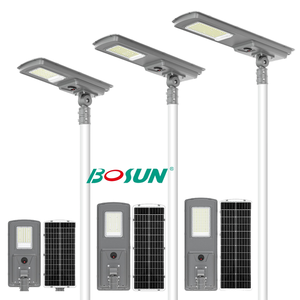
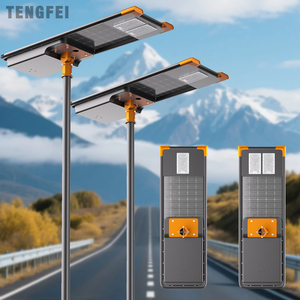
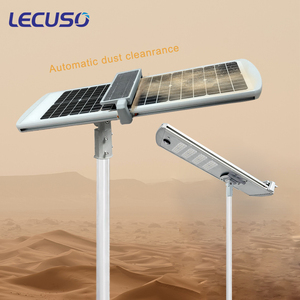
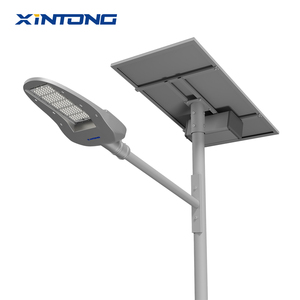
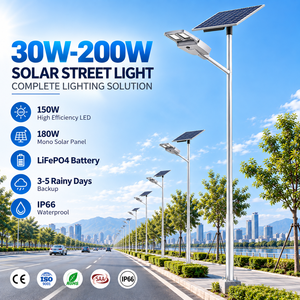
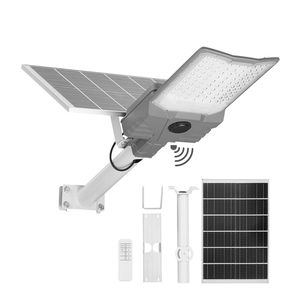
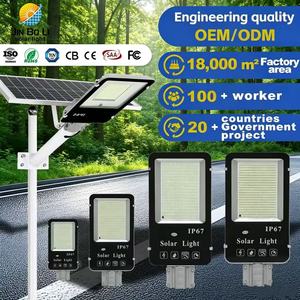
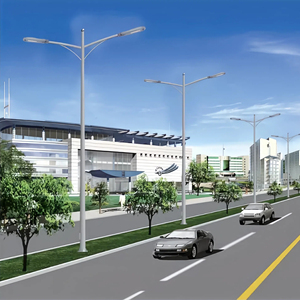
Technical Whitepaper: Thermal Management & High-Temperature Solar Engineering
Ho Chi Minh City, located in Southern Vietnam’s tropical monsoon zone (Zone 2), presents one of the world's most aggressive operating environments for semiconductor electronics, photovoltaic (PV) modules, and energy storage systems. With ambient temperatures regularly surpassing 38°C to 42°C during the dry season (March to May), radiant surface heat on unshaded luminaire housings can rapidly escalate to internal temperatures exceeding 75°C. Standard commercial off-the-shelf solar street lights deployed under these conditions suffer from severe thermal throttling, accelerated Li-ion battery degradation, driver potting thermal collapse, and premature LED lumen depreciation.
To deliver an operational design life exceeding 10 years without performance decay, our CE-certified high-temperature solar street lights are engineered from the ground up utilizing advanced thermodynamic isolation, specialized chemical cell formulations, and intelligent thermal management algorithms.
Key Engineering Metric: Our high-temperature solar luminaires maintain continuous 100% luminous flux output at ambient temperatures up to 65°C, featuring an internal thermal cutoff threshold rated up to 85°C—ensuring flawless performance during Southern Vietnam’s heatwave peaks.
1. Advanced LiFePO4 Chemistry with High-Temperature Thermal Cutoff BMS
The core vulnerability of standard solar lights in tropical climates lies in the energy storage medium. Conventional NCM (Nickel Cobalt Manganese) and basic LiFePO4 cells undergo rapid capacity decay and thermal runaway risk when ambient enclosure temperatures cross 45°C. Our export-grade solar street light series incorporates Grade-A high-density Lithium Iron Phosphate (LiFePO4) cell packs utilizing proprietary electrolyte additives that raise the thermal decomposition limit above 300°C.
Each battery module is managed by a custom Smart Battery Management System (BMS) with dynamic pulse-width temperature regulation. The BMS monitors cell temperature across multi-point NTC sensors. If internal temperatures rise above 55°C during daytime solar charging, the smart controller dynamically modulates charge current from MPPT full-phase to trickle phase, preventing heat accumulation without sacrificing cumulative daily state-of-charge (SOC).
2. Thermodynamic Convection Enclosures & ADC12 Die-Cast Heat Sinks
Unlike sealed plastic or thin aluminum sheet housings that trap thermal energy, our luminaires utilize heavy-duty ADC12 die-cast aluminum enclosures featuring vertical aerodynamic heat dissipation fins. The housing design establishes a natural chimney effect—drawing cool ambient air across the underside fins while accelerating the convection of internal thermal energy away from the LED engine and MPPT driver housing.
Furthermore, critical components are segmented into isolated thermal chambers. The solar charge controller, LED light engine, and LiFePO4 battery pack reside in independent compartments separated by high-grade aerogel thermal isolation barriers. This structural isolation guarantees that heat generated by high-power LED arrays (operating at 160-200 lm/W) does not transfer to the temperature-sensitive battery cells.
Data Visualization: Standard vs. HCMC Tropicalized High-Temp Solar Systems
To quantify the competitive advantage of our localized high-temperature solar street light architecture, examine the key technical parameters evaluated under Ho Chi Minh City climate conditions:
| Engineering Parameter | Standard Commercial Solar Light | HCMC High-Temp Series (Our Product) | Performance Benefit |
|---|---|---|---|
| Operating Temp Threshold | -10°C to +45°C max | -20°C to +65°C continuous | +44% higher heat tolerance |
| Battery Chemistry | Standard Li-ion or basic LiFePO4 | High-temp Grade-A LiFePO4 + Aerogel Isolation | Zero thermal runaway risk |
| Battery Cycle Life (@40°C) | 800 - 1,200 cycles | 4,000+ deep cycles (10+ year lifespan) | 3.5x longer operational life |
| Monsoon Ingress Protection | IP65 (Rubber gasket seal) | IP67 Double Silicone O-ring Seal | 100% protection against downpours |
| Salt Spray Corrosion Class | C3 Light Anti-corrosion | C5-M Heavy Marine Fluorocarbon Coating | Resistant to coastal/river humidity |
| Self-Cleaning Mechanism | None (Manual cleaning required) | Robotic Dual-Wiper Auto Self-Cleaning | Maintains 98%+ optical yield in dry season |
| Wind Resistance Rating | Class 10 (100 km/h) | Class 14 Typhoon Resistant (165 km/h) | Withstands tropical storm surges |
Localized Application Scenarios Across Ho Chi Minh City & Southern Vietnam
Ho Chi Minh City is undergoing unprecedented urban modernization, transforming into a megacity with connected smart infrastructure, sprawling industrial zones, and major transport corridors. Our CE-certified high-temperature solar street lights are custom-tailored to solve specific geographical, climatic, and structural lighting challenges across the HCMC metropolitan region.
Thu Duc Smart City & Hi-Tech Parks
Deploying integrated All-in-One and All-in-Two smart solar poles fitted with IoT remote monitoring controllers. These units provide autonomous dusk-to-dawn illumination along innovation hubs, university campuses, and residential tech sectors without requiring trenching or disruptive grid cable installation.
Industrial Zones (Tan Thuan, Hiep Phuoc, VSIP)
Heavy logistics corridors and export processing zones require powerful 80W-150W split solar street lamps with Type II/III wide optical lenses. Designed to illuminate broad multi-lane freight roadways, container staging yards, and perimeter security fencing under severe heavy-vehicle vibration.
Arterial Expressways & Coastal Roads
Highways connecting HCMC to Long An, Dong Nai, and Vung Tau (such as Mai Chi Tho Boulevard & Long Thanh Highway connectors) utilize auto-cleaning self-maintenance solar lights. Self-cleaning wiper blades remove airborne dust and industrial pollution, preserving solar charging performance year-round.
Waterfront Developments & Saigon River Corridors
Urban riversides and coastal marsh areas like Can Gio require maximum defense against high humidity and salt vapor. Our C5-M anti-corrosion fluorocarbon spray-coated aluminum poles resist moisture-induced oxidation while matching modern architectural aesthetics in District 2 and District 7 developments.
Rural Grid-End Communes & Mekong Delta Border Lines
In peripheral districts where utility grid voltage suffers from extreme fluctuations or blackouts during monsoon storms, off-grid split-type solar floodlights deliver guaranteed 365-day lighting autonomy, securing remote checkpoints, agricultural hubs, and residential lanes.
Localized Development Trends & Vietnam Energy Policy Alignment
The adoption of off-grid solar street lighting in Ho Chi Minh City is accelerating rapidly due to powerful national regulatory mandates, municipal sustainability drives, and economic incentives:
1. National Power Development Plan VIII (PDP8) Alignment
Under Vietnam’s officially ratified PDP8, the national government has prioritized decentralizing energy infrastructure and aggressively scaling renewable power generation to achieve Net-Zero Carbon Emissions by 2050. Municipal public lighting accounts for up to 35% of local urban energy expenditure. Municipal contractors in Ho Chi Minh City are systematically replacing grid-tied High-Pressure Sodium (HPS) luminaires with standalone off-grid solar poles, directly reducing municipal grid loads during peak afternoon cooling hours.
2. Mitigating HCMC Urban Heat Island (UHI) Effects
Dense urban construction in districts like District 1, District 3, and Binh Thanh creates localized heat sinks where nighttime temperatures stay elevated above 32°C. Standard LED luminaires with inefficient power drivers emit substantial waste heat, exacerbating local microclimates. Our ultra-high efficacy LED chips (operating at 190-210 lm/W) consume fewer watts per lumen generated, reducing parasitic heat emission by up to 40% compared to legacy lighting systems.
3. Resilience Against Monsoon Power Grid Disruption
During Southern Vietnam’s wet season (May to November), torrential tropical downpours and severe localized flooding frequently trigger automatic safety shut-offs on municipal underground electrical cables. Grid-dependent streetlights in low-lying zones (such as District 8 and Nha Be) can remain dark for days during repair cycles. Standalone solar street lights operate completely decoupled from the municipal electrical grid—ensuring public safety, traffic visibility, and security during flood emergencies.
Manufacturer Expertise, Quality Compliance & Exporter Advantages
As a premiere OEM/ODM manufacturer and exporter specializing in high-temperature solar lighting solutions, we provide municipal procurement agencies, EPC contractors, and electrical distributors in Vietnam with end-to-end engineering excellence, rigorous quality assurance, and seamless import support.
Full CE, RoHS & IEC Compliance
Every luminaire model undergoes certified laboratory testing for Electromagnetic Compatibility (EMC), Low Voltage Directive (LVD), IEC 60598-2-3 (Road and Street Lighting Safety), and UN38.3 lithium battery transport safety. Full documentation is provided for rapid customs clearance at Cat Lai Port, HCMC.
Custom OEM/ODM Photometric Engineering
We provide full DIALux optical layout simulations tailored to specific road widths, pole spacing, and lux level mandates in Vietnam (QCVN 07-7:2016/BXD lighting standards). Custom optical lenses, CCT options (3000K-6500K), and programmable dimming profiles are engineered per project specifications.
Direct Shipping & Logistics to Vietnam
With established supply chain corridors serving Ho Chi Minh City, Haiphong, and Da Nang ports, we handle containerized freight, Certificate of Origin (Form E for duty exemption), MSDS documentation, and local technical warranty support to ensure smooth project delivery.
Frequently Asked Questions (FAQ) — Ho Chi Minh City Procurement
Technical guidance for electrical importers, municipal engineers, and EPC contractors procuring solar lighting systems for deployment in Southern Vietnam:
Q1: How do your solar lights prevent battery thermal degradation during HCMC's 40°C+ summer heatwaves?
Our luminaires feature heat-isolated battery compartments separated from the LED module by aerogel thermal shields. Coupled with high-density Grade-A LiFePO4 cells rated up to 65°C continuous operation and dynamic BMS temperature regulation, internal battery heat is kept within safe operating limits, preserving 4,000+ cycle lifespans.
Q2: What continuous rainy day autonomy is guaranteed during the heavy monsoon season?
Our high-performance MPPT solar charge controllers utilize intelligent dimming algorithms (such as adaptive motion sensing and dynamic power throttling). Even during 5 to 7 consecutive days of heavy cloud cover and torrential rain during HCMC’s wet season, the luminaire maintains uninterrupted dusk-to-dawn illumination.
Q3: Are these products fully certified under European CE standards for municipal tenders?
Yes. All exported solar street lights carry comprehensive CE, RoHS, and IEC laboratory certifications covering EMC, LVD, IP67 ingress protection, and salt spray resistance. We provide certified lab reports required for official municipal and industrial tender submissions in Vietnam.
Q4: How does the self-cleaning mechanism handle heavy industrial dust in Southern Vietnam?
Our automatic self-cleaning solar street light models integrate a dual-action motorized brush/wiper system programmed to sweep across the high-transmittance tempered glass solar panel twice daily. This removes accumulated road dust, pollen, and industrial soot without manual labor or maintenance costs.
Q5: What is the typical lead time and shipping process to Cat Lai Port, Ho Chi Minh City?
Standard production lead times for bulk OEM orders range from 12 to 20 days depending on custom specifications. Maritime container shipping from our export port to Cat Lai Port, HCMC typically takes 5 to 9 days, supported by complete Form E documentation for preferential tariff treatment.
Q6: Can these solar street lamps be integrated into HCMC Centralized Smart City IoT platforms?
Yes. Our smart solar street lights can be equipped with 4G/5G/Zigbee IoT communication modules, allowing central municipal operators to monitor battery real-time SOC, adjust dimming schedules remotely, receive automated fault alerts, and track energy generation metrics across thousands of poles.
Request a Custom Quote & DIALux Simulation for Your HCMC Project
Partner with a trusted, CE-certified manufacturer. Contact our engineering support team today for factory-direct wholesale pricing, localized product customization, and technical tender documentation.
Send an Inquiry