
Solar Lighting Blog & News
Latest news, technical guides, and expert perspectives on smart solar street lights, off-grid infrastructure, and clean energy technology.
Industrial Smart Solar Street Lighting Systems
Engineered for high-volume municipal tenders, highway electrification, and commercial developments. Our off-grid systems feature Grade-A LiFePO4 battery banks, high-efficiency monocrystalline PV modules, and IoT smart monitoring nodes.
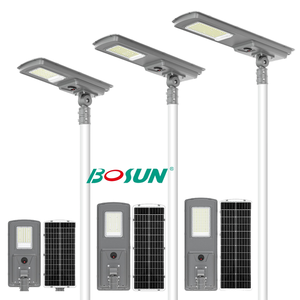
Dusk to Dawn All in One Solar Street Light Outdoor Waterproof
Integrated sleek aluminum alloy housing combining ultra-bright LED modules, dynamic microwave radar motion sensors, and automated dusk-to-dawn Intelligent Energy Management System (IEMS).
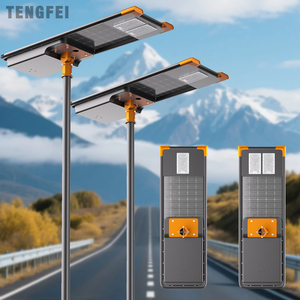
Hot Selling Low-energy Split Solar Street Light Outdoor Led Street Lighting Lamp
Heavy-duty split-configuration luminaire engineered for maximum PV array tilt flexibility. Ideal for high-latitude regions requiring oversized solar panels to ensure zero-fail year-round operation.
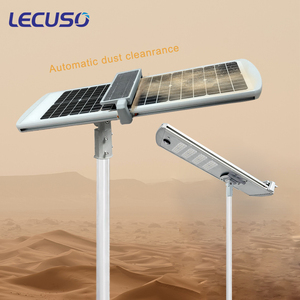
High Quality 30w 50w 60w 90w 100w 150w Automatic Auto Clean Self Cleaning Solar Street Light
Patented motorized robotic wiper mechanism designed for desert and high-dust environments. Automatically removes particulate buildup daily, preventing up to 40% photovoltaic yield loss.
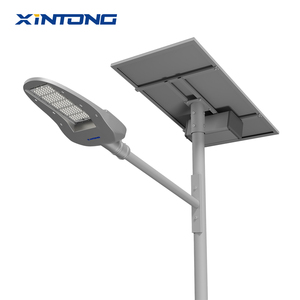
Road Light 60W 80W 100W 120W 150W Solar Street Lamp Split Solar Street Light
Municipal-grade roadway luminaire featuring customized Type II / Type III optical batwing lenses to deliver uniform illumination with strict cut-off control and zero sky-glow light pollution.
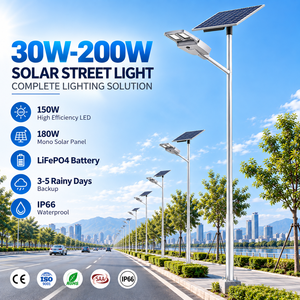
All In Two Lamp Led Solar Powered Street Light IP66 80W 100W 150W Lighting With Battery Backup
Modular All-In-Two system separating the high-capacity LiFePO4 battery pack from the solar panel for rapid installation and simplified thermal mitigation in tropical climates.
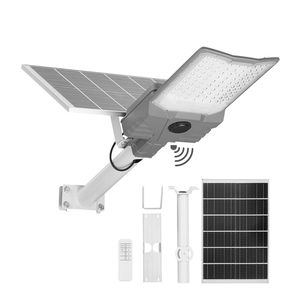
12000W Equivalent High-Powered Solar Street Light 900,000LM Outdoor Split-Type LED Floodlight
Ultra-high lumen industrial floodlighting system engineered for stadium perimeters, logistics hubs, mining sites, and security zones demanding wide-angle 240° multi-directional illumination.
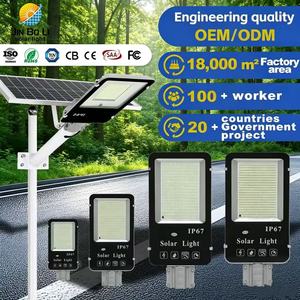
Remote Control IP67 Solar LED Light, 50W-300W, Split Type Outdoor Street Lamp
Fully customizable commercial lighting unit equipped with 2.4G RF remote telemetry, multi-stage dimming curves, dynamic power regulation, and CE/RoHS global compliance.

SLOER Commercial Split All in One Solar Street Light System
Cost-optimized commercial lighting solution engineered for residential real estate, municipal park pathways, and campus perimeter security with long-term maintenance-free operation.
Industry Whitepaper: Technical Evolution of Off-Grid Smart Solar Illumination
The transition toward autonomous carbon-neutral urban infrastructure has accelerated the strategic procurement of industrial-grade IoT Smart Solar Street Lights worldwide. Modern municipal engineering demands significantly more than basic illumination; contemporary deployments serve as critical smart city edge telemetry platforms. By decoupling public lighting networks from legacy AC electrical grids, city planners and industrial developers eliminate extensive trenching expenses, bypass grid-capacity bottlenecks, and establish zero-emission security networks capable of operating under continuous severe weather conditions.
Legacy solar lighting systems historically suffered from premature failure due to lead-acid battery degradation, inefficient PWM charge controllers, and manual cleaning oversights. Next-generation IoT architectures resolve these structural vulnerabilities through integrated Lithium Iron Phosphate (LiFePO4) energy storage, Maximum Power Point Tracking (MPPT) algorithms operating at 99.5% efficiency, and centralized cloud telemetry for predictive system diagnostics.
1. IoT Mesh Architecture & Remote Central Management Systems (CMS)
At the core of top-tier commercial solar lighting is the integration of cellular (NBIoT/4G/5G) and localized wireless mesh protocols (LoRaWAN, Zigbee). Each light luminaire acts as an intelligent node capable of transmitting bidirectional status telemetry to a Centralized Smart City Management Platform. Utility operators can monitor individual battery State-of-Charge (SoC), real-time solar input wattage, LED thermal load, and ambient motion events without dispatching physical maintenance field teams.
Onboard microcontrollers utilize predictive AI weather algorithms to adjust dimming curves dynamically during multi-day storm cycles, extending operational autonomy to over 7-10 consecutive overcast days.
Industrial Lithium Iron Phosphate chemistry offers 3,000 to 6,000 charge cycles at 80% Depth of Discharge (DoD), engineered with active thermal management to operate reliably from -20°C up to +65°C.
Robotic wiper integration automatically cycles across the glass PV surface twice daily, preventing dust accumulation, bird droppings, and soot buildup from causing irreversible hot-spot cell degradation.
2. Optical Precision & Luminous Efficacy Advancement
Modern municipal procurement frameworks dictate strict light-spill limits and glare ratings. Utilizing high-efficiency LED chips (such as Lumileds 5050 or Cree XP-G3) backed by optical-grade PMMA lenses, commercial street lights deliver luminous efficacy exceeding 160 lm/W. Optimized asymmetric distribution optics (Type II and Type III batwing patterns) ensure uniform lux distribution across multi-lane highways while preventing dark zones between light poles spaced 30 to 45 meters apart.
Strategic B2B Procurement Trends (2026–2030)
As international sustainability mandates (such as ESG corporate metrics and ISO 50001 energy standards) tighten, global sourcing directors are shifting focus toward long-term Total Cost of Ownership (TCO) rather than initial capital expenditure. Key procurement vectors currently reshaping the smart outdoor lighting market include:
Transition to "Lighting-as-a-Service" (LaaS) & Utility Subscriptions
Municipalities and industrial port operators are increasingly avoiding upfront hardware CAPEX by partnering with OEM manufacturers providing turnkey LaaS models. Under these agreements, the manufacturer retains ownership of the off-grid asset while providing guaranteed uptime service level agreements (SLAs), funded directly via operational energy savings.
Convergence of Solar Street Poles into Multi-Functional IoT Infrastructure
Future-proof urban planning requires solar light poles to act as physical anchors for secondary smart city hardware. High-specification solar poles now routinely integrate public Wi-Fi hotspots, EV charging assist modules, CCTV environmental surveillance cameras, emergency SOS call buttons, and hyper-local air quality index (AQI) sensors—all powered exclusively by off-grid solar storage.
Why Leading Global Engineers Partner With Our Factory
Direct factory manufacturing compliance, robust quality control engineering, and international execution standards.
Designed and engineered in compliance with stringent Western municipal standards, combined with cost-effective, high-precision automated mass production capabilities.
Complete engineering flexibility—from tailored photometrics (DIALux lighting simulations) to structural wind load calculations (up to 160 km/h) for extreme coastal typhoon zones.
Every production batch undergoes mandatory 48-hour thermal aging tests, salt-spray corrosion chamber testing, simulated heavy rainfall testing, and automated battery cell balancing audits.
Dedicated technical assistance throughout the asset lifecycle, including remote firmware upgrades, spare component logistics, and field technician training workshops.
Frequently Asked B2B Procurement Questions
Technical clarifications for municipal engineers, procurement directors, and EPC contractors.
Our smart solar street lighting systems utilize dynamic Intelligent Energy Management Systems (IEMS). By monitoring real-time solar harvest and battery State-of-Charge (SoC), the onboard controller automatically adjusts the LED power output curve. Combined with high-density Grade-A LiFePO4 battery storage sized for 5 to 7 days of autonomy, the luminaires ensure continuous dusk-to-dawn operation without total blackout risks.
All-in-One (Integrated): Combines the PV panel, battery, controller, and LED into a single housing for rapid, low-cost installation.
All-in-Two: Integrates the battery and LED engine into the light fixture while keeping the PV panel separate for optimized tilt angles.
Split Type: Separates all components (panel, luminaire, subterranean battery box), recommended for high-wattage municipal highways or extreme heat zones requiring underground thermal protection for the battery storage.
Particulate buildup on PV panels in desert or heavy industrial zones can reduce solar absorption by 15% to 40% within just a few months. Our patented self-cleaning robotic wipers operate on automated daily schedules powered directly by the system. This eliminates the need for expensive manual maintenance dispatches while preserving optimal solar energy conversion and extending battery health over a 10-year lifespan.
Industrial project tenders require verified independent laboratory certifications. Key standards include IP66/IP67 ingress protection against water and dust penetration, IK10 mechanical impact resistance rating, ISO9001 quality management manufacturing, as well as CE, RoHS, UL, and TUV certificates for electrical safety, electromagnetic compatibility (EMC), and environmental hazard safety.
Request a Customized Photometric Simulation & B2B Quotation
Partner directly with our engineering team for customized DIALux lighting design simulations, technical tender compliance documents, and factory-direct volume pricing.