
Solar Lighting Blog & News
Latest news, technical guides, and expert perspectives on smart solar street lights, off-grid infrastructure, and clean energy technology.
Heavy-Duty Hurricane-Proof Solar Lighting Catalog
Explore our storm-tested, off-grid solar street light series engineered specifically for hurricane zones, island infrastructure, high-altitude roadways, and coastal commercial developments.
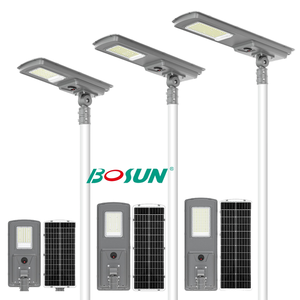
Dusk to Dawn All in One Solar Street Light Outdoor Waterproof
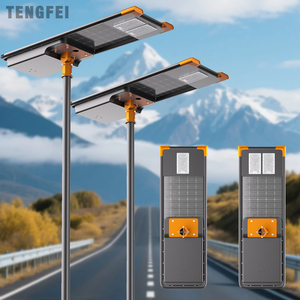
Low-Energy Split Solar Street Light Outdoor LED Lighting Lamp
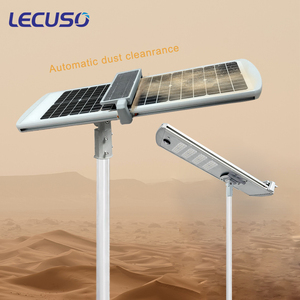
30W-150W Automatic Self Cleaning Hurricane Solar Street Light
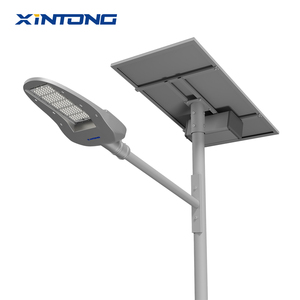
Heavy Duty 60W-150W Highway Split Solar Street Light Pole
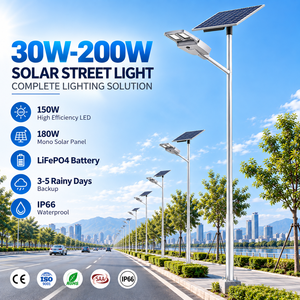
All In Two IP66 80W-150W Solar Street Light with Battery Backup
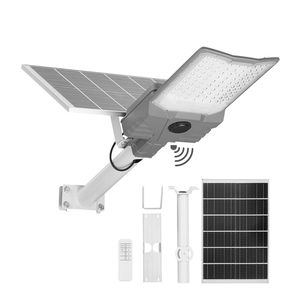
High-Powered Ultra Lumen Dusk-Dawn Split LED Floodlight
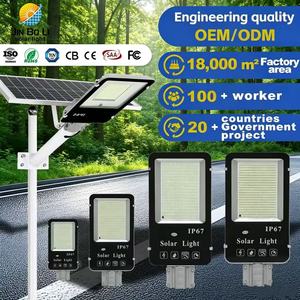
Remote Control IP67 Split Outdoor Solar Lamp (50W-300W)
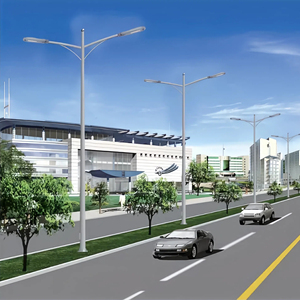
Commercial Grade 60W/120W Integrated Hybrid Solar Street Light
Why Coastal Municipalities & B2B Buyers Trust Our Storm Engineering
Standard solar lighting fixtures often collapse, shear off, or suffer structural failure during Category 3+ hurricanes. We engineer off-grid infrastructure designed to withstand extreme wind shear, salt spray corrosion, and severe flooding.
Wind Shear & Aerodynamic Drag FEA Analysis
Our engineering team utilizes Finite Element Analysis (FEA) to model dynamic wind loads up to 250 km/h (155 mph) based on ASCE 7-16 structural codes. By optimizing solar panel tilt angles, bracket gussets, and cylindrical pole shapes, we minimize drag forces ($C_d$) while preventing harmonic vibration resonance during extreme gale conditions.
Corrosion Protection & Marine-Grade Alloys
High humidity, sea salt spray, and tropical air rapidly degrade cheap metal components. We construct our light poles using Q345/Q235 Hot-Dip Galvanized Steel with an external fluorocarbon anti-corrosion coating (exceeding ASTM B117 salt spray testing for 2,000+ hours) to guarantee a 25-year structural lifespan in island environments.
Sub-Surface IP68 Sealed LiFePO4 Energy Core
Traditional top-mounted or exposed battery boxes risk wind damage or overheating. Our systems incorporate sealed Grade-A Lithium Iron Phosphate (LiFePO4) battery arrays with IP68 sub-surface or internal-pole mounting, protecting critical energy storage from storm surges, ambient heat waves, and physical flying debris impact.
Global Engineering Excellence & Proven Municipal Deployment
With engineered designs rooted in US standards and over 500+ successful installations across 40+ countries (including hurricane-prone Caribbean islands, Gulf Coast USA highways, and Southeast Asian coastal cities), our enterprise stands as a premier manufacturer and global exporter of heavy-duty solar lighting systems.
From smart connectivity poles equipped with IoT remote telemetry to zero-grid municipal lighting, our product line integrates state-of-the-art MPPT (Maximum Power Point Tracking) controllers capable of harvesting energy even under overcast, stormy conditions with 98.5% conversion efficiency.
Trusted by Global Enterprises & Municipal Authorities






Future Procurement Trends in Resilient Public Lighting
An authoritative analysis of procurement shifts, total cost of ownership (TCO) benchmarks, and regulatory requirements driving public lighting infrastructure from 2025 through 2030.
1. Shift from Grid-Tied to Standalone Emergency Micro-Infrastructure
Recent catastrophic hurricanes have exposed the vulnerability of centralized electrical power grids. During Major Hurricane Ian and Hurricane Milton, conventional grid-tied streetlights suffered months of power blackouts due to downed transmission lines and destroyed transformer sub-stations.
Municipal procurement standards in Florida, the Caribbean, and East Asia now mandate that key arterial highways, emergency evacuation routes, and hospital access corridors deploy 100% off-grid, self-sustaining solar lighting nodes. Procurement contracts increasingly reward manufacturers who demonstrate multi-day energy autonomy (autonomy ratio > 5 to 7 days continuous operation without direct solar radiation).
2. Total Cost of Ownership (TCO) Over CAPEX Optimization
Historically, procurement tenders prioritized initial fixture unit price (CAPEX). However, field failure data from tropical storm zones revealed that low-cost solar lights without certified wind shear specs failed within 18-24 months, causing massive maintenance costs and liability risks.
Modern commercial procurement models incorporate 20-year TCO evaluations. Key valuation metrics now include:
- Zero Trenching & Wiring Costs: Saving $25,000 to $45,000 per mile versus grid installation.
- Self-Cleaning Mechanism ROI: Solar panels equipped with automated wipers eliminate dust and bird drop buildup, keeping efficiency above 95% and reducing manual cleaning frequency from bi-monthly to zero.
- Modularity & Upgradability: Swappable LED engines and slide-in controller trays that allow field technicians to perform maintenance in under 10 minutes.
3. Integration of Smart IoT Telemetry & Disaster Response Networks
Next-generation government procurement guidelines demand that solar light poles serve as multi-functional smart city nodes. Following a storm, municipal emergency centers require immediate status maps detailing destroyed infrastructure, flood levels, and road accessibility.
Solar street lights integrated with LoRaWAN, Zigbee, or 4G/5G IoT controllers transmit real-time telemetry regarding battery state-of-charge (SoC), physical pole tilt angle (detecting wind-induced leaning), and ambient temperature. This allows post-hurricane emergency teams to remotely boost illumination along disaster relief lanes while conserving battery life in non-critical zones.
4. Strict Wind Load Certification & Materials Traceability
Engineering compliance is shifting from standard static load testing to dynamic wind tunnel testing. B2B buyers and government agencies now routinely require independent third-party lab verification (such as SGS or Intertek certification) confirming that complete pole assemblies—including PV modules, mounting brackets, and luminaire arms—resist sustained wind speeds exceeding 250 km/h (Category 5 typhoon rating).
Furthermore, sourcing mandates require mill test certificates for steel raw materials and verified UL/IEC compliance for lithium battery safety (UL 1973 and IEC 62619).
Technological Innovations Driving Next-Gen Solar Lighting
Discover how emerging photovoltaic advancements, battery chemistry breakthroughs, and AI algorithms are transforming storm-resistant solar street lights.
Vertical Cylindrical 360° Solar Wrapping
Traditional flat solar panels act like sails in high wind conditions, creating massive aerodynamic resistance. The industry is rapidly adopting vertical 360-degree cylindrical solar modules wrapped directly around the structural pole. This design drastically reduces wind drag coefficient ($C_d$), prevents snow and sand accumulation, and collects solar radiation from direct and reflected light throughout the day.
AI-Driven Adaptive Energy Management (AEM)
Leveraging machine learning algorithms, modern controllers analyze local historical weather patterns, real-time cloud cover telemetry, and battery degradation curves. The AI automatically dynamically adjusts lumen output curves, ensuring the system never goes dark even during prolonged 10-day tropical storm cycles.
Sodium-Ion & Advanced Solid-State Thermal Management
Extreme hurricanes are frequently followed by intense heat waves. Next-generation energy storage is moving toward sodium-ion and advanced LiFePO4 cells with phase-change thermal management materials. These batteries operate reliably in extreme ambient temperatures ranging from -40°C up to +65°C without thermal runaway risks.
Frequently Asked Questions (Procurement & Engineering FAQ)
Technical answers to critical questions faced by municipal engineers, highway contractors, and B2B importers when specifying hurricane-proof solar street lighting.
All-in-Two: Separates the solar panel onto an adjustable bracket while integrating the battery and fixture body. It allows optimal solar tilt angles for maximum charging while keeping structural mass concentrated on the pole top.
Split Solar Street Lights: Utilizes large high-wattage panels (up to 300W+) and heavy battery banks placed sub-surface or inside the pole base. Split systems are specified for high-lumen highway applications requiring 12-meter to 15-meter pole heights.
Ready to Secure Your Infrastructure with Hurricane-Proof Solar Lighting?
Contact our senior structural engineers and B2B export specialists today to receive customized photometrical (DIALux) lighting designs, wind shear calculations, and factory-direct wholesale quotations.