Clear, definitive technical answers for EPC contractors, municipal procurement teams, and commercial lighting distributors.
Q:
What is the actual efficiency gain of bifacial solar street lights compared to conventional monofacial lights?
Bifacial solar street light panels capture reflected solar light (albedo) from the ground and surrounding surfaces via their rear-side glass. Depending on the ground cover (e.g., concrete, sand, snow, grass), energy generation increases by 15% to 35%. This allows the luminaire to maintain higher lumen output or extend battery autonomy by up to 2 extra overcast days without increasing overall panel dimensions.
Q:
How do your factory solar street lights perform during prolonged rainy or cloudy weather?
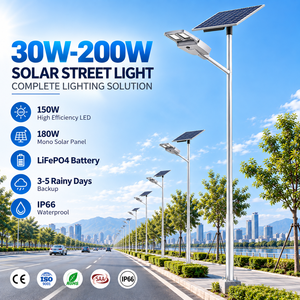
Our solar lighting systems feature smart MPPT controllers equipped with dynamic power frequency adjustment algorithms. Combined with oversized Grade-A LiFePO4 battery capacity, our street lamps guarantee continuous lighting autonomy for 5 to 7 consecutive rainy or overcast days without total system blackout.
Q:
What certifications do your solar street lights carry for municipal government tenders?
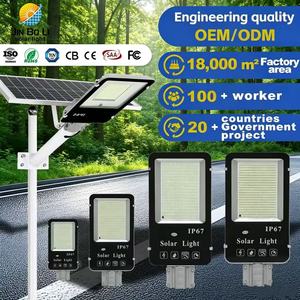
All exported solar street lights fully comply with major global certification frameworks, including CE, RoHS, IP67 waterproof testing, IK10 vandal resistance, IEC 61215 solar module quality standard, UN38.3 battery transport safety, and ISO9001/ISO14001 manufacturing quality standards. IES file photometric reports are supplied for dialux layout calculations.
Q:
What is the expected lifespan and warranty terms for wholesale orders?
We offer a comprehensive 5-year factory warranty across the entire system. The LED light engine is rated for over 100,000 hours (L70), the N-type bifacial solar panel retains >85% power performance at 25 years, and the LiFePO4 battery bank is designed for 4,000+ deep charge cycles (approx. 10 to 12 years of daily operational service).
Q:
Can your solar lights be integrated into existing Smart City CMS platforms?
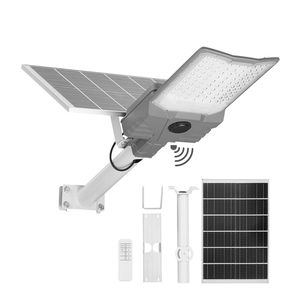
Yes. We manufacture smart solar street poles equipped with 4G/5G cellular modules, NB-IoT node controllers, or Zigbee wireless mesh gateways. They natively interface with standard Central Management Software (CMS) via MQTT/HTTP protocols, enabling remote monitoring of battery state of charge, real-time energy production telemetry, automated dimming curves, and immediate maintenance fault alerts.
Q:
What is the typical manufacturing lead time for bulk container orders?
Standard production lead time is 15 to 20 working days for standard container orders (20ft/40ft HQ). For custom OEM/ODM prototypes or custom pole engineering, initial samples are produced within 7 to 10 days following approval of technical drawings.