
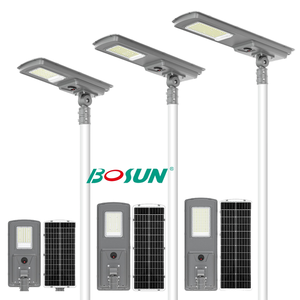
Dusk to Dawn All in One Solar Street Light Outdoor Waterproof
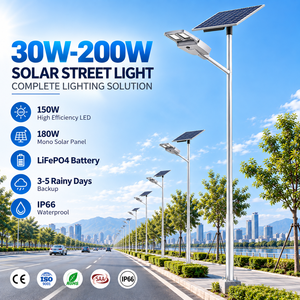
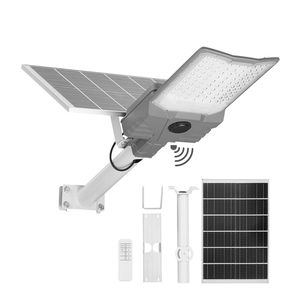
- Integrated Mono-PV & LiFePO4 Pack
- Intelligent Microwave Radar Motion Sensor
- IP66 Waterproof Die-Cast Housing
Latest news, technical guides, and expert perspectives on smart solar street lights, off-grid infrastructure, and clean energy technology.
Explore our top-rated zero-carbon solar street lights, split floodlights, and auto-cleaning solar luminaires engineered for highways, urban roads, and industrial infrastructure.
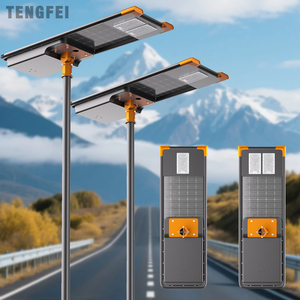
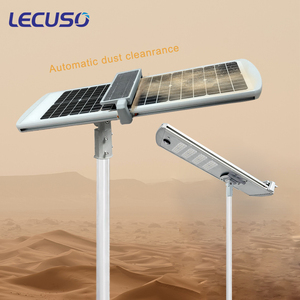
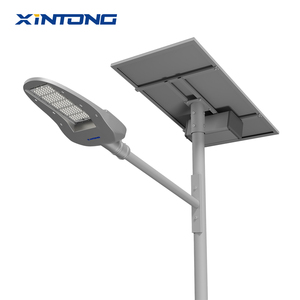

An engineering breakdown of next-generation off-grid photovoltaics, intelligent MPPT charging algorithms, and deep-cycle battery telemetry engineered by premier Chinese solar lighting manufacturers.
As global municipalities and civil infrastructure developers accelerate carbon neutrality initiatives, traditional grid-tied high-pressure sodium (HPS) and legacy AC LED luminaires are being phased out. Modern Zero Carbon Solar Street Light Manufacturing in China has evolved far beyond basic standalone solar lamps. Today's tier-1 OEM/ODM manufacturing ecosystems leverage advanced solid-state electronics, automotive-grade lithium iron phosphate (LiFePO4) energy storage, and AI-driven telemetry to guarantee year-round uninterrupted lighting performance.
The strategic imperative for procurement teams, civil engineering contractors, and urban planners is clear: replacing fossil-fuel dependent power lines with localized solar energy nodes drastically slashes Capital Expenditure (CAPEX) associated with trenching, cabling, and transformer installation by up to 70%. Concurrently, Operational Expenditure (OPEX) drops to near zero as electricity consumption charges are eliminated.
| Technical Parameter | Legacy Grid-Tied HPS Lighting | Standard Commercial Solar LED | Next-Gen Zero Carbon Smart Solar System |
|---|---|---|---|
| Lumen Efficacy | 50 – 80 lm/W | 120 – 150 lm/W | 180 – 210 lm/W |
| Solar Panel Type & Efficiency | N/A (Grid Dependent) | Polycrystalline (15% - 17%) | N-Type Monocrystalline (22% - 24%) |
| Battery Chemistry & Cycle Life | N/A | Lead-Acid / AGM (500 - 800 cycles) | Grade-A LiFePO4 (4,000 - 6,000+ cycles) |
| Charge Controller Tech | N/A | PWM Control (70%-75% efficiency) | Smart MPPT tracking (99.2% efficiency) |
| Operational Reliability | Vulnerable to grid blackouts | 1 - 2 Days Autonomy | 5 - 7 Days Autonomy (Adaptive Power) |
| Smart IoT Telemetry | None | Basic Infra-red Remote | LoRaWAN / 4G / Zigbee City Platform |
Utilizing TOPCon and PERC N-type monocrystalline solar cells engineered for high ambient temperature tolerance, maintaining robust power output even under tropical desert conditions.
Maximum Power Point Tracking algorithms continuously adjust charging current based on irradiance and battery temperature state, maximizing solar harvest by up to 30% over PWM controllers.
Precision PMMA lens arrays project wide Batwing distribution patterns (Type II / Type III ISO curves), maximizing pole spacing distances while ensuring uniform, glare-free illuminance.
How intelligent IoT mesh connectivity, self-maintaining robotics, and vertical pole integration are redefining zero-carbon outdoor lighting standards.
Dust, sand, and organic debris accumulation on solar panels can reduce photovoltaic generation by 25% to 40% in dry, high-dust environments like the Middle East and North Africa. The fast-growing demand for automatic self-cleaning solar street lights featuring dual-action robotic wiper blades ensures peak energy conversion without costly manual maintenance crews.
Moving away from traditional top-mounted horizontal panels, urban architectural design is rapidly shifting toward flexible vertical solar wraps and cylindrical pole-integrated PV modules. This design provides 360° sunlight absorption, reduces wind load pressure (drag resistance up to 160 km/h), and completely eliminates bird dropping accumulation.
Zero-carbon street lights are morphing into multi-functional smart city nodes. Future B2B procurements mandate NEMA/ZHAGA standard sockets supporting cellular 4G/5G micro-cells, environmental air monitoring sensors, CCTV security camera powering, and dynamic dimming triggered by traffic density and real-time climate data.
Procurement directors are demanding modular "plug-and-play" system architectures. Leading Chinese OEM factories are responding by standardizing modular battery drawers, tool-less latch luminaire heads, and hot-swappable MPPT controllers. This circular design approach allows municipalities to replace lithium battery modules after 8–10 years without discarding the steel pole, LED luminaire head, or photovoltaic bracket—extending total infrastructure lifespan to 25+ years.
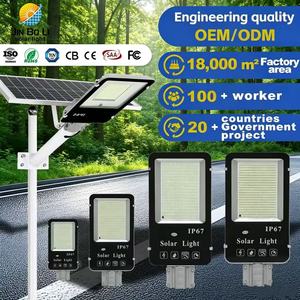
Delivering world-class zero carbon lighting infrastructure backed by rigorous international quality certifications, automated production lines, and customized project engineering.
Equipped with robotic SMT surface-mount technology, automated optical inspection (AOI), and continuous aging test chambers ensuring zero-defect LED module assembly for high-volume orders.
Fully compliant with ISO9001 quality, ISO14001 environmental standards, CE, RoHS, IP66, IP67, IK10, and IEC testing protocols required for government municipal tenders worldwide.
Our optical engineering team provides comprehensive DIALux illuminance simulations, wind resistance calculations, and customized solar autonomy sizing tailored to your geographical coordinates.
Before shipping, every product batch undergoes strict testing protocols including: 1,000-hour salt spray corrosion testing (ASTM B117 standard) for coastal installations, high-frequency vibration testing to simulate heavy vehicle traffic, IP67 immersion testing, and thermal shock chamber cycling (-40°C to +85°C). This guarantees reliable performance in extreme coastal, desert, and freezing climates.
Key engineering, logistical, and technical insights to help municipal buyers and contractors select the optimal solar lighting solution.
Battery Ah = (Luminaire Wattage × Daily Hours × Autonomy Days) / (System Voltage × Battery DoD)
Deploying 1,000 units of 80W zero-carbon solar street lights instead of traditional 250W HPS fixtures saves approximately 365,000 kWh of grid electricity annually. This translates directly to an annual carbon emissions reduction of over 290 metric tons of CO2 equivalent, delivering complete investment payback (ROI) within 18 to 24 months based on local utility tariffs and avoided trenching expenditures.
Whether you are preparing a municipal tender, designing a commercial park pathway, or upgrading high-speed roadway lighting, our engineering team offers full technical support, photometrics calculations, and direct factory-direct pricing.
Request customized DIALux optical reports, detailed product datasheets, and competitive factory-direct quotes from China's leading solar street light manufacturer.
Get a Quote