
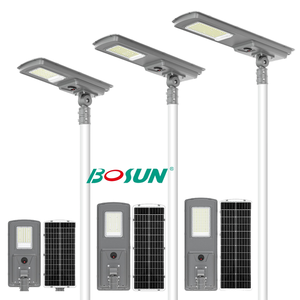
Dusk to Dawn All in One Solar Street Light Outdoor Waterproof
Integrated Design IP67 Waterproof Smart Radar Sensor
Latest news, technical guides, and expert perspectives on smart solar street lights, off-grid infrastructure, and clean energy technology.
Industrial-grade solar luminaires optimized for rural roads, agricultural hubs, remote village pathways, and perimeter safety infrastructure across global off-grid regions.
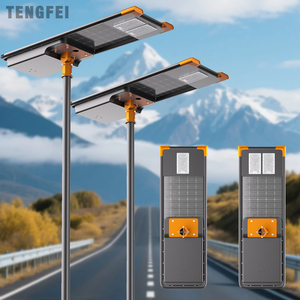
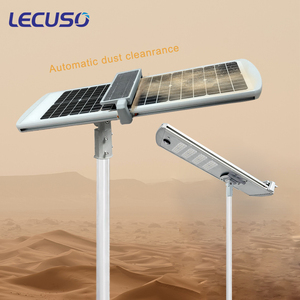
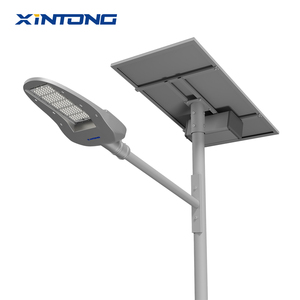
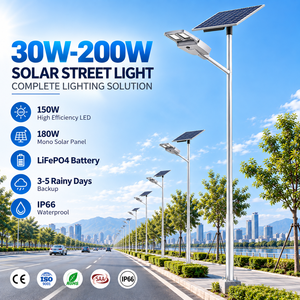
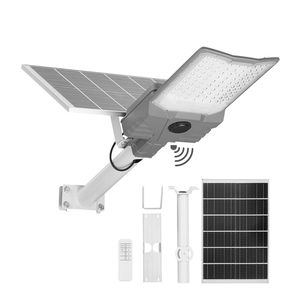
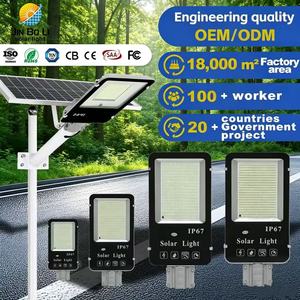

Global rural infrastructure initiatives—ranging from government-backed municipal revitalization in Southeast Asia and Latin America to off-grid electrification programs across Sub-Saharan Africa—are experiencing a fundamental technology shift. Traditional grid extension costs between $15,000 to $40,000 per kilometer in terrain-challenged rural sectors. In contrast, deploying standalone solar street lighting infrastructure reduces civil engineering capital expenditure by over 70% while guaranteeing zero operational electricity costs.
However, procuring solar street lights from China requires a sophisticated understanding of supplier capabilities, component topologies, and semantic search criteria. Municipal buyers and EPC contractors must look beyond superficial lumen specs. True Information Gain lies in evaluating thermal management algorithms, MPPT controller conversion efficiencies, battery degradation profiles under extreme ambient heat, and optical light distribution curves (IESNA Type II and Type III).
| Lighting Architecture | Best Application Intent | Solar Panel Efficacy | Battery Longevity (DOD 80%) | Maintenance Complexity |
|---|---|---|---|---|
| Integrated All-in-One | Village Alleyways, Residential Streets, Parks | 21.5% - 23.5% Monocrystalline | 5 - 8 Years (LiFePO4) | Ultra-Low (Plug & Play Replacement) |
| Split-Type Solar Light | Highways, Heavy Snow Areas, High Power Requirements | Custom Sized up to 400W | 7 - 10 Years (Underground Box) | Moderate (Cable & Pole Inspections) |
| All-in-Two System | Rural Collector Roads, Commercial Plazas | 22.0% High-Efficacy PV | 6 - 8 Years (Integrated Fixture) | Low (Top-mounted Battery Module) |
| Robotic Auto-Cleaning | Desert Regions, Dusty Agricultural Belts | Maintains 98% Peak Yield Daily | 6 - 8 Years (Automated Brush System) | Low (Periodic Brush Inspection) |
As China’s Tier-1 solar lighting factories upgrade their manufacturing lines, procurement officers must align their RFPs (Request for Proposals) with the next generation of technological trends dominating the 2026–2030 horizon:
Legacy PWM controllers waste up to 30% of harvested solar energy. Modern systems utilize micro-second Maximum Power Point Tracking (MPPT) integrated with AI-driven adaptive dimming, extending autonomy up to 7 consecutive rainy/cloudy days.
Village lights are transitioning from isolated fixtures to connected smart grid nodes. Remote telemetry allows municipal management to monitor battery state of charge (SoC), operational status, and automated fault reporting in real time.
To combat wind resistance, dust accumulation, and sandstorms, vertical solar poles with wrap-around bifacial flexible solar panels are replacing traditional flat tilted panels, increasing energy yield by capturing ground albedo reflections.
When evaluating suppliers for large-scale rural development, procurement teams must execute rigorous factory verification protocols. China remains the world’s manufacturing powerhouse for solar lights, producing over 90% of global supply. However, the price variance between low-spec assembly workshops and Tier-1 ISO-certified original equipment manufacturers (OEMs) can exceed 40%.
Ensure the supplier uses 100% Grade-A new LiFePO4 (Lithium Iron Phosphate) cells rather than recycled or second-life EV batteries. Grade-A cells offer >4,000 to 6,000 cycles at 80% DOD, ensuring an 8–10 year operational lifespan even in high ambient temperatures.
Demand verified IES files generated in integrating spheres and goniophotometer darkrooms. Premium suppliers utilize batwing lenses that distribute light uniformly across wider pole spacing (up to 30–40 meters apart), dramatically reducing the total pole count required per kilometer.
By combining Western engineering oversight, smart IoT software control, and strict compliance with international municipal standards with China's high-capacity manufacturing eco-system, we deliver uncompromised reliability for global rural electrification tenders.
Get in touch with our engineering team for free Dialux lighting simulations, OEM product customization, and competitive factory-direct pricing for your project bids.