
Solar Lighting Blog & News
Latest news, technical guides, and expert perspectives on smart solar street lights, off-grid infrastructure, and clean energy technology.
Featured Solar Landscape & Street Lighting Solutions
Explore our engineering-grade, off-grid outdoor solar luminaires designed for municipal highways, commercial real estate, public parks, and high-end residential landscapes. Built to withstand tropical typhoons, arid heat, and sub-zero climates.
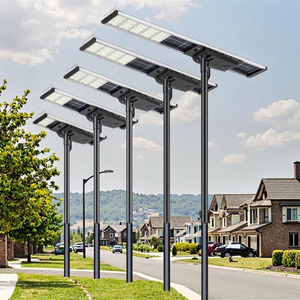
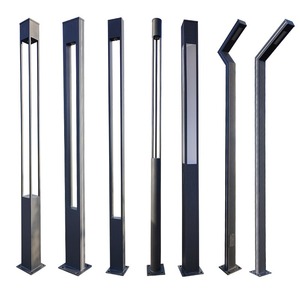
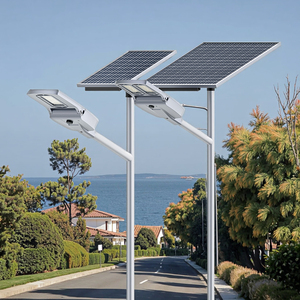
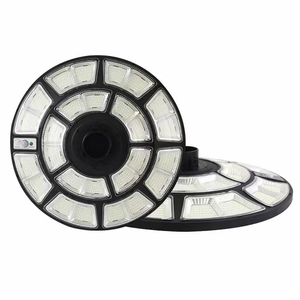
1. Executive Summary & Sourcing Landscape in China
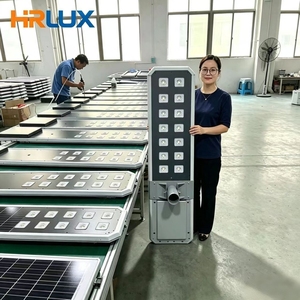
The global outdoor architectural and roadway illumination market is experiencing a structural migration toward autonomous, off-grid infrastructure. Driven by municipal carbon-neutrality mandates, rising grid distribution infrastructure costs, and aggressive developments in photovoltaic efficiency, China has emerged as the premier manufacturing epicentre for advanced solar street lighting and landscape luminaires.
However, navigating China's supply chain requires clear engineering metrics rather than relying solely on wattage labels. B2B procurement managers, EPC contractors, and municipal buyers must evaluate factories across six critical technical vectors: Photometric Efficacy (lumens per Watt), Thermodynamic Heat Sink Engineering, Battery Management System (BMS) logic, Maximum Power Point Tracking (MPPT) efficiency, Wind Load Structural Integrity (EN 40-5 compliance), and Ingress Protection longevity under extreme UV exposure.
2. Technological Trends Reshaping Solar Landscape Street Lighting (2026–2030)
Understanding the micro-innovations within China's top R&D facilities allows procurement directors to future-proof municipal lighting assets over a 10 to 15-year operational lifecycle.
N-Type TOPCon & Bifacial PV Modules
Legacy P-type PERC solar cells are rapidly being replaced by N-Type TOPCon (Tunnel Oxide Passivated Contact) and vertical cylindrical PV wrap-around technologies. Top Chinese suppliers offer bifacial solar light poles that capture direct overhead irradiance alongside ground albedo reflection, increasing energy harvest by up to 28% in snowy or light-colored pave stone environments.
Grade-A LiFePO4 & Smart Thermal BMS
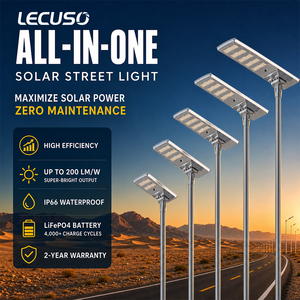
Safety and thermal tolerance define modern energy storage. Top Chinese manufacturers exclusively utilize EV-grade LiFePO4 cells capable of over 4,000 to 6,000 cycles at 80% Depth of Discharge (DoD). Integrated thermal blankets and active BMS balancing allow operation across extreme ambient temperatures ranging from -30°C to +65°C without thermal runaway risks.
IoT Smart Control & Zhaga Book 18
Modern landscape luminaires function as data collection nodes. Incorporating standard Zhaga Book 18 sockets or NEMA 7-pin receptacles allows plug-and-play integration of LoRaWAN, Zigbee, or NB-IoT controllers. Central Management Software (CMS) enables remote dimming schedules, automated fault detection, and energy consumption analytics.
Engineering Benchmark: Standard vs. Tier-1 Commercial Solar Luminaires
| Technical Parameter | Conventional Market Standard | Tier-1 Chinese Manufacturer Benchmark | Impact on Project TCO |
|---|---|---|---|
| Solar Cell Efficiency | 17.5% - 19.5% (Polycrystalline / PERC) | 23.0% - 24.8% (N-Type TOPCon Monocrystalline) | Requires 30% smaller PV footprint for equivalent output |
| LED Module Efficacy | 130 - 150 lm/W (Standard SMD2835) | 190 - 220 lm/W (Bridgelux/Philips SMD5050) | Dramatically reduces battery discharge depth per night |
| Battery Lifecycle | 1,500 - 2,000 Cycles (Ternary Lithium / Second-life) | 4,000 - 6,000+ Cycles (Brand New EV Grade-A LiFePO4) | Extends operational life from 3 years to 10+ years |
| Controller Technology | PWM Charging (70%-78% Efficiency) | Adaptive MPPT with Dynamic Dimming (>98.5% Efficiency) | Ensures 3-5 consecutive rainy day illumination performance |
| Housing & Corrosion Rating | Extruded Scrap Aluminum (IP65 / C3 Corrosion) | Die-Cast ADC12 Aluminum + AkzoNobel Powder (IP66/IK10/C5) | Prevents moisture ingress, salt-fog pitting, and storm damage |
3. Future Sourcing & Procurement Trends for Solar Landscape Lighting
As international supply chains emphasize transparency, resilience, and sustainability, the procurement methodologies for purchasing Chinese solar street lighting are evolving rapidly. B2B buyers should prepare for four key shifts:
1. Shift from Initial CapEx to Total Cost of Ownership (TCO)
Municipal clients and commercial project developers historically prioritized the lowest initial bid price. However, early failures of low-tier solar lights—caused by degraded battery packs and water-damaged controllers—have forced a pivot toward TCO evaluation. Sourcing teams now factor in maintenance labor, bucket truck deployment costs, and component replacement cycles over a 10-year horizon, giving high-efficiency, tier-1 modular luminaires a decisive advantage.
2. Demand for Architectural & Dark-Sky Compliant Optics
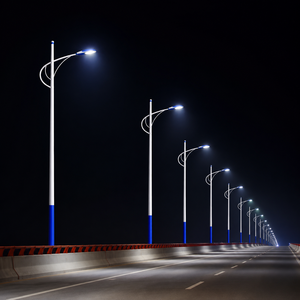
Landscape solar street lights are no longer strictly functional items; they are central element of urban landscape architecture. Modern procurement specifications demand refined aesthetic profiles—such as sleek vertical solar poles, flying saucer courtyard tops, and unobtrusive all-in-one profiles—combined with strict Dark-Sky compliance (zero upward light waste, full cut-off optics, and warm 2700K–3000K CCT options to protect nocturnal ecosystems).
3. Modular "Click-and-Fit" Component Architecture
Maintenance down-time represents a significant operational cost. The industry is standardizing around modular structural designs where the solar panel bracket, LED engine, drawer-style battery box, and intelligent controller can be swapped out in under five minutes without dismantling the structural light pole or cutting electrical wiring.
4. Third-Party Verified EPD & Carbon Footprint Audits
With ESG reporting mandates expanding across Europe, North America, and the Middle East, leading Chinese manufacturers are providing verified Environmental Product Declarations (EPDs), ISO 14064 carbon footprint trackings, and full material traceability (RoHS and REACH compliance) across their supply chain.
4. Enterprise Manufacturing Advantage: Why Partner with Top Chinese OEM Suppliers
Selecting the right manufacturing partner in China requires looking beyond product catalogs to evaluate core manufacturing infrastructure and engineering rigor. Premium manufacturers distinguish themselves through systematic quality assurance ecosystems:
Photometric & Environmental Labs
In-house Darkroom Testing with Goniophotometers to generate certified IES LM-79 and LM-80 reports, ensuring precise light distribution curves (Type I, Type II, Type III, and Type V Batwing) for dialux lighting simulation compliance.
Automated Quality Control
100% automated SMT surface mount placement, IPX6 waterproof high-pressure jet testing chambers, high-low temperature thermal shock testing (-40°C to +85°C), and 72-hour full power burn-in aging procedures before container dispatch.
Custom OEM/ODM Flexibility
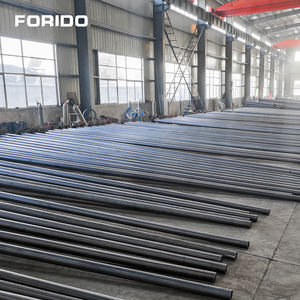
Full engineering support for custom pole heights (3m to 12m+), high-mast floodlight brackets, custom RAL color powder coating, laser-cut decorative landscape covers, and customized software dimming profiles tailored to regional solar irradiance datasets.
Need Engineering Support or Factory Direct Pricing for Your Project?
Our technical team provides free Dialux lighting simulations, photometric analysis, custom OEM design, and factory-direct volume quotes tailored to your exact municipal or commercial specs.