
Solar Lighting Blog & News
Latest news, technical guides, and expert perspectives on smart solar street lights, off-grid infrastructure, and clean energy technology.
Commercial All-In-Two Solar Lighting Infrastructure
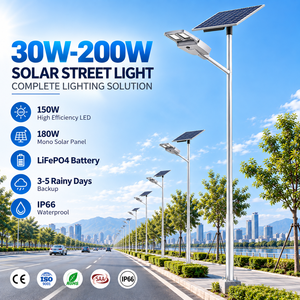
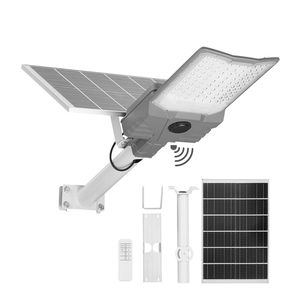
As municipal sustainability mandates and utility costs surge globally, civil engineers and project procurement officers are shifting from traditional grid-tied fixtures to advanced solar street lighting systems. Among all off-grid architectures, All In Two (A2S) Solar Street Lights have emerged as the optimal benchmark for commercial, industrial, and highway projects. By separating the high-efficiency photovoltaic solar panel from the integrated LED light engine and lithium battery enclosure, All In Two designs eliminate the angle orientation limitations of "All-In-One" lights while dramatically reducing the complex installation costs associated with traditional "Split-Type" systems.
Featured Commercial Solar Lighting Products
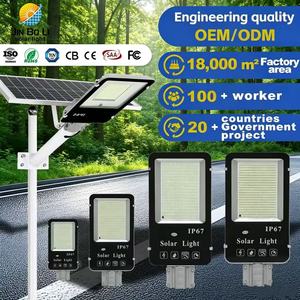
Explore our engineered lineup of commercial-grade All In Two and hybrid split-type solar street lights manufactured in China under strict ISO9001, CE, RoHS, and IEC compliance standards.
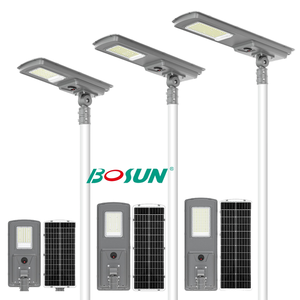
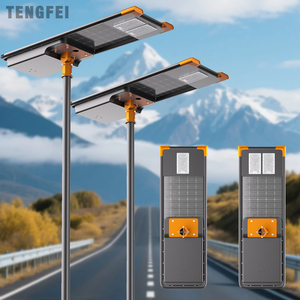
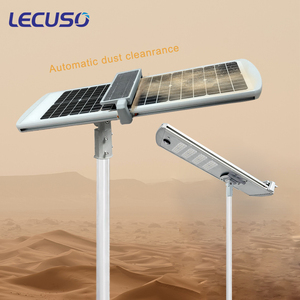
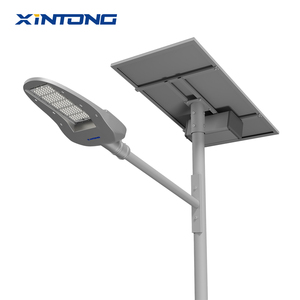

Architectural Comparison: All In Two vs. All In One vs. Split Systems
Understanding the core technical differences between solar street lighting configurations is vital for project managers conducting procurement evaluations. Chinese solar manufacturers lead global innovation by offering three main structural layouts. However, for commercial municipal projects located in variable sunlight regions or high-latitude territories, the All In Two (A2S) configuration delivers the single best return on investment (ROI).
| Evaluation Parameter | All In One (Integrated) | All In Two (Semi-Integrated) | Traditional Split System |
|---|---|---|---|
| PV Panel Adjustability | Fixed horizontally with lamp body | 360° Rotational & Multi-Angle Tilt | 360° Rotational & Multi-Angle Tilt |
| Battery Enclosure Location | Inside light fixture casing | Integrated inside lamp or underneath panel | External ground box or lower pole mount |
| Maximum Solar Wattage | Limited (Typically 50W – 120W) | High Flexibility (80W – 300W+) | Unlimited (Up to 600W+) |
| Installation Complexity & Cost | Ultra-Low (Plug & Play) | Low (2-step connection, no subterranean wiring) | High (Requires cable trenching & burial) |
| Thermal Management | Moderate (Heat transfers to battery) | Excellent (Heat sink isolated from PV panel) | Optimal (Battery subterranean or shaded) |
| Target Applications | Residential paths, small courtyards | Highways, arterial roads, industrial parks | Utility grids, heavy industrial highways |
The primary drawback of standard "All In One" solar lamps is that the solar panel faces whichever direction the roadway dictates. If a street runs north-to-south, an integrated panel faces sideways, losing up to 45% of daily solar irradiance. The All In Two Solar Street Light solves this fundamental flaw: the luminaire head (housing the MPPT controller, LED array, and long-life LiFePO4 battery) points directly at the road surface, while the top solar panel rotates freely toward true South (or North in the Southern Hemisphere).
Why Source All In Two Solar Lights from Leading Chinese Manufacturers?
China produces over 85% of the world's commercial solar street lighting products. Sourcing directly from tier-1 Chinese manufacturers and OEM suppliers gives overseas distributors, engineering contractors, and government entities an unbeatable balance of cost efficiency, rapid technological adaptation, and robust quality assurance.
Future Procurement Trends in All-In-Two Solar Street Lighting (2026–2030)
The commercial solar outdoor lighting sector is undergoing rapid technological convergence. Procurement specialists must look beyond standard wattage specifications and evaluate suppliers based on next-generation technological readiness:
1. IoT Smart City Integration & Central Management Systems (CMS)
Future municipal tenders increasingly require smart connected street lighting nodes. All In Two systems are now built with Zigbee, LoRaWAN, or 4G/5G Cellular IoT modules embedded inside the luminaire housing. This allows city administrators to remotely monitor battery health, adjust dimming profiles based on traffic density, calculate energy savings, and receive automated maintenance alerts when a fixture requires servicing.
2. High-Efficiency N-Type TOPCon & Perovskite Solar Cells
Legacy P-type PERC monocrystalline panels (yielding 20-21% efficiency) are being replaced by N-Type TOPCon solar cells capable of achieving over 23.5% conversion efficiency. This higher power density allows All In Two street lights to utilize smaller physical panel frames while capturing significantly more energy during overcast, rainy, or low-irradiance winter days.
3. Self-Cleaning & Automated Maintenance Mechanisms
Dust accumulation, bird droppings, and sandstorms can reduce solar charging capacity by up to 30% within a few months in dry regions. Leading Chinese suppliers are integrating dual-robotic wiper brushes and hydrophobic nano-coatings directly onto the solar glass. Automated self-cleaning schedules ensure maximum photovoltaic absorption throughout the 10-year lifespan without incurring manual labor costs.
4. Adaptive Motion Sensing & Custom Photometric Optics
Modern commercial installations demand strict compliance with dark-sky pollution regulations. Next-gen All In Two lights feature batwing professional optical lenses (Type II, Type III, and Type IV distributions) combined with dual microwave radar sensors. Lights run at an ambient 30% economy brightness, instantly ramping up to 100% full lumen output when pedestrian or vehicular movement is detected.
Engineering Trends: Battery Chemistry & Thermal Dissipation Breakthroughs
The reliability of an off-grid solar street light is governed almost entirely by its energy storage system. Historically, lead-acid and gel batteries buried underground suffered from short cycle lives (2-3 years) and high maintenance overheads.
Today's top-tier China manufacturers exclusively integrate Grade-A Lithium Iron Phosphate (LiFePO4) battery cells inside the All-In-Two luminaire body. LiFePO4 chemistry provides up to 4,000 deep discharge cycles at 80% Depth of Discharge (DoD), ensuring a functional service lifespan exceeding 10 to 12 years. Furthermore, advanced aluminum heat-pipe thermodynamic cooling channels isolate the battery module from the high heat generated by the LED matrix, preventing thermal degradation during continuous high-lumen operational modes.
Frequently Asked Questions (FAQ) for Global Sourcing Managers
Get direct, technical answers to common queries regarding OEM customization, minimum order quantities (MOQ), shipping logistics, and product selection for Chinese All In Two solar lights.
Ready to Sourcing High-Performance All In Two Solar Lights?
Partner directly with China's leading OEM/ODM solar outdoor lighting manufacturer. Request complete product specifications, Dialux lighting calculations, and direct factory pricing for your upcoming project.
Get Catalog