
Solar Lighting Blog & News
Latest news, technical guides, and expert perspectives on smart solar street lights, off-grid infrastructure, and clean energy technology.
Featured Commercial Tubular & Split Solar Street Lighting Systems
Explore state-of-the-art municipal and commercial-grade solar street lighting solutions manufactured for extreme weather resistance, ultra-high luminous efficacy, and zero-grid carbon-neutral operation. The following selection represents top-tier engineering configurations available for direct B2B factory procurement.
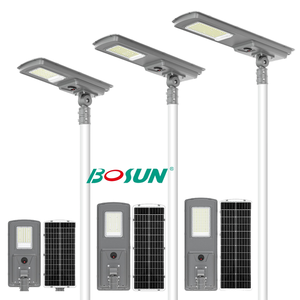
Integrated IP65/IP67 weatherproof structure with Grade-A LiFePO4 battery pack, automated optical sensors, and continuous 3-5 rainy day autonomy.
Contact Us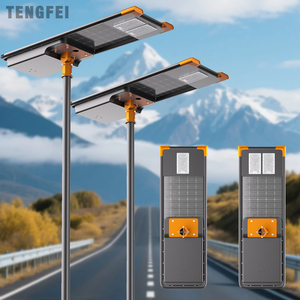
High-efficiency split-type architecture engineered for flexible panel angle tilt, maximizing solar energy yield in northern latitude installations.
Contact Us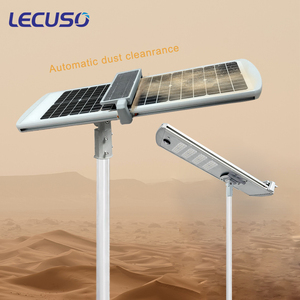
Patented robotic sweeping mechanism prevents dust and sand accumulation, ensuring maximum energy conversion rates in arid and desert environments.
Contact Us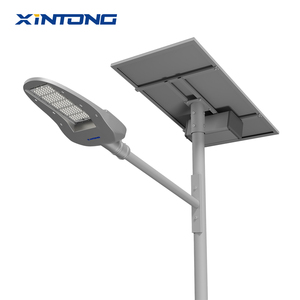
Heavy-duty municipal pole lighting powered by high-lumen Philips/Lumileds LED chips delivering up to 210 lm/W for multi-lane expressways.
Contact Us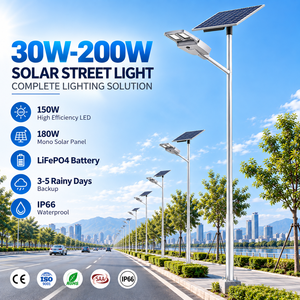
Streamlined modular design integrating die-cast aluminum heat sinks, smart MPPT tracking, and long-life battery enclosures for urban main roads.
Contact Us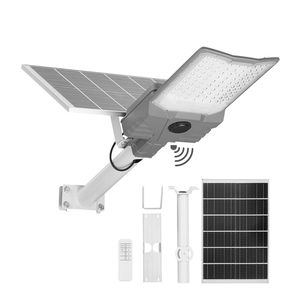
Ultra-high lumen industrial floodlight system designed for wide area illumination, logistics hubs, seaports, and stadium parking fields.
Contact Us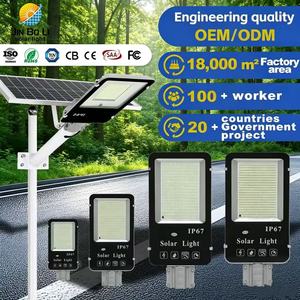
Fully customizable 50W-300W system equipped with wireless RF/IoT remote management, programmable dimming profiles, and RoHS compliance.
Contact Us
Cost-effective commercial lighting pole engineered with high-transmittance optical lenses and structural wind load certification for OEM projects.
Contact UsExecutive Summary: The Shift to Vertical Tubular Solar Street Light Poles
The global municipal lighting landscape is undergoing a paradigm shift. Traditional grid-connected high-pressure sodium (HPS) and standard flat-panel solar street lights are rapidly giving way to vertical tubular solar street light poles (also termed cylindrical solar poles or wrap-around solar light poles). This structural evolution resolves the fundamental engineering limitations of legacy solar street lights: excessive wind drag, dust/snow accumulation, structural vandalism, and aesthetic clunkiness in urban architectural zones.
As municipal procurement managers, EPC contractors, and urban developers prepare for 2026-2030 infrastructure initiatives, identifying reliable manufacturers with certified vertical PV integration capabilities is critical. This B2B buyer guide analyzes the top 10 global tubular solar street light pole factories, evaluating their manufacturing scale, technological patents, battery management systems (BMS), smart city IoT capabilities, and OEM/ODM flexibilities.
Technological Deep-Dive: Why Vertical Tubular PV Integrations Outperform Flat Panels
Understanding the physics of vertical cylindrical solar encapsulation is essential when evaluating OEM suppliers. Tubular solar modules employ flexible or semi-flexible monocrystalline PERC/TOPCon cells arranged in a vertical multi-string configuration around a cylindrical substrate. Below are the primary technical advantages:
1. Aerodynamic Wind Load Mitigation
Flat solar panels act like sails during extreme atmospheric events, creating immense cantilever force on pole foundations. Tubular solar poles present a low-drag cylindrical profile (drag coefficient Cd ≈ 0.5 to 0.7), capable of withstanding Category 5 hurricane wind loads (up to 160-180 mph) without structural deflection.
2. 360-Degree Sunlight & Albedo Capture
Unlike fixed flat panels that only experience peak solar irradiance for 2-3 hours around solar noon, vertical cylindrical panels capture solar rays throughout the entire daylight cycle (East to West). Furthermore, they absorb ground-reflected light (albedo effect from snow, water, or light concrete), expanding total daily power generation.
3. Natural Gravity Dust & Snow Shedding
Dust, bird droppings, and heavy snow build-up are the leading causes of solar panel efficiency degradation (up to 40% loss). The 90-degree vertical orientation of tubular solar modules allows rain to naturally wash away particulate matter, while snow cannot settle on the vertical surface, eliminating winter power failure.
Engineering Comparison: Vertical Tubular Poles vs. Traditional Flat Solar & Grid Poles
| Engineering Criteria | Vertical Tubular Solar Pole | Standard Flat Solar Pole | Traditional Grid-Tied Light Pole |
|---|---|---|---|
| Wind Resistance Rating | Category 5 (Up to 180 mph) | Category 2-3 (Max 90-110 mph) | Category 5 (Up to 160 mph) |
| Maintenance Requirement | Ultra-Low (Self-cleaning) | High (Regular surface cleaning) | Medium (Grid/Wiring maintenance) |
| Trenching & Cabling Cost | $0 (100% Off-Grid) | $0 (100% Off-Grid) | $40 - $120 per linear meter |
| Urban Aesthetic Rating | Architectural Premium (Sleek) | Industrial / Clunky | Standard / Utility |
| Snow Accumulation Impact | Zero Performance Loss | Severe (Up to 100% power loss) | N/A |
| Smart City Integration | Native 5G/CCTV/Sensor Node | Limited Module Space | Requires External Power Add-ons |
Top 10 Tubular Solar Street Light Pole Factories & Suppliers
To assist municipal buyers, lighting engineering consultants, and B2B distributors, we have evaluated the top 10 manufacturing suppliers globally based on technical capability, quality assurance certifications (ISO9001, CE, RoHS, IP67), production capacity, and R&D innovation in vertical solar technology.
EnGoPlanet Energy Solutions LLC (USA / Global)
EnGoPlanet is a global pioneer in smart off-grid infrastructure and vertical solar street light poles. Engineered in the USA, EnGoPlanet's flagship series (EnGo Slim, EnGo Illumo, EnGo Leaf) integrates vertical flexible solar modules with internal LiFePO4 battery storage, dynamic motion sensors, and IoT smart monitoring platforms.
Keroa LED / SLOER Solar Lighting Co., Ltd.
A dominant OEM/ODM manufacturing giant with vast automated assembly facilities. Specializes in cost-competitive commercial split and all-in-one solar street lamps, vertical cylindrical solar poles, and automated self-cleaning road lights. Highly favored by international contractors for large-scale municipal tenders.
Sunna Design (France)
Renowned European manufacturer focusing on high-reliability solar lighting systems for extreme climatic environments. Their smart energy management algorithms and durable electronics provide long operational lifespans in tropical and desert regions.
Leadsun Innovation (Australia)
Early innovator in integrated solar lighting, offering robust cylindrical and modular pole lighting solutions across Oceania and North America. Strong emphasis on wireless IoT monitoring and public pathway lighting.
SolarStreetLight USA
Focuses on heavy-duty commercial solar street lamps and municipal lighting poles designed specifically to meet US Department of Transportation (DOT) structural and photometric guidelines.
Valmont Structures (Global Manufacturing)
Global infrastructure infrastructure leader providing specialized structural steel poles tailored for vertical solar wrap integration, high wind resistance, and smart grid applications.
Fonroche Lighting (France)
Specializes in high-lumen off-grid solar street lights for major highway projects, municipal bypasses, and industrial complexes across Europe, Africa, and the Americas.
Hebei Flying Dragon Energy Co., Ltd.
Large-scale Asian manufacturer of hot-dip galvanized octagonal and tubular steel lighting poles, supplying integrated cylindrical PV modules for OEM brand distribution worldwide.
Greenshine New Energy (USA)
Provides custom commercial solar outdoor lighting solutions for park districts, military bases, parking lots, and corporate campuses across North America.
Shenzhen Nomo Solar Lighting Co., Ltd.
An early entrant into vertical triangular and cylindrical solar pole systems, offering integrated cloud software for remote monitoring, dimming control, and automated self-cleaning features.
Future Sourcing & Product Trends: What B2B Buyers Must Prepare For
The next decade will transform solar light poles from isolated illumination units into interconnected, revenue-generating smart city assets. Procurement directors evaluating 2026-2030 tenders should align with factories capable of delivering the following advanced technologies:
1. Multi-Functional Smart City Infrastructure (IoT Nodes)
Modern tubular solar poles offer ample vertical space inside the housing for edge-computing hardware. Suppliers are now co-engineering poles equipped with 4G/5G small cell transceivers, environmental particulate sensors (PM2.5/PM10), surveillance cameras (CCTV), emergency SOS buttons, and public Wi-Fi hotspots—all powered continuously by the integrated cylindrical solar energy storage system.
2. Transition to Sodium-Ion and Next-Gen LiFePO4 Batteries
While Lithium Iron Phosphate (LiFePO4) remains the industry benchmark with 4000-6000 deep discharge cycles, factories are introducing Sodium-Ion (Na-ion) battery options. Sodium-ion technology provides superior low-temperature performance (retaining over 80% capacity at -40°C), drastically reducing winter failure rates in extreme northern climates (Canada, Scandinavia, Northern US).
3. Solar Lighting as a Service (SLaaS) & Zero-CapEx Sourcing
Leading manufacturers are partnering with financial institutions to offer SLaaS models. Municipalities and industrial park developers can now upgrade public lighting infrastructure with zero upfront capital expenditure (CapEx), repaying equipment and maintenance through guaranteed monthly energy savings and reduced operational costs (OpEx).
Factory OEM/ODM Capabilities & Engineering Quality Criteria
Selecting the right manufacturing facility requires rigorous auditing of quality control standards, manufacturing equipment, and engineering certifications. Below are the key parameters evaluated during factory site inspections:
Structural Galvanization & Corrosion Protection
Poles must undergo internal and external hot-dip galvanization conforming to ISO 1461 standards (minimum zinc coating thickness 85 µm), followed by architectural-grade electrostatic fluorocarbon powder coating to withstand salt-spray environments (C5-M marine rating for 25+ years).
Smart MPPT Controller Efficiency
Advanced Maximum Power Point Tracking (MPPT) charge controllers with dual-circuit auto-adaptation achieve tracking efficiency >99.5%. Programmed dimming profiles (e.g., 100% brightness for 4 hours, 50% for 4 hours, 30% with motion sensing till dawn) double system autonomy.
Photometric & Dialux Simulation Support
Top factories provide complimentary Dialux photometric calculations to ensure project compliance with international roadway lighting standards (EN 13201 / IESNA RP-8), guaranteeing optimal illuminance (Lux), uniformity (U0), and glare control (G*).
B2B Procurement FAQ: Tubular Solar Light Poles
A premium tubular solar light pole is engineered for a multi-stage operational lifespan: The hot-dip galvanized steel pole structure lasts 25-30 years; the vertical monocrystalline PV modules retain over 80% power efficiency at 25 years; the Grade-A LiFePO4 battery pack lasts 8-12 years (4000-6000 cycles); and the LED luminaire engine operates for 100,000 hours (L70 rating).
Vertical tubular poles excel in cold climates. Because the solar panels are vertically oriented (90 degrees), snow cannot cover or accumulate on the panel surface. Furthermore, battery packs are housed underground or thermally insulated inside the pole shaft, preventing cold-weather capacity drop.
Yes. Reputable factories conduct finite element analysis (FEA) and customize wall thickness (from 3mm to 8mm), pole taper, foundation flange dimensions, and anchor bolt steel grades (e.g., Q235, Q345, or ASTM A572) based on local wind speeds (ranging from 120 km/h to 260 km/h).
Standard prototype development takes 7 to 14 days. Mass manufacturing for containerized project orders (100 to 1,000 units) typically requires 20 to 35 calendar days, depending on custom steel fabrication, galvanization schedules, and specialized optical testing.
Modern cylindrical solar modules utilize multi-string bypass diode architectures and parallel cell interconnections. Even if one side of the pole is in direct shadow, the unshaded multi-angle strings continue to produce energy at optimal voltage, avoiding partial shading system shutdown.
Yes. High-tier suppliers integrate Zigbee, LoRaWAN, or 4G/5G NBIoT communication modules into the MPPT controller. This enables municipal operators to remotely monitor battery state-of-charge (SOC), adjust lighting schedules, receive automated fault alerts, and track energy yield in real time via a cloud portal.
For global municipal tenders, factory compliance should include ISO9001 (Quality Management), ISO14001 (Environmental Management), CE certification, RoHS compliance, IP66 or IP67 ingress protection, IK10 impact resistance, and IEC 61215 / IEC 61730 certifications for solar module safety.
While the initial equipment cost of a vertical solar pole is higher than a plain steel grid pole, the elimination of cable trenching, transformer upgrades, power permits, and monthly electricity bills yields a complete payback (ROI) within 2 to 4 years. Over 25 years, solar poles reduce overall project TCO by 50% to 70%.
Global Field Engineering & Case Verification
Cylindrical vertical solar poles have been successfully deployed in high-profile international locations ranging from commercial corporate headquarters in Texas to luxury resort coastal boulevards in Montenegro. In hurricane-prone coastal regions, vertical poles have logged 100% structural survival rates following Category 4 and 5 tropical storms, proving the real-world safety advantage of aerodynamic cylindrical PV engineering.
Request Engineering Specifications & Factory Pricing
Need customized Dialux lighting designs, structural wind load calculations, or OEM quotation packages for upcoming municipal tenders? Connect directly with our Senior Engineering Team.