
Solar Lighting Blog & News
Latest news, technical guides, and expert perspectives on smart solar street lights, off-grid infrastructure, and clean energy technology.
1. Executive Industry Whitepaper: The MPPT Advantage in Commercial Solar Street Lighting
In modern municipal and industrial outdoor illumination, the shift from traditional Pulse Width Modulation (PWM) to advanced Maximum Power Point Tracking (MPPT) solar charge controllers represents the single most significant efficiency benchmark of the decade. As smart cities, highway authorities, and commercial developers demand zero-carbon infrastructure without sacrificing operational uptime, MPPT controllers serve as the intelligence hub of off-grid solar street lights. By continuously scanning the voltage-current ($V-I$) curve of photovoltaic (PV) modules, high-performance MPPT algorithms dynamically match peak electrical output under fluctuating solar irradiance and extreme ambient temperatures.
While legacy PWM controllers force the solar panel to operate at the exact voltage of the battery bank—resulting in energy losses between 20% and 40%—industrial-grade MPPT systems convert excess panel voltage into supplementary charging current. This allows system engineers to specify higher voltage solar arrays (e.g., 36V or 48V nominal) paired with lower-voltage LiFePO4 energy storage, yielding an extraordinary peak tracking efficiency of up to 99.5% and overall energy conversion efficiency exceeding 98%.
From an engineering perspective, the technical advantages of integrating MPPT controllers into commercial split-type and all-in-one solar street lamps extend beyond energy conversion:
- Adaptive Multi-Stage Charging Profiles: MPPT electronics incorporate programmed Constant Current (Bulk), Constant Voltage (Absorption), and Float/Equalization stages customized specifically for Lithium Iron Phosphate ($\text{LiFePO}_4$) chemistry, extending battery lifecycle beyond 4,000 deep cycles.
- Dynamic Dusk-to-Dawn Autonomy: Integrated dimming profiles combined with intelligent power management automatically adjust light output based on real-time state of charge (SoC), maintaining illumination across 5 to 7 consecutive rainy or overcast days.
- Thermal Drift Mitigation: Temperature compensation sensors dynamically adjust charging threshold parameters, protecting solar energy storage systems deployed in harsh environments ranging from desert heats (+65°C) to arctic winters (-40°C).
| Performance Metric | Conventional PWM Solar Systems | Advanced MPPT Solar Systems (Our Standard) |
|---|---|---|
| Photovoltaic Conversion Efficacy | 65% – 75% | 97% – 99.5% |
| Low-Irradiance Performance (Cloudy/Dawn) | Minimal to Zero Charging Current | Active Step-Down Current Amplification |
| Solar Array Voltage Matching | Strictly tied to Battery Voltage | Flexible (High Input Voltage / Low Battery V) |
| Battery Chemistry Optimization | Basic Lead-Acid / Generic Lithium Profile | Precision Microprocessor LiFePO4 BMS Tuning |
| System Heat Loss | High (Dissipated as direct heat) | Ultralow (High-frequency MOSFET Switching) |
2. Top 8 Engineered MPPT Solar Light Systems & Product Recommendations
As a premiere manufacturer and international exporter, our commercial solar street lighting catalog features field-proven architectures engineered for high-lumen reliability, extreme wind resistance, and maintenance-free longevity. Below are 8 flagship MPPT-driven models recommended for municipal, commercial, and industrial procurement.
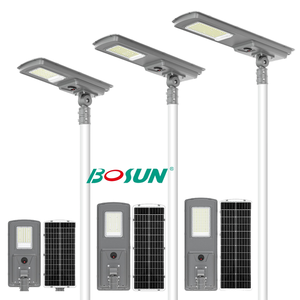
Dusk to Dawn All in One Solar Street Light Outdoor Waterproof
- Smart MPPT Controller Built-in
- IP67 Waterproof & Die-Cast Aluminum
- Integrated Microwave Motion Sensor
- Zero Wiring Off-Grid Installation
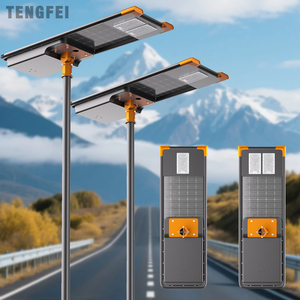
Hot Selling Low-Energy Split Solar Street Light Outdoor LED Lamp
- High Efficacy 180 lm/W LED Optics
- External High-Wattage Mono PV Panel
- Deep-Cycle Battery Enclosure
- Optimal for High-Latitude Regions
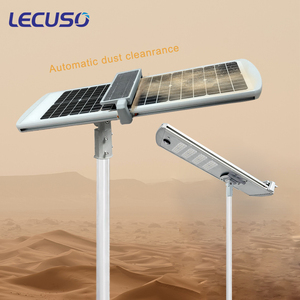
30W-150W Automatic Self-Cleaning Solar Street Light
- Robotic Dust & Sand Wiper System
- Programmable Cleaning Frequency
- MPPT Efficiency Restoration +25%
- Engineered for Desert & Arid Zones
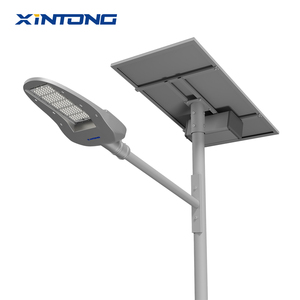
Road Light 60W-150W Split Commercial Solar Street Lamp
- Batwing Type II/III Optical Lens
- Heavy-Duty MPPT Charge Unit
- Hot-Dip Galvanized Pole Compatible
- EN 60598 / CE Certified Safety
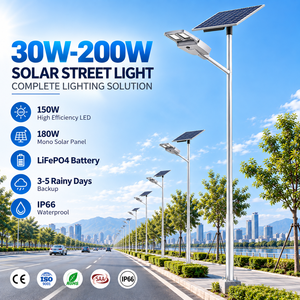
All In Two LED Solar Street Light IP66 80W-150W with Battery Backup
- Modular Solar Panel Angle Adjust
- Integrated LiFePO4 Pack in Fixture
- Smart Bluetooth / Zigbee Remote Control
- IP66 Harsh Environment Protection
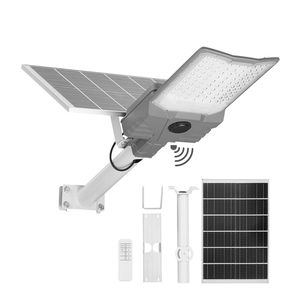
Ultra High-Powered Split-Type LED Solar Floodlight & Street Lamp
- Extreme Lumen Density Output
- 240° Wide Beam Angle Optics
- 6500K Daylight CCT Illumination
- Multi-Channel Industrial MPPT Hub
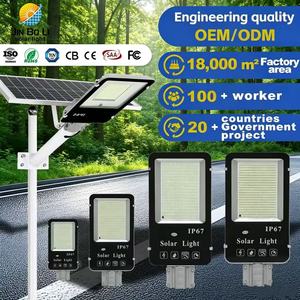
Remote Control IP67 Solar LED Light 50W-300W Split Type Lamp
- Multi-Function Infrared Remote Control
- RoHS & CE Compliant Exporter Standard
- Weatherproof Sealed Aluminum Housing
- Intelligent Power Dimming Modes

SLOER Commercial Split & All-in-One Solar Street Light System
- Competitive Wholesale Factory Pricing
- 60W / 120W Rated Power Modules
- Fast Assembly Bracket System
- Rigorous QC Burn-In Tested
3. Future Procurement & Technological Trends in MPPT Solar Lighting (2026–2030)
As global infrastructure investments accelerate toward zero-emissions goals and IoT integration, municipal buyers and engineering procurement contractors (EPCs) must anticipate rapid technological shifts. The convergence of smart grids, advanced power electronics, and artificial intelligence is reshaping commercial solar street lighting procurement. Below are five strategic trends driving the future of the industry:
1. IoT-Cloud Managed MPPT Networks (Zhaga / NEMA Socket)
Modern MPPT controllers are evolving from standalone regulators into connected smart city nodes. Future-proof solar lighting contracts increasingly specify standardized 7-pin NEMA or 4-pin Zhaga sockets integrated directly with cellular (NB-IoT / LTE-M) or LoRaWAN gateways. This enables remote telemetry monitoring of battery state-of-charge, solar panel degradation, fault alerts, and centralized dynamic dimming over cloud platforms.
2. High-Voltage Architecture & Bifacial Glass-Glass Solar Panels
To reduce copper wiring losses and increase overall system efficiency, top-tier solar light manufacturers are moving toward higher DC system voltages (up to 60V DC). Paired with bifacial TOPCon solar modules that harvest albedo reflection from ground surfaces (snow, sand, concrete), next-generation MPPT controllers dynamically optimize dual-sided irradiance, boosting total energy generation by an additional 15% to 25%.
3. Autonomous Robotic Self-Cleaning Mechanisms
Dust, bird droppings, and particulate matter build-up (soiling) can reduce solar charging capacity by up to 60% in arid or desert regions. The market is witnessing a massive surge in demand for integrated automatic cleaning MPPT street lamps. Utilizing low-power dual-brush mechanisms driven by algorithm-timed MPPT signals, these lights clean panels daily before dawn, maintaining peak optical transmittance without manual maintenance.
4. Smart Thermal Management & LiFePO4 BMS Integration
Extreme weather events caused by climate fluctuations require superior battery safety profiles. Advanced MPPT controllers now feature direct digital interfaces to LiFePO4 Smart Battery Management Systems (BMS). Features include automatic low-temperature heating elements (enabling charging down to -20°C), active cell balancing, and multi-point thermal cutoffs that eliminate thermal runaway risks in high-temperature equatorial regions.
4. Enterprise Engineering & Global OEM Exporter Capabilities
As a recognized leader in off-grid renewable infrastructure, our manufacturing enterprise combines state-of-the-art USA-engineered technology standards with high-volume, precision manufacturing. Trusted by municipal authorities, global telecommunications partners, and major industrial enterprises across 40+ countries, we deliver reliable outdoor solar lighting solutions tailored to complex environmental specifications.
USA Engineering Standards & Quality Control
Our product lines—including the acclaimed EnGo Slim, EnGo Illumo, and EnGo Leaf smart solar pole systems—are engineered with meticulous precision. Every production batch undergoes rigorous quality assurance testing:
- Photometric & Dialux Simulation Support: We provide full IES file rendering for architectural lighting layout optimization, ensuring strict compliance with IESNA RP-8 and European EN 13201 roadway lighting standards.
- IP67 Waterproof & Salt-Spray Resistance: Die-cast aluminum and anodized structural components tested against 1,000 hours of aggressive salt fog (ASTM B117 standard) for coastal and marine environments.
- Wind-Tunnel Certified Pole Structural Stability: Engineered to withstand extreme hurricane-force winds up to 160 mph (71 m/s) when fully integrated with pole assemblies.
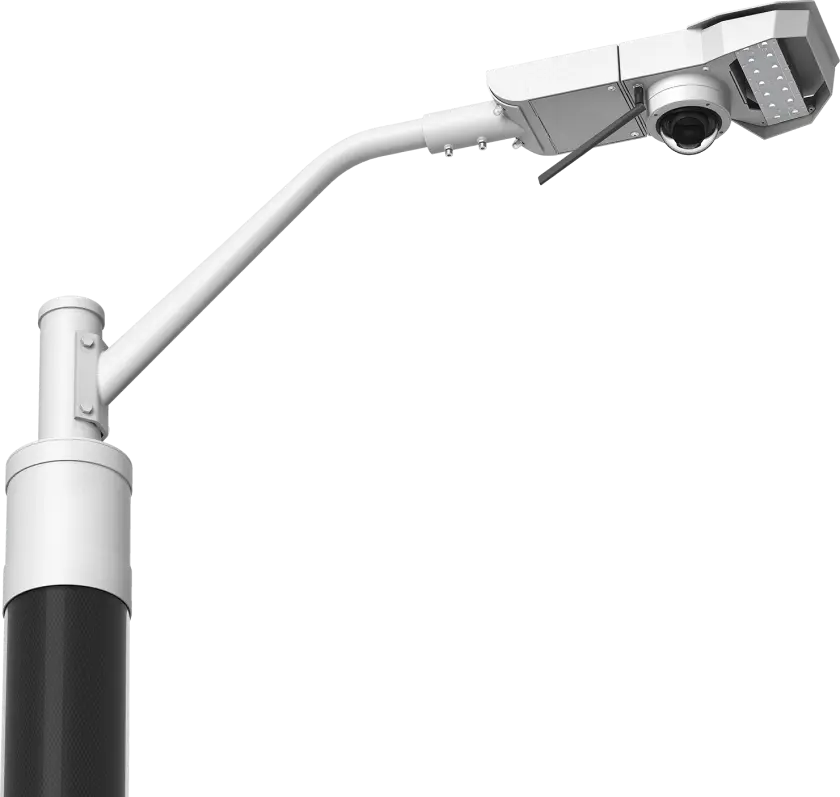 Integrated EnGo Smart Solar Lighting Node Architecture
Proven Global Deployments & Key Landmark Projects
Our proprietary MPPT solar lighting technology has been successfully deployed at high-profile locations worldwide, including high-tech manufacturing corridors like SpaceX facilities in Boca Chica, Texas, luxury coastal developments in Lustica Bay, Montenegro, and major municipal arterial roads across the United States, Europe, and the Middle East. Whether for commercial parking lots, public parks, highway corridors, or off-grid industrial zones, our systems deliver 100% off-grid autonomy with zero grid interconnection costs.
5. Comprehensive B2B Procurement FAQ: MPPT Solar Lighting Systems
Ready to upgrade your municipal or commercial project with high-efficiency MPPT solar lights?