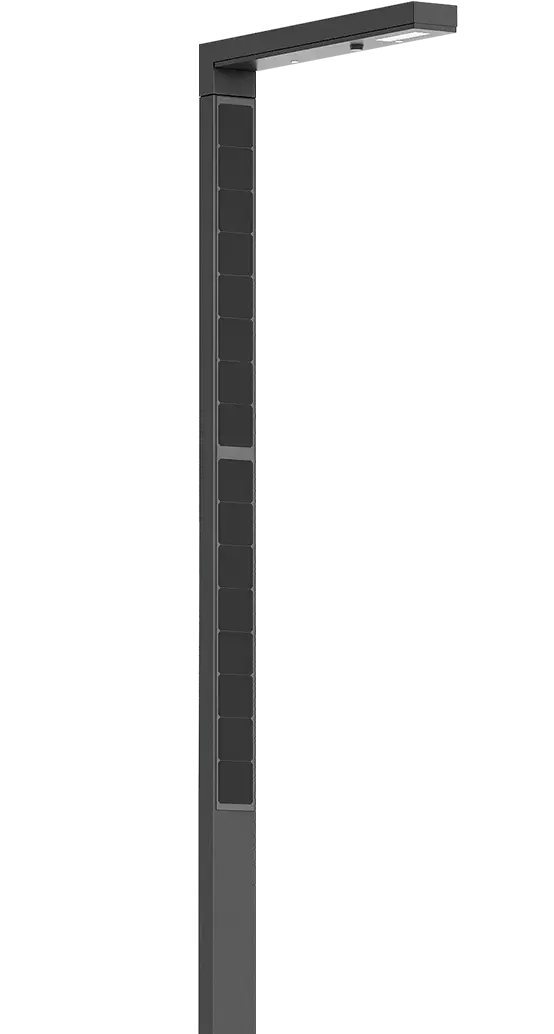
Hot Selling Low-energy Split Solar Street Light Outdoor Led Street Lighting Lamp
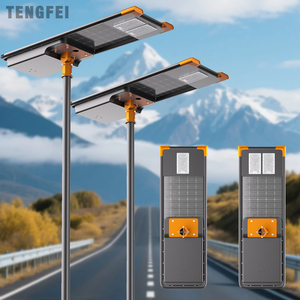
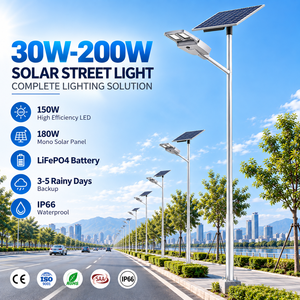
Split TypeLow Power ConsumptionHigh Lumens
Heavy-duty split-system street lighting designed for highway and main arterial road illumination. Features customizable solar panel orientation to maximize radiation capture in non-equatorial latitudes.
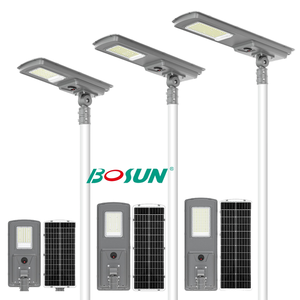
All In Two LED Solar Powered Street Light IP66 80W 100W 150W
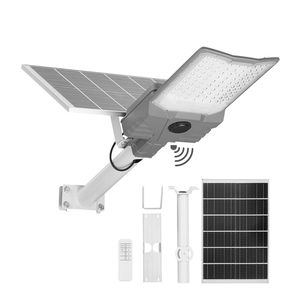
All-In-TwoIP66 WaterproofLithium Battery
Engineered All-in-Two modular system combining luminaire head, motion radar sensor, and internal lithium battery pack with an adjustable external solar module for simplified engineering installation.
High-Powered Ultra-Lumen Outdoor Split LED Solar Floodlight 6500K
High Output240° Beam Angle6500K CCT
Industrial-grade high-lumen output solar floodlight system engineered for stadium perimeters, mining sites, logistic hubs, and broad perimeter security lighting applications requiring maximum lux coverage.
Remote Control IP67 Solar LED Light 50W-300W Split Street Lamp
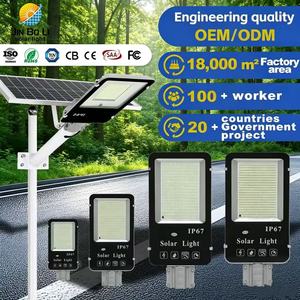
IP67 SubmersibleWireless RemoteRoHS Compliant
IP67 weather-sealed split solar street lamp with intelligent infrared multi-mode remote programming, adaptive power management, and corrosion-resistant die-cast aluminum housing.
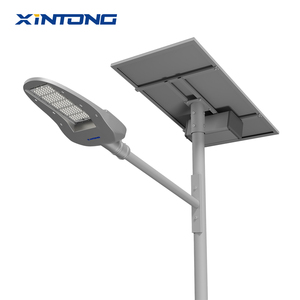
SLOER Commercial Split & All-In-One Integrated Solar Street Light
OEM ScaleSmart DimmingCommercial Grade
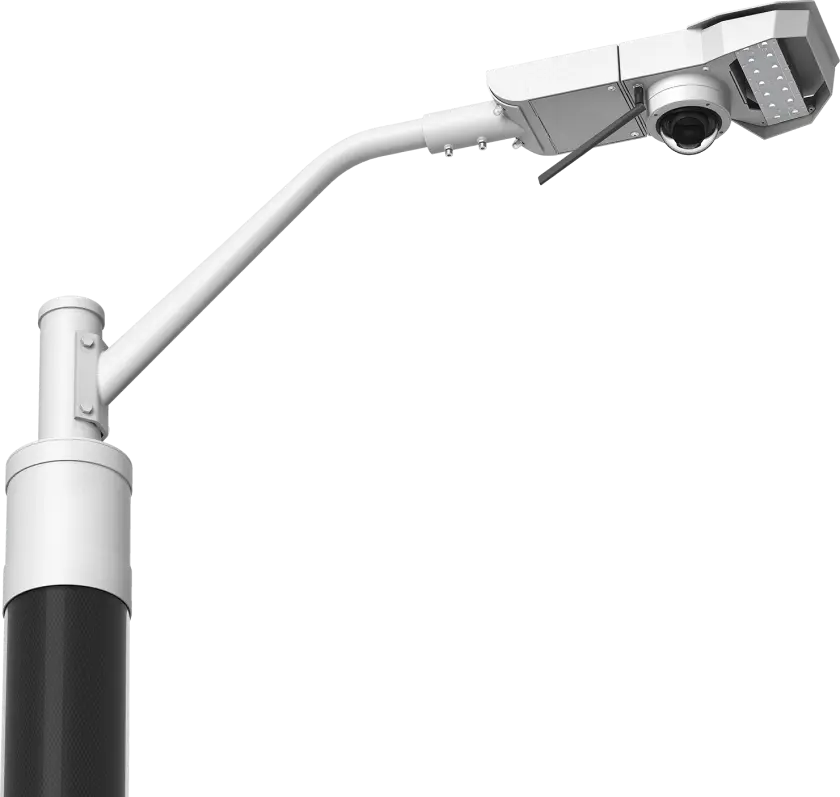
Cost-optimized commercial solar street light manufacturer solution designed for municipal B2B tenders, combining robust thermal dissipation architecture with ultra-long lifecycle components.
Executive Whitepaper: Top 10 Motion Sensor Solar Street Light Manufacturers & Exporters
The global off-grid commercial lighting sector is undergoing a profound paradigm shift driven by urban decarbonization initiatives, advancement in lithium battery chemistry, and smart city sensor integration. Procurement managers, municipal engineers, and EPC contractors navigating overseas supply chains require rigorous technical criteria to evaluate manufacturer capability beyond basic price-per-watt metrics.
Motion sensor solar street lights represent the peak of off-grid engineering efficiency. By integrating 5.8GHz microwave radar sensors or passive infrared (PIR) modules with dynamic Maximum Power Point Tracking (MPPT) power modulation, contemporary lighting nodes reduce energy consumption by up to 70% during low-traffic hours while delivering 100% full-lumen output upon human or vehicular detection.
Top 10 Global Exporters & Technical Capability Matrix
Based on manufacturing capacity, export compliance certifications (UL, CE, RoHS, ISO9001), optical efficiency standards, and battery BMS protection technologies, the top 10 global manufacturers and exporters are ranked below:
Manufacturer / Brand
Primary Export Markets
Core Technological Advantage
Max Photovoltaic Efficiency
Motion Sensor Type
Warranty Standard
EnGoPlanet Energy Solutions
North America, EU, Middle East
Smart Pole Integration, IoT Remote Monitoring, USA Engineering
22.8% - 24.0%
5.8GHz Microwave Radar / AI Motion
5 - 10 Years
SLOER Solar Tech
Southeast Asia, South America
Cost-Competitive Mass Manufacturing, Split Systems
Information Gain Insight: Selecting a solar street lighting exporter requires auditing their Battery Management System (BMS) logic. Premium exporters utilize multi-tier thermal protection, low-voltage disconnect (LVD) algorithms, and active cell balancing to ensure LiFePO4 batteries reach 4,000 to 6,000 charge-discharge cycles even under climate extremes (-20°C to +65°C).
Future Procurement Trends in Commercial Solar Lighting (2025–2030)
B2B enterprise buyers and government procurement departments are moving away from legacy low-spec standalone solar lights toward integrated smart grid nodes. As municipal sustainability mandates accelerate globally, procurement decisions are influenced by four structural trends:
1. Transition to N-Type TOPCon & Monocrystalline PERC Solar Cells
Conventional Polycrystalline solar panels with 15-17% efficiency are obsolete in commercial street lighting. Premium factories have fully shifted to Monocrystalline N-Type TOPCon (Tunnel Oxide Passivated Contact) and PERC cells offering conversion efficiencies exceeding 23.5%. Higher efficiency allows manufacturers to reduce overall luminaire footprint while maximizing energy yield in overcast or high-latitude regions.
2. Shift from PIR (Passive Infrared) to 5.8GHz Microwave Radar & AI Vision
First-generation solar lamps relied on PIR thermal sensors, which suffer from drastic sensitivity degradation in ambient temperatures exceeding 35°C (95°F) due to reduced thermal contrast. Modern procurement specifications demand 5.8GHz Doppler Microwave Radar sensors or AI optical vision sensors. Microwave sensing penetrates non-metallic obstacles, offers 360-degree coverage up to 15 meters, and maintains 100% operational precision regardless of ambient temperature spikes.
3. Adoption of Smart IoT Central Management Systems (CMS)
Standalone unmonitored solar lights incur high lifecycle inspection costs. The future of municipal procurement relies on smart connected poles equipped with 4G/5G, LoRaWAN, or NB-IoT telemetry (such as EnGo Monitor and EnGo Connect platforms). Remote administrators can monitor battery state-of-charge (SoC), adjust motion sensor light dimming curves in real-time, receive automatic fault alerts, and evaluate energy harvesting metrics via cloud dashboards.
4. Growth of "Solar Lighting as a Service" (SLaaS) and Zero-CapEx Contracts
Municipalities and private developers are increasingly leveraging subscription-based utility procurement models (e.g., EnGo Utility). Rather than incurring heavy upfront capital expenditure (CapEx), institutions enter operational contracts (OpEx) where the manufacturer/exporter designs, installs, monitors, and maintains the off-grid infrastructure with guaranteed uptime service level agreements (SLAs).
Product Technological Development & Engineering Innovations
To compete in the international export market, Tier-1 factories are driving technological breakthroughs across four core engineering domains:
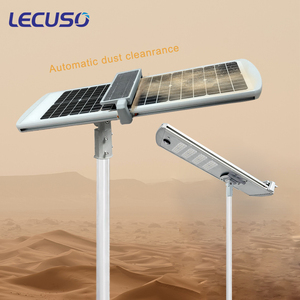
Robotic Self-Cleaning Photovoltaic Modules
Dust, sand, and bird droppings (soiling effect) can degrade solar panel output by 40% to 70% within six months in arid climates such as the Middle East and North Africa (MENA). Advanced export models integrate automated daily self-cleaning mechanisms. Embedded micro-actuators drive heavy-duty rubber wipers or electro-static repellent coatings across the glass surface every morning, guaranteeing optimal solar irradiance capture without manual maintenance crews.
Lithium Iron Phosphate (LiFePO4) & Smart Thermal Management
The transition from lead-acid/gel batteries to LiFePO4 chemistry has dramatically elevated product lifespans from 2 years to 10+ years. Factories now integrate smart thermal insulation sleeves, internal heating elements for sub-zero charging, and dual-layer aluminum heat sinks to prevent thermal runaway in intense tropical heat.
IP67 Water Ingress
Fully sealed die-cast aluminum housing prevents moisture penetration during intense hurricanes and storms.
MPPT Efficiency 99%
Real-time tracking of peak power point maximizes solar harvesting under diffused winter sunlight.
IK10 Vandal-Proof
High impact resistance optical polycarbonate lenses protect against physical vandalism and debris.
Modular "All-In-Two" and Integrated Pole Designs
While legacy "Split" solar street lights remain essential for high-wattage highway illumination (120W-300W), urban boulevards and residential parks prefer sleek "All-In-One" or "All-In-Two" architectures (such as EnGo Slim and EnGo Illumo). These unified profiles eliminate exposed cabling, reduce wind resistance (EPA rating optimization), and cut freight container shipping volumes by up to 50% for international exporters.
When selecting an OEM/ODM solar street lighting factory, global buyers must assess production infrastructure, quality control rigor, and engineering validation capabilities. Enterprise competitiveness relies on five foundational pillars:
R&D and Custom Optical Engineering: Ability to provide IES photometric simulation files (Type I, Type II, Type III, Type IV light distribution profiles) tailored to specific road geometries and LUX uniformity targets.
Automated SMT & PCB Assembly Lines: High-speed Surface Mount Technology (SMT) lines ensuring precise placement of high-efficiency LED chips (Bridgelux, Cree, Lumileds) with minimal thermal resistance.
Global Supply Chain Traceability: Direct procurement partnerships for A-grade lithium cells (CATL, BYD, EVE) with complete batch trace certificates and UN38.3 battery transport safety clearance.
USA & Global Field Reliability Footprint: Proven deployments across demanding environments—from high-profile enterprise facilities (e.g., SpaceX, AT&T, Microsoft) to municipal roadways in North America, Europe, and the Middle East.
Frequently Asked Questions (FAQ) for B2B Buyers & Procurement Managers
Answers to common technical, financial, and logistical questions encountered when sourcing motion sensor solar street lights from global exporters.
How do 5.8GHz microwave radar sensors differ from traditional PIR sensors?
Microwave radar sensors emit high-frequency electromagnetic waves to detect motion via Doppler shift. Unlike Passive Infrared (PIR) sensors—which detect heat differential and fail in high ambient summer temperatures—microwave sensors operate accurately regardless of heat spikes. Furthermore, microwave sensors penetrate glass and light plastic covers, enabling fully concealed waterproof housing designs with 360° wide-angle detection.
What is the typical battery autonomy of motion sensor solar street lights during overcast days?
Standard commercial-grade systems are engineered for 3 to 7 days of continuous rainy/cloudy autonomy. By leveraging dynamic motion sensor profiles (e.g., operating at 20-30% standby power during idle hours and ramping up to 100% full brightness for 30 seconds upon motion detection), energy consumption is drastically minimized, allowing the system to maintain lighting duty even during multi-day storm cycles.
Which lithium battery chemistry is best for extreme climate installations?
Lithium Iron Phosphate (LiFePO4) is the global benchmark for solar street lighting due to its exceptional thermal stability, safety profile, and high cycle life (3,500 to 6,000+ cycles at 80% Depth of Discharge). For severe Arctic cold (-30°C or lower), specialized LiFePO4 cells with built-in thermal heating films or Lithium Titanate (LTO) battery formulations are recommended.
What export certifications must a factory possess for North American and European imports?
For European Union imports, CE (EMC & LVD), RoHS, and REACH certifications are compulsory. For North American markets, UL 1598 / UL 8750 compliance, FCC certification for microwave sensors, and DLC (DesignLights Consortium) listing are often required for municipal utility rebates. Additionally, UN38.3 and MSDS certificates are strictly mandatory for lithium battery international ocean/air transport.
How does automated self-cleaning technology lower the Total Cost of Ownership (TCO)?
Manual cleaning of street light solar panels in dusty or industrial zones requires aerial lift trucks, road blockades, and ongoing maintenance crews, costing anywhere from $15 to $50 per pole annually. Integrated self-cleaning mechanism modules automatically brush off particulate matter daily, maintaining PV charging efficiency within 95%+ of factory rating and eliminating manual maintenance expenses across a 10-year operating lifespan.
What is the standard OEM/ODM lead time for bulk B2B container orders?
Standard manufacturing lead times for customized B2B container loads (e.g., 20ft or 40ft HQ filled with 200 to 800 units depending on split or integrated model) range from 15 to 25 business days following technical photometrics approval and initial deposit confirmation. Prototype samples typically ship within 7 to 10 days.
Partner with a trusted global exporter. Contact our senior technical team for OEM/ODM pricing, IES light simulation files, customized solar street light engineering specifications, and bulk container logistics support.