
Solar Lighting Blog & News
Latest news, technical guides, and expert perspectives on smart solar street lights, off-grid infrastructure, and clean energy technology.
Top-Rated Commercial Solar Post Top Lighting Solutions
Explore high-efficiency commercial solar luminaires engineered for highways, public parks, municipal roadways, and corporate plazas. Each unit features Grade-A monocrystalline cells, intelligent MPPT controllers, and long-life LiFePO4 storage.
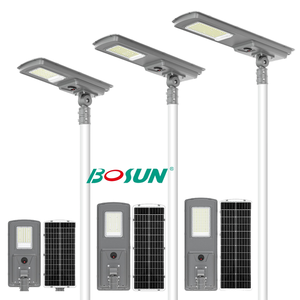
Dusk to Dawn All in One Solar Street Light Outdoor Waterproof
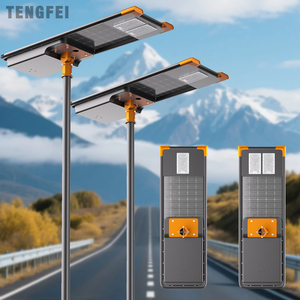
Low-Energy Split Solar Post Top LED Lighting Lamp
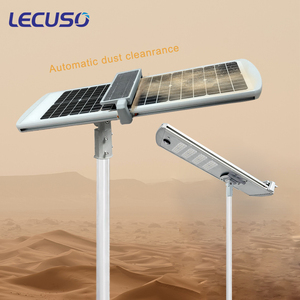
Robotic Self-Cleaning Solar Post Top Street Light
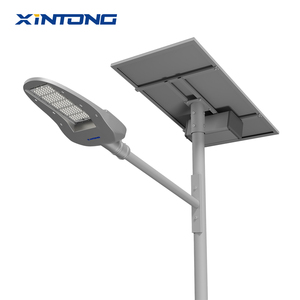
Heavy-Duty Modular Split Solar Commercial Road Light
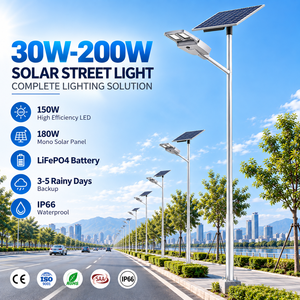
All-In-Two Commercial LED Solar Post Light with Battery Backup
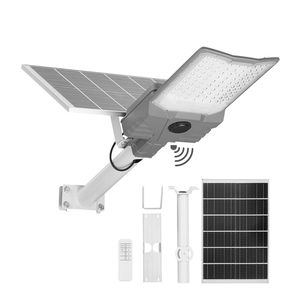
High-Powered Industrial Solar Post Top Floodlight Luminaire
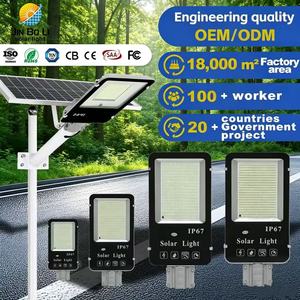
Smart Remote Control Commercial Solar LED Post Light

Commercial Dual-Mode Integrated Solar Post Top Light
Executive Summary: Strategic Sourcing of Commercial Solar Post Top Lighting
As municipal budgets align with aggressive net-zero emissions targets, decarbonized public outdoor lighting has shifted from an eco-friendly luxury to a foundational infrastructure requirement. Commercial solar post top light fixtures represent a specialized segment of urban illumination, combining architectural aesthetics with high-efficiency photovoltaic (PV) generation, advanced lithium storage, and smart grid telemetry. Unlike standard street lights mounted on extended cobra-head tenons, post-top solar luminaires are engineered for 360-degree ambient optical dispersion, making them essential for city plazas, pedestrian walkways, corporate campuses, and municipal parks.
Architectural Taxonomy & Photometric Performance Criteria
Commercial buyers must navigate three primary architectural configurations when procuring solar post top lighting systems. Each architecture serves distinct operational parameters based on solar irradiance ratios, pole height limits, and aesthetic urban design criteria:
1. All-in-One (Integrated) Systems
Features the PV panel, LiFePO4 battery pack, MPPT controller, and LED optical engine housed within a single post-top chassis. Ideal for streamlined installation, low wind profile, and sleek urban aesthetics.
2. All-in-Two (Semi-Split) Systems
Separates the high-wattage solar panel from the post-top luminaire body containing the battery and optics. Allows independent tilt adjustment of the PV module to optimize solar yield in higher latitudes.
3. Smart Vertical Pole Wraps
Integrates flexible cylindrical solar arrays directly onto the vertical lighting pole. Delivers extreme wind resistance (up to 160 mph), reduces snow accumulation, and offers premium architectural appeal.
Top 10 Global Solar Post Top Light Factories Benchmarking Matrix
To assist municipal buyers, EPC contractors, and commercial developers, our engineering team evaluated leading global manufacturers based on vertical supply chain integration, quality assurance standards, battery protection protocols, and IoT capability.
| Manufacturer Tier | Key Technical Differentiation | PV Module Tech | Battery Chemistry | Max Efficacy | Smart IoT Protocol | Warranty |
|---|---|---|---|---|---|---|
| Tier 1 (USA / Global Eng.) | Patented Smart Pole Tech & USA Assembly Standards | TOPCon Monocrystalline (24.2%) | LiFePO4 (Grade A+ EV Cells) | 210 - 230 lm/W | Zigbee / LoRaWAN / 5G Cellular | 10 Years Full System |
| Tier 1 (Commercial OEM) | Automated Robotic Self-Cleaning Mechanisms | N-Type Mono PERC (22.8%) | LiFePO4 (BMS Smart Balancer) | 190 - 210 lm/W | RS485 / Bluetooth Mesh | 5-8 Years System |
| Tier 2 (High-Volume Factory) | Standard Split & All-In-Two Commercial Castings | Standard Mono PERC (21.5%) | Lithium NMC / LiFePO4 | 160 - 180 lm/W | RF Remote / Microwave Sensor | 3-5 Years System |
| Tier 3 (Budget Exporters) | Low-cost basic dusk-to-dawn floodlights | Polycrystalline (17.5%) | Recycled Lithium Ion | 130 - 150 lm/W | Basic PIR Sensor Only | 1-2 Years Limited |
Future Procurement Trends in Commercial Solar Lighting (2026-2030)
The commercial outdoor lighting landscape is undergoing rapid technological convergence. Procurement executives must evaluate forward-looking technologies to prevent premature infrastructure obsolescence over a 15 to 20-year operational horizon.
1. N-Type TOPCon & Perovskite-Silicon Tandem Cells
Legacy P-type PERC solar cells are reaching their theoretical efficiency limit (~24%). Modern commercial post-top luminaires are transitioning toward N-Type TOPCon (Tunnel Oxide Passivated Contact) and emerging Perovskite-Silicon tandem modules. These advanced cells offer a lower temperature coefficient (-0.30%/°C), enabling up to 15% higher energy harvest in high-ambient tropical environments where thermal degradation severely impacts traditional solar panels.
2. AI-Powered Predictive Battery Energy Management (BMS 2.0)
Next-generation solar post top lights no longer rely on simple timer curves or basic motion sensing. Advanced controllers integrate AI-driven algorithms that analyze localized weather forecast feeds via IoT networks. If three consecutive overcast days are predicted, the BMS dynamic load balancing adjusts LED drive current dynamically, guaranteeing 100% continuous lighting uptime (Zero-Blackout Technology) while protecting battery cell depth of discharge (DoD).
3. Smart City Infrastructure Convergence & Micro-Cell Nodes
Commercial post-top light poles are evolving into prime real estate for smart city connectivity. Equipped with standardized NEMA/ANSI C136.41 7-pin receptacles or Zhaga Book 18 sockets, solar post-top light fixtures now double as multi-sensor urban hubs housing 4G/5G micro-cells, environmental air-quality monitoring devices, license plate recognition cameras, and public Wi-Fi access points powered by dedicated solar-battery reserves.
4. Solar Lighting as a Service (SLAAS) & Decarbonized Capital Allocation
Commercial enterprises and municipalities are rapidly adopting Solar Lighting as a Service (SLAAS) utility models. Rather than allocating heavy upfront Capital Expenditure (CapEx) for trenching, wiring, grid connection fees, and luminaire hardware, organizations pay a predictable operational fee (OpEx). The manufacturer retains ownership, remotely monitors system performance via cloud telemetry, and handles lifecycle maintenance guarantees.
Enterprise Advantages & Manufacturing Core Competencies
Our manufacturing facility represents the pinnacle of commercial solar lighting engineering. Built on rigorous quality control frameworks, domestic and global engineering standards, and robust supply chain integration, we deliver enterprise-grade illumination solutions tailored for demanding climate conditions.
USA Engineering Standards
Designed and tested to meet stringent North American and European structural, electrical, and optical standards. Certified ISO9001, CE, RoHS, IP67, and IK10 impact resistant.
Bespoke OEM/ODM Customization
Complete custom engineering capability—from rapid CAD/IES photometrics prototyping to custom color temperatures (2700K to 6500K), optical distribution curves (Type I-V), and branded housing finishes.
Cloud Telemetry & Smart Monitoring
Integrated proprietary IoT platforms (EnGo Monitor & Connect) providing real-time solar yield tracking, automated fault alerts, battery health monitoring, and remote firmware updates over-the-air (OTA).
Commercial Sourcing & Engineering FAQ
Direct answers to critical technical and logistical questions asked by B2B buyers, electrical engineers, and procurement managers.
Q1: How do commercial solar post top lights compare against conventional grid-connected LED fixtures in Total Cost of Ownership (TCO)?
While grid-connected LED fixtures have a lower upfront luminaire cost, commercial solar post top lights eliminate grid trenching, conduit laying, electrical panel upgrades, transformer connections, and monthly utility bills. For typical commercial projects (e.g., parking lots, pathways), trenching and copper wiring costs average $50 to $120 per linear foot. Solar post-top fixtures yield immediate ROI at installation and achieve full financial payback within 1.5 to 3 years while delivering zero carbon operational emissions.
Q2: What calculation methodology determines the necessary solar panel wattage and battery capacity ratio?
System sizing follows the Autonomy Ratio Formula. First, calculate the daily watt-hour (Wh) consumption: Fixture Wattage × Operating Hours × Dimming Profile Factor. To compensate for systemic inefficiencies (controller loss, temperature drop, battery charging efficiency), multiply Wh by 1.35. Finally, multiply by the target Days of Autonomy (typically 3 to 5 rainy/cloudy days). The solar panel capacity (Watts Peak) must then be sized to fully recharge the depleted battery pack within 4.5 to 6 hours of peak sun equivalent.
Q3: What battery chemistry is recommended for extreme hot or cold climate installations?
Lithium Iron Phosphate (LiFePO4) is the gold standard for commercial solar lighting. LiFePO4 offers 4,000 to 6,000 charge cycles at 80% Depth of Discharge (DoD), superior thermal stability up to +65°C (+149°F), and non-combustible safety characteristics. For extreme arctic environments (-20°C to -40°C), specialized LiFePO4 batteries equipped with internal thermal heating pads or Lithium Titanate Oxide (LTO) chemistries are recommended to prevent lithium plating during sub-zero charging.
Q4: How do automated self-cleaning solar post top light fixtures improve long-term energy yield?
Dust, sand, bird droppings, and industrial particulate buildup (soiling) degrade solar panel output by 15% to 40% annually in desert, coastal, or agricultural regions. Self-cleaning commercial solar lights feature built-in robotic wiper blades programmed to sweep the glass panel twice daily. This maintains optimal light transmittance, prevents localized hot-spot cell damage, and eliminates costly manual bucket-truck maintenance visits.
Q5: What optical distribution standard (Type I, II, III, IV, V) should be selected for post-top luminaires?
Post top fixtures traditionally utilize Type V (360° Circular symmetrical dispersion) for open park areas, central plazas, and wide pedestrian intersections. However, for pathway and roadway applications mounted along perimeter curbs, Type II or Type III asymmetric optics are specified to direct light forward onto the pavement while suppressing backlight spillover into adjacent residential windows, ensuring full Dark-Sky IDA compliance.
Q6: What certifications are mandatory when importing commercial solar post top lights for municipal tenders?
Municipal tenders require comprehensive third-party lab documentation: ISO 9001 for manufacturing quality management; UL 8750 / IEC 60598 for LED safety; UN 38.3 and IEC 62133 for lithium battery transport and cell safety; IP66/IP67 for ingress protection against moisture/dust; IK09/IK10 for mechanical impact resistance; and IES LM-79 / LM-80 reports verifying luminous efficacy and lumen maintenance over time.
Q7: Can these commercial solar post top luminaires be integrated into existing Smart City Central Management Systems (CMS)?
Yes. Standard commercial units are supplied with NEMA 7-pin receptacles or Zhaga sockets supporting smart wireless controllers. Communication protocols include LoRaWAN, Zigbee, and NB-IoT / Cellular. Once linked to a Central Management System (CMS), asset managers can remotely monitor battery voltage state of charge (SoC), adjust dimming schedules on demand, execute automated fault diagnostics, and monitor localized energy generation from a centralized cloud dashboard.
Q8: What is the typical lead time and MOQ for custom factory OEM orders?
Standard commercial product samples ship within 5 to 7 business days. Custom OEM/ODM orders (involving specialized pole tenon adapters, branded housing colors, custom color temperatures, or custom PV module configurations) typically carry a manufacturing lead time of 15 to 25 days depending on batch volume. Minimum Order Quantities (MOQs) are negotiable based on project scale, with sample evaluations supported for verified B2B procurement tenders.
Request Complete Factory Engineering Specifications & Pricing
Download our 2026 Commercial Solar Post Top Lighting Product Catalog, Photometric IES Files, and Factory Direct Price Lists for your upcoming infrastructure projects.