
Solar Lighting Blog & News
Latest news, technical guides, and expert perspectives on smart solar street lights, off-grid infrastructure, and clean energy technology.
Featured Smart Commercial Solar Lighting Products
Engineered for highway, municipal, and industrial infrastructure projects. Powered by autonomous MPPT controllers, ultra-luminous LED arrays, and seamless Zigbee 3.0 network gateways.
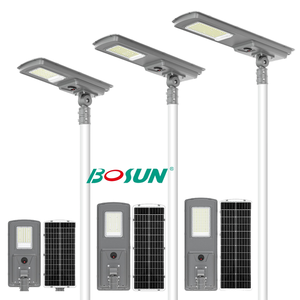
Dusk to Dawn All in One Solar Street Light Outdoor Waterproof
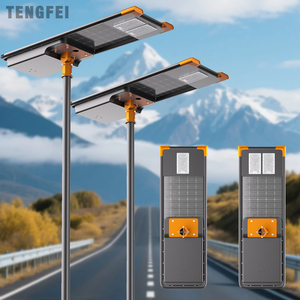
Hot Selling Low-energy Split Solar Street Light Outdoor Led Street Lighting Lamp
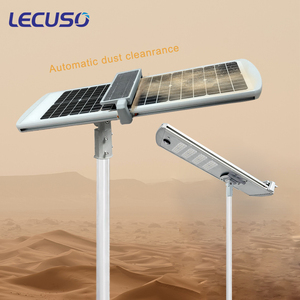
High Quality 30w 50w 60w 90w 100w 150w Automatic Auto Clean Self Cleaning Solar Street Light
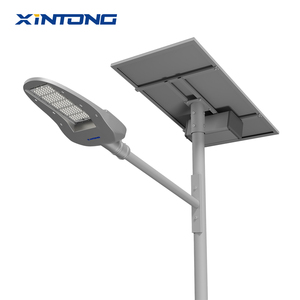
Road Light 60W 80W 100W 120W 150W Solar Street Lamp Split Solar Street Light
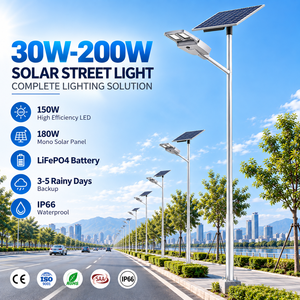
All In Two Lamp Led Solar Powered Street Light IP66 80W 100W 150W Lighting Solar Street Light With Battery Backup
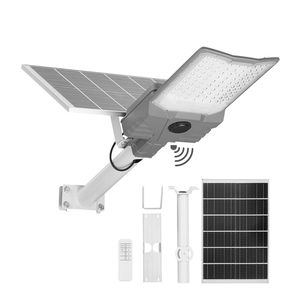
12000W High-Powered Solar Street Light 900,000LM Outdoor Dusk-Dawn Split-Type LED Floodlight 6500K CCT 240 Beam Angle
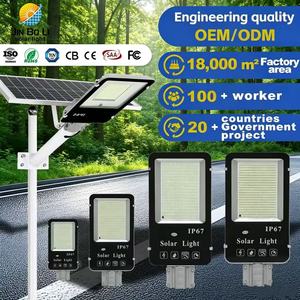
Remote Control IP67 Solar LED Light, 50W-300W, Split Type Outdoor Street Lamp, Waterproof, RoHS Certified

SLOER Competitive Price Good Quality 60W 120W Commercial Split All in One Solar Street Light Manufacture
The Shift to Zigbee-Enabled Smart Solar Lighting Infrastructure
As global municipal infrastructure accelerates toward zero-carbon mandates and smart city integration, traditional standalone off-grid solar street lights are undergoing a radical architectural transformation. Engineering procurement teams, urban planning agencies, and EPC contractors no longer evaluate solar street lighting solely on luminaire wattage or battery capacity. Modern procurement centers on system interconnectivity, predictive operational efficiency, and central management software (CMS) integration.
Our OEM/ODM manufacturing facility specializes in bridging the gap between heavy-duty hardware engineering and intelligent IoT software platforms. By incorporating industrial-grade Zigbee 3.0 mesh protocol (IEEE 802.15.4) directly into the Maximum Power Point Tracking (MPPT) charge controller PCB, each solar light post functions as both a self-sustaining energy node and a reliable wireless communication relay.
Why OEM/ODM Sourcing Requires Custom Hardware-Software Co-Design
Generic off-the-shelf solar lighting fixtures often fail under severe environmental stresses—such as extreme thermal cycling in Middle Eastern deserts or prolonged multi-day overcast conditions in sub-arctic regions. True OEM/ODM manufacturing requires granular customization across every layer of the system architecture:
- Photometric & Optical Engine Engineering: Tailoring Type II, Type III, or Type IV batwing lens distributions in accordance with IESNA standards to achieve target lux levels while eliminating light pollution (Dark Sky Compliance).
- Dynamic Thermal Management: Engineering die-cast aluminum heat sinks (A360/A380 grade) capable of maintaining junction temperatures ($T_j$) below 75°C under continuous 100% duty cycles in ambient climates up to 60°C.
- Smart BMS & Battery Cell Balancing: Utilizing automotive-grade lithium iron phosphate ($\text{LiFePO}_4$) pouch or 32700 cylindrical cells configured with hardware-level micro-controllers to prevent cell voltage divergence during multi-year operation.
- Wireless Gateway Bridge Integration: Pairing local Zigbee networks with 4G LTE-M, NB-IoT, or Ethernet backhauls for real-time telemetry streaming to cloud management consoles.
Zigbee 3.0 Mesh Network Topology Architecture
Comparing wireless communication standards for smart municipal lighting deployments.
| Architecture Feature | Zigbee 3.0 Mesh (Our Factory OEM Standard) | LoRaWAN | NB-IoT (Cellular) | Legacy Autonomous PIR |
|---|---|---|---|---|
| Network Topology | Self-Healing Multi-Hop Mesh | Star Topology | Point-to-Cellular Base Station | Standalone (No Network) |
| Operating Frequency | 2.4 GHz ISM (Global Unlicensed) | 868 MHz / 915 MHz | Licensed Cellular Bands | N/A |
| Local Latency | < 50 ms (Real-time group dimming) | 1.5s - 5s | 1s - 3s | Instant Local PIR Only |
| Gateway Dependence | 1 Gateway per 200–500 Nodes | 1 Gateway per 1,000+ Nodes | No Gateway (Requires SIM per pole) | None |
| Recurring Data Costs | Zero for intra-node communication | Low/Zero (Private Network) | High (Monthly Carrier Fee/SIM) | Zero |
| Fail-Safe Autonomy | Autonomous Mesh Rerouting & Local Sensor Triggers | Gateway-dependent switching | Tower-dependent switching | Basic Timer/PIR only |
Robotic Self-Cleaning PV
Dust deposition (soiling) reduces solar energy conversion efficiency by 2.5% to 15% monthly in arid regions. Our OEM self-cleaning street light units incorporate automated dual-brush wipers powered by micro-stepper motors, programmed via Zigbee to execute cleaning routines every morning post-dawn.
Central Management Software (CMS)
Control thousands of distributed lighting poles via a GIS-mapped SaaS dashboard. Monitor real-time battery state of charge (SoC), operational temperatures, solar energy harvest metrics, and receive instant alert notifications for component degradation or knock-downs.
Adaptive Edge AI Motion Sync
Rather than individual lights brightening independently when motion is detected, our Zigbee 3.0 mesh broadcasting enables "Wave Illumination". When vehicle or pedestrian motion is detected at Pole A, neighboring Poles B, C, and D instantly ramp up brightness ahead of the subject's path.
Factory Manufacturing Capabilities & OEM/ODM Supply Chain Integrity
Building high-reliability outdoor lighting for heavy industrial and municipal sectors requires absolute control over raw materials, engineering tolerances, and assembly testing. As a dedicated OEM/ODM manufacturer, our facility operates under certified ISO 9001:2015 Quality Management Systems and ISO 14001:2015 Environmental Management Standards.
1. Automated SMT & Circuit Board Manufacturing
Every MPPT charging controller and Zigbee communication module is fabricated in-house on high-speed SMT lines. We utilize industrial-grade components rated for extended ambient operating ranges (-40°C to +85°C). All printed circuit board assemblies (PCBAs) undergo conformal coating via automated robotic sprayers to protect against atmospheric humidity, salt spray corrosion, and chemical exposure.
2. Advanced Battery Packaging & Safety Engineering
Energy storage is the heart of off-grid solar performance. We utilize Tier-1 lithium iron phosphate ($\text{LiFePO}_4$) cells sourced directly from certified manufacturers (such as EVE, BYD, or CATL). Each cell batch undergoes rigorous internal resistance sorting and automated laser welding into high-density battery packs protected by dual-layer hardware BMS units certified under UN38.3, IEC 62133, and CE standards.
3. Environmental Testing & Stress Screening
Before leaving our factory floor, every production batch is subjected to rigorous qualification protocols:
- C5-M Salt Spray Corrosion Testing: ISO 9227 compliant salt spray chamber testing ensuring structural coatings withstand severe coastal marine environments for over 1,500 continuous hours.
- Thermal Shock & Vibration Simulation: Subjecting finished luminaires to rapid temperature cycling (-40°C to +70°C) and multi-axis mechanical vibration to simulate transport and extreme wind stress loads (up to 160 mph wind resistance).
- 3D Photometric Sphere Analysis: Integrating sphere testing to verify spectral distribution, Color Rendering Index (CRI > 75/80/90 options), Correlated Color Temperature (CCT 3000K–6500K), and luminous efficacy (up to 210 lm/W).
Standard Engineering Specifications Matrix
Customizable parameter options available for specialized B2B project tender specifications.
| System Component | Standard Manufacturing Specification | OEM Customization Options |
|---|---|---|
| Solar Photovoltaic Module | High-Efficiency Monocrystalline Silicon (22.5% - 24.0% efficiency), Tempered Glass Cover | N-Type TOPCon / Bifacial PV / Custom Wattage (40W to 400W+) |
| Energy Storage Battery | Grade-A $\text{LiFePO}_4$ Cell Pack, 12.8V / 25.6V Nominal, 3,500+ Deep Cycles @ 80% DoD | Expanded Ah capacity, low-temperature heating jacket (-30°C operational) |
| LED Light Engine | Lumileds / Cree 5050 SMDs, Efficacy: 180 - 210 lm/W, CRI > 70 (80/90 Optional) | Custom CCT (2700K warm to 6500K cool), Turtle-Friendly Amber (590nm) |
| Controller & IoT Chipset | Digital MPPT Charge Controller (>98.5% tracking efficiency), Integrated Zigbee 3.0 Module | Hybrid Utility Grid Switcher, LoRaWAN / NB-IoT dual-module configuration |
| Ingress & Mechanical Impact | IP67 Sealed Electrical Chamber, IK10 Impact Resistant Optical Lens | C5-M Marine Anti-Corrosion Finish, Custom RAL Powder Coating Colors |
| Operating Autonomy | 3 to 7 consecutive rainy/cloudy days autonomy depending on programmed power profile | 100% full-brightness night-long profile for high-security perimeter applications |
Frequently Asked Questions (B2B Procurement & Engineering)
Technical answers for municipal buyers, engineering consultants, and project distributors.
What are the distinct advantages of OEM/ODM Zigbee 3.0 solar street lights over standalone solar lights?
Standalone solar street lights operate as isolated islands without status feedback. If a battery degraded or panel became covered in dust, maintenance teams only discovered the fault via manual inspection. Zigbee 3.0 connected solar lights automatically report real-time telemetry (charging voltage, battery capacity, LED health, temperature) to a Central Management Software (CMS). Furthermore, Zigbee mesh allows group motion-sensing synchronization across consecutive poles along a highway.
How does your factory ensure battery longevity in extreme hot or cold climates?
We utilize chemistry-stabilized Grade-A $\text{LiFePO}_4$ cells engineered specifically for wide thermal windows. For extreme cold environments (sub-zero northern climates), our ODM engineering includes built-in thermal heating pads activated by solar charging currents when ambient temperatures drop below 0°C. For desert environments, battery compartments are insulated inside the pole structure or dual-vented die-cast housings to prevent direct solar thermal radiation.
What is the maximum communication range between individual Zigbee solar street light poles?
Under line-of-sight outdoor conditions, our amplified industrial Zigbee 3.0 modules achieve node-to-node communication distances of up to 300 meters (980 feet). However, standard municipal installations space poles between 30 to 50 meters apart. Because Zigbee functions as a self-healing mesh, data automatically hops from pole to pole back to the central gateway, ensuring reliable network coverage across many kilometers of road.
Can our engineering team integrate your Zigbee hardware into our existing Smart City software?
Yes. Our IoT controllers support standard open communication protocols, including MQTT, CoAP, and RESTful APIs. We provide comprehensive API documentation, SDKs, and payload parsing specifications to enable seamless integration into third-party municipal IoT platforms, TALQ-certified software, or proprietary smart city control centers.
What customized ODM options are available for municipal project tenders?
Our full-scope ODM services include custom mechanical structure design (solar poles, integrated arm brackets, cylindrical PV wrap modules), custom optical light distribution profiles (DIALux simulation reports), specialized housing colors (RAL matching), co-branded software interfaces, and tailored electrical parameter presets (specific dimming schedules, battery backup autonomy days).
What is the typical factory production lead time for enterprise OEM orders?
Standard OEM production sample lead times range from 7 to 10 working days. Full mass-production container orders (20ft/40ft HQ) are typically fulfilled within 20 to 25 calendar days following engineering design sign-off and component qualification. Accelerated batch scheduling is available for urgent government tender timelines.