
Insights & Articles
Solar Lighting Blog & News
Latest news, technical guides, and expert perspectives on smart solar street lights, off-grid infrastructure, and clean energy technology.
Tier-1 OEM/ODM Manufacturing Portfolio
Featured Municipal Road Solar Lighting Series
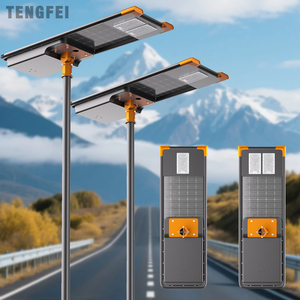
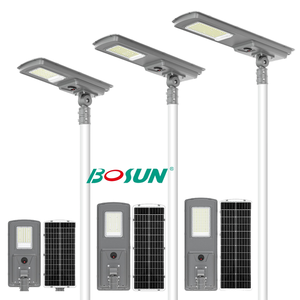
Hot Selling Low-energy Split Solar Street Light Outdoor Led Street Lighting Lamp
Get Catalog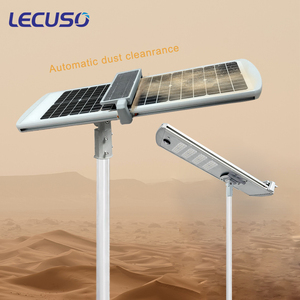
High Quality 30w-150w Automatic Auto Clean Self Cleaning Solar Street Light
Get Catalog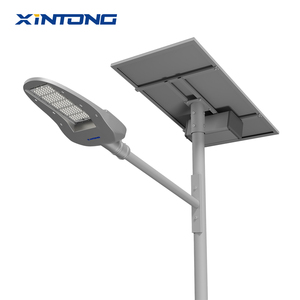
Road Light 60W-150W Solar Street Lamp Split Solar Street Light
Get Catalog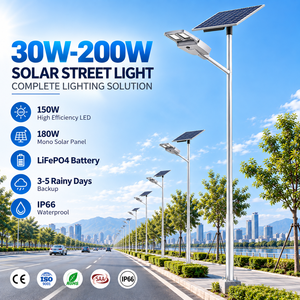
All In Two Lamp Led Solar Powered Street Light IP66 80W-150W With Battery Backup
Get Catalog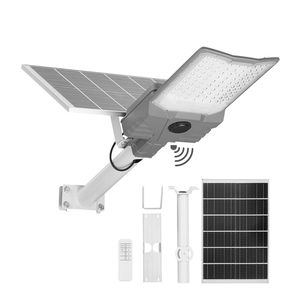
High-Powered Solar Street Light Outdoor Dusk-Dawn Split-Type LED Floodlight
Get Catalog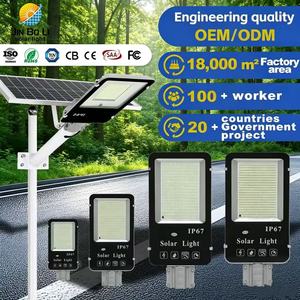
Remote Control IP67 Solar LED Light 50W-300W Split Type Outdoor Street Lamp
Get Catalog
SLOER Commercial Split & All in One Solar Street Light Engineering Series
Get CatalogNavigating Modern Urban Road Solar Lighting Procurement & Manufacturing Standards
As global urban infrastructure accelerates its transition toward zero-emission carbon neutrality and decentralized off-grid resilience, municipal planning authorities, civil engineering contractors, and B2B procurement executives face mounting pressure to deploy highly reliable, long-lifecycle urban road solar lighting systems. Selecting the right OEM (Original Equipment Manufacturer) and ODM (Original Design Manufacturer) partner has evolved beyond basic unit price considerations to encompass holistic Levelized Cost of Energy (LCOE), Total Cost of Ownership (TCO), microgrid telemetry, thermal safety, and optical precision.
23.5%
N-Type Monocrystalline Solar Cell Efficiency
6,000+
LiFePO4 Battery Deep Charge Cycles (80% DoD)
210 lm/W
Ultra-High Efficacy LED Chip Optic Output
IP67 / IK10
Hermetic Weatherproofing & Impact Protection
In high-density traffic arteries, expressways, coastal boulevards, and sprawling municipal districts, legacy grid-connected streetlights represent up to 40% of municipal electrical utility spending. Transitioning to off-grid urban road solar lighting systems eliminates subterranean trenching, transformer installation, and high-voltage grid wiring fees—reducing capital expenditure (CAPEX) for new road developments by up to 60%. However, ensuring uninterrupted 365-night illumination under extreme overcast weather, sandstorms, sub-zero winter freeze, or coastal humidity demands rigorous engineering standards that only specialized, tier-1 OEM/ODM manufacturing facilities can deliver.
All-in-One vs. All-in-Two vs. Split-Type Solar Lighting Systems
A critical decision point for municipal engineering teams and OEM purchasers is choosing the optimal mechanical topology. Our manufacturing facility specializes in custom structural engineering across all three major architectural frameworks.
Integrated All-in-One Systems
Integrates photovoltaic panel, LiFePO4 battery pack, MPPT intelligence charge controller, and LED optical engine into a single aerodynamic die-cast aluminum housing. Ideal for urban arterials, smart park pathways, and rapid installation scenarios requiring minimal wind resistance and zero external wiring.
Modular All-in-Two Systems
Separates the high-wattage solar panel onto an adjustable top bracket while housing the battery and LED luminaire in a unified lower module. Balances aesthetic elegance with maximum solar orientation freedom, making it perfect for multi-lane urban avenues with variable sun trajectories.
Heavy-Duty Split-Type Systems
Designed for ultra-high wattage highway lighting (100W–300W LED). Features custom-sized ground-buried or pole-mounted battery enclosures with high-capacity solar arrays. Built for extreme sub-zero or scorching desert climates requiring massive energy storage reserves.
Engineering & Customization Matrix (OEM/ODM Manufacturing Parameters)
| Subsystem | Standard OEM Specifications | Advanced ODM Customization Options | Municipal Engineering Impact |
|---|---|---|---|
| Photovoltaic Module | Monocrystalline PERC (21.5% Efficiency) | N-Type TOPCon / HJT Cells (Up to 24.5% Efficiency) | Higher power density per sq meter; superior weak-light performance during overcast days. |
| Energy Storage | Grade-A LiFePO4 (Lithium Iron Phosphate) | Low-Temp Electrolyte LiFePO4 (-40°C to +65°C Operating) | Prevents thermal runaway risks; extends battery lifespan up to 12-15 operational years. |
| MPPT Controller | 98% Tracking Efficiency, Dusk-to-Dawn Sensing | IoT-Enabled (LoRaWAN / Zigbee / 4G Cellular) Telemetry | Enables remote dimming schedule adjustment, failure self-diagnosis, and real-time power metering. |
| Optical Engine | High-Power Philips/Bridgelux Chips (180 lm/W) | Custom Batwing Type II / Type III PMMA Lenses | Eliminates dark spots between light poles; achieves glare-free IESNA road light uniformity (>0.4). |
| Enclosure & Structure | Die-Cast ADC12 Aluminum, Powder Coated | Hot-Dip Galvanized Q235/Q345 Steel, Anodized Coating | Withstands wind gusts up to 160 mph (Category 5 Hurricane) and 1,000-hour C5-M salt spray tests. |
Key Industry Trends Driving Urban Solar Lighting Manufacturing
Smart municipal procurement is moving rapidly beyond static illumination toward multi-functional smart city edge Nodes. OEM/ODM suppliers must incorporate advanced electronic and mechanical innovations to maintain competitive advantage.
1. Automated Robotic Self-Cleaning Systems
Atmospheric dust, particulate soiling, and bird droppings can decrease solar power generation by 25% to 45% within months. Factory-integrated automatic self-cleaning solar streetlights utilize dual-action electrostatic wiper blades programed to cycle daily, ensuring maximum photovoltaic yield without manual maintenance crews.
2. AI-Driven Smart Dimming & Motion Sensing
Incorporating microwave radar sensors and dynamic AI energy modeling algorithms allows systems to operate at 30% ambient luminosity during low-traffic midnight hours, instantly ramping to 100% full lumen output within 50 milliseconds upon detecting vehicular or pedestrian motion. This extends battery autonomy through up to 7 consecutive rainy days.
3. Smart City IoT Infrastructure Convergence
Modern ODM street light poles act as urban digital hubs. Next-generation factory designs incorporate standardized NEMA / Zhaga Book 18 sockets, permitting plug-and-play integration of 5G micro base stations, environmental air-quality sensors, surveillance security cameras, and emergency push-to-talk call boxes powered directly by the solar array.
Why Global Engineering Partners Select Our OEM/ODM Ecosystem
Combining USA design philosophy, rigorous engineering standards, and high-volume cost-competitive production facilities to supply reliable lighting infrastructure worldwide.
End-to-End Precision Manufacturing & Quality Testing
Our factory operates under strict ISO 9001, ISO 14001, and ISO 45001 certified quality management systems. Every batch of streetlights undergoes rigorous 100% factory burn-in testing, thermal imaging checks, and automated optical goniophotometer calibration before dispatch.
- ✓ Salt Spray Testing (ASTM B117): 1,000+ hours resistance against marine atmospheric corrosion.
- ✓ Ingress & Impact Proof: Certified IP66/IP67 waterproof rating with IK09/IK10 tempered glass covers.
- ✓ Wind Tunnel Rated: Aerodynamic structural validation up to 160 mph / 70 m/s storm wind load.
- ✓ Comprehensive Certifications: Fully compliant with CE, RoHS, IP67, UL, CB, and IEC standards.
OEM/ODM Customization Workflows
1. Photometric DIALux Simulation: Send us your road width, pole spacing, and target lux requirements for custom light distribution reports.
2. Custom Mechanical Design: Tailor luminaire housing aesthetics, pole arm adapters, powder coat RAL colors, and laser-engraved corporate branding.
3. Firmware & IoT Tailoring: Custom dimming curves, factory-configured LoRaWAN gateways, and pre-integrated cloud management software platforms.
Frequently Asked Questions for OEM/ODM Buyers
Direct answers to technical, commercial, and logistical questions commonly raised by municipal engineers, distributors, and global lighting procurement managers.
Q1:
What is the minimum lead time and Minimum Order Quantity (MOQ) for custom OEM/ODM orders?
Our standard production MOQ for custom logo branding and housing color matching is 50 units. For fully customized ODM mechanical tooling and electrical circuit engineering, sample prototypes are delivered within 10-14 working days, followed by mass production delivery in 20-25 days depending on batch volume.
Q2:
How do you guarantee 365-day light availability in low-solar radiation or high-latitude winter regions?
Our ODM engineering team conducts localized solar irradiance analysis using NASA surface meteorology data. We size the solar photovoltaic wattage ratio to battery storage capacity at a minimum 3.5:1 ratio, complemented by smart MPPT energy management controllers featuring auto-adaptive dimming algorithms to preserve battery reserves during multi-day storm cycles.
Q3:
What battery chemistries do your solar road lights use, and what is the expected operating life?
We exclusively utilize brand-new Grade-A LiFePO4 (Lithium Iron Phosphate) battery cells capable of delivering over 6,000 deep cycles at 80% Depth of Discharge (DoD). Unlike traditional ternary lithium or lead-acid batteries, LiFePO4 offers extreme thermal safety up to +65°C and an operational lifespan of 10 to 12 years.
Q4:
Can your factory assist with photometric DIALux simulation files for municipal tender bids?
Yes, our in-house optical engineering team provides comprehensive IES photometric files and complimentary DIALux lighting layout designs. We assist engineering contractors in proving compliance with EN13201 and IESNA RP-8 street lighting uniformities prior to bidding.
Q5:
What standard warranty coverage is provided for government and commercial projects?
We provide standard 3-year, 5-year, and optional extended 10-year factory warranties. Warranties cover complete system replacement for LED optical engines, MPPT smart controllers, solar panels, and LiFePO4 battery modules, backed by dedicated technical support engineers.
Accelerate Your Next Urban Lighting Infrastructure Project
Partner with an industry-leading OEM/ODM manufacturer. Contact our senior engineering team today to receive custom photometric simulations, complete product spec sheets, factory pricing, and immediate catalog downloads.