
Solar Lighting Blog & News
Latest news, technical guides, and expert perspectives on smart solar street lights, off-grid infrastructure, and clean energy technology.
Industrial Grade Solar WiFi Lighting Portfolio
Engineered for municipalities, highways, industrial complexes, and commercial real estate. Complete OEM/ODM hardware and firmware customization options available.
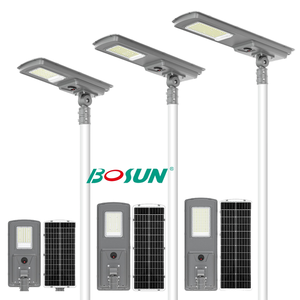
Dusk to Dawn All in One Solar Street Light Outdoor Waterproof
Optics: Integrated Bridgelux 5050 (190 lm/W)
Energy Storage: LiFePO4 12.8V High Capacity
Features: Smart PIR Sensor, IP67 Waterproof
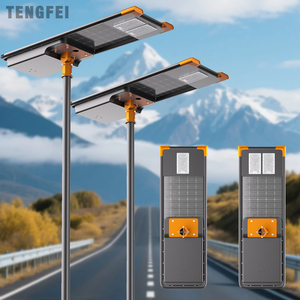
Hot Selling Low-energy Split Solar Street Light Outdoor Led Street Lighting Lamp
System Type: Modular Split Engine System
Solar Array: Monocrystalline 180W-350W Panel
Control: Dynamic MPPT Charge Optimization
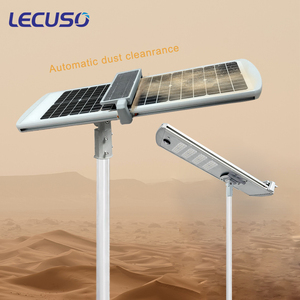
30W-150W Automatic Auto Clean Self Cleaning Solar Street Light
Maintenance: Robotic Dual-Bristle Auto Wiper
Applications: Desert & High Dust Environments
Efficiency: Keeps PV Yield above 98% Year-Round
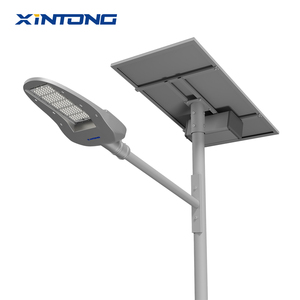
Municipal Highway Split Solar Street Lamp System (60W-150W)
Lens Distribution: Batwing Type II / Type III Optics
Pole Height: 6m to 12m Heavy-Duty Mounting
Autonomy: 5-7 Days Continuous Rainy Backup
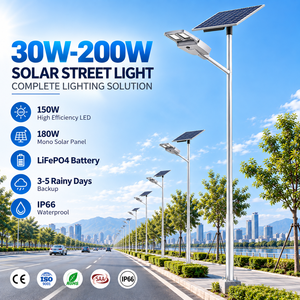
All In Two LED Solar Powered Street Light IP66 with Battery Backup
Housing: Die-Cast ADC12 Aluminum Structure
Protection: IP66 & IK10 Impact Resistance
Connectivity: Integrated Smart Pole Node Bracket
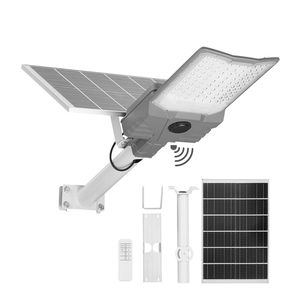
High-Powered 900,000LM Equivalent Split Solar LED Floodlight
Lumen Output: High-Density Array 6500K CCT
Beam Angle: 240° Extra Wide Illumination Span
Usage: Stadiums, Ports, Logistics Yards
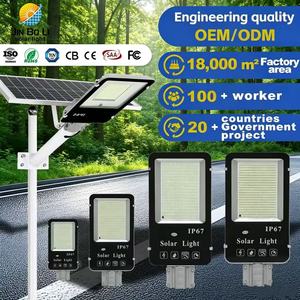
Remote Control IP67 Solar LED Street Lamp (50W-300W, RoHS)
Telematics: Wireless RF / WiFi Dimming Receiver
Certification: CE, RoHS, ISO9001 Compliant
Thermal: Anodized Fin Matrix Cooling

SLOER Commercial Grade Split All in One Solar Light System
Flexibility: Integrated Solar-Luminaire Architecture
BMS Safety: Overcharge, Thermal & Deep-Discharge
OEM Supply: Bulk Commercial Project Engineering
Industry White Paper: The Evolution of Solar WiFi Street Light Poles
The global smart municipal infrastructure market is undergoing a structural paradigm shift. Municipalities, civil contractors, and enterprise park developers no longer evaluate solar street lighting merely as standalone illumination devices. Instead, the modern Solar WiFi Street Light Pole has emerged as the central node of urban IoT connectivity, energy independence, and decentralized edge computing.
As a primary OEM/ODM manufacturer, our engineering framework integrates high-efficiency photovoltaic power conversion, advanced LiFePO4 thermal-managed battery storage, dynamic MPPT charge controllers, high-lumen optical engines, and robust outdoor WiFi 6 / 5G micro-gateway units into a single cohesive structural steel or aluminum pole envelope.
System Architecture & Key Technological Components
To meet strict municipal standards (such as AASHTO wind load limits and EN13201 optical road standards), a high-reliability OEM solar WiFi pole must balance electrical load dynamics with structural structural resilience. The complete system breakdown includes:
| Subsystem | Technical Specification Standard | OEM/ODM Customization Capability |
|---|---|---|
| PV Solar Array | N-Type Monocrystalline (22.8% - 24.2% Efficacy) | Flexible Vertically Mounted Sleeves, Bifacial Glass, Tilt Angles (15°-60°) |
| Battery Storage | Lithium Iron Phosphate (LiFePO4, >4000 Cycles @ 80% DoD) | Underground Thermal Vault, In-Pole Vertical Rack, Heating Elements for -40°C |
| LED Engine | High-Efficiency Chips (180 - 210 LM/W, CRI >70/80) | Custom IES Type I to V Optical Lenses, Dark-Sky Compliant Cutoff Angles |
| WiFi & IoT Router | Dual-Band 802.11ax / 802.11ac, IP67 Outdoor Gateway | Mesh Networking, Captive Portal Branding, Fiber SFP Uplink, 4G/5G Backhaul |
| Structural Pole | Q235 / Q355 Galvanized Steel or 6063-T6 Aluminum | Hot-Dip Galvanization (>85µm thickness), Custom Powder Coatings, Flange Mounting |
Future Procurement Trends in Smart Solar Infrastructure
1. Convergence of Smart City Edge Devices and Multi-Tenant WiFi
Governments and private estate managers are abandoning single-function lighting poles. Future-proof procurement mandates the inclusion of multi-tenant wireless hotspots. By incorporating enterprise-grade WiFi access points capable of supporting 100+ concurrent user connections, smart solar poles generate high ROI through public connectivity services, remote security camera backhaul, and environmental sensor data collection.
2. Vertical Cylinder PV Modules vs. Flat Panels
Traditional flat solar panels present significant wind resistance (drag force) and accumulate dust, snow, and bird droppings, reducing power generation by up to 35% annually. The industry is accelerating toward vertical cylindrical solar pole sleeves. Wrap-around 360-degree solar modules offer 360° sunlight absorption, zero dust build-up, and superior wind load performance capable of withstanding Category 16 typhoons (up to 60 m/s).
3. Transition to AI-Powered MPPT & Predictive Energy Budgeting
Next-generation charge controllers integrate machine learning algorithms that analyze historic weather telemetry, battery health decay rate, and foot-traffic patterns. If the algorithm forecasts a 4-day cold front with heavy precipitation, it dynamically scales down maximum LED brightness and WiFi transmitter RF output, preventing catastrophic system shutoff and maintaining essential safety lighting.
Why Partner With Us: Factory-Direct OEM/ODM Capabilities
We deliver complete end-to-end custom manufacturing for international lighting brands, engineering firms, and municipal contractors.
Full Structural Customization
From single-arm to dual-arm decorative designs, custom height engineering (4m to 14m), wind pressure calculations, and specialized anti-corrosion marine powder coatings (ASTM B117 salt-spray compliant).
IoT & Hardware Integration
Pre-wired and integrated housing for CCTV IP cameras, emergency SOS panic buttons, environmental air quality sensors (PM2.5/PM10), EV charging points, and 4G/5G/WiFi gateways.
Rigorously Tested & Certified
Every production batch undergoes photometric IES LM-79/LM-80 testing, IP67 ingress water immersion testing, spectroradiometer sphere calibration, and thermal chamber cycling (-40°C to +85°C).
Frequently Asked Technical Questions (FAQ)
Addressing key technical, architectural, and supply chain considerations for B2B engineering buyers and municipal planners.
Q1 What is the typical coverage radius and user capacity for an integrated Solar WiFi Street Light Pole?
Our industrial outdoor WiFi access points operate on dual-band 2.4GHz and 5.8GHz frequencies with high-gain omnidirectional antennas (5dBi to 8dBi). Mounted at a standard 6m-8m height, a single solar WiFi pole provides an effective wireless coverage radius of 100 to 150 meters in open line-of-sight environments. System hardware supports up to 128 concurrent user connections, featuring bandwidth management tools to guarantee smooth operation for public browsing or industrial IoT sensor communication.
Q2 How do you guarantee continuous WiFi and CCTV operation during extended rainy or cloudy days?
We perform precise solar insolation sizing based on historical NASA meteorological data for your project installation coordinates. Our systems are engineered with a minimum reserve capacity (Autonomy Index) of 3 to 7 consecutive zero-sunlight days. Furthermore, our proprietary MPPT controllers prioritize load distribution: if battery capacity drops below 20%, the system utilizes smart dimming on the LED luminaire while preserving full power allocation to the WiFi access point and security modules.
Q3 What are the minimum order quantities (MOQ) and lead times for custom OEM/ODM projects?
For standard catalog configurations, our MOQ starts at 10 units. For fully customized OEM/ODM projects—including unique pole bracket geometries, custom RAL powder coating colors, tailored optical photometric distributions, or specific smart city communication protocol integration—our standard MOQ is 50 units. Prototype samples can be engineered and dispatched within 12-15 business days, with mass production completing in 25-30 days.
Q4 What battery chemistry is utilized, and what is the expected lifespan in hot desert climate zones?
We exclusively utilize Grade-A Lithium Iron Phosphate (LiFePO4) battery cells equipped with intelligent Battery Management Systems (BMS). LiFePO4 offers exceptional thermal stability and a long cycle life (>4,000 deep discharge cycles at 80% DoD). For desert environments exceeding 50°C ambient temperature, we offer specialized underground heat-sink vaults or vertical internal pole mounting with double-layer aluminum heat reflection barriers, ensuring an operational service life exceeding 10 years.
Q5 Are your solar WiFi street lights compatible with central Smart City Management Systems (CMS)?
Yes. Our smart controllers support RS485, Modbus, Zigbee, LoRaWAN, and 4G/5G NBIoT communication protocols, fully adhering to the TALQ Consortium standards. This enables seamless API integration into third-party smart city management software platforms, allowing remote control of light dimming schedules, real-time monitoring of solar yield and battery health, automatic fault alerts, and remote WiFi hotspot configuration.
Q6 How does the automatic self-cleaning solar panel mechanism function?
Our self-cleaning solar street lights feature a heavy-duty, weather-resistant robotic brush mechanism driven by an internal micro-motor. Controlled by automated timing software, the brush sweeps across the solar panel surface twice daily (typically at dawn and dusk). This eliminates sand, dust, dust storms accumulation, and grime buildup, maintaining maximum solar conversion efficiency (>98%) without manual cleaning labor cost.