
Solar Lighting Blog & News
Latest news, technical guides, and expert perspectives on smart solar street lights, off-grid infrastructure, and clean energy technology.
Engineered OEM Solar Lighting Solutions
Factory-direct, customizable solar street lights engineered for highway infrastructure, municipal boulevards, industrial parks, and smart urban communities.
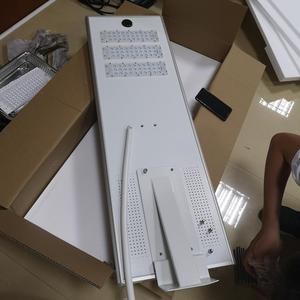
LIWEI Ip65 Solar Street Light Solar Led Light Outdoor Lampadaire Solaire Waterproof Integrated All in One Solar Street Lights
- High-Efficacy Monocrystalline PV
- IP65 Weatherproof Enclosure
- Grade-A LiFePO4 Battery Pack
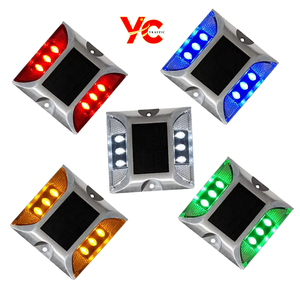
Solar Power High Bright Traffic Driveway Waterproof Aluminum Flashing Solar Reflector Light Cat Eyes Led Marker Road Stud
- Die-Cast Heavy Duty Aluminum
- High-Visibility LED Output
- Anti-Pressure Load Rating
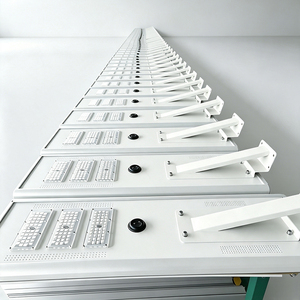
20000LM Streetlight Outdoor Project 88AH Integrated Road Lamp Engineering 100W 150W 200W All in One Outdoor Solar Street Light
- 20,000LM Luminous Output
- 88Ah High Capacity Storage
- Multi-Power Wattage Options
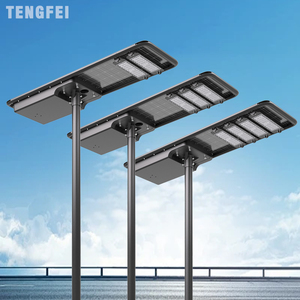
2025 New Design LED IP65 30W 60W 100W 200W Outdoor Solar Road Street Light
- 2025 Aerodynamic Design
- Scalable Wattage (30W-200W)
- Smart Motion Sensor Dimming
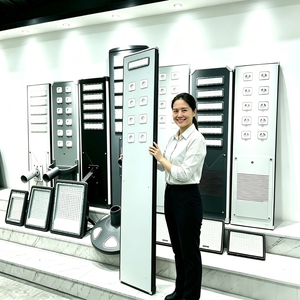
Professional Manufacturer All-in-one Solar Street Light 150W 200W IP66 High Lumens for Outdoor Project
- IP66 Waterproof Protection
- High Lumen LED Engine
- Engineering-Grade Heat Sink
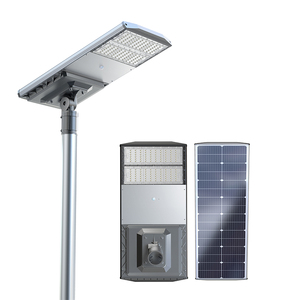
Factory-provided High-quality 60W 80W 120W All In One Solar Integrated Street Lights
- Integrated Solar Module
- 60W / 80W / 120W Custom Matrix
- Rapid Installation Architecture
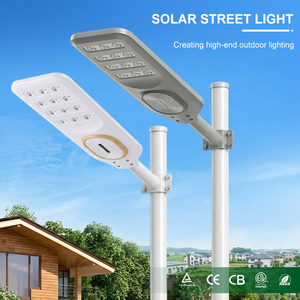
Multi Scenes 300W 400W Integrated Outdoor Energy Saving LED ABS Solar Street Light Engineering Bulk Procurement
- 300W-400W Ultra-High Output
- Impact-Resistant ABS Housing
- Bulk Contract OEM Pricing
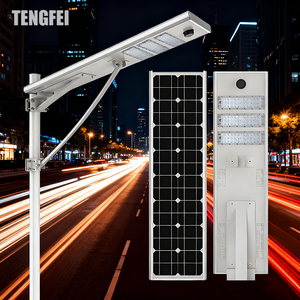
Easy Install Aluminum Manufacturer Led Street Solar Light For Smart City
- Smart City Connectivity Hub
- Precision Aircraft Aluminum
- Plug-and-Play Assembly
The Paradigm Shift in Utility-Grade OEM Solar Procurement
Why international EPC contractors, municipal engineers, and commercial project developers are moving away from standardized retail units toward customized, factory-tailored OEM solar street light infrastructure.
Commercial Off-the-Shelf (COTS) Bottlenecks
Standardized off-the-shelf solar lighting fixtures frequently fail in critical municipal deployments due to fixed photovoltaic capacity ratios, unoptimized optical distributions, and poor thermal tolerance. When operating in extreme environments—such as Middle Eastern desert heat or Nordic sub-zero winters—generic battery management systems experience premature capacity degradation, leading to premature field failure within 18–24 months.
Engineered Custom OEM Architecture
Custom OEM procurement bridges the gap between photometric design requirements and hardware execution. By engineering every parameter—photovoltaic panel wattage, LiFePO4 cell matrix, MPPT charge controller firmware, optical lens geometry (IESNA Type I to Type V), and pole structural load calculation—OEM manufacturing ensures guaranteed 365-night operational autonomy and compliance with stringent municipal tender specifications.
Utility-grade OEM procurement relies on exact mathematical modeling rather than guesswork. Required battery capacity ($C_{wh}$) is derived from night runtime ($t_{hours}$), luminaire power consumption ($P_{night}$), targeted depth of discharge ($\eta_{dod}$), and regional autonomy days ($D_{autonomy}$):
Formulation: $C_{wh} = \frac{P_{night} \times t_{hours} \times D_{autonomy}}{\eta_{dod} \times \eta_{temp}}$
Our engineering teams customize the battery matrix and solar PV surface area specifically to your project's geographic solar insolation data (kWh/m²/day).
Technological Trends Reshaping Solar Lighting Infrastructure
Next-generation hardware developments defining high-efficacy outdoor illumination, energy storage safety, and intelligent smart city integration.
1. N-Type TOPCon & Bifacial Photovoltaics
Legacy P-type PERC monocrystalline panels (~20% efficiency) are being systematically replaced by N-Type TOPCon and Heterojunction (HJT) solar cells achieving commercial module efficiencies beyond 24.5%. For vertical pole applications (wrap-around or integrated slim solar poles), bifacial photovoltaics harness ground albedo reflections, increasing daily energy harvesting by 15% to 30% even during overcast winter periods.
2. Advanced LiFePO4 Thermal Management
Electrochemical energy storage has shifted entirely to automotive-grade Grade-A Lithium Iron Phosphate (LiFePO4) chemistry. Modern OEM designs integrate Intelligent Battery Management Systems (BMS) with active thermal balancing and phase-change material (PCM) insulation, protecting cells from thermal runaway up to +70°C and enabling cold-weather charging heating elements down to -30°C.
3. AI-Assisted Dynamic MPPT Firmware
Next-gen Maximum Power Point Tracking (MPPT) controllers feature real-time neural network algorithms that continuously adapt dimming profiles based on local weather forecasts, historic charge curves, and human presence telemetry. Tracking efficiency exceeds 99.5%, ensuring optimal energy usage and preventing complete battery depletion during extreme rain events.
Future Procurement Trends for Global B2B Exporters & Utility Buyers
Strategic supply chain evolution, environmental compliance mandates, and subscription-based utility infrastructure business models.
Modular Hardware Architecture & Zero-Tool Maintenance
High labor costs in North America, Europe, and Australia have transformed lighting procurement requirements. Procurement officers prioritize modular "snap-in" component architectures. LED engines, battery packs, and smart MPPT controller modules utilize quick-disconnect IP68 wiring harnesses, allowing field technicians to perform routine servicing or upgrades within 3 minutes without dismounting the lighting pole or requiring specialized electrical tools.
Solar Lighting as a Service (SLaaS) & Zero-CAPEX Procurement
Municipalities and large enterprise logistics hubs are increasingly shifting from direct Capital Expenditure (CAPEX) models to Operational Expenditure (OPEX) utility subscriptions. Known as SLaaS or "EnGo Utility," factory partners retain long-term asset ownership, providing guaranteed uptime, automated fault alerting via remote IoT dashboards, and ongoing maintenance under a fixed monthly service contract.
| Evaluation Parameter | Standard Retail / Low-End Exports | Enterprise Custom OEM Architecture |
|---|---|---|
| Photovoltaic Module | Polycrystalline or low-grade P-PERC (16-18% Efficiency) | Monocrystalline N-Type TOPCon / Bifacial (>24.5% Efficiency) |
| Battery Chemistry & Cycle Life | Recycled Ternary Lithium / Standard LiFePO4 (~1,500 Cycles) | Grade-A Automotive LiFePO4 with BMS (>6,000 Cycles @ 80% DOD) |
| Charge Controller Tech | Basic PWM (Pulse Width Modulation) ~70-75% Efficiency | Ultra-Fast Smart MPPT (>99.5% Tracking, Integrated IoT Gateway) |
| Optical Distribution Options | Fixed 120° Symmetric Flood Lens (High Glare/Light Pollution) | Batwing Asymmetric Optical Lenses (IESNA Type II, III, IV, V) |
| Housing & Mechanical Rating | Thin ABS Plastic / Die-Cast Aluminum (IP63 - IP65, IK07) | Heavy-Duty Marine Aircraft Aluminum Alloy (IP66/IP67, IK10) |
| Smart City Integration | None (Standalone static operation) | Zhaga Book 18 / NEMA 7-Pin, LoRaWAN, Cellular NB-IoT, 5G Micro-Cell |
Factory OEM Capabilities & Global Engineering Leadership
Backed by decades of solar innovation, US-designed engineering standards, and robust ISO-certified mass production lines serving over 40 countries.
Photometric DIALux Simulation
Our optical engineering team generates full DIALux illumination reports for project proposals. We calculate exact lux levels, uniformity ratios ($U_0$), and glare indices ($TI$) to meet strict Department of Transportation (DOT) highway and municipal illumination benchmarks prior to production.
Extreme Environmental QA/QC
Every export lot undergoes comprehensive testing in our factory labs: ISO 12944 C5-M high-salinity salt spray chambers for coastal corrosion resistance, IP67 water immersion testing, IK10 mechanical impact verification, and darkroom goniophotometer calibration.
Proven Deployments Worldwide
Trusted by world-class infrastructure developers, government municipalities, and telecommunications leaders—including high-profile installations at SpaceX launch facilities in Boca Chica Texas, luxury developments at Luštica Bay Montenegro, and municipal roadways in Boston, Las Vegas, and Santa Monica.
Industrial Engineering & Procurement FAQ
Clear technical answers addressing critical procurement queries from EPC contractors, government buyers, and lighting distributors.
Q1: How do you size solar street lighting systems to maintain continuous light output during consecutive rainy/cloudy days?
Our engineering team calculates autonomy days based on NASA surface meteorology and solar energy datasets for your exact project coordinates. We customize the battery storage capacity ($C_{wh}$) and photovoltaic wattage ratio (typically 2.5:1 to 3.5:1 PV-to-load ratio) alongside smart adaptive dimming software. This ensures that even during 5 to 7 consecutive days of complete cloud cover or monsoon conditions, the system dynamically scales lumen output to maintain continuous nighttime safety illumination without completely draining the battery.
Q2: What is the technical distinction between All-in-One integrated solar lights and All-in-Two / Split solar poles?
All-in-One (Integrated) systems combine the solar panel, LiFePO4 battery, LED engine, and MPPT controller into a single compact fixture—ideal for rapid installation on poles up to 8 meters in height and areas with high solar insolation. All-in-Two or Vertical Solar Pole (Split) systems separate or wrap the solar PV surface vertically around the pole column, supporting larger battery capacities and LED heads up to 200W/20,000+ Lumens. Split/Vertical systems are preferred for multi-lane highways, high-latitude regions with low winter sun angles, and locations requiring high wind-resistance profiles.
Q3: How does your factory protect LiFePO4 lithium batteries in extreme desert thermal conditions exceeding +50°C ambient?
High ambient heat is the primary cause of premature lithium cell degradation. In our OEM desert-spec models, we relocate the battery chamber into an underground thermal insulated sleeve or mount it inside a dual-shell ventilated aluminum housing featuring phase-change insulation material (PCM). Combined with high-temperature grade BMS boards calibrated to regulate charge currents dynamically when cell temperatures exceed +55°C, we maintain an operational lifespan exceeding 10 years even in harsh Middle Eastern or African climate zones.
Q4: What compliance certifications and laboratory test reports are provided for international project clearance?
All OEM products are backed by comprehensive compliance dossiers required by customs authorities and municipal tenders. This includes CE, RoHS, IP65/IP66/IP67 ingress testing, IK10 impact reports, ISO 9001/14001 factory audits, UN38.3 battery transport safety certification, MSDS datasheets, IESNA LM-79 (luminaire optical performance), LM-80 (LED chip lumen maintenance), and ISO 12944 C5-M salt spray anti-corrosion test reports.
Q5: Can your factory integrate smart city nodes such as CCTV cameras, public Wi-Fi, or environmental monitoring sensors?
Yes. Our intelligent solar poles (such as the EnGo Slim and EnGo Connect series) are designed as off-grid smart city micro-nodes. We equip poles with standard Zhaga Book 18 or NEMA 7-pin sockets, auxiliary 12V/24V DC step-down power taps, and internal mounting brackets for 4G/5G micro-cells, environmental air-quality sensors, public emergency call buttons, and IP surveillance cameras connected via LoRaWAN, NB-IoT, or cellular backhaul.
Q6: What structural wind load ratings are engineered into your solar lighting poles?
Our structural engineers conduct finite element analysis (FEA) based on AASHTO (American Association of State Highway and Transportation Officials) wind load standards. Standard poles are rated for wind speeds up to 150 km/h (41.6 m/s), while specialized heavy-duty coastal models are engineered to withstand typhoon and Category 5 hurricane conditions up to 216 km/h (60 m/s) with reinforced anchor bolt foundation flange plates and high-tensile Q235/Q345 steel or 6063-T6 marine aluminum columns.
Q7: What are the typical minimum order quantities (MOQ), production lead times, and OEM customization capabilities?
For standard project evaluation samples, our MOQ starts at 5 to 10 units. For full custom OEM/ODM production runs (custom RAL powder coating colors, tailored optical lenses, custom logo branding, and specialized firmware dimming algorithms), typical factory production lead times are 15 to 25 calendar days following engineering drawing sign-off. Express air freight and containerized maritime ocean freight handling (FOB, CIF, DDP, DAP Incoterms) are fully supported by our international logistics division.
Q8: What warranty coverage and long-term technical support SLAs do you provide for factory export orders?
We provide standard 3-year, 5-year, or extended 10-year comprehensive factory warranties depending on project tier specifications. Warranties cover 100% replacement of LED drivers, MPPT controllers, LiFePO4 battery modules, and PV panels with zero hassle. Furthermore, our US and international technical support teams offer remote firmware diagnostic troubleshooting, spare parts buffer stock planning, and onsite engineering field supervision for large-scale municipal tenders.
Ready to Accelerate Your Solar Infrastructure Project?
Partner with an industry-leading OEM manufacturing facility. Contact our senior solar engineering specialists today for custom project DIALux photometrics, technical datasheets, wholesale tender pricing, and factory audit requests.
Contact Us