
Solar Lighting Blog & News
Latest news, technical guides, and expert perspectives on smart solar street lights, off-grid infrastructure, and clean energy technology.
Industrial-Grade OEM Solar Street Lighting Systems
Explore our engineered catalog of high-efficiency solar street light systems tailored for global municipality contracts, highway expansions, and commercial property lighting. Built with Grade-A Lithium Iron Phosphate (LiFePO4) cell chemistry and intelligent MPPT controllers.
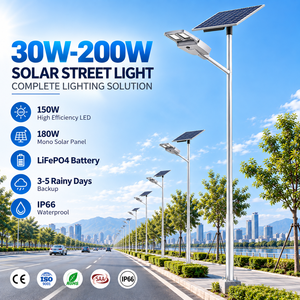
All In Two Integrated LED Solar Street Light (80W–150W)
High-lumen All-in-Two modular architecture separating the solar module for flexible angle orientation while housing an industrial battery backup unit. Engineered for heavy traffic expressways.
Contact Us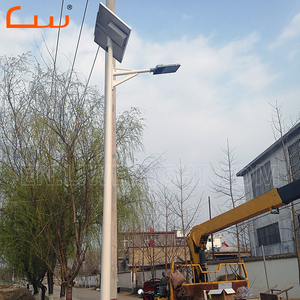
Commercial 30W Solar LED Luminaires with Internal LiFePO4 Battery
Compact outdoor road lamp designed for rural development and pedestrian pathways. Features long-cycle thermal stability and optimized battery pricing for large OEM procurements.
Contact Us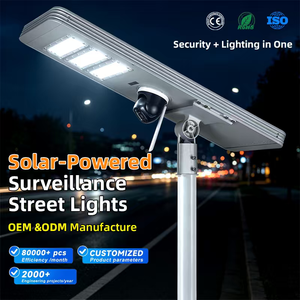
Smart Solar Street Light with 4G/WiFi CCTV & MPPT Controller
Smart City infrastructure pole featuring full optical LED dimming, integrated IP security camera telemetry, remote MPPT tracking, and weather-proof extruded aluminum enclosure.
Contact Us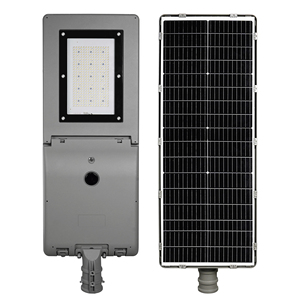
LoRaWAN Remote Control All-in-One Solar Street Light (25W–60W)
Engineered for highway and arterial roads, utilizing LoRaWAN connectivity for cloud management. Built-in thermal BMS logic maximizes energy conservation across extended rainy cycles.
Contact Us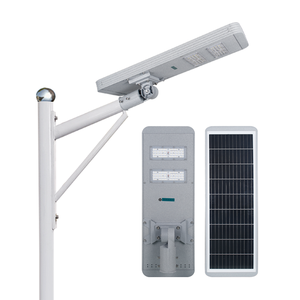
Die-Cast Aluminum Integrated Solar Road Lamp for Municipal Projects
Heavy-duty heat sink casting engineered for high-ambient temperature regions. Incorporates low internal resistance LiFePO4 cells to ensure zero thermal runaway risk during peak sun charge.
Contact Us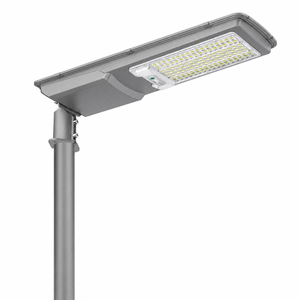
High-Power 100W–300W Integrated Solar Street Light with Radar Sensor
High-lumen industrial solar lamp equipped with 24GHz microwave radar sensors for dynamic brightness adjusting, delivering optimal lighting coverage for wide arterial thoroughfares.
Contact Us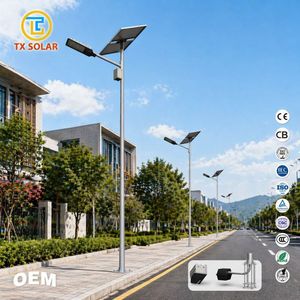
9m Pole Mounted 80W Solar Street Light with External Battery Box
Custom engineered pole system featuring an external thermal-insulated battery chamber mounted underneath high-wattage monocrystalline PV modules for simplified long-term servicing.
Contact Us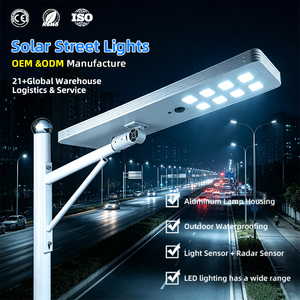
Urban Highway & Plaza 80W/100W All-in-One Solar Luminaire
Premium aerodynamic die-cast aluminum housing featuring multi-channel MPPT solar tracking, custom Type II/III optical beam spreads, and rapid assembly mounting brackets.
Contact UsIndustrial OEM Manufacturing Infrastructure & Quality Control Standards
As global infrastructure investments accelerate toward zero-carbon energy targets, sourcing reliable solar street lighting products from certified Custom OEM LiFePO4 Battery Solar Street Light Factories has become a vital operational imperative. Standard off-the-shelf solar lighting often suffers from mismatched lithium cell capacities, inadequate thermal dissipation, and substandard charge controllers—resulting in system failures within 18 to 24 months. Our manufacturing ecosystem addresses these vulnerabilities through rigorous automotive-grade production methodologies, comprehensive thermal simulation testing, and state-of-the-art automated Surface Mount Technology (SMT) lines.
Automated LiFePO4 Cell Matching & Sorting
Every single lithium iron phosphate cell undergoes strict 5-stage automated grading for internal resistance (mΩ), voltage capacity (mAh), and discharge rate consistency prior to pack assembly to prevent premature pack degradation.
Patented Multi-Protection BMS Technology
Our custom-built Battery Management Systems (BMS) integrate multi-layer electronic protections including high/low temperature cut-off (-20°C to +65°C), active cell balancing, short-circuit shutdown, and secondary hardware over-voltage isolation.
IP66 Waterproof & Corrosion-Resistant Housings
Luminaire bodies are die-cast from ADC12 aluminum and coated with AkzoNobel electrostatically sprayed fluorocarbon powder, guaranteeing resistance to marine salt spray environments (ISO 12944 C5-I compliance).
MPPT Tracking Efficiency Up to 99%
Our proprietary dynamic Maximum Power Point Tracking algorithms constantly adjust solar input voltage to maximize charging current during morning dawn, dusk, and heavily overcast atmospheric conditions.
Manufacturing Quality Matrix: Tier-1 OEM Factory vs. Standard Workshop
| Engineering Parameter | Tier-1 OEM Custom Factory Standard | Standard Commercial Assemblers |
|---|---|---|
| Battery Chemistry & Sourcing | 100% Brand-New Grade-A LiFePO4 (CATL/EVE/BYD cells) | Recycled or B-grade ternary NCM / LiCoO2 cells |
| Battery Cycle Life Expectancy | 4,000 to 6,000 cycles @ 80% Depth of Discharge (DoD) | 500 to 800 cycles before severe capacity fade |
| Charge Controller Tech | Industrial MPPT with dynamic temperature compensation | Basic PWM controllers with 20-30% power loss |
| Optical Lens Distribution | Custom Type II / Type III Batwing lens (CRI > 75, up to 170 lm/W) | Generic symmetric 120° round beam (high glare & dark spots) |
| Thermal Management | Independent dual-chamber heat separation for LED and Battery | Single chamber design causing battery overheating & premature failure |
| Compliance & Certification | ISO9001, CE, RoHS, IP66, IK10, UN38.3, MSDS, IEC 62133 | Basic self-declared CE without certified lab test reports |
Deep Technical Insights: The Evolution of Industrial Solar Lighting Technologies
The shift from traditional grid-connected high-pressure sodium (HPS) and metal halide fixtures toward off-grid OEM solar street lights represents one of the most critical transformations in municipal infrastructure engineering. Understanding the underlying chemistry, electronic topologies, and mechanical engineering tradeoffs is paramount for project engineers and procurement decision-makers.
1. Lithium Iron Phosphate (LiFePO4) Crystal Structure vs. Ternary Chemistry
Unlike ternary lithium (NCM/NCA) batteries which exhibit exothermic reaction and risk thermal runaway when temperatures exceed 180°C, Lithium Iron Phosphate (LiFePO4) possesses an extremely stable olivine crystal structure with strong P-O covalent bonds. This chemical architecture remains intact even under high charging stress and ambient operating temperatures reaching up to 70°C. OEM factories utilizing genuine LiFePO4 cells guarantee non-combustible performance, zero risk of explosion, and an extraordinary operational lifespan extending past 10 to 12 years under normal daily cycling.
2. All-In-One (Integrated) vs. All-In-Two Mechanical Architecture
When evaluating physical deployments for public roads, two primary structural designs dominate OEM requests:
- All-In-One (Integrated) Systems: Consolidate the solar panel, LED engine, LiFePO4 pack, MPPT controller, and motion sensor into a single streamlined housing. This architecture reduces wind resistance, simplifies installation labor, eliminates external wiring harnesses, and mitigates on-site theft risk. Highly recommended for standard urban thoroughfares, parking plazas, and residential developments up to 80W outputs.
- All-In-Two Systems: Separate the solar PV panel from the luminaire battery engine. This split architecture allows procurement managers to deploy ultra-high wattage solar panels (up to 300W+) tilted independently toward optimal solar azimuth angles, making them essential for high-latitude geographic zones, dense shade, or heavy multi-lane highway projects requiring continuous high lumen illumination throughout long winter nights.
3. Smart City Integration via IoT Telemetry (LoRaWAN, 4G, & NB-IoT)
Modern municipal tenders increasingly mandate Smart City compatibility. High-end OEM factories embed cloud telemetry modules directly into the solar charge controller board. Using LoRaWAN low-power mesh networks or 4G LTE cellular connectivity, municipal operators can remotely monitor real-time battery state of charge (SoC), operational temperature, power consumption graphs, and immediate fixture fault alerts via a centralized Graphical User Interface (GUI), reducing field maintenance operational expenses by over 60%.
Strategic Procurement & Future Market Trends (2025–2030)
As global carbon-neutral mandates tighten and solar PV efficiencies rise, procurement strategies for municipal and enterprise lighting contracts are shifting dramatically. Key technical and strategic trends shape future factory specifications.
1. Transition to High-Efficacy Optical Chipsets (180+ lm/W)
Future solar lighting procurement focuses heavily on system-level luminous efficacy rather than raw LED wattage. By pairing ultra-high-efficiency LED chips (such as Lumileds 5050 or Bridgelux CSP) with high-transmittance optical grade PC lenses, OEM factories can deliver identical lux levels on road surfaces while reducing battery pack capacity requirements by 25%. This shift lowers overall bill-of-materials (BOM) costs and shipping weights without compromising illumination standards.
2. Modular & Standardized Servicing Enclosures
Historical solar lights required total fixture replacement upon component failure. Next-generation procurement specs demand modular plug-and-play internal architecture. Leading OEM factories are standardizing tool-less entry latch housings, magnetic controller mountings, and modular quick-connect wire harnesses, permitting rapid field swapping of battery modules or driver cards in under 5 minutes per pole.
3. AI-Driven Adaptive Energy Management
Rather than static dimming timers, future solar charge controllers employ predictive artificial intelligence. By evaluating historical solar energy capture patterns over the preceding 7 days alongside real-time weather forecasts, the system dynamically adjusts dimming curves and microwave radar sensitivity to guarantee 100% continuous lighting uptime through extended 5-to-7 day rainy periods.
4. ESG Compliance & Circular Economy Manufacturing
Enterprise buyers and government agencies now require comprehensive Life Cycle Assessments (LCA) and carbon footprint transparency. Tier-1 OEM factories lead this evolution by utilizing recycled aluminum alloys, eco-friendly powder coatings, lead-free soldering processes, and establishing clear end-of-life battery recycling logistics networks under international compliance protocols.
B2B Engineering Procurement FAQ
Detailed technical answers to common questions raised by infrastructure engineers, municipal procurement managers, and international contractors when evaluating custom OEM LiFePO4 battery solar street light factories.
Battery Energy (Wh) = [Total Daily LED Watt-Hours × Desired Autonomy Days] ÷ [BMS DoD Factor (0.85) × System Efficiency (0.90)]. Standard municipal specifications mandate 3 to 5 continuous autonomy days. Advanced OEM factories combine this battery capacity buffer with smart MPPT energy dimming profiles to maintain continuous baseline safety lighting even during extreme monsoon seasons.
Partner with a Trusted OEM Solar Street Light Manufacturer
Transform your municipal infrastructure projects with industrial-grade, long-lifecycle LiFePO4 solar street lighting systems engineered to exact project specifications. Contact our senior technical team today for full photometric Dialux simulations, custom OEM design samples, and factory-direct volume quotes.