
Insights & Articles
Solar Lighting Blog & News
Latest news, technical guides, and expert perspectives on smart solar street lights, off-grid infrastructure, and clean energy technology.
Commercial & Municipal Solutions
Featured High Lumen Solar Lighting Systems
Explore our flagship OEM & ODM solar street light configurations engineered for extreme durability, high lumen output, and zero-grid reliance.
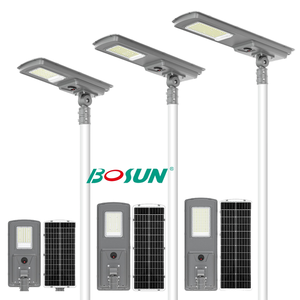
Hot Selling Low-Energy Split Solar Street Light Outdoor LED Street Lamp
Send an Inquiry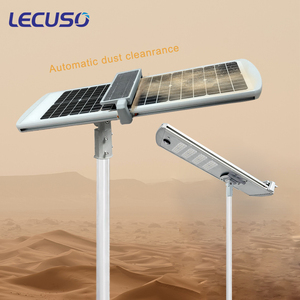
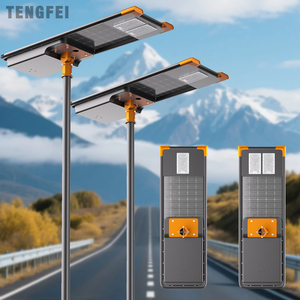
Automatic Self-Cleaning Solar Street Light (30W to 150W Options)
Send an Inquiry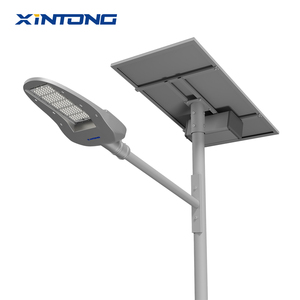
Road Light 60W-150W Heavy-Duty Split Solar Street Light
Send an Inquiry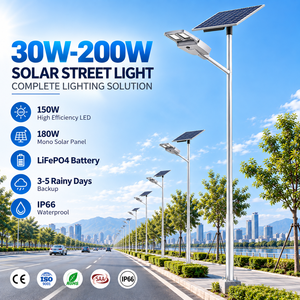
All In Two LED Solar Powered Street Light IP66 with Battery Backup
Send an Inquiry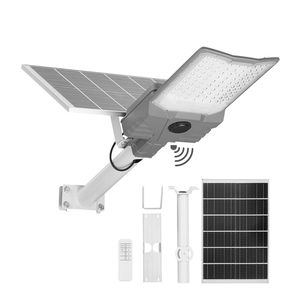
High-Powered Solar Street Light 900,000LM Outdoor Dusk-Dawn Floodlight
Send an Inquiry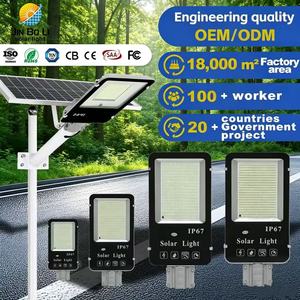
Remote Control IP67 Split Type Solar LED Street Lamp (50W-300W)
Send an Inquiry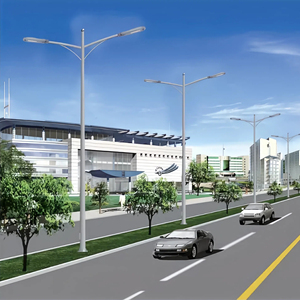
SLOER Commercial Grade Split & All-in-One Solar Street Light
Send an Inquiry220 lm/W
Peak Photometric Efficacy
6,000+
LiFePO4 Battery Cycles
500+
Global Municipal Projects
160 km/h
Typhoon Wind Resistance
Executive Whitepaper: The Evolution of Custom OEM High-Lumen Solar Street Lighting
The global outdoor illumination sector is undergoing a profound paradigm shift. Modern municipal infrastructure and industrial complex developments no longer treat solar lighting as a secondary backup option. Driven by strict carbon neutrality mandates, skyrocketing grid electricity prices, and significant advancements in energy storage density, custom OEM high-lumen solar street lighting has taken center stage as a primary infrastructure asset.
Historically, off-grid solar street lights were limited by low lumen output, premature battery degradation in extreme ambient temperatures, and inefficient PWM charge controllers. Today, enterprise-level OEM solar street light manufacturers integrate grade-A monocrystalline N-type PERC solar cells, ultra-efficient Maximum Power Point Tracking (MPPT) controllers operating at >98.5% conversion efficiency, and high-density Lithium Iron Phosphate (LiFePO4) storage arrays. When coupled with advanced Philips Lumileds or Cree LED chips outputting up to 220 lumens per watt, these integrated systems easily replace conventional 400W-1000W High-Pressure Sodium (HPS) or metal halide fixtures across multi-lane highways, arterial municipal roads, commercial logistics parks, and perimeter security installations.
"True information gain in solar lighting engineering comes from understanding thermal dissipation vs. lumen depreciation. Premium OEM manufacturing requires balancing junction temperature management with smart dimming logic to deliver continuous illumination across 7+ rainy or cloudy days."
Architectural Engineering Matrix: All-in-One vs. All-in-Two vs. Split Systems
As a turnkey OEM/ODM supplier, our production lines manufacture three core structural configurations. Selecting the optimal mechanical layout depends on geographical solar radiance (peak sun hours), local wind pressure load profiles, and target mounting heights.
Integrated All-in-One Systems
Combines the PV panel, LiFePO4 battery pack, smart controller, and microwave sensor into a single streamlined aluminum housing. Optimized for rapid installation on urban streets, residential zones, and park pathways with mounting heights of 4m to 8m.
Modular All-in-Two Systems
Separates the solar PV array from the LED luminaire head while keeping the battery embedded within the lamp housing or bracket. Allows flexible tilt adjustment of the PV panel to maximize seasonal solar absorption in mid-to-high latitude regions.
Heavy-Duty Split Type Systems
Designed for ultra-high lumen demands (up to 900,000LM or 150W+ LED loads) on expressways and heavy industrial compounds. Utilizes high-capacity external PV panels (up to 400W+) and ground-buried or pole-mounted IP68 battery enclosures.
Engineering Comparison: High-Lumen Solar Lighting Architectures
| Performance Metrics | All-in-One Integrated | All-in-Two Modular | Commercial Split-Type |
|---|---|---|---|
| Typical Lumen Output | 3,000 LM - 12,000 LM | 8,000 LM - 24,000 LM | 15,000 LM - 120,000+ LM |
| PV Panel Tilt Adjustability | Fixed Horizontal Angle | 360° Horizontal / 60° Vertical | Full Dual-Axis Orientation |
| Battery Chemistry & Life | LiFePO4 (2,500 - 3,500 Cycles) | LiFePO4 (4,000+ Cycles) | EV-Grade LiFePO4 (6,000+ Cycles) |
| Heat Dissipation System | Internal Die-Cast Fins | Dual-Chamber Isolation | External Convection Heatsink |
| Autonomy (Backup Days) | 3 to 5 Days | 5 to 7 Days | 7 to 10+ Days Continuous |
| Primary Application | Urban Roads, City Parks | Avenue Lighting, Parking Lots | Highways, Airports, Ports |
Future Procurement Trends in High-Lumen Solar Street Lighting (2026–2030)
Engineering consultants and procurement directors must evaluate long-term trends to avoid specifying technology that will become obsolete before its operational lifespan ends. Over the next decade, market dominance will belong to products offering intelligent connectivity, adaptive optics, and sustainable lifecycle management.
1. IoT Smart City Node Integration
Solar light poles are transforming into smart city data hubs. Future B2B RFQs increasingly mandate 4G/5G micro-cells, LoRaWAN mesh nodes, traffic monitoring cameras, and environmental air-quality sensors powered directly by the pole's solar battery system.
2. Autonomous Robotic Self-Cleaning Optics
Dust accumulation (soiling) on solar panels in desert or tropical road environments can degrade charging power by up to 40% within 3 months. Integrated motorized self-cleaning wipers activated by rain sensors or smart timers are fast becoming a standard procurement requirement.
3. Dynamic AI Power Optimization
Legacy dimming profiles rely on rigid timers. Next-generation systems leverage edge AI algorithms that analyze real-time weather forecasts, historical battery depth-of-discharge (DOD), and pedestrian traffic density to dynamically modulate lumen output for zero blackout risk.
Technological Innovations Driving High-Lumen Efficiency
Achieving extreme light output (e.g., 10,000 to 900,000 ultra-high equivalent lumens) without compromising battery longevity requires deep innovation across four core engineering pillars:
1. Advanced Photometrics & IESNA Optical Distribution
High lumen output is useless if light is wasted or causes blinding glare for motorists. Our OEM lights utilize high-transmittance optical PMMA lenses featuring Batwing (Type II-M and Type III-M) distributions. This ensures maximum lateral light spread across multi-lane highways while maintaining strict zero-uplight compliance (Dark Sky friendly) to reduce light pollution.
2. Thermal Management & Heat Pipe Cooling Architecture
LED thermal junction temperature (Tj) directly dictates light efficiency and diode lifespan. Operating high-wattage LEDs in high ambient temperature regions (such as the Middle East or Southeast Asia) can cause rapid lumen attenuation. Our heavy-duty fixtures incorporate 6063 aviation-grade extruded aluminum heat sinks paired with phase-change heat pipes, keeping Tj below 65°C even during continuous full-power operation.
3. Smart BMS with Active Thermal Balancing
The battery represents over 40% of the total system cost. Our customized OEM battery packs integrate an intelligent Battery Management System (BMS) equipped with dual thermal cut-offs, over-charge protection, over-discharge safety, and passive cell balancing. This extends battery service life to over 10 years (>4,000 full cycles at 80% DOD).
Why Partner With Us: Our Manufacturing & Supply Chain Advantages
With a proven track record supplying over 500 major municipal and commercial projects across 40+ countries (including specialized off-grid deployments for Fortune 500 energy firms and municipal smart cities), our factory provides comprehensive B2B engineering support:
Full OEM/ODM Customization
From custom housing colorways (RAL matching) and branded silkscreening to custom Dialux lighting simulation reports, we tailor photometric optical profiles, CCT (2700K to 6500K), and battery capacities to match your exact tender specs.
Stringent Quality Testing
Every unit undergoes strict quality control protocols: 100% aging tests under thermal stress, IP67 immersion testing, IK10 impact resistance validation, salt-spray corrosion resistance tests (up to 1,000 hours), and vibration testing.
Certified Global Compliance
Our products fully comply with global tender standards, holding comprehensive international certifications including CE, RoHS, ISO9001:2015, ISO14001, IP66/IP67, IK10, and UN38.3 transport safety documentation for lithium batteries.
Frequently Asked Questions (B2B Procurement & Engineering)
What is the expected operating lifespan of your OEM solar street lights?
Our systems are engineered for long-term municipal reliability. The LED luminaire fixture has an LM-80 certified lifespan exceeding 100,000 hours (over 10 years). The monocrystalline solar PV panel retains >80% power output after 25 years. The LiFePO4 battery pack lasts 8 to 12 years (4,000 to 6,000 cycles), and the smart MPPT controller has a design life of 8+ years.
How do your solar street lights perform during continuous rain, snow, or heavy overcast days?
Systems are designed with a calculated autonomy reserve of 5 to 7 days depending on the project location. Utilizing smart adaptive dimming algorithms, the controller detects low battery voltage levels during extended bad weather and automatically scales down lumen intensity during midnight hours to maintain non-stop illumination without ever leaving the road in pitch darkness.
Do you provide Dialux photometrics files (.IES) for project bidding?
Yes. We provide complete photometric files (.IES and .LDT) for our full product lineup. Our dedicated lighting design engineers can generate tailored Dialux simulations showing exact illuminance levels (Lux), uniformity (U0), and pole spacing calculations to support your municipal tender submission.
What minimum order quantity (MOQ) and lead times apply for OEM/ODM orders?
Standard OEM branding (custom logos and labeling) requires a minimal MOQ of 20 to 50 units. Fully custom structural design or custom mold engineering MOQs vary based on product complexity. Standard production lead time is 15 to 25 business days from design sign-off and sample approval.
How do you ensure safe transport and customs compliance for integrated lithium batteries?
All our battery modules carry UN38.3, MSDS, and Air/Sea Transport Safety Certificates. We work with certified hazardous goods forwarders to guarantee seamless door-to-door or CIF delivery to global destination ports.