
Solar Lighting Blog & News
Latest news, technical guides, and expert perspectives on smart solar street lights, off-grid infrastructure, and clean energy technology.
Commercial Solar Lighting Product Line
Explore our enterprise-grade photovoltaic lighting units engineered for extreme resilience, high lumen efficacy (up to 200 lm/W), and complete OEM/ODM customized integration.
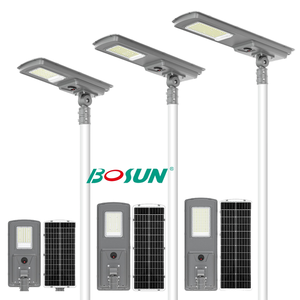
Dusk to Dawn All in One Solar Street Light Outdoor Waterproof
- Integrated AIO Monocrystalline Array
- IP67 Waterproof & Heat-Resistant
- Auto Dusk-to-Dawn Radar Sensor
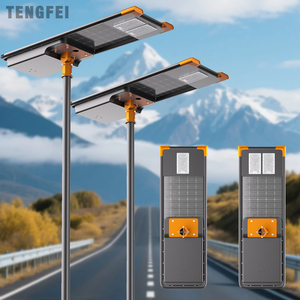
Low-Energy Split Commercial Solar LED Outdoor Lighting System
- Flexible Solar Panel Orientation
- Deep-Cycle LiFePO4 Battery Storage
- High-Speed MPPT Charging Engine
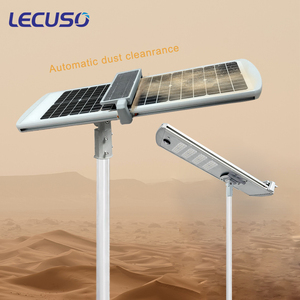
30W-150W Automatic Self-Cleaning Solar Commercial Street Luminaire
- Robotic Auto Brush Dust Removal
- Designed for High Dust & Desert Areas
- Prolongs Solar Absorption Efficacy
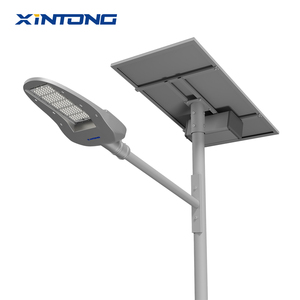
Heavy-Duty Highway Split Solar Street Lamp (60W-150W)
- Batwing Type II/III Optics Lens
- Heavy-Duty Aluminum Housing
- 5-7 Days Rainy Autonomy Reserve
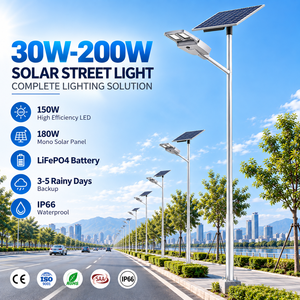
All-In-Two Commercial LED Solar Street Light IP66 (80W-150W)
- Streamlined All-in-Two Ergonomics
- High-Lumen Bridgelux LED Chips
- Smart Dynamic Power Management
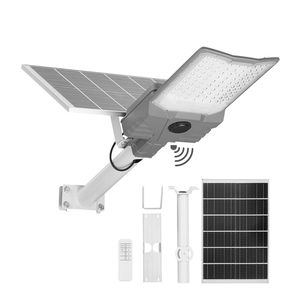
Ultra High-Power Industrial Solar Floodlight & Street Luminaire
- Wide Angle 240° Beam Illumination
- Crisp 6500K Daylight CCT Output
- Split Solar Matrix for Perimeter Security
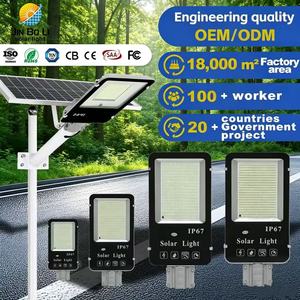
Remote-Controlled IP67 Modular Solar Outdoor Street Light (50W-300W)
- Wireless RF Remote Configuration
- Certified CE, RoHS, ISO9001 Compliance
- Extended Lifespan LiFePO4 Cells

SLOER Municipal Grade Hybrid Split/AIO Commercial Solar Light
- Cost-Effective Municipal Engineering
- 60W/120W High Luminous Efficacy
- Optimized Thermal Dissipation Body
Executive Whitepaper: Strategic Architecture of Modern Commercial Solar Lighting
An In-Depth Engineering Overview for Municipal Planners, EPC Contractors, and Commercial Real Estate Developers Seeking Energy Independence and Decarbonization.
The global transition toward resilient, zero-emission municipal infrastructure has elevated commercial solar street lighting from an auxiliary green option to a primary urban lighting asset. As legacy electrical grids face compounding pressures from extreme climatic events and rising electricity tariffs, off-grid commercial photovoltaic systems offer complete energy autonomy, immediate operational cost reductions, and absolute immunity against localized power outages.
Engineering a modern commercial solar lighting system requires balancing photometrics, solar energy harvesting capacity, energy storage chemistry, and thermal management. A standard retail solar lamp frequently suffers from rapid lumen degradation, early battery failure, and inadequate autonomy during consecutive overcast days. In contrast, enterprise-grade OEM solar lighting solutions are engineered around strict site-specific solar irradiance data (kWh/m²/day), IESNA photometric distribution classes, and advanced Maximum Power Point Tracking (MPPT) logic.
Photovoltaic Energy Harvesting
Utilizing high-purity Monocrystalline N-Type or PERC solar cells with efficiencies surpassing 21.5%. Micro-textured anti-reflective glass increases light capture across low incidence angles during early morning and late afternoon hours.
Advanced LiFePO4 Storage
Deploying grade-A Lithium Iron Phosphate (LiFePO4) battery packs featuring integrated Battery Management Systems (BMS). Exceptional thermal stability operates reliably from -20°C to +65°C with over 6,000 cycles at 80% Depth of Discharge (DoD).
Precision Optical Engineering
Batwing Type II, Type III, and Type V optical lenses manufactured from optical-grade PMMA eliminate dark zones, maximize pole spacing (up to 45 meters), and provide strict Dark-Sky compliant light cut-off.
Commercial Solar Lighting Procurement & Future Trends (2025–2030)
Key technological vectors and regulatory mandates redefining international procurement specifications for infrastructure lighting.
1. Smart City & IoT Mesh Connectivity
The convergence of street lighting with smart city network topologies is accelerating. Modern procurement contracts increasingly stipulate NEMA 7-pin or Zhaga Book 18 interfaces. Solar street lights are transformed into smart nodes hosting LoRaWAN, NB-IoT, or 4G/5G micro-cells, allowing centralized monitoring of battery state-of-charge (SoC), remote dimming schedules, automated fault alerts, and traffic flow monitoring.
2. Vertical Pole-Integrated Solar Wraps
While traditional flat-tilted solar panels remain standard for cost-effective performance, urban architectural projects favor vertically integrated cylindrical solar modules wrapped seamlessly around the lighting pole. This design minimizes wind load (drag coefficient), eliminates snow accumulation, prevents sand deposition, and offers vandalism-resistant aesthetics.
3. Adaptive AI Power Management Logic
Fixed timer-based dimming profiles are being replaced by dynamic artificial intelligence firmware embedded within MPPT charge controllers. By monitoring real-time weather forecasting data and historical battery drain curves, the system dynamically adjusts LED current output to guarantee 100% continuous lighting uptime through extended rainy seasons lasting 7 to 10 days.
4. Circular Economy & Tool-less Modular Maintenance
High Total Cost of Ownership (TCO) concerns are driving demand for quick-release modular architectures. Municipalities require tool-less access to driver compartments and plug-and-play battery trays, allowing maintenance crews to swap modules in under 3 minutes without dismantling the structural pole installation.
System Architecture Technical Comparison Matrix
Evaluating All-In-One (AIO), All-In-Two, and Traditional Split Commercial Solar Street Light Systems.
| Engineering Criteria | All-In-One (AIO) Systems | All-In-Two Systems | Split Type Commercial Systems | Vertical Solar Pole Systems |
|---|---|---|---|---|
| Power Output Range | 15W – 100W LED | 40W – 150W LED | 60W – 300W+ High Power | 40W – 160W LED |
| Solar Panel Tilt Flexibility | Fixed Horizontal / 5° Tilt | Adjustable Luminaire Bracket | 360° Azimuth & 0-60° Tilt | 360° Omnidirectional vertical capture |
| Battery Placement | Integrated into Luminaire Body | Integrated into Luminaire Body | Subterranean Vault or Upper Pole Box | Internal Pole Column Placement |
| Wind Resistance Rating | Class 12 (Category 1 Hurricane) | Class 14 (Category 2 Hurricane) | Class 16 (Super Typhoon Rated) | Class 17 (Ultra Low Drag Profile) |
| Ideal Application | Residential Streets, Pathways, Parks | Urban Arterials, Commercial Parking | Highways, Industrial Parks, Airports | Smart Cities, Luxury Boulevards |
| OEM Customization Scope | Moderate (Housing/Finish) | High (Lens/Watts/Battery) | Maximum (Full Project Specs) | Highest Architectural Customization |
Why Enterprise Buyers Choose Our OEM/ODM Manufacturing Platform
End-to-End Engineering, Rigorous Quality Control, and Global Logistics Support for Municipal Contracts and Large-Scale Solar Projects.
Dialux Photometric Engineering
We provide complete Dialux simulation modeling prior to production. Our optical engineers calculate ground lux levels, uniformity ratios (U0), and glare ratings to guarantee compliance with EN13201 and AASHTO highway lighting standards.
Certified Manufacturing Quality
Operating under strict ISO9001, ISO14001, and OHSAS18001 frameworks. Every system undergoes 100% automated electroluminescence (EL) solar testing, IP67 ingress testing, high-low temperature thermal shock testing, and 48-hour continuous burn-in.
Custom Metal Fabrication & Coating
Our steel pole fabrication facilities produce hot-dip galvanized poles according to ASTM A123 / EN ISO 1461 standards. Finished with marine-grade fluorocarbon or polyester powder coating, ensuring 25+ years of corrosion resistance in harsh coastal environments.
Commercial Solar Lighting Procurement FAQ
Direct Technical Solutions to the Most Critical Questions Raised by Municipal Engineers and Project Developers.
Request a Customized Commercial Solar Lighting Engineering Solution
Partner with an industry-leading OEM/ODM manufacturer. Contact our engineering team today to receive a complete Dialux photometric study, technical bill of materials, and direct factory quotation tailored to your project requirements.