
Solar Lighting Blog & News
Latest news, technical guides, and expert perspectives on smart solar street lights, off-grid infrastructure, and clean energy technology.
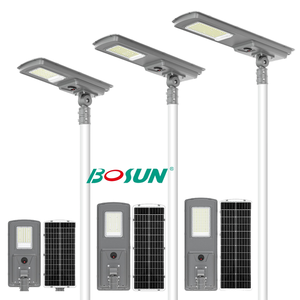
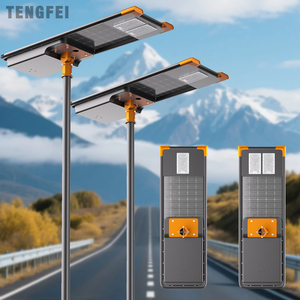
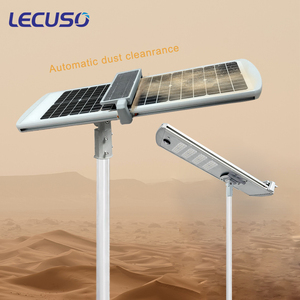
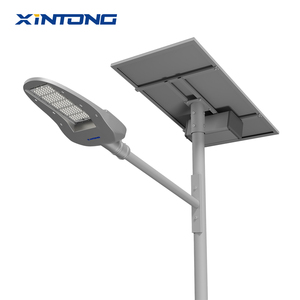
Featured Commercial Solar Pedestrian & Street Lighting Systems
Explore China’s leading industrial-grade solar luminaires, specifically configured for pedestrian crossings, municipal roadways, and off-grid traffic safety applications. Manufactured under ISO9001, CE, and RoHS standards with Grade-A LiFePO4 battery architectures.
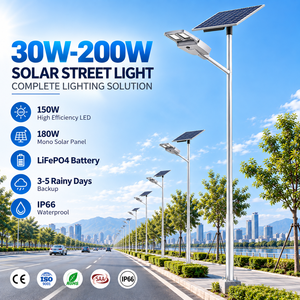
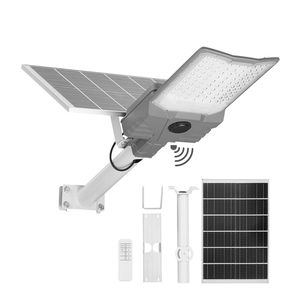
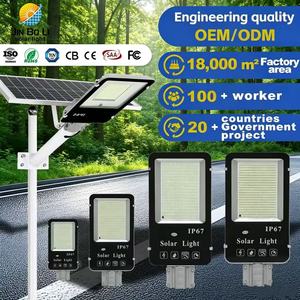

Executive Whitepaper: The Strategic Transition to Solar Pedestrian Crossing Systems
Pedestrian safety at marked crosswalks, mid-block crossings, and school zones represents one of the most critical challenges in modern municipal engineering and traffic management. According to international road safety statistics, over 75% of pedestrian fatalities occur during hours of darkness or twilight, where reduced visibility prevents drivers from detecting vulnerable road users (VRUs) in sufficient time to execute emergency braking. Traditional grid-connected crosswalk illumination systems incur exorbitant trenching, cabling, and utility connection costs—frequently exceeding $25,000 to $40,000 per crossing point in remote, suburban, or highway environments.
As a prime global manufacturing hub, China’s industrial OEM/ODM solar lighting ecosystem has undergone a monumental paradigm shift. Moving far beyond basic dusk-to-dawn residential floodlights, top-tier Chinese exporters now design and manufacture zero-grid commercial pedestrian crossing lighting systems engineered to meet international illuminance standards (such as IESNA RP-8, EN 13201, and FHWA crosswalk guidelines). By combining high-efficacy LED engines (exceeding 190 lm/W), asymmetric optical lenses, dynamic Doppler radar sensors, and advanced Lithium Iron Phosphate (LiFePO4) storage, Chinese factories deliver turnkey off-grid infrastructure that guarantees zero operational emissions and complete resilience against power grid failures.
Photometric Precision: Asymmetric Optical Distribution for Pedestrian Visibility
A fundamental error in early-stage solar crosswalk deployments was the use of symmetric, broad-beam street light lenses. Standard road optics illuminate the asphalt directly beneath the fixture, leaving the vertical surface of a pedestrian standing on the curb in shadow. Professional pedestrian crossing solar lights from leading Chinese exporters utilize specialized Asymmetric Type II-S or Type III-M optics.
These precision optical lenses project concentrated luminous flux forward and across the walkway, casting high-contrast vertical illuminance (measured in Lux) onto the pedestrian's body from the driver's vantage point. This eliminates the "silhouetting effect" and creates positive contrast, allowing motorists traveling at speeds up to 80 km/h (50 mph) to identify pedestrians from distances exceeding 150 meters, effectively providing adequate reaction margins.
Enterprise Manufacturing Advantages & R&D Architecture
Selecting a tier-one manufacturing partner in China requires looking beyond initial unit pricing. Global buyers, municipal contractors, and engineering procurement firms evaluate factory pedigree, test certifications, component selection, and structural engineering capabilities. Below is an overview of our enterprise manufacturing matrix:
Grade-A LiFePO4 Battery Systems
We exclusively incorporate brand-new Grade-A Lithium Iron Phosphate (LiFePO4) cells equipped with intelligent Battery Management Systems (BMS). Delivering over 4,000 to 6,000 deep discharge cycles at 80% DOD, our energy storage systems operate seamlessly across extreme temperature spans from -20°C to +70°C without thermal runaway risks.
Smart MPPT Charging Efficiency
Our proprietary Maximum Power Point Tracking (MPPT) solar charge controllers feature continuous algorithm tracking with a conversion efficiency of ≥98.5%. This ensures rapid recharging even under dense cloud cover, monsoon rain, or low-irradiance winter conditions, preventing total system blackouts.
Radar & Synchronized Beacons
Advanced options integrate 24GHz Doppler microwave sensors and RF wireless synchronization module linkages. Upon detecting an approaching pedestrian, the overhead solar luminaire dynamically boosts luminance from 30% eco-mode to 100% full capacity while simultaneously triggering yellow warning flashing beacons.
Future Procurement Trends in Pedestrian Solar Lighting (2026–2030)
The global solar street light market is shifting rapidly from low-cost static fixtures toward intelligent, connected zero-emission infrastructure. B2B importers and government procurement entities should align their sourcing strategies with the following technological trends:
1. Vertically Integrated Solar Wrap Modules (Cylindrical PV Poles)
Traditional flat solar panels mounted at the top of poles are highly vulnerable to wind loads, bird droppings, dust accumulation, and vandalism. The emerging industry gold standard involves vertical cylindrical solar modules wrapped seamlessly around the pole. Utilizing flexible monocrystalline silicon or vertical glass laminates, these 360-degree solar poles capture ambient sunlight throughout the day, boast high wind resistance (up to 60 m/s), and self-clean via rainwater runoff.
2. Smart City IoT & Cellular Telemetry Integration
Modern pedestrian crossing lights are evolving into smart city nodes. Procurement specifications increasingly mandate cellular (4G/5G/NB-IoT) or LoRaWAN gateways embedded directly into the solar charge controller. This allows municipal operators to remotely monitor battery state-of-charge (SOC), track daily solar harvesting yields, adjust lighting schedules, and receive automated diagnostic alerts if a LED module or driver requires maintenance.
3. Self-Cleaning Micro-Robotic & Hydrophobic Coatings
Soiling losses—caused by dust, sandstorms, and air pollution—can reduce solar module output by 25% to 40% within six months in arid regions (e.g., Middle East, North Africa, Australia). High-end Chinese manufacturers now offer integrated mechanical wiper systems powered by auxiliary solar micro-drives, alongside permanent hydrophobic nanocoatings that prevent particulate adhesion.
4. Circular Economy & Modular Battery Exchange Units
To fulfill strict ESG compliance requirements across European and North American markets, top exporters are adopting modular "plug-and-play" battery and controller cassettes. Instead of replacing an entire fixture after 7–10 years, maintenance crews can slide out the depleted battery enclosure and click in a recycled or updated pack in less than 3 minutes, dramatically lowering total cost of ownership (TCO).
Technology Comparison Matrix
Evaluating the structural, optical, and operational differences between legacy grid crosswalk systems, basic standard solar lights, and professional pedestrian crossing solar lighting systems:
| Technical Parameter | Traditional Grid Crosswalks | Basic Standard Solar Lights | Pro Pedestrian Crossing Solar Systems |
|---|---|---|---|
| Trenching & Installation Cost | High ($15,000 - $45,000 / site) | Zero (Off-Grid) | Zero (100% Off-Grid Plug & Play) |
| Optical Beam Pattern | Symmetric / Standard Street Optic | Broad Floodlight Optics | Asymmetric Pedestrian Vertical Illuminance |
| Battery Technology & Life | N/A (Grid Dependent) | Lead-Acid / Recycled Li-ion (1-2 Yrs) | Grade-A LiFePO4 Pack (8-12 Years Life) |
| Trigger & Warning Mechanism | Static / Continuous ON | Passive PIR Sensor Only | 24GHz Doppler Radar + RF Sync Flashing |
| Continuous Autonomy (Rainy Days) | 0 Days during blackout | 1 - 2 Days maximum | 5 - 7 Days (Smart MPPT Intelligent Dimming) |
| Ingress Protection & Rating | IP65 Typical | IP65 Aluminium / Plastic | IP66 / IP67 Die-Cast Aluminum (IK10 Rated) |
Frequently Asked Questions (B2B Sourcing & Engineering FAQ)
Below are detailed answers to the most critical technical, logistics, and quality assurance questions raised by international distributors, engineering consultants, and B2B buyers when sourcing solar pedestrian lighting from China.
Split Solar Lights utilize a separate high-wattage solar panel mounted at an optimal tilt angle on top of the pole, while the luminaire and battery box are mounted separately. Split systems are specified for high-power requirements (100W–300W+ LED), high poles (8–12m), or high-latitude geographic zones that require large PV arrays to capture limited winter sunlight.
Partner with China’s Leading Solar Lighting OEM/ODM Manufacturer
Accelerate your municipal road safety projects and expand your commercial distribution network with our industry-leading off-grid solar pedestrian crossing luminaires. Contact our technical engineering team today to receive complete photometric DIALux simulations, customized technical data sheets, and competitive factory-direct wholesale pricing.
Get Catalog