
Solar Lighting Blog & News
Latest news, technical guides, and expert perspectives on smart solar street lights, off-grid infrastructure, and clean energy technology.
Featured Wholesale LoRaWAN Solar Lighting Systems & Controllers
Direct from China’s leading OEM/ODM manufacturing facility. Engineered for municipal highways, commercial parks, industrial zones, and smart city developments worldwide.
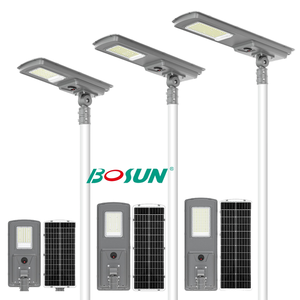
Dusk to Dawn All in One Solar Street Light Outdoor Waterproof
Integrated LoRaWAN smart controller with ultra-high efficiency MPPT charge monitoring, auto-dimming profiles, and IP67 weather-proofing for urban applications.
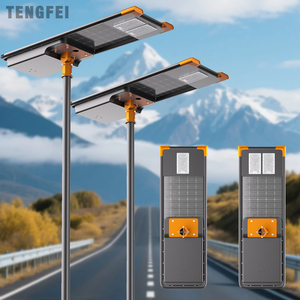
Hot Selling Low-energy Split Solar Street Light Outdoor Led Lamp
Split-type system featuring external high-power solar module control, smart thermal dissipation, and long-range RF network connectivity for arterial roads.
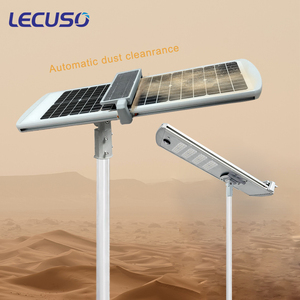
Automatic Auto Clean Self Cleaning Solar Street Light 30W-150W
Equipped with robotic brush dual-action drivers triggered via LoRaWAN downlink commands. Prevents dust accumulation for consistent lumen output.
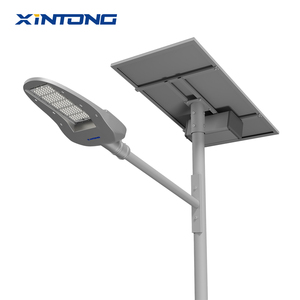
Road Light 60W 80W 100W 120W 150W Split Solar Street Lamp
Heavy-duty commercial street lamp node with telemetry sensors, real-time energy metering, and dynamic battery health optimization algorithms.
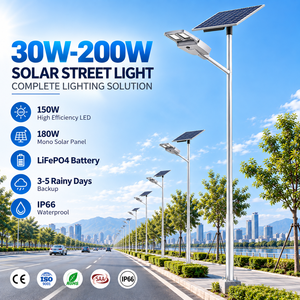
All In Two Lamp Led Solar Powered Street Light IP66 with Battery Backup
Dual-body architecture combining modular battery protection, LoRaWAN Class A/C switching, and robust surge protection for stormy coastal zones.
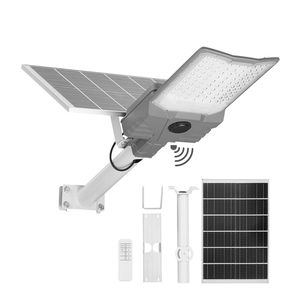
12000W High-Powered Outdoor Dusk-Dawn Split-Type LED Floodlight
Ultra-high lumen industrial floodlight system designed for perimeter security, mining yards, and ports controlled via central LoRaWAN CMS platform.
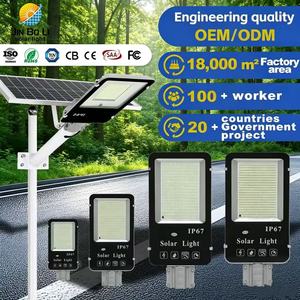
Remote Control IP67 Solar LED Light 50W-300W Split Type Lamp
RoHS-certified multi-channel solar charge controller featuring RF wireless hand-held override alongside long-distance LoRa gateway telemetry.

Commercial Split All in One Solar Street Light Manufacture 60W 120W
High-reliability B2B supplier node incorporating real-time fault detection, solar panel dirty sensor alerts, and adaptive power throttling.
Architectural Mechanics of Industrial LoRaWAN Solar Lighting Controllers
An engineering analysis of Maximum Power Point Tracking (MPPT), Long Range Wide Area Network (LoRaWAN) protocol integration, and intelligent battery management for municipal smart streetlighting.
1. High-Efficiency MPPT Solar Tracking Algorithms
Traditional PWM (Pulse Width Modulation) controllers dissipate excess PV voltage as heat, forfeiting up to 30% of harvested solar energy. Advanced LoRaWAN solar controllers manufactured in China utilize dual-stage Maximum Power Point Tracking (MPPT) circuits with continuous perturb-and-observe (P&O) algorithms. By matching solar array voltage to battery state-of-charge dynamically, energy conversion efficiency reaches 99.4%, ensuring maximum battery charge even under dense cloud cover or partial shading.
2. LoRaWAN Protocol & Class C Architecture
Smart streetlighting requires real-time control without heavy recurring cellular bandwidth costs. Operating across sub-GHz license-free ISM bands (868 MHz in Europe, 915 MHz in the Americas, 433/470 MHz in Asia), our controllers implement LoRaWAN 1.0.4/1.1 Class C mode. While Class A devices only listen after uplink transmission, Class C street light nodes maintain continuous downlink reception, enabling instant emergency overrides, dynamic dimming schedule pushes, and instantaneous fault diagnostics.
3. BMS & LiFePO4 Thermal Safeguards
The solar charge controller acts as the central brain protecting Lithium Iron Phosphate (LiFePO4) or Ternary Li-ion battery banks. Embedded microcontrollers supervise cell balancing, low-temperature charging cut-offs (0°C protection), over-discharge protection, and thermal runaway prevention. Integrated RS485 / Modbus interfaces relay voltage curves, cycle counts, and internal resistance degradation metrics back to the Central Management System (CMS).
Deploying off-grid solar street poles integrated with native LoRaWAN controllers eliminates utility grid connection costs (which average $25-$45 per linear foot of trenching and wiring). Combined with Central Management Systems (CMS), municipal operators report up to an 80% reduction in maintenance dispatch calls by remotely identifying degraded batteries or soiled panels prior to system blackout.
LoRaWAN vs NB-IoT vs Zigbee/PLC in Solar Lighting
Evaluating communication topology performance for large-scale outdoor lighting infrastructure deployments.
| Evaluation Vector | LoRaWAN (Our Standard) | NB-IoT (Cellular) | Zigbee / RF Mesh | Power Line Comm (PLC) |
|---|---|---|---|---|
| Network Ownership | Private or Public | Telecom Carrier Only | Private Mesh | Grid-Tied Cable |
| Recurring SIM Fees | Zero (Private Gateway) | High (Per-Node Monthly) | Zero | Zero |
| Coverage Distance | Up to 15 km (Rural) / 3 km (Urban) | 10 km (Cell tower dependent) | 100m (Hop dependent) | Physical Wire Limited |
| Power Consumption | Ultra-Low (<15mA RX) | Medium (High peak TX) | Low | High |
| Off-Grid Solar Viability | Optimal | Moderate (Battery drain) | Moderate | Not Applicable |
| Standard Socket Support | NEMA 7-Pin ANSI C136.41 / Zhaga Book 18 | NEMA / Zhaga | Custom / Internal | Internal Terminal |
Future Procurement Trends for Solar Lighting Controllers
Strategic shifts reshaping how government tenders, EPC contractors, and wholesale buyers source IoT-enabled solar lighting components from China exporters.
1. Shift Toward Standardization: NEMA & Zhaga Book 18
Procurement specifications have migrated away from proprietary internal controller boards toward standardized external twist-lock sockets. ANSI C136.41 (7-pin NEMA) and Zhaga Book 18 sockets allow project developers to upgrade control nodes without replacing luminaire housings or disassembling IP-rated enclosures. China wholesale suppliers now offer plug-and-play LoRaWAN controllers compatible with standardized receptacles.
2. Edge Computing & Dynamic Motion Sensing Integration
Rather than relying purely on cloud-side triggers, modern LoRaWAN solar controllers embed edge logic. Radar (24GHz Doppler) or passive infrared (PIR) sensors communicate directly with the local controller. When motion is detected, neighboring light nodes trigger elevated brightness via localized sub-GHz inter-node chatter before transmitting uplink status reports to the gateway.
3. Hybrid Dual-Communication Protocols (LoRaWAN + Bluetooth)
To streamline field commissioning, upcoming controller iterations combine long-range LoRaWAN transceivers with short-range Bluetooth Low Energy (BLE). Maintenance crews can perform wireless diagnostic health checks, adjust dimming curves, or update firmware directly from a mobile smartphone app without requiring bucket trucks or climbing light poles.
4. AI-Driven Energy Budgeting & Auto-Adaptation
Next-generation controllers continuously evaluate historical solar harvest data and weather forecast inputs. If consecutive rainy days are predicted, the onboard microcontroller automatically throttles maximum LED power dissipation and dynamically adjusts active dimming thresholds to prevent battery deep-discharge shutdowns, achieving 365-night continuous operation reliability.
Technology Development Roadmap in China Manufacturing Hubs
How Chinese OEM/ODM factories are advancing semiconductor integration, wireless performance, and thermal resilience for harsh outdoor environments.
Advanced Hardware Architecture & Reliability Engineering
Leading manufacturers in China are executing multi-layered hardware upgrades to satisfy stringent European and North American municipal standards:
- GaN (Gallium Nitride) Switching MOSFETs: Replacing traditional Silicon FETs in charge circuits to cut conversion thermal losses by 40% and shrink controller footprint.
- Conformal Coating & Potting Compound: Applying automated military-grade polyurethane conformal coatings to protect SMT componentry against high humidity, salt spray, and corrosive coastal ambient conditions.
- 10kV/5kA Surge Suppressors: Integrating multi-stage TVS diodes and Gas Discharge Tubes (GDT) to guard sensitive RF transceivers against lightning surges and electrostatic discharge.
- Multi-Band Software Defined Radio (SDR): Enabling regional frequency switching (US915, EU868, AU915, AS923) on a single hardware layout for streamlined global distribution inventory.
Quality Assurance Matrix
China Wholesale Supply Chain & OEM Enterprise Strengths
Leveraging state-of-the-art automated production, rigorous E-E-A-T manufacturing compliance, and global logistics infrastructure.
High-Precision SMT Production Lines
Operating fully automated Yamaha and Panasonic Surface Mount Technology (SMT) assembly lines. Automated Optical Inspection (AOI) and X-ray soldering validation guarantee zero defective units across high-volume wholesale production runs.
International Certification Compliance
All LoRaWAN solar lighting controller units carry full CE, FCC, RoHS, ISO9001:2015, and ISO14001 environmental standard approvals. Pre-certified RF modules accelerate local telecom compliance for international distributors.
Turnkey OEM / ODM Customization
From custom PCB layout dimensions, specific voltage curves (12V/24V/48V), bespoke LoRaWAN payload structures, to private-label casing and branding—our engineering team delivers sample prototypes within 14 business days.
Frequently Asked Questions (FAQ)
Addressing key technical, commercial, and operational queries from global buyers and IoT system integrators.