
Solar Lighting Blog & News
Latest news, technical guides, and expert perspectives on smart solar street lights, off-grid infrastructure, and clean energy technology.
High-Temperature Engineered Solar Luminaires
Explore our premium OEM/ODM portfolio of split, all-in-two, and all-in-one high-temperature solar street lights designed for tropical, desert, and extreme climate installations (+65°C to +80°C operating ambient).
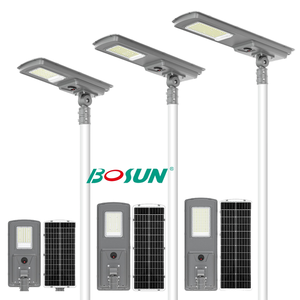
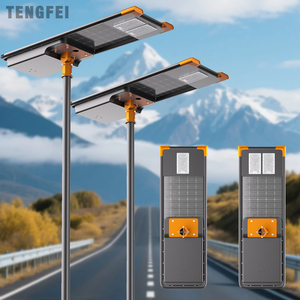
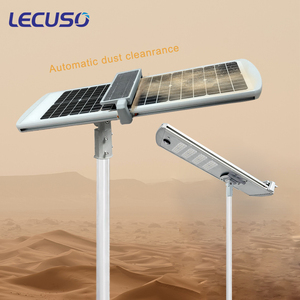
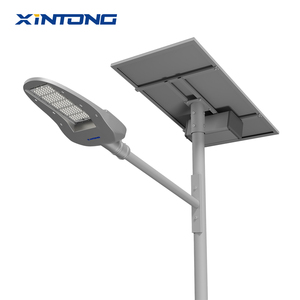
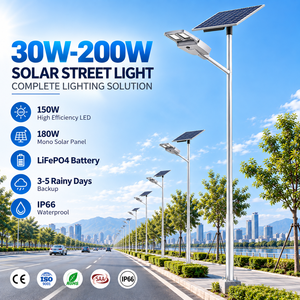
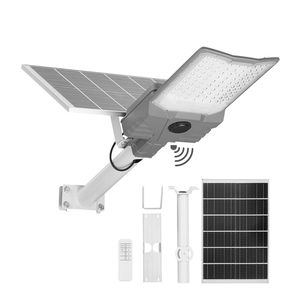
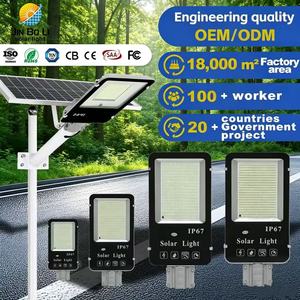

White Paper: Engineering High-Temperature Resistant Solar Lighting Systems
As global municipal infrastructure expands into arid regions, equatorial corridors, and high-ambient industrial zones (such as the Middle East, North Africa, Sub-Saharan regions, and parts of Australia and Latin America), standard commercial off-the-shelf solar street lights face severe reliability bottlenecks. Ambient temperatures exceeding +45°C—combined with direct solar radiation that drives enclosure surface temperatures beyond +75°C—cause premature battery degradation, luminous decay, controller failure, and structural fatigue in standard equipment.
As a leading China Wholesale High Temperature Solar Street Light Exporter & Exporters network, our engineering teams have re-architected off-grid solar power systems from the molecular and thermodynamic levels up. This technical white paper explores the engineering paradigms, material science breakthroughs, and procurement strategies required to ensure 100% continuous nocturnal operation under extreme environmental thermal stress.
Key Insight: Solar panels operating in desert environments lose approximately 0.4% efficiency for every degree Celsius above 25°C. Combined with battery thermal throttling, unengineered systems lose up to 40% of their operational capacity within 12 months of deployment.
1. Thermodynamic Architecture & Thermal Isolation Engineering
Traditional "All-in-One" solar street lights house the photovoltaic panel, LED module, MPPT controller, and lithium battery inside a single integrated chassis. In high-temperature regions, this design traps heat generated by both internal electronics and ambient solar radiation, pushing internal battery compartment temperatures over +80°C. This causes rapid capacity fade and increases thermal runaway risks.
Our engineered high-temperature split and "All-in-Two" solar luminaires utilize patent-pending thermal decoupling architecture. By physically isolating the battery enclosure beneath the solar panel shadow barrier or housing it inside an underground IP68 sealed vault / vertical pole core, ambient temperatures inside the energy storage bay are maintained 15°C to 20°C below ambient peak.
Phase Change Material (PCM) Cooling
Integrated microencapsulated PCM latent heat absorption layers around battery packs absorb peak daytime heat energy and release it passively during cool desert nights.
Aerospace Grade 6063 Heat Sinks
Extruded anodized aluminum alloy heatsinks with multi-fin aerodynamic convection chimneys prevent thermal throttling of high-lumen SMD5050 LED chips.
Smart MPPT Dynamic Thermal Derating
Next-gen AI controllers automatically adjust charging currents based on real-time thermistor telemetry to protect cell chemistry without shutting off light output.
2. High-Temperature Battery Chemistry: LiFePO4 vs. Sodium-Ion (Na-Ion)
Battery chemistry selection is the fundamental baseline of high-temperature solar street light longevity. Standard ternary NCM (Nickel Cobalt Manganese) batteries suffer severe catastrophic risks above 60°C. Standard LiFePO4 (Lithium Iron Phosphate) cells perform well up to 55°C, but exhibit electrolyte oxidation and capacity fade when subjected to prolonged high-heat cycles.
China exporter innovations now offer specialized High-Temperature Customized LiFePO4 cells with thermal-stable ceramic separators and advanced Sodium-Ion (Na-Ion) Energy Storage Systems. Sodium-ion batteries maintain outstanding thermal stability from -40°C to +80°C, offering superior cycle retention, enhanced safety profiles, and lower raw material procurement costs for mega-scale municipal projects.
3. Photometric & Optical Efficiency Preservation
LED luminous efficacy degrades as junction temperature ($T_j$) rises. In standard fixtures, high heat causes color shift (chromaticity drift toward blue wavelengths) and rapid degradation of silicone optical lenses. Our high-temperature exporter series integrates optical-grade PMMA lenses rated for continuous operation at +120°C with non-yellowing anti-UV coatings. Paired with high-efficacy LEDs (up to 220 lm/W), system efficacy remains ultra-high even under intense thermal loads.
Global Procurement & Industry Trends (2026–2035 Horizon)
The global solar lighting market is transitioning from simple off-grid illumination fixtures to multi-functional Smart City IoT Nodes. Municipal buyers, EPC contractors, and commercial developers sourcing from China wholesale exporters are demanding systems that deliver higher intelligence, resilience, and operational value. Key procurement trends shaping the decade include:
1. Vertical Integrated Flexible Solar Poles
Moving away from flat top-mounted panels susceptible to high wind loads and dust accumulation, vertical flexible solar pole wraps (wrap-around monocrystalline silicon modules) offer 360-degree solar harvesting, self-cleaning geometry, and sleek urban aesthetics.
2. Robotic Auto-Cleaning Mechanisms
In high-temperature desert regions, dust storms reduce solar panel power output by up to 80% within days. Automated daily cleaning wipers powered by motorized tracks are becoming a mandatory RFP specification for major Middle Eastern highway projects.
3. IoT Smart City & 4G/5G Integration
Solar street light poles now serve as communication hubs equipped with public Wi-Fi hotspots, environmental air quality sensors, HD security monitoring, and intelligent motion-activated dimming networks managed via cloud platforms.
4. Solar Lighting as a Service (SLaaS)
Governments and corporations are adopting zero-CAPEX subscription models where exporters and local utility partners supply, install, and service lighting assets under guaranteed uptime service level agreements (SLAs).
Why Partner With Us: Premier China Exporter Core Competencies
As an authoritative OEM/ODM manufacturer and global exporter, our enterprise infrastructure is built to solve complex engineering challenges for international clients. We bring decades of combined industrial expertise, rigorous quality management frameworks, and end-to-end supply chain integration to every project.
ISO 9001 & International Certification Compliance
Our manufacturing lines operate under strict ISO 9001, ISO 14001, and OHSAS 18001 standards. All high-temperature product lines carry CE, RoHS, IP66/IP67, IK10, IEC, and UL certifications for global project tender eligibility.
Bespoke Customization & Prototyping Capabilities
From rapid 3D optical rendering and Dialux photometric simulations to custom structural pole engineering, our R&D center transforms client specs into production-ready prototypes in as little as 14 days.
Rigorous Thermal Chamber Burn-In Testing
100% of manufactured batches undergo 72-hour continuous thermal stress burn-in testing inside +80°C environmental chambers, salt spray corrosion testing, and high-frequency vibration simulation prior to export container loading.
End-to-End Export Logistics & Warranty Protection
We provide full export documentation (Form E, CO, SASO, SABER), container shipping management, site installation guidance, and up to 10-year comprehensive warranty support with direct spare parts availability.
Frequently Asked Questions (FAQ) for B2B Buyers & Engineers
Request a Custom High-Temperature Engineering Quote
Consult directly with our senior solar engineering specialists. Get custom Dialux photometric reports, technical specification sheets, and factory-direct wholesale pricing for your project tenders.
Inquire Now