
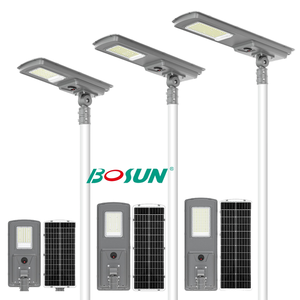
Dusk to Dawn All in One Solar Weather Light Pole
Fully integrated IP67 waterproof structure featuring high-efficiency monocrystalline solar panels, LiFePO4 battery storage, and compact weather telemetry sensor arrays.
Latest news, technical guides, and expert perspectives on smart solar street lights, off-grid infrastructure, and clean energy technology.
Explore our export-ready, high-durability off-grid solar weather station poles engineered for municipalities, highways, smart industrial parks, and coastal infrastructure.
Fully integrated IP67 waterproof structure featuring high-efficiency monocrystalline solar panels, LiFePO4 battery storage, and compact weather telemetry sensor arrays.
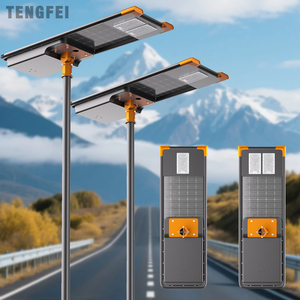
Flexible split-type design tailored for high-latitude regions requiring adjustable PV tilt angles, heavy payload capacity, and multi-parameter meteorological sensors.
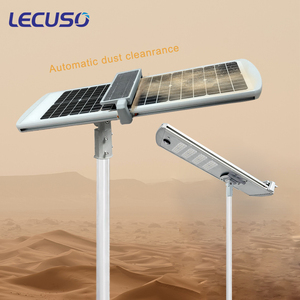
Robotic self-cleaning brush mechanism preventing dust and sand accumulation on solar panels, ensuring uninterrupted telemetry and optimal lux output in desert climates.
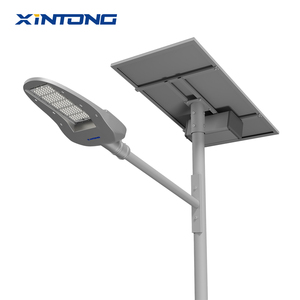
High-lumen roadway lighting (60W-150W LED) integrated with ultrasonic anemometers, rain gauges, and RS485 Modbus telemetry gateways for highway monitoring.
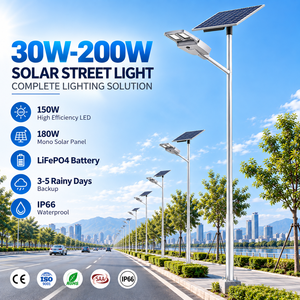
IP66 rated modular architecture featuring intelligent battery thermal management, 7-day extended autonomy, and IoT connectivity for urban smart grid integration.
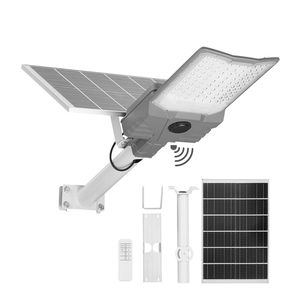
Massive lumen output (up to 900,000LM system rating equivalency) engineered for perimeter security, industrial yards, ports, and emergency weather monitoring hubs.
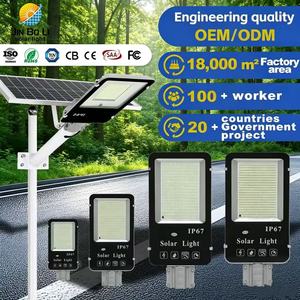
IP67 waterproof rating with remote cloud configuration, dynamic dimming schedules, environmental AQI monitoring, and real-time fault diagnostics.

Highly customizable OEM/ODM modular pole system accommodating customized sensor payloads, CCTV cameras, public Wi-Fi hotspots, and environmental displays.
The global infrastructure paradigm is undergoing an unprecedented shift toward decentralized, smart, and resilient clean technology. Solar weather station light poles represent the nexus of this revolution—combining off-grid outdoor lighting with real-time micro-meteorological sensing, edge computing, and IoT telecommunications. As world-class China manufacturers and global exporters, our engineering facilities bridge the gap between heavy structural steel fabrication and advanced electronic sensor integration.
A primary failure mode for multi-sensor solar light poles in coastal or typhoon-prone regions is structural fatigue caused by wind-induced vortex shedding and drag forces generated by large solar array surface areas and auxiliary weather instruments. Leading Chinese manufacturers utilize Q235B and high-strength Q355B structural steel to construct tapered round or octagonal poles engineered in strict compliance with EN 40-3-1 and TIA-222-G standards.
Every structural pole undergoes hot-dip galvanization according to ISO 1461 specifications, applying a zinc coating layer of 85–110 μm thickness inside and out. This provides cathodic protection against salt spray and atmospheric corrosion for up to 30 years in harsh coastal environments (C4/C5 marine atmospheric classifications per ISO 12944). Furthermore, advanced finite element analysis (FEA) software simulates static wind pressures exceeding 60 m/s (Category 16 Typhoons), verifying that mechanical stress remains comfortably within safe yield stress limits.
ISO 1461 certified anti-corrosion coating (85-110μm zinc thickness) guarantees a 30+ year structural lifespan in high-salinity marine air.
Grade-A Lithium Iron Phosphate cells paired with intelligent BMS, maintaining 80% capacity retention after 6,000 discharge cycles.
Custom LED engines delivering up to 180–210 lm/W with Type II/III optical distribution lenses for glare-free uniform coverage.
Unlike standard off-grid street lights, a professional solar weather station pole must house a suite of high-precision meteorological instruments without introducing electromagnetic interference (EMI) or power instability. Our factory-integrated meteorological platforms support a comprehensive sensor matrix:
Data from these micro-meteorological sensors is aggregated by an industrial-grade embedded gateway via isolated RS485 Modbus-RTU interfaces. The telemetry payload is compressed and transmitted to municipal IoT cloud platforms or emergency management dispatch centers using MQTT/HTTPS over 4G LTE/5G cellular networks or LoRaWAN long-range low-power radio communication protocols.
| Architecture Type | Ideal Application Scenario | Wind Load Resistance | Battery Integration | Maintenance Complexity |
|---|---|---|---|---|
| All-in-One Integrated | Urban avenues, pathways, smart parks, low-wind zones | Medium (Up to 45 m/s) | Top-mounted housing with PV | Low (Plug-and-play replacing) |
| All-in-Two System | Commercial parking lots, secondary highways, residential areas | High (Up to 55 m/s) | Integrated into LED fixture bracket | Moderate (Modular access) |
| Split-Type (Custom Pole) | Major highways, coastal weather stations, desert outposts | Extreme (Up to 60+ m/s) | Underground IP68 box or base cabinet | Structured (Individual component swap) |
| Vertical Solar Wrap Pole | High-end urban boulevards, architecturally sensitive zones | Superior (360° Low Drag) | Inside pole base shaft with ventilation | Low (Clean visual profile) |
As international energy policies lean heavily toward carbon neutrality and infrastructure resilience against climate change, global B2B procurement strategies for solar lighting and weather stations are evolving rapidly. Buyers must align their purchasing criteria with four fundamental technological trends shaping China’s export manufacturing ecosystem.
Traditional MPPT controllers rely on reactive voltage/current tracking. Next-generation solar weather poles incorporate micro-edge AI microcontrollers. By correlating real-time weather forecasts (received via IoT cloud) with historical solar irradiance data gathered by the on-board pyranometer, the pole's smart controller dynamically adjusts LED power output curves, sensor polling rates, and telemetry transmission intervals. If three consecutive days of torrential rain are predicted, the AI automatically activates deep power-conservation modes—guaranteeing 100% telemetry operational continuity for critical weather monitoring without blacking out.
The solar hardware layer is shifting from standard PERC monocrystalline cells to N-type TOPCon (Tunnel Oxide Passivated Contact) cells, raising module conversion efficiency beyond 24.5%. Simultaneously, to overcome battery performance degradation in cold climates (such as Scandinavian, Canadian, or Central Asian winters), leading factories are integrating self-heating BMS circuits. When ambient temperatures drop below 0°C, surplus solar power is routed to internal thermal heating films before charging the battery, enabling operational discharge down to -40°C.
Proprietary closed-loop radio frequency networks are being phased out in favor of standardized TALQ Consortium compliant smart city protocols and open API architectures. Procurement agencies now mandate that solar weather station light poles seamlessly interface with third-party Central Management Systems (CMS) such as Philips CityTouch, Telensa, or custom municipal dashboard software without vendor lock-in.
In ultra-critical safety infrastructure—such as highway storm warning stations and alpine weather monitoring passes—pure off-grid solar is being upgraded to hybrid micro-energy harvesting. Future-ready solar poles incorporate vertical-axis wind turbines (VAWT) or small-scale auxiliary grid tie-ins to supplement solar harvesting during extended polar nights or continuous winter blizzards.
Key technical, logistical, and commercial insights for municipal buyers, EPC contractors, and international importers.
Contact our senior engineering and export consultation team today for custom CAD drawings, photometric Dialux simulations, structural wind calculations, and factory-direct wholesale quotations for your upcoming project.
Send an Inquiry