
Solar Lighting Blog & News
Latest news, technical guides, and expert perspectives on smart solar street lights, off-grid infrastructure, and clean energy technology.
Industrial & Municipal Solar Retrofit Kit Systems
Explore our flagship solar lighting conversion engines designed to fit standard utility poles, replacing traditional High-Pressure Sodium (HPS) and metal halide fixtures with zero grid dependency.
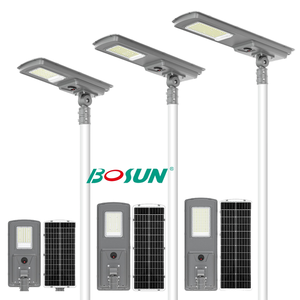
Dusk to Dawn All in One Solar Street Light Kit
- Integrated Monocrystalline PV Engine
- Automated Dusk-to-Dawn Radar Sensing
- IP67 Waterproof Die-Cast Housing
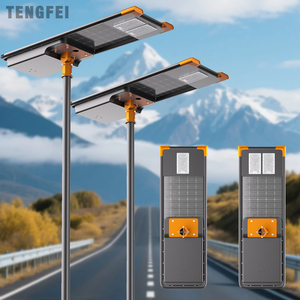
Low-Energy Split Solar Retrofit LED Module
- High Luminous Efficacy (>180 lm/W)
- Flexible Angle Solar Mount System
- LiFePO4 Deep Cycle Battery Backup
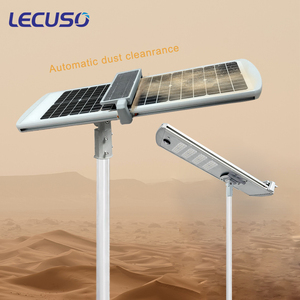
Self-Cleaning 30W-150W Auto-Clean Solar Light
- Robotic Dust & Snow Removal System
- Zero Maintenance Desert-Grade Design
- MPPT Smart Charge Tracking Control
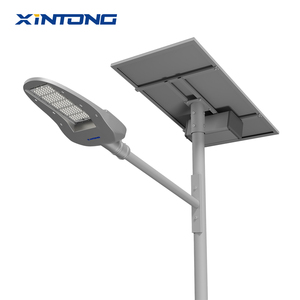
Commercial Road Light 60W-150W Split Solar Kit
- Bat-Wing Optical Type II/III Distribution
- High-Output Lumileds 5050 LED Chips
- Extruded Aluminum Heat Sink Engine
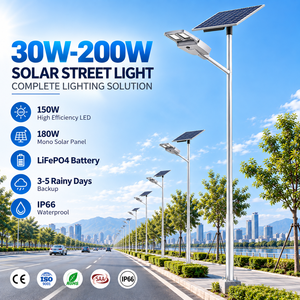
All-In-Two Solar Street Luminaire IP66 80W-150W
- High-Density Built-in Lithium Storage
- Wind-Resistant Aerodynamic Frame
- 5-7 Days Autonomy Extended Backup
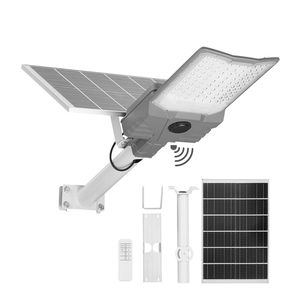
High-Powered 900,000LM Split Solar Light Kit
- Extreme Ultra-High Lumen Density Output
- 240° Wide Angle Highway & Stadium Beam
- Rugged IK10 Impact Protection Glass
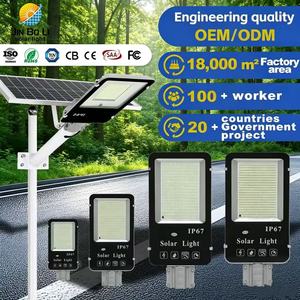
Remote Control IP67 Split Solar Engine 50W-300W
- RF Remote & Mobile App Program Control
- Multi-Stage Programmable Dimming Curves
- RoHS & CE Certified Manufacturing

SLOER Commercial Split & All-In-One Solar Light
- Cost-Optimized Municipal Sourcing Solution
- Modular Quick-Connect Cable Assemblies
- Universal Pole Adapter Sleeve Inclusion
The Strategic Imperative of Solar Street Light Retrofitting
As municipalities, industrial parks, highways, and commercial real estate operators worldwide face accelerating decarbonization targets and escalating grid energy costs, converting legacy street lighting infrastructure into off-grid, solar-powered systems has shifted from a sustainable option to a core financial strategy. Traditional street pole replacement requires costly civil engineering—including trenching, grid cabling re-wiring, concrete foundation destruction, and extended traffic management disruption. Solar street light retrofit kits eliminate these capital-intensive barriers by retaining structural steel poles while integrating state-of-the-art photovoltaic (PV) modules, high-capacity Lithium Iron Phosphate (LiFePO4) storage, intelligent Maximum Power Point Tracking (MPPT) charge controllers, and high-efficacy LED optical engines directly onto existing infrastructures.
As China’s premier solar street light retrofit kit manufacturer and exporter, our engineering group synthesizes decades of advanced optoelectronics development, energy storage integration, and structural aerodynamics. We design universal retrofit engines that convert traditional High-Pressure Sodium (HPS), Metal Halide (MH), and early-generation inefficient LED fixtures into completely autonomous, smart grid-independent solar nodes.
Anatomy of an Industrial-Grade Solar Retrofit Kit
N-Type TOPCon Photovoltaic Array
Our kits feature ultra-high-efficiency monocrystalline N-Type TOPCon solar panels achieving up to 23.5% cell conversion efficiency. Engineered with anti-reflective tempered glass and anodized aluminum frames, these arrays maintain low power degradation (<0.55% annually) even in harsh high-temperature, high-salinity marine or desert environments.
Automotive-Grade LiFePO4 Pack
Safety and lifespan define solar energy storage. We integrate A-grade LiFePO4 cells rated for 4,000+ deep charge-discharge cycles at 80% DOD. Each battery module includes an intelligent Battery Management System (BMS) with multi-stage thermal throttling, over-charge, over-discharge, and short-circuit safeguards.
Smart MPPT & AI Energy Drivers
Our proprietary MPPT controllers deliver 99.5% tracking efficiency, harvesting maximum solar energy under cloudy, rainy, or shaded conditions. Adaptive dimming algorithms dynamically adjust light output based on real-time battery state-of-charge (SoC) and ambient movement to guarantee 365-night continuous operation.
Retrofit Kit vs. Traditional Pole Replacement vs. HPS Grid
The following data visualization illustrates the economic, operational, and environmental impact of upgrading 1,000 standard municipal streetlights using our solar retrofit engines over a 10-year lifecycle.
| Performance Metric | Legacy HPS Grid Lighting | Complete Pole & Grid Replacement | China Top Solar Retrofit Kit |
|---|---|---|---|
| Initial CAPEX (Per Light Node) | $0 (Existing Base) | $2,200 - $3,500 (Civil + Cable) | $350 - $650 (Retrofit Engine Only) |
| Trenching & Cabling Required | Yes (High Maintenance) | Yes (Extensive Site Excavation) | Zero (100% Off-Grid Wireless) |
| Luminous Efficacy | 65 - 85 lm/W | 140 - 160 lm/W | 180 - 220 lm/W (Lumileds/Bridgelux) |
| Annual Grid Power Cost | $120 - $180 / Pole | $0 (Solar) / $60 (Hybrid) | $0 (100% Free Solar Energy) |
| Installation Time Per Node | N/A | 4 - 8 Hours / Pole | 20 - 35 Minutes / Pole |
| 10-Year Carbon Footprint (1k Units) | ~4,500 Metric Tons CO2 | ~350 Metric Tons CO2 (MFG) | <120 Metric Tons CO2 (Minimal Material) |
| Payback Period (ROI) | N/A | 6.5 - 9 Years | 1.2 - 2.4 Years |
Future Procurement Trends in Solar Street Lighting (2025–2030)
As global municipal procurement offices, B2B importers, EPC contractors, and project developers re-evaluate public lighting infrastructure contracts, several critical macro trends are reshaping how solar street light retrofit kits are specified and purchased:
1. Shift from Universal Fixture Swaps to Modular Engine Retrofitting
Procurement specs are moving away from whole-pole teardowns. Buyers prioritize modular solar engine kits that can be universally clamped onto standard arm diameters (40mm to 76mm), reducing freight volumes by up to 70% and minimizing international logistics costs.
2. AIoT Smart City Integration & Central Management Software (CMS)
Future-proof procurement demands smart nodes. Modern retrofit kits now require integrated cellular (NBIoT/LTE-M) or wireless mesh (LoRaWAN/Zigbee) gateways. Operators can remotely monitor battery state-of-health, lumen attenuation, and fault diagnostics via cloud dashboards.
3. High-Temperature & Thermal-Resistant Chemistry
With climate change driving ambient summer temperatures above 50°C in regions like the Middle East, Africa, and Southern Europe, buyers specify heat-resistant LiFePO4 chemistries and active cooling heat sinks to eliminate thermal throttling degradation.
4. Self-Sustaining Autonomous Maintenance (Robotic Wipers)
Dust, sand, and bird droppings can decrease solar array efficiency by 30-50% within months. High-end tenders now mandate automated daily self-cleaning brush mechanisms on retrofit solar modules to ensure consistent power generation.
Technological Evolution of the Chinese Solar Export Sector
China manufactures over 85% of the world's solar street lighting components. However, the market has undergone a significant paradigm shift from low-cost, low-quality legacy assemblies to high-precision, heavy-duty municipal energy engines.
Optical Precision & Dark-Sky Compliance
Early solar lights suffered from uncalibrated glare and light pollution. Modern engineering incorporates specialized optical polycarbonate or glass lenses with precise Type II-M, Type III-M, and Type IV cut-offs. This directs 95%+ of generated lumens onto road surfaces, walkways, and parking bays while preventing upward spill light into residential windows or night skies.
Vertical Integration & Component Compatibility
Top-tier Chinese manufacturers now control the entire supply chain—from aluminum die-casting and SMT LED surface mounting to battery pack spot-welding and MPPT firmware coding. This vertical integration guarantees seamless internal communications between the BMS, MPPT driver, and optical engine, preventing premature field failures common in unbranded off-the-shelf assemblies.
Why Partner With Us: Premium OEM/ODM Manufacturing Excellence
As a global leader in off-grid solar street light engineering, our manufacturing enterprise delivers comprehensive B2B production capabilities customized to project specs worldwide:
- Custom Photometric Engineering (DIALux Simulations): We provide complimentary DIALux lighting calculations based on road width, pole height, spacing, and required illuminance standards (EN13201 / IESNA RP-8).
- Advanced Testing & Quality Assurance: Every retrofit kit batch undergoes 100% aging tests, salt-spray corrosion chamber exposure (1,000 Hours), IP68 submersion testing, thermal shock testing (-40°C to +70°C), and vibration testing.
- Flexible OEM Branding & Private Labeling: Complete support for customized laser-etched branding, packaging, customized CCT selection (2700K to 6500K), and tailored optical lens configurations for B2B buyers.
- Global Regulatory Compliance: Full international certification portfolio including CE, RoHS, IP67, IK10, ISO9001:2015, ISO14001, UN38.3 (Lithium Transport), and IEC 62133.
Solar Street Light Retrofit Kit Sourcing FAQ
Direct technical answers to crucial questions asked by engineering procurement teams, B2B distributors, and municipal buyers.
1. How do solar street light retrofit kits adapt to existing utility pole dimensions?
Our retrofit kits include heavy-duty, hot-dip galvanized steel or die-cast aluminum slip-fitter sleeves with adjustable inclination angles (-15° to +15°). These sleeves universal-fit onto standard pole tenons and horizontal mounting arms ranging from 40mm to 76mm outer diameter, securing firmly via stainless steel 316 anti-vibration locking bolts without structural alterations.
2. What is the expected autonomy during prolonged overcast or rainy conditions?
Engineered for critical infrastructure reliability, our systems provide 5 to 7 continuous days of illumination autonomy without solar recharge. This is achieved through high-density LiFePO4 battery capacity matched with intelligent MPPT dynamic dimming, which automatically shifts power consumption based on remaining battery state-of-charge (SoC).
3. Can these solar retrofit engines withstand typhoons and high wind loads?
Yes. The structural frames of our solar panel mounts and luminaire housings undergo CFD aerodynamic wind tunnel modeling. Rated to withstand wind speeds up to 60 m/s (Category 12-14 Typhoons/Hurricanes), our brackets utilize high-tensile T6 structural aluminum and Grade 8.8 structural fasteners to ensure zero mechanical failure.
4. What is the maintenance lifespan of the LiFePO4 battery pack?
Our Grade-A LiFePO4 battery cells deliver 4,000+ complete charge cycles to 80% capacity retention, translating to an operational lifespan of 10 to 12 years under standard daily cycling conditions. In contrast to legacy lead-acid or gel batteries that fail within 2 years, our thermal BMS prevents cell degradation in hot climates.
5. What lead times and MOQ are required for wholesale export orders?
Standard sample evaluation kits are dispatched within 5 to 7 working days. Bulk container production (500 to 2,000 units) typically requires 15 to 22 calendar days. Minimum Order Quantity (MOQ) starts at 10 units for standard models, with full OEM custom production starting at 50 units.
6. How does the warranty policy protect long-term B2B procurement contracts?
We provide a comprehensive 5-Year Full Replacement Warranty covering the solar panel, LED light engine, MPPT controller, and LiFePO4 battery pack. In the rare event of a component failure, replacement modules are shipped via priority air freight without requiring the defective unit to be returned first.
Ready to Retrofit Your Public & Industrial Lighting Fleet?
Connect directly with our engineering sales director for customized DIALux photometric reports, technical specification sheets, and competitive B2B factory-direct pricing.