
Solar Lighting Blog & News
Latest news, technical guides, and expert perspectives on smart solar street lights, off-grid infrastructure, and clean energy technology.
Engineered Solar & Hybrid Lighting Product Portfolio
Discover our top-rated industrial-grade off-grid and grid-tied hybrid solar street lights. Built with high-efficiency TOPCon PV modules, ultra-durable LiFePO4 batteries, and smart MPPT AC/DC transfer switches for continuous municipal and commercial illumination.
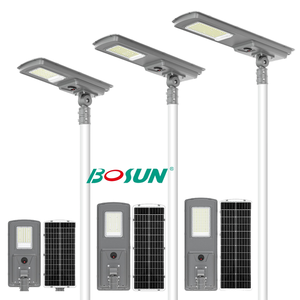
Dusk to Dawn All in One Solar Street Light Outdoor Waterproof
- Integrated Monocrystalline PV & LFP Battery
- IP67 Waterproof Heavy-Duty Die-Cast Aluminum
- Automated Dusk-to-Dawn Radar Motion Sensor
- Optical Efficacy: Up to 180 LM/W LED Engine
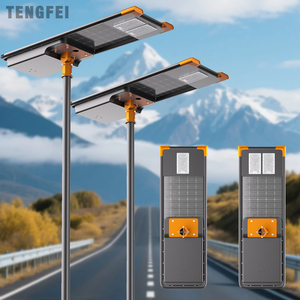
Hot Selling Low-Energy Split Solar Street Light Outdoor LED Lamp
- High-Yield External Adjustable Solar Panel
- Grid-Tied AC Backup Modular Architecture
- Deep-Cycle LiFePO4 Battery Pack (2000+ Cycles)
- Multi-Angle Type II/III Street Luminaire Lens
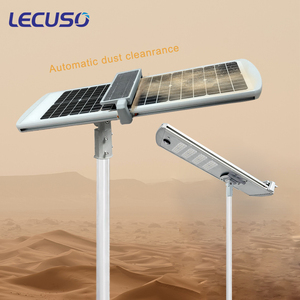
High Quality 30W-150W Automatic Self-Cleaning Solar Street Light
- Robotic Auto-Brush Dust & Sand Removal
- Restores Up to 99.2% Solar Charging Efficiency
- Ideal for Desert, Coastal & High-Dust Zones
- Smart IoT Remote Monitoring & Status Logs
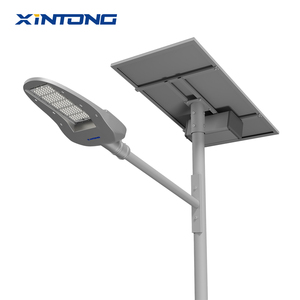
Road Light 60W-150W Municipal Split Hybrid Solar Street Lamp
- Engineered for High-Speed Arterial Highways
- Hybrid AC-Grid Seamless Switching Controller
- High-Lumen Philips/Bridgelux Chipsets
- Hot-Dip Galvanized Anti-Corrosion Housing
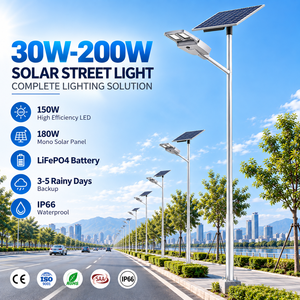
All In Two LED Solar Street Light IP66 with Battery Backup
- Integrated Light Head & Separate PV Array
- IP66 & IK10 Vandal-Resistant Construction
- 5-7 Rainy Days Uninterrupted Power Autonomy
- Programmable Dimming Profiles & Microwave Sensor
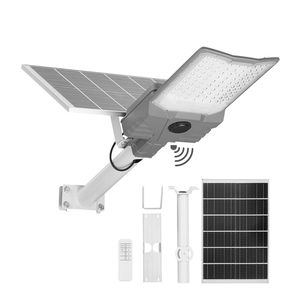
High-Powered Split-Type LED Solar Stadium Floodlight System
- Ultra-Wide 240° Illumination Beam Angle
- 6500K CCT High Visibility Daylight White
- Designed for Logistics Hubs, Sports & Airports
- Dual Power Input: Solar DC + Municipal AC
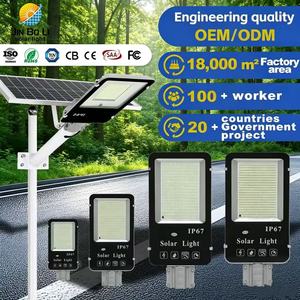
Remote Control IP67 Commercial Split Solar LED Street Lamp
- RoHS, CE & TÜV SÜD Industrial Certification
- Multi-Function Handheld Wireless Controller
- Advanced Aluminum Heat-Sink Thermal Management
- Heavy-Duty 50W-300W Modular Options

Commercial Grade Hybrid All-in-One Solar Street Light
- Optimized Direct-Factory OEM Sourcing Price
- Dual-Layer Anti-Corrosion Powder Coating
- Intelligent MPPT Efficiency >98.5%
- Rapid Pole-Mounting Bracket Architecture
Why Premier Global Procurement Teams Partner with Our Manufacturing Base
As a leading Tier-1 exporter and manufacturer of solar street lighting in China, we integrate rigorous engineering standards, automated production lines, and comprehensive quality assurance testing to deliver zero-defect municipal lighting solutions worldwide.
Automated Production & Scale
Our 45,000 m² state-of-the-art manufacturing facility houses SMT surface-mount lines, automated battery pack assembly cells, and robotic CNC luminaire housing casting machinery. With an annual capacity exceeding 600,000 solar units, we ensure consistent supply-chain stability and rapid order turnaround for mega-scale infrastructure projects.
Rigorous Quality Assurance & Testing
Every luminaire undergoes exhaustive environmental stress screening. Our in-house ISO/IEC 17025 accredited laboratory conducts IP67/IP68 immersion tests, IK10 mechanical impact testing, salt-spray anti-corrosion simulations (1,500 hours), and high/low-temperature thermal chamber cycling (-40°C to +70°C).
Patented Hybrid AC/DC Architecture
Our R&D department holds over 45 international patents focusing on MPPT algorithm optimization, automatic dual-power source transfer switches, and intelligent battery health management systems (BMS). We bridge off-grid clean energy with utility grid dependability.
Engineering Knowledge Gain: Why Grid-Tied Hybrid Systems Are Replacing Pure Off-Grid Solar
In high-latitude regions or areas subject to prolonged rainy seasons (exceeding 7-10 consecutive days), pure off-grid solar systems suffer from battery depletion, resulting in dark roadways and public safety hazards. Grid-tied hybrid solar street lights resolve this structural weakness by utilizing solar power as the primary energy source while dynamically drawing minimal AC utility power only when battery SOC (State of Charge) drops below critical thresholds (e.g., 20%). This guarantees 100% 365-day lighting availability while lowering municipal energy expenses by up to 85%–92% compared to conventional AC streetlights.
Grid-Tied Hybrid vs. Pure Off-Grid vs. Traditional AC Street Lights
Evaluating technical performance, operational capital expenditure (OPEX), reliability metrics, and smart grid integration potential across public lighting infrastructure choices.
| Evaluation Parameter | Grid-Tied Hybrid Solar System | Pure Standalone Off-Grid Solar | Traditional AC Grid Lighting |
|---|---|---|---|
| Continuous Uptime Guarantee | 100% (Zero Blackouts Year-Round) | Dependent on Battery Capacity (3-5 Days) | 100% (Subject to Grid Power Outages) |
| Grid Electricity Reduction | 80% – 92% Annual Savings | 100% Energy Independence | 0% (100% Grid Dependent) |
| Cable Trenching & Infrastructure Cost | Low to Medium (Uses Light Cabling) | Zero Trenching / Zero Cabling | Extremely High (Trenching & Heavy Cables) |
| Battery Capacity Requirement | Optimized (Smaller Pack Needed) | Oversized (Heavy Pack for Autonomy) | None |
| Automatic AC Transfer Speed | < 10 Milliseconds (Instantaneous) | N/A | N/A |
| Carbon Footprint Mitigation | Very High (70-90 kg CO2/pole/year) | Maximum Reduction | High Carbon Output |
| Smart City / IoT Expandability | Fully Integrated (24/7 Sensor Power) | Limited by Battery Reserves | Requires Dedicated Power Lines |
Key Development & Technological Trends in Solar Street Lighting (2025–2030)
The global outdoor commercial lighting market is experiencing a structural migration toward intelligent energy harvesting, modular power conversion, and smart city connectivity.
1. Transition to High-Efficacy N-Type TOPCon & Perovskite Solar Cells
Traditional P-type PERC monocrystalline panels (efficiency ~21-22%) are rapidly being superseded by N-Type TOPCon cells capable of reaching module efficiencies of 24.5% to 26%. Furthermore, dual-sided bifacial glass solar modules integrated vertically into lamp poles are gaining traction, allowing energy harvesting from both direct sunlight and ground albedo reflection.
2. Smart Battery Management (BMS) with Thermal Runaway Protection
Next-generation LiFePO4 (Lithium Iron Phosphate) chemistry is becoming standard due to its superior safety profile and extended cycle life (3,500+ deep charge cycles to 80% DOD). Future procurement standards mandate intelligent active-balancing BMS with multi-stage thermal monitoring, automatic heating elements for sub-zero operation (-30°C), and explosion-proof pressure relief valves.
3. AI-Driven Adaptive MPPT & Weather-Predictive Dimming
Microprocessor controllers are transitioning from basic static timers to edge-AI algorithms. By parsing local meteorological satellite data via cellular/LoRaWAN nodes, the light pole dynamically adjusts its LED lumen output and battery discharge strategy days before heavy cloud cover or storms hit, ensuring optimized light distribution without battery exhaustion.
4. Fusion with Smart City IoT & 5G Micro-Cell Infrastructure
Solar street light poles are no longer standalone luminaires; they represent prime urban real estate. Hybrid grid-tied poles are increasingly specified with integrated DC power taps (12V/24V/48V) to feed public Wi-Fi access points, CCTV security cameras, environmental sensors (PM2.5, humidity), traffic surveillance systems, and 5G small cell transceivers.
Future Sourcing Trends for Importers, Municipalities & EPC Contractors
How global procurement directors and highway engineers can optimize total cost of ownership (TCO) and mitigate supply chain risks when purchasing Chinese hybrid solar lighting hardware.
Shift from Upfront CAPEX to 10-Year TCO Evaluation
Municipal tenders are pivoting away from selecting the lowest initial bid price. Modern RFP requirements evaluate 10-year Total Cost of Ownership, factoring in LED driver longevity, corrosion resistance warranties, and replacement battery cost schedules. Buying higher-grade hybrid lights drastically lowers maintenance OPEX.
Modular Plug-and-Play Maintenance Architecture
Importers are demanding toolless maintenance access. Future street lights incorporate modular drawer-style battery compartments and quick-disconnect IP68 wiring harnesses, reducing field repair times from 45 minutes down to less than 5 minutes per pole.
Mandatory International Compliance & Certifications
Top-tier manufacturers must supply verified laboratory reports. Essential global compliance requirements now include EN 60598-2-3 (Street Lighting Safety), IEC 62722 (LED Luminaire Performance), UN38.3 (Lithium Battery Transport Safety), RoHS 2.0, CE, and TÜV SÜD validation.
Frequently Asked Questions by B2B Buyers & Engineers
Everything you need to know about purchasing, installing, and customizing grid-tied hybrid solar lighting systems directly from Chinese manufacturing facilities.
Q: How does the grid-tied hybrid switching mechanism operate during rainy weather?
The system utilizes an integrated smart MPPT hybrid controller. Under normal conditions, the light operates 100% on solar energy stored in the LiFePO4 battery. If consecutive rainy days exhaust the battery reserve past a pre-set voltage limit (e.g., 20% SOC), the internal solid-state automatic transfer switch shifts input power to the AC grid in under 10 milliseconds, ensuring continuous light without flickering.
Q: What is the expected operational lifespan of the core components?
The monocrystalline solar panels are rated for a 25-year service life (with >80% output performance guaranteed at Year 25). The LiFePO4 battery pack lasts 8 to 12 years (3,500+ cycles). The high-efficacy LED chipsets (Philips/Bridgelux) feature an L70 lifetime exceeding 100,000 hours (approx. 11-12 years of nightly operation).
Q: Can grid-tied hybrid street lights feed excess solar energy back into the power grid?
Yes, optional grid-feed hybrid models equipped with micro-inverters can export surplus daytime solar power back into the local municipal electricity grid (Net Metering). However, standard hybrid models use unidirectional AC grid power purely as an emergency backup input to simplify grid compliance approvals.
Q: How do automatic self-cleaning solar street lights improve performance?
In dusty, desert, or industrial environments, dust and sand accumulation on solar panels can reduce charging efficiency by up to 40% within a few weeks. Our auto-cleaning solar street lights feature a heavy-duty silicone wiper brush that automatically cleans the PV surface twice daily, maintaining maximum solar conversion efficiency without manual labor costs.
Q: What customization options (OEM/ODM) are available for large tender projects?
We offer comprehensive OEM/ODM engineering services including custom pole heights (4m to 14m), tailored LED wattage (20W to 300W), specific optical beam angles (Type I, II, III, IV lens), customized brand labeling, color temperatures (2700K to 6500K), and integrated smart city sensor suites.
Q: How do your lights withstand extreme coastal weather and typhoon-grade winds?
Our luminaire housings are cast from structural-grade A360 aluminum alloy with high-grade hot-dip galvanization and outdoor polyester powder coating. Rated at IP67/IK10, the mechanical structural design is wind-tunnel tested to resist severe storms and typhoons up to 60 m/s (Category 16 winds).
Ready to Upgrade Your Municipal Lighting Infrastructure?
Connect with our senior engineering team to request factory-direct quotations, IES photometric files, technical specification datasheets, or custom OEM project evaluations.