
Solar Lighting Blog & News
Latest news, technical guides, and expert perspectives on smart solar street lights, off-grid infrastructure, and clean energy technology.
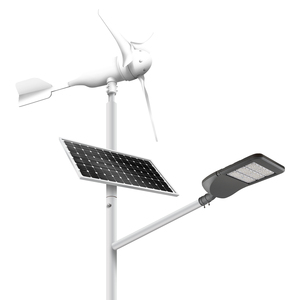
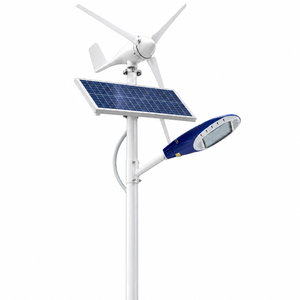
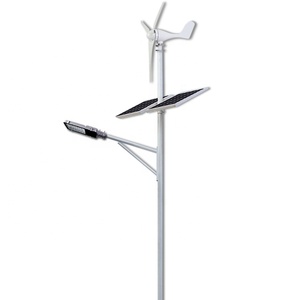
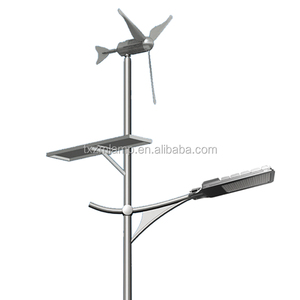
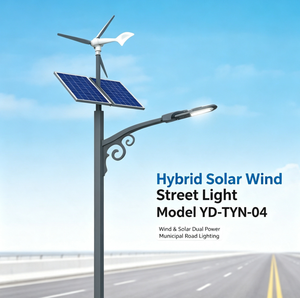
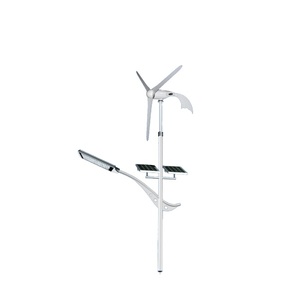
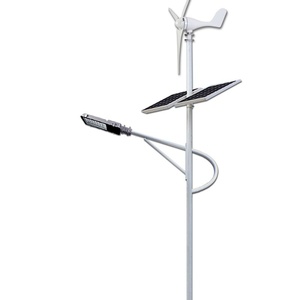
Featured Commercial Wind-Solar Hybrid Lighting Systems
Explore our engineering-grade wind solar hybrid street lighting portfolio. Designed with heavy-duty aerodynamic turbines, ultra-high efficacy LED modules (up to 160 lm/W), dynamic MPPT controllers, and long-life LiFePO4 battery storage, these systems ensure 365-day uninterrupted operational uptime even under total seasonal overcast conditions.
Executive Industry Whitepaper: The Engineering Advantage of Wind-Solar Hybrid Street Lighting
As global municipalities and infrastructure developers accelerate decarbonization mandates, conventional standalone solar street lights frequently encounter performance bottlenecks during extended winter periods, rainy seasons, or high-latitude installations. In geography characterized by seasonal light decay, reliance solely on Photovoltaic (PV) modules creates high system over-design costs (requiring excessively large solar panels and battery banks) or results in catastrophic power outages.
As China’s leading manufacturer and exporter of off-grid smart lighting, our engineering matrix solves this paradigm through Dual Energy Micro-Generation Complementarity. By harnessing wind kinetics during overcast or nocturnal hours alongside solar irradiance during daytime, wind-solar hybrid systems flatline the volatility of seasonal weather patterns. This whitepaper analyzes the core mechanical, electrical, and thermal engineering parameters required for utility-grade procurement.
1. Advanced Aerodynamic Wind Turbine Mechanics
The bottleneck of early-generation wind hybrid lights was mechanical wear, noise vibration, and high cut-in wind thresholds. Modern engineering breakthroughs from premier Chinese exporters have revolutionized turbine design across two distinct topologies:
| Engineering Feature | Vertical Axis Wind Turbine (VAWT) - Savonius / Darrieus | Horizontal Axis Wind Turbine (HAWT) - 3/5 Blade |
|---|---|---|
| Wind Direction Sensitivity | Omnidirectional (360° capture without yaw mechanism) | Requires Active/Passive Yaw alignment mechanism |
| Cut-In Wind Speed | Ultra-Low (1.2 m/s – 1.5 m/s) | Moderate (2.0 m/s – 2.5 m/s) |
| Aerodynamic Noise | Extremely Quiet (< 20 dB at 10m height) | Low-to-Moderate Whistle (< 38 dB) |
| Turbulence Tolerance | High (Ideal for urban streets & tree-lined avenues) | Moderate (Requires laminar airflow, ideal for open highways) |
| Structural Stress / Fatigue | Low center of gravity, minimal mast moment load | Higher tip-speed ratio, higher top-pole torque |
Our export-grade turbines utilize high-strength nylon fiber glass blades reinforced with precision magnetic levitation (Maglev) dual-bearing hubs. This eliminates mechanical friction, allowing spontaneous rotation under light breeze conditions while surviving storm gusts exceeding 60 m/s (Category 15 Typhoons).
2. Dual-Channel MPPT Controller & AI Charge Logic
A critical technical vulnerability in basic hybrid systems is energy dissipation caused by improper charge regulation. Our proprietary hybrid controllers integrate an intelligent Dual Maximum Power Point Tracking (MPPT) circuit board running digital signal processing (DSP) algorithms:
- Buck-Boost Wind MPPT Engine: Enables power extraction even when the wind turbine's AC voltage generation is lower than the battery pack's nominal DC voltage, stepping up voltage to maintain constant trickle charging.
- Dynamic Over-speed Electromagnetic Braking: Automatically applies electronic load dampening when wind speeds exceed safe operational limits, preventing mechanical overrun without needing failure-prone mechanical disk brakes.
- Adaptive Photovoltaic Solar MPPT: Tracks solar IV curves with >99.5% conversion efficiency, adapting seamlessly to partial shading from passing clouds or overhead foliage.
3. Next-Generation Energy Storage: LiFePO4 Chemistry & Smart BMS
Legacy lead-acid and AGM batteries suffer severe depth-of-discharge (DoD) limitations, short life cycles (300-500 cycles), and toxic environmental impacts. China’s leading exporters have entirely shifted the benchmark to Lithium Iron Phosphate (LiFePO4) cell technology coupled with active Battery Management Systems (BMS).
Our internal LiFePO4 battery modules feature an energy density exceeding 160 Wh/kg, offering 100% Depth of Discharge with over 4,000 continuous charge cycles (retaining >80% capacity). Furthermore, for installations in arctic regions (Northern Europe, Canada) or desert climates (Middle East, North Africa), our thermal-managed battery enclosures incorporate integrated heating foils and phase-change material (PCM) insulation, permitting safe charge/discharge operation between -40°C and +70°C.
Global Procurement & Future Industry Development Trends (2025–2030)
The global market for smart off-grid lighting is undergoing a paradigm shift. Bidding entities, municipal engineering consultants, and private EPC contractors are no longer evaluating luminaires purely on initial capital expenditure (CAPEX). Instead, selection criteria have pivoted toward Total Cost of Ownership (TCO), multi-sensor infrastructure integration, and circular economy compliance.
A. Smart City Multi-Functional Connectivity Hubs
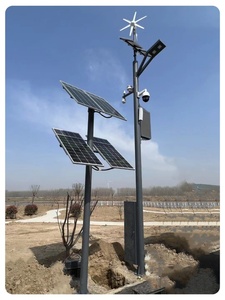
Street lighting poles are transforming into primary real estate for Smart City IoT nodes. Future-ready wind solar hybrid street lights exported from top Chinese facilities feature modular expansion ports capable of driving integrated payloads directly from off-grid clean power reserves:
IoT Environmental Telemetry & Security
Integrated HD AI-CCTV surveillance cameras, air quality index (AQI) particulate matter sensors, and noise level monitors powered 24/7 without grid trenching costs.
5G Micro-Cell & Public Wi-Fi Hotspots
Off-grid power supply solutions for telecommunication infrastructure, extending micro-cellular coverage across remote highways, rural villages, and municipal parks.
B. Autonomous AI Energy Management (SaaS & Cloud Mesh)
Modern installations utilize remote Zigbee, LoRaWAN, or cellular NB-IoT communication protocols to connect every streetlight to a centralized dashboard. Machine learning algorithms analyze historical weather forecasts, satellite cloud coverage data, and localized wind trends to dynamically adjust luminaire brightness curves. By decreasing power consumption during periods of anticipated low wind and zero solar, the system guarantees zero dark-night risk regardless of unseasonal weather anomalies.
C. Financial ROI Analysis: Grid-Tied vs. Off-Grid Hybrid Infrastructure
When evaluating infrastructure deployment over a 5km highway stretch, traditional grid-tied AC lighting requires underground cable trenching, transformer substations, junction boxes, and utility permitting fees. A comparative financial assessment highlights the compelling economics of wind-solar hybrid units:
| Cost Vector (5km Highway / 150 Lighting Poles) | Conventional Grid-Tied LED Poles | Wind Solar Hybrid Off-Grid Poles |
|---|---|---|
| Civil Engineering (Trenching/Cables/Transformers) | $120,000 – $180,000 USD | $0 USD (Zero Trenching Required) |
| Installation & Labor Time | 3 to 6 Months (Heavy Excavation) | 5 to 7 Days (Anchor Bolt Assembly) |
| Electricity Utility Costs (10-Year Lifecycle) | $45,000 – $75,000 USD | $0 USD (100% Free Kinetic & Solar Energy) |
| Carbon Footprint Offsetting | Net Positive Emissions | 100% Zero Emission (Carbon Neutral Project) |
Enterprise Manufacturing Competence & Global Export Advantage
As a global tier-1 manufacturer based in China, our state-of-the-art production complex combines aerospace-grade structural testing with automated SMT electronics manufacturing. We bridge the gap between engineering innovation and cost-competitive mass production, delivering turnkey lighting assets to over 40 countries worldwide.
Frequently Asked Questions (Procurement & Technical FAQ)
Answers to common technical, logistics, and engineering queries compiled by our senior application engineering team for overseas buyers and EPC contract managers.
Ready to Elevate Your Infrastructure Project?
Contact our senior application engineering team today for custom Dialux optical design, precise GIS wind-solar energy output calculations, and direct factory wholesale pricing.