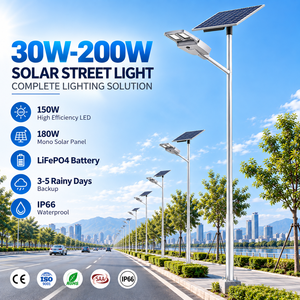
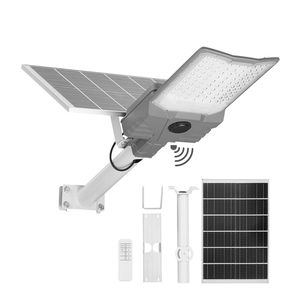
Dusk to Dawn All in One Solar Street Light Outdoor Waterproof
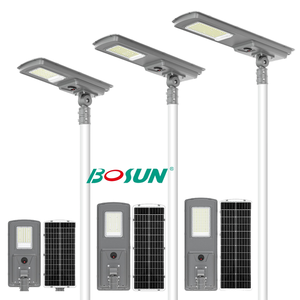
Integrated monoblock design utilizing marine-grade aluminum alloy with double-layer electrocoated fluorocarbon finish for complete rust immunity along sea walls.
Latest news, technical guides, and expert perspectives on smart solar street lights, off-grid infrastructure, and clean energy technology.
Explore our export-grade marine lighting catalog. Built with die-cast ADC12 aluminum housings, fluorocarbon electrocoating, and IP68 sealed optic chambers to withstand ASTM B117 salt fog exposure.
Integrated monoblock design utilizing marine-grade aluminum alloy with double-layer electrocoated fluorocarbon finish for complete rust immunity along sea walls.
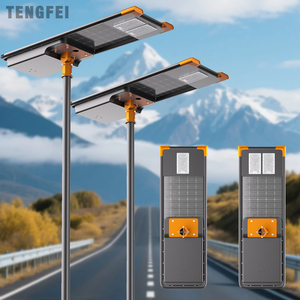
Heavy-duty split configuration allowing independent solar panel orientation for optimal sun harvest in tropical and humid coastal zones.
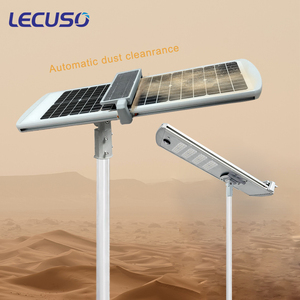
Patented robotic dual-brush mechanism removes salt crystallizations, sand, and dust automatically to ensure unbroken optical efficiency.
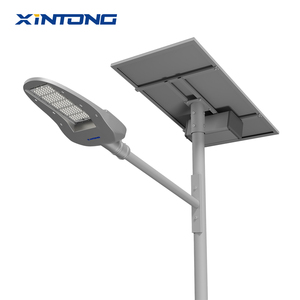
Engineered for coastal expressways and arterial harbor roads, featuring precision batwing lenses protected by anti-UV polycarbonate shielding.
Combines sleek aesthetic integration with oversized subterranean/pole-mounted lithium reserves designed to weather severe oceanic storms.
Industrial-scale output fixture built specifically for container terminals, shipyards, and coastal industrial zones requiring vast area coverage.
Smart remote-managed luminaire equipped with conformal coated driver boards to prevent micro-corrosion from saline mist and airborne sulfur.
Versatile commercial lighting system engineered for coastal public parks, resorts, and municipal infrastructure projects globally.
Why standard outdoor solar lights fail within 12–18 months in coastal regions, and how China’s premier engineering exporter solves galvanic oxidation and atmospheric aerosol degradation.
Deploying off-grid solar street lighting in coastal strips, marine ports, island communities, and high-salinity industrial sectors presents one of the most punishing environments for outdoor electronics and structural metallurgy. Atmospheric sodium chloride ($NaCl$), combined with high ambient humidity, ultraviolet radiation, and thermal cycling, accelerates metal oxidation and electronic component failure exponentially compared to inland installations.
As a premier China Salt Mist Resistant Solar Light Factory & Exporter, our engineering team adheres strictly to international corrosion protection standards including ISO 12944 (Paints and varnishes — Corrosion protection of steel structures) and IEC 60068-2-52 (Environmental testing — Salt mist, cyclic) to guarantee 10+ years of operational integrity without structural decay or electrical short-circuiting.
Standard aluminum extruded housings suffer from intergranular corrosion under salt fog attack. We utilize high-density die-cast ADC12 aluminum treated with a 5-stage pre-passivation wash, followed by a double-layer PVDF fluorocarbon powder coating (>100μm thickness). This creates an impermeable barrier against chlorine ion penetration.
Galvanic corrosion occurs when dissimilar metals meet in a conductive salt solution. We eliminate galvanic cell pairs by equipping all external fasteners, brackets, and hinges exclusively with 316 Marine-Grade Stainless Steel featuring added molybdenum for resistance to pitting and crevice corrosion.
High relative humidity drives airborne salt mist into electrical cavities. Our internal MPPT controllers and LED driver boards undergo automated robotic dip-coating with an acrylic-polyurethane nano conformal coating, creating an insulation barrier rated to MIL-I-46058C and IPC-CC-830 standards.
When procuring solar lighting infrastructure for global projects, municipal engineers must match technical specifications against localized atmospheric exposure ratings. The table below highlights how our specialized manufacturing process upgrades standard street lights to survive coastal environments:
| Corrosion Category | Environment Risk Profile | Standard Solar Light Specs | Our Marine-Grade Solar Specs |
|---|---|---|---|
| C1 - C2 (Low) | Inland dry zones, rural areas, heated offices | Standard powder coating (<40μm), 201 Stainless Steel | Exceeds standards (Over-engineered for longevity) |
| C3 - C4 (Medium/High) | Urban inland, moderate industrial, inland high humidity | Basic anodized aluminum, basic silicone seals | Standard configuration (50μm PVDF, SUS304 fasteners) |
| C5-M (Very High Marine) | Coastal areas, high salinity, offshore structures, docks | FAILS within 12-18 months | PASSED (>100μm PVDF, SUS316, IP68 Vent Valve) |
| CX (Extreme) | Extreme marine, subtropical coastal spray zones | Catastrophic corrosion | Custom Anodized + PTFE Marine Seal Coating |
As a leading exporter based in China's prime solar manufacturing hub, our 25,000m² facility integrates rigorous quality management protocols directly verified by international inspection bodies (SGS, TUV, Intertek).
Every batch of salt mist resistant luminaires undergoes 100% full-load thermal burn-in, vacuum pressure IP testing, and automated optical spectroradiometry prior to international dispatch.
Key market developments shaping global B2B procurement decisions for smart cities, harbor authorities, and coastal developers over the next decade.
Modern municipal solar projects are shifting away from standalone unmonitored units toward IoT-connected smart lighting networks. Equipped with LoRaWAN, Zigbee, or 4G/5G cellular gateways, future-proof coastal solar street lights allow asset managers to track battery state-of-health, solar panel generation degradation, and internal enclosure humidity in real time. Remote predictive maintenance algorithms can alert engineers to seal micro-fractures before saltwater intrusion damages internal electronics.
Traditional flat or angled solar panels act as dust and salt collectors in maritime breeze zones. As saline moisture dries on flat glass surfaces, it leaves behind a thick white salt crust that dramatically reduces photovoltaic conversion efficiency by up to 40%. The market is rapidly adopting cylindrical vertical solar pole modules (360° vertical PV wrapping). Vertical surface geometry naturally sheds salt particles during rain and minimizes wind drag during coastal hurricanes and typhoons.
Extreme ambient temperatures in tropical coastal regions (e.g., Middle East, Southeast Asia, Caribbean) combined with direct solar radiation can drive internal solar battery chamber temperatures above 60°C. Advanced procurement frameworks now mandate Lithium Iron Phosphate (LiFePO4) battery packs insulated inside double-walled air-gap enclosures, integrated with phase-change heat dissipation materials (PCM) and automatic thermal cut-offs to ensure continuous 12-hour dusk-to-dawn lighting even after consecutive rainy days.
Global government entities are increasingly demanding sustainable, modular product architectures. Factory-direct exporters that offer fully serviceable, modular components—allowing separate replacement of LED modules, MPPT drivers, or battery pods without discarding the heavy-duty anti-corrosion pole structure—are winning high-value municipal tenders under modern circular economy procurement guidelines.
Combining world-class engineering, scalable China manufacturing output, and stringent international compliance for high-stakes infrastructure deployments.
We provide complete customization ranging from luminaire wattage (30W to 1500W+), pole height specs, color temperature customization (2700K-6500K), to custom mounting brackets tailored for high-wind coastal installations.
Our in-house optical engineering team provides comprehensive DIALux lighting simulations for highway tenders, port facilities, and resort developments, ensuring exact lux distribution and zero waste light spill.
With shipments completed to over 40 countries across North America, Southeast Asia, Europe, and the Middle East, our logistics team manages rigorous seaworthy export packaging, customs compliance, and certificate of origin documentation.
Direct answers to essential engineering and commercial questions regarding salt-mist resistant solar luminaire imports from China.
Our solar light fixtures undergo rigorous testing according to ASTM B117 Neutral Salt Spray (NSS) standards for a minimum of 1,000 to 2,000 continuous hours. Additionally, products are verified under IEC 60068-2-52 severity levels for cyclic salt mist, as well as ISO 12944 C5-M atmospheric rating tests, ensuring complete resistance against salt pitting, coating flaking, and structural oxidation.
Galvanic corrosion occurs when materials with different electrochemical potentials (e.g., aluminum and stainless steel) contact each other in the presence of saline moisture. We solve this by utilizing insulating non-metallic nylon/Teflon washers between dissimilar metals, alongside applying passivated 316-grade marine stainless steel hardware coated with anti-seize protective compound.
IP65 only protects against low-pressure water jets. In marine environments, intense coastal winds cause high-pressure driving rain, while thermal contraction (cool night sea breeze after hot sunny days) creates a negative pressure vacuum inside luminaire housings. Standard IP65 lights suck in moist saline air, leading to internal condensation. Our IP68 sealed optic chambers and electronic cavities utilize Gore breather valves to equalize pressure while blocking 100% of liquid water and vapor intrusion.
Yes. Coastal areas are frequently prone to severe storms. Our marine-grade solar street lights and poles are structurally analyzed using Finite Element Analysis (FEA) to withstand extreme wind speeds up to 60 m/s (Category 5 hurricane force). We utilize high-tensile Q235B/Q345B steel for poles, reinforced base plates, and heavy-duty die-cast aluminum brackets.
Our standard Minimum Order Quantity (MOQ) is 10 units for evaluation samples and project orders. Standard lead time for sample production is 7 to 10 days, while bulk project orders (200+ units) typically take 20 to 25 days. We provide full support for OEM branding, customized optical distributions, and specialized export packaging suited for sea freight.
Dried salt residue on solar panels creates a white haze that blocks sunlight, reducing charging efficiency by up to 40%. We mitigate this through two solutions: 1) Equipping lights with self-cleaning robotic wipers that clean the panel twice daily, and 2) Using hydrophobic, anti-static nano-coatings on the tempered solar glass to prevent salt and dust adhesion.
Contact our engineering sales team today to request DIALux photometric layouts, formal factory quotes, or full salt spray test report documentation.
Get a Quote