
Solar Lighting Blog & News
Latest news, technical guides, and expert perspectives on smart solar street lights, off-grid infrastructure, and clean energy technology.
High-Performance Auto-Cleaning & Split Solar Luminaires
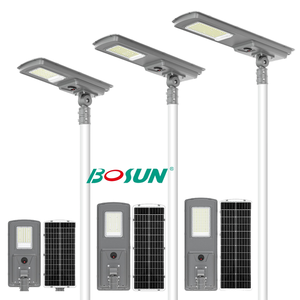
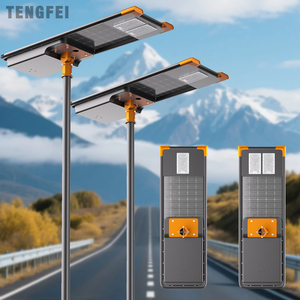
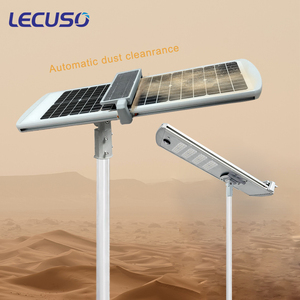
High Quality 30w 50w 60w 90w 100w 150w Automatic Auto Clean Self Cleaning Solar Street Light
Inquire Now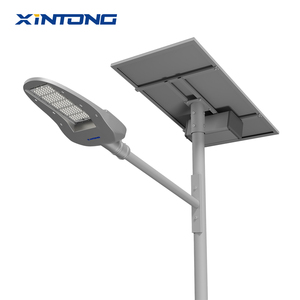
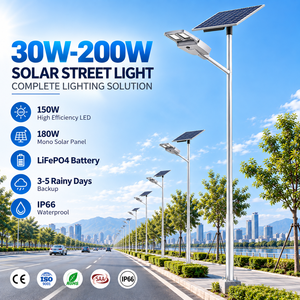
All In Two Lamp Led Solar Powered Street Light IP66 80W 100W 150W Lighting Solar Street Light With Battery Backup
Inquire Now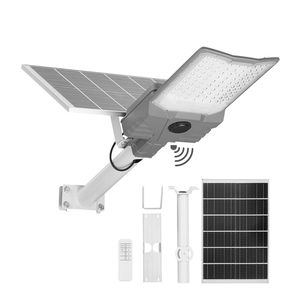
12000W High-Powered Solar Street Light 900,000LM Outdoor Dusk-Dawn Split-Type LED Floodlight 6500K CCT 240 Beam Angle
Inquire Now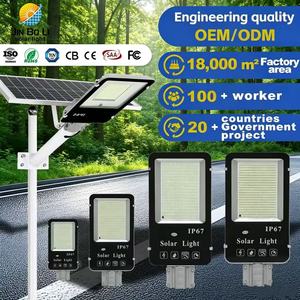
Remote Control IP67 Solar LED Light, 50W-300W, Split Type Outdoor Street Lamp, Waterproof, RoHS Certified
Inquire Now
SLOER Competitive Price Good Quality 60W 120W Commercial Split All in One Solar Street Light Manufacture
Inquire Now1. The Photovoltaic Soiling Paradox: Solving Efficiency Degradation in Off-Grid Infrastructure
In modern municipal and highway engineering, off-grid solar street lighting represents the premier solution for sustainable urban infrastructure. However, EPC contractors, municipal authorities, and international buyers face an endemic operational challenge: Photovoltaic Soiling Degradation. Dust, airborne particulates, sandstorms, avian droppings, and industrial smog form an opaque film across solar modules, severely impeding optical transmittance.
Empirical field studies in arid and semi-arid regions (such as the Middle East, North Africa, and Western Australia) reveal that uncleaned solar panels lose up to 1.5% to 3% of power generation capacity daily during dry seasons. Over a 6-month period without manual intervention, accumulated soiling reduces system output by 35% to 60%. This drop causes battery undercharging, premature depth-of-discharge (DoD) degradation in lithium batteries, and total system blackouts during critical nighttime hours.
Key Engineering Insight: Manual elevated cleaning using water trucks and boom lifts costs between $15 and $45 per pole per session. For a 5,000-pole municipal highway project, operational maintenance costs quickly surpass the initial capital expenditure (CAPEX) within 36 months. Autonomous auto-cleaning technology eliminates this OPEX burden entirely.
As China's premier manufacturer and global exporter of auto-cleaning solar street lights, our engineering teams have integrated robotic mechanical cleaning systems directly into the photovoltaic architecture. By utilizing dual-helical brush assemblies and intelligent micro-controllers, our systems restore solar transmittance to 99.8% daily without requiring manual labor or water consumption.
Zero Maintenance OPEX
Autonomous cleaning routines run twice daily, eliminating the need for elevated maintenance platforms, water haulage, and manual labor teams.
Maximized Solar Harvest
Prevents dust stratification, guaranteeing continuous maximum power point tracking (MPPT) efficiency even under harsh desert sandstorm conditions.
Extended Battery Lifespan
Consistent daily PV power output ensures LiFePO4 batteries undergo optimal charging cycles, extending battery service life beyond 10 years.
2. Engineering Deep-Dive: Robotic Auto-Cleaning Mechanisms & Technical Performance
The reliability of an automatic self-cleaning solar street light hinges on the durability of its mechanical drive, brush design, and electrical control circuits. Unlike low-grade commercial alternatives that suffer from gear failure and environmental degradation, Chinese enterprise-tier exports utilize military-grade, fully sealed IP68 robotic modules.
A. Brush Dynamics & Material Physics
Our self-cleaning luminaires feature specialized high-density polymer alloy brushes combined with anti-static rubber wiper blades. The bristles are manufactured from hydrophobic fluorocarbon materials that prevent fine particulates (PM2.5 and PM10) from adhering to the brush surface. As the cleaning carriage glides across the tempered solar glass, it applies a calibrated contact pressure of 4.5 N/m², sweeping away calcified dust, salt spray residues, and sticky organic deposits without micro-scratching the anti-reflective (AR) coating.
B. IP68 Brushless Drive Motors & Heavy-Duty Tracks
The mechanical drive system relies on industrial-grade Brushless DC (BLDC) motors paired with planetary gear reducers sealed inside an aluminum alloy housing. Operating under an IP68 ingress protection rating, these motors resist thermal expansion up to 85°C and remain operational down to -40°C. High-tensile stainless-steel lead screws or reinforced synchronous belts ensure smooth, jam-free linear motion across panel spans exceeding 1.8 meters.
B2B Technical Comparison: Auto-Cleaning vs Standard Systems
| Performance Metrics | Auto-Cleaning Solar Street Light | Standard All-in-One Solar Light | Traditional Grid LED Street Light |
|---|---|---|---|
| 5-Year Average PV Yield | 98.5% Efficacy Retained | 45.0% - 60.0% Degradation | N/A (Grid Dependent) |
| Maintenance Cost (OPEX) | $0 / Year (Autonomous) | $150 - $400 / Pole / Year | $80 - $200 / Pole / Year |
| Battery DoD Stability | Optimal 100% Full Charge Cycle | Severe Undercharging Risk | N/A |
| Ingress & Drive Protection | IP68 Sealed Industrial Motor | No Motor Assembly | IP65 Light Engine Only |
| System Lifespan | 10 - 12+ Years | 3 - 5 Years (Due to Failure) | 8 - 10 Years (Grid Dependent) |
3. China Manufacturing Leadership: Factory Benchmarks, Quality Control, and Export Capabilities
As global municipal tenders demand higher compliance standards, leading Chinese manufacturers have transitioned from low-cost assembly to precision-engineered OEM/ODM production lines. Chinese manufacturing infrastructure offers an integrated supply chain advantage, combining raw aluminum extrusion, SMT LED surface mounting, lithium pack assembly, and rigorous climate chamber testing under one quality management system (QMS).
Automated SMT & Optics
High-lumen LED engines utilizing Philips Lumileds 5050 or Cree chips, delivering up to 210 lm/W light efficacy with customized Type II, III, and IV IES photometric lens distribution.
A-Grade LiFePO4 Energy Storage
Utilizing brand-new Grade-A Lithium Iron Phosphate cells equipped with smart BMS protecting against over-voltage, thermal runaway, short-circuit, and deep discharge.
Extensive Testing Standards
Every export batch undergoes 72-hour aging tests, salt-spray corrosion tests (ASTM B117), IP67 submersion testing, and wind-tunnel resistance up to 160 km/h (Category 12 typhoons).
When selecting a Chinese manufacturing partner, global buyers should mandate verifiable international certifications including CE, RoHS, ISO9001:2015, ISO14001, IP66/IP67/IP68 Test Reports, IEC 62722 photometrics, and UN38.3 battery safety transport certification. Our manufacturing plants provide full OEM custom bracket fabrication, tailored CCT configurations (2700K to 6500K), and private labeling for turnkey tender compliance.
4. Future Sourcing & Technological Trends in Auto-Cleaning Solar Lighting (2025–2030)
The global off-grid lighting market is undergoing a rapid evolution, driven by Smart City mandates, IoT communication integration, and carbon-neutral infrastructure investments. Procurement specialists must anticipate the following technological shifts when structuring long-term purchasing contracts:
A. IoT Telemetry & Remote Cloud Control (4G / 5G / NBIoT / LoRaWAN)
Modern self-cleaning solar street lights are no longer isolated lighting units; they are intelligent IoT nodes. Advanced systems integrate smart controllers capable of transmitting real-time performance telemetry—including battery voltage, daily energy harvest curves, driver temperature, and wiper motor health status—to centralized municipal management software. Operations teams can remotely adjust cleaning schedules, initiate emergency sweeping after sandstorms, and dynamically dim light levels based on real-time pedestrian and vehicle movement data.
B. AI Adaptive Energy Management & MPPT Evolution
Next-generation charge controllers feature Artificial Intelligence algorithms that analyze local meteorological forecasts. By continuously measuring solar irradiance trends over trailing 7-day windows, the AI controller automatically balances LED power output and cleaning frequency, guaranteeing 365 nights of uninterrupted illumination even during prolonged monsoons or overcast winter cycles.
C. Modular Mechanical Integration (All-in-Two & Vertical Solar Poles)
While traditional horizontal panel brackets remain popular, procurement trends show accelerating adoption of vertical wrap-around solar poles and All-in-Two split configurations. Vertical flexible PV panels equipped with dual-axis cylindrical auto-cleaning sleeves prevent dust, snow accumulation, and wind resistance while preserving sleek urban architectural aesthetics.