
Solar Lighting Blog & News
Latest news, technical guides, and expert perspectives on smart solar street lights, off-grid infrastructure, and clean energy technology.
Certified Solar Airfield & Perimeter Lighting Systems
Industrial-grade off-grid solar fixtures engineered for civil, military, and commercial airport operations worldwide.
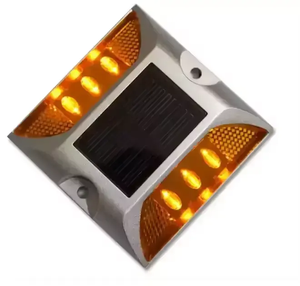
6 LED Low-Profile Aluminum Solar Road Stud Runway Marker
Ultra-rugged cast aluminum casing with 30+ ton compression resistance. Designed for airport walkways, taxiway edges, and perimeter road delineation.
Send an Inquiry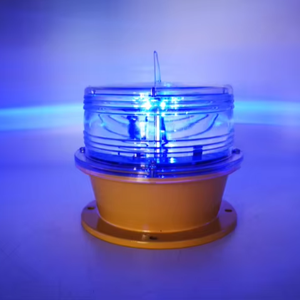
AH-SA-B Solar Taxiway & Airport Aviation Obstruction Light
Self-contained solar aviation light compliant with ICAO Annex 14 standards. Features IP68 submersible enclosure and intelligent solar charging BMS.
Send an Inquiry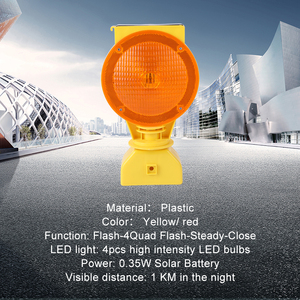
Solar Barricade & Airport Perimeter Warning Light
High-visibility optical lens warning lamp for airfield construction hazard zones, perimeter security barriers, and emergency access bridges.
Send an Inquiry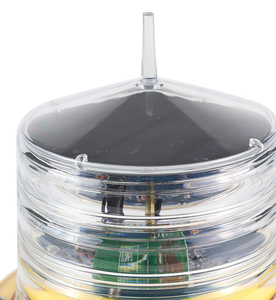
GS-JC/PB Solar LED Runway Edge & Heliport Boundary Light
360-degree white beam output for airfield boundary marking and helipad edge identification. Built with UV-resistant polycarbonate and IP68 sealing.
Send an Inquiry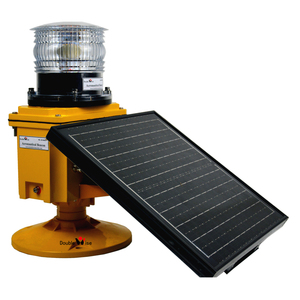
FAA Compliant Solar Powered Airfield Identification Beacon
Long-range solar beacon designed for remote strip identification and perimeter height hazard marking. Low operational cost and high optical gain.
Send an Inquiry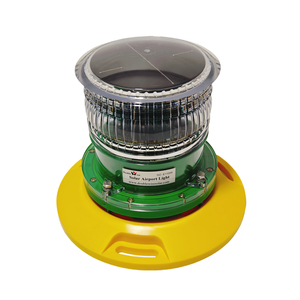
Wireless Controlled Solar Helipad Perimeter Light
Features integrated wireless control modules for remote brightness adjustment and emergency strobe activation. Ideal for hospital and off-grid helipads.
Send an Inquiry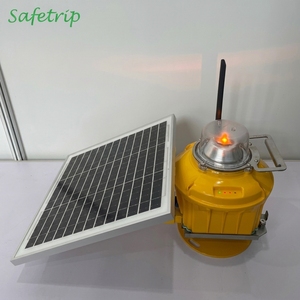
Safetrip Portable Solar/Battery Helipad Yellow Perimeter Light
Omni-directional yellow aviation optics designed for rapid tactical deployment, temporary airfields, and military airfield perimeter boundaries.
Send an Inquiry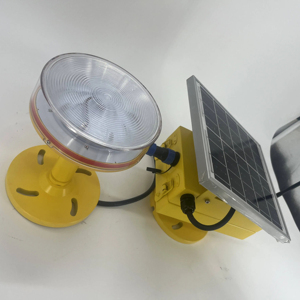
Multi-Mode Portable Solar Helipad & Runway Approach Light
Complete solar lighting solution for FATO (Final Approach and Take-off) and TLOF (Touchdown and Lift-off) perimeter zones. Plug-and-play maintenance.
Send an InquiryExecutive Summary: The Strategic Transition to Solar Airport Perimeter Infrastructure
Modern airport operations require uninterrupted perimeter illumination and clear visual navigational aids to ensure airfield security, prevent runway incursions, and guide aircraft safely under all meteorological conditions. Historically, hard-wired AC infrastructure dominated airfield perimeter lighting. However, legacy grid systems present crippling capital costs, high installation lead times (requiring extensive trenching and conduit routing across miles of remote perimeter fences), and single-point-of-failure vulnerabilities during main grid blackouts.
As leading Chinese original equipment manufacturers (OEMs) and original design manufacturers (ODMs) advance photochemically integrated solutions, solar-powered airport perimeter lighting has emerged as the premier global benchmark for both emergency retrofits and permanent off-grid installations.
China's industrial lighting clusters (primarily located in Guangdong, Zhejiang, and Jiangsu provinces) have evolved into the epicenter of global solar aviation lighting technology. Utilizing state-of-the-art Monocrystalline PERC solar cells, high-capacity Lithium Iron Phosphate (LiFePO4) battery chemistries, and custom-molded PMMA Fresnel optics, top Chinese manufacturers are now exporting certified lighting systems that rigorously satisfy ICAO (International Civil Aviation Organization) Annex 14 Volume I/II standards and FAA (Federal Aviation Administration) AC 150/5345 series specifications.
Technical Compliance Benchmark Matrix (ICAO vs. Commercial Solar Standards)
Procurement teams and airport engineering consultants must evaluate solar perimeter and taxiway lights against non-negotiable international standards. The matrix below outlines key engineering criteria delivered by tier-1 Chinese manufacturers:
| Performance Parameter | ICAO Annex 14 Requirement | Tier-1 China Factory Capability | Operational Impact |
|---|---|---|---|
| Optical Chromaticity | Specific Red/Green/Yellow/White boundaries | High-CRI OSRAM/CREE LEDs with tuned filters | Prevents pilot misinterpretation at range |
| Submersible Waterproofing | Minimum IP65 weather defense | IP68 certified (immersion up to 2m depth) | Withstands seasonal flash flooding & monsoons |
| Autonomy / Reserve Power | Minimum 7 nights continuous without sun | 14-21 days smart dimming autonomy (LiFePO4) | Guarantees 24/7 reliability in monsoon seasons |
| Impact & Blast Resistance | IK08 to IK10 mechanical durability | Cast aluminum shell with 30-ton compression | Survives jet engine wash and heavy service trucks |
| Wireless Network Control | Optional centralized remote control | 2.4GHz / 868MHz Mesh & LoRaWAN integration | Real-time status monitoring & instant activation |
Global Procurement & Technological Trends (2026–2030)
Key innovations driving the next generation of off-grid airport boundary and obstruction lighting sourcing.
1. Solid-State LiFePO4 & Low-Temp Batteries
Next-generation airport solar lights are abandoning legacy lead-acid and standard lithium-ion chemistries in favor of specialized low-temperature Lithium Iron Phosphate (LiFePO4) cells. Equipped with internal thermostatic heating films, these units maintain 85%+ charge efficiency even at extreme ambient temperatures ranging from -40°C to +70°C.
2. Smart Wireless Mesh & IoT Telemetry
Procurement bids increasingly demand encrypted RF Mesh (2.4GHz) or LoRaWAN centralized management software. Airfield operators can now remotely flash all perimeter stud markers, dim heliport approach lights, or diagnose battery degradation across thousands of fixtures from a single master control console.
3. Modular Integrated Solar Glass Optics
To resist optical degradation from UV exposure, desert sandstorms, and jet fuel vapors, Chinese suppliers are transitioning to self-cleaning, micro-prismatic toughened glass solar panels integrated directly into low-profile aluminum housings, maximizing solar absorption even in overcast conditions.
Manufacturing Excellence: What Sets Top Chinese Suppliers Apart
Selecting the right OEM/ODM partner in China requires evaluating physical engineering infrastructure and quality control protocols. Industry-leading factories do not merely assemble off-the-shelf components; they maintain end-to-end manufacturing verticality:
- Die-Cast Precision Enclosures: Utilizing high-pressure marine-grade aluminum alloys (A380/ADC12) coated with fluorocarbon outdoor powder paints to prevent salt-fog corrosion in coastal airport deployments.
- Automated SMT PCB Assembly: High-precision surface-mount technology ensures LED drivers and smart MPPT (Maximum Power Point Tracking) charge controllers maintain optimal conversion efficiency (>95%).
- Environmental Stress Testing: Rigorous batch testing including 48-hour IP68 water immersion tanks, thermal shock chambers (-40°C to +85°C), and vibration testing under simulate aircraft take-off acoustic pressures.
- Photometric Goniophotometer Labs: In-house darkroom photometers guarantee that light output curves, beam angles, and candela ratings strictly match ICAO specifications prior to shipment.
By leveraging established scale and complete domestic supply chains, qualified Chinese factories can deliver custom OEM/ODM solutions—such as tailored mounting flanges, specialized LED colors, or integrated infrared (IR) NVG-compatible emitters—at lead times up to 50% faster than Western counterparts.
Airport Solar Perimeter Lighting Procurement FAQs
Expert insights addressing key technical, regulatory, and commercial procurement inquiries.
Partner with China's Premier Airport Solar Lighting Manufacturers
Planning an airfield perimeter upgrade, temporary runway project, or helipad installation? Contact our engineering team today for technical specifications, ICAO/FAA test reports, and factory-direct OEM/ODM wholesale pricing.
Send an Inquiry