
Solar Lighting Blog & News
Latest news, technical guides, and expert perspectives on smart solar street lights, off-grid infrastructure, and clean energy technology.
CE Certified Split Type Solar Street Light Product Portfolio
Explore our professional range of split-type and high-output hybrid solar street lights. Specially designed for highway arterial roads, municipal perimeters, extreme temperature zones, and heavy-duty industrial applications.
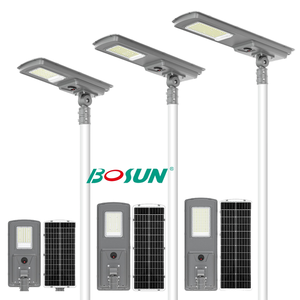
Dusk to Dawn All in One Solar Street Light Outdoor Waterproof
Integrated intelligent radar sensor with ultra-grade aluminum housing. Designed for continuous 3-5 days autonomy in rainy conditions.
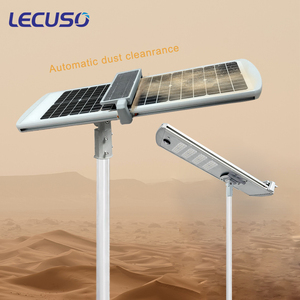
30W-150W Automatic Self-Cleaning Split Solar Street Light
Patented motorized dust wiper system ensures 98%+ solar panel efficiency in desert or high-dust industrial environments.
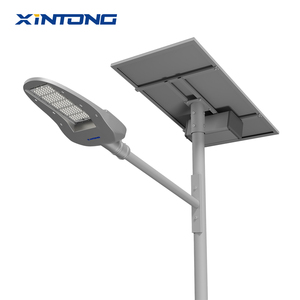
60W-150W Commercial Split Solar Road Lighting System
Flexible panel tilt angle adjustment (0°-60°) for optimized solar absorption across European and North American latitudes.
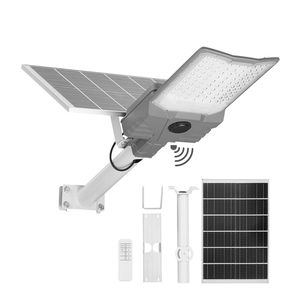
High-Powered Split-Type LED Floodlight 6500K CCT
Extreme lumens projection featuring 240° wide beam angle optic lenses. Perfect for wide plazas, ports, and logistics hubs.
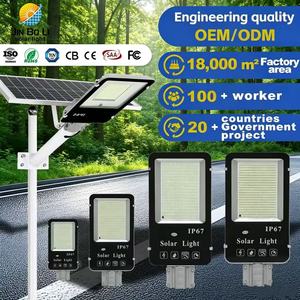
Remote Control IP67 Split Outdoor Street Lamp 50W-300W
Includes multi-mode RF remote management with programmable dimming profiles and smart battery energy balancing.

Commercial Grade 60W 120W Split Photovoltaic Light
Optimized cost-performance ratio for government bids, estate pathways, and public infrastructure upgrades.
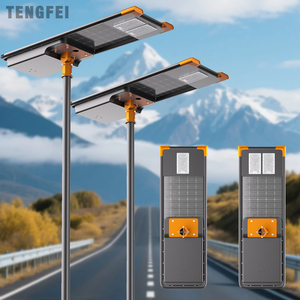
Low-Energy High Efficacy Split LED Street Light Fixture
Next-generation Lumileds/Bridgelux LED chips reaching up to 180-210 lm/W efficiency to maximize battery duration.
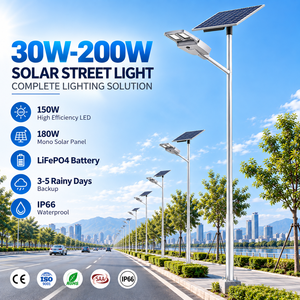
All-In-Two Modular Solar Street Lamp with LiFePO4 Backup
Combines panel flexibility with an integrated battery-luminaire head for rapid 15-minute field installation.
Engineering Whitepaper: Why Split-Type Solar Street Lighting Wins Infrastructure Tenders
In the global transition toward sustainable urban infrastructure, public works departments and municipal engineering consultants increasingly favor Split-Type Solar Street Lighting Architecture over standard All-in-One (integrated) systems. While All-in-One systems offer compactness for small domestic pathways, commercial and municipal road applications (Class M1 to M5 under European EN 13201 standards) demand high luminous flux, thermal durability, and precise solar orientation—criteria that only split-type engineering can deliver.
1. Independent Photovoltaic Orientation
Unlike fixed-panel integrated lights constrained by road alignment, split-type systems allow the solar panel mount to rotate 360° horizontally and tilt 0°-60° vertically. This guarantees optimal tilt relative to solar irradiance profiles, yielding up to 35% higher daily energy harvesting in northern European and extreme southern latitudes.
2. Thermal Isolation of Energy Storage
Heat is the primary cause of lithium battery degradation. Integrated lights expose batteries directly underneath hot solar panels where internal temperatures can exceed 70°C. Split systems isolate the battery box—either subterranean or mounted lower on the pole—maintaining ambient operating conditions between -20°C and 45°C, thereby doubling battery lifespan to over 10 years.
3. Scalable Wattage & High Luminous Flux
Split-type solar lighting accommodates large Monocrystalline panels (up to 400W-600W) and heavy-capacity LiFePO4 battery banks (exceeding 1500Wh). This enables luminaires to reliably emit 6,000 to 18,000+ lumens continuously without dark-period shutdown—meeting strict highway illumination criteria.
Comprehensive System Specifications: All-In-One vs. Split-Type Architecture
To assist municipal buyers, procurement managers, and EPC contractors, the following comparison matrix details the physical and operational differences between solar lighting topologies:
| Technical Parameter | Traditional All-In-One Solar Light | CE Certified Split Type Solar Light | Procurement Advantage (Split Type) |
|---|---|---|---|
| PV Panel Output | 15W – 120W (Constrained by body size) | 50W – 550W+ (Customizable module size) | Higher charging current; suitable for high-wattage LED engines. |
| PV Orientation Flexibility | Fixed horizontally facing sky | 360° Azimuth Rotation / 0°-60° Tilt Angle | Optimized sunlight capture regardless of street pole direction. |
| Battery Operating Temp | 35°C to 75°C (Trapped heat under PV) | -20°C to 45°C (Isolated ground/pole box) | Extends LiFePO4 battery service life from 3 years to 10+ years. |
| Max Luminous Output | 1,500 – 6,000 Lumens | 4,000 – 24,000+ Lumens | Meets Class M1-M3 international highway lighting standards. |
| Wind Resistance Loading | High surface mass concentrated at top | Distributed mass (Panel top, battery lower) | Capable of withstanding Category 12 Typhoon forces (140-160 km/h). |
| Maintenance & Serviceability | Requires replacing entire fixture body | Modular component swap (Panel/Battery/LED) | Reduces long-term Operations & Maintenance (O&M) costs by 65%. |
CE Certification & EU Regulatory Compliance Standards
As a premium CE Certified Split Type Solar Street Light Supplier, our products undergo rigorous laboratory validation to comply with European Union directives and international quality benchmarks. Obtaining authentic CE certification is not merely a legal mark; it guarantees electrical safety, electromagnetic compatibility, and structural stability.
Low Voltage Directive (LVD) 2014/35/EU
Tested according to EN 60598-2-3:2003+A1:2011 (Particular requirements for road and street lighting luminaires). Ensures insulation resistance, dielectrical strength, mechanical vibration safety, and thermal management safety under continuous peak load.
Electromagnetic Compatibility (EMC) 2014/30/EU
Compliant with EN 55015 and EN 61547 standards. Guarantees our MPPT charge controllers and high-frequency LED drivers do not emit electromagnetic interference that disrupts 4G/5G telecommunications, aviation radar, or emergency radio signals.
RoHS Directive 2011/65/EU & (EU) 2015/863
100% restriction of hazardous substances including Lead (Pb), Mercury (Hg), Cadmium (Cd), and Polybrominated Biphenyls (PBB). All circuit boards, housing alloys, and lens optics are verified eco-friendly for sustainable public procurement.
Ingress & Impact Protection (IP67 / IK10)
Validated under IEC 60529 (IP rating) and IEC 62262 (IK rating). Complete hermetic seal against fine dust intrusion and high-pressure water jets, combined with vandal-proof IK10 optical tempered glass/polycarbonate lenses.
Future Trends in Commercial & Municipal Solar Street Light Procurement
The global solar lighting industry is undergoing rapid technological evolution. B2B buyers, municipal authorities, and project contractors must align their purchasing strategies with emerging technological paradigms to avoid premature infrastructure obsolescence.
1. Integration of NEMA / Zhaga Smart Sockets
Future-proof split solar lights are standardized with 7-pin NEMA or Zhaga Book 18 sockets. This allows plug-and-play installation of IoT smart nodes (LoRaWAN, NB-IoT, Zigbee) for remote dimming, automated fault reporting, and central management software (CMS) integration.
2. Transition to Bifacial PV Modules & N-Type TOPCon
Legacy P-type PERC panels are being superseded by N-Type TOPCon bifacial solar panels in split lighting configurations. Bifacial modules harvest direct sunlight from the front and reflected albedo light from the road surface on the rear, increasing power yield by up to 25%.
3. Ultra-Smart Adaptive MPPT Control Algorithms
Next-generation Maximum Power Point Tracking (MPPT) controllers feature dynamic energy algorithms that analyze weather forecasts and historical battery state of charge (SoC) to automatically adjust brightness levels, ensuring zero blackouts during extended monsoon seasons.
Why Partner With Our Factory: OEM/ODM Engineering Excellence
As a premier tier-one CE Certified Split Type Solar Street Light Supplier, we operate over 25,000 square meters of modern manufacturing space equipped with automated SMT assembly lines, integrating sphere optical laboratories, and environmental testing chambers.
- Strict Grade-A Battery Selection: We exclusively utilize brand-new CATL, EVE, or BYD LiFePO4 cell units with full MSDS, UN38.3, and IEC 62133 certifications.
- Custom Optical Photometric Distribution: Custom Type I, Type II, Type III, and Type IV asymmetric lens beam options designed via Dialux simulation to eliminate dark zones on multi-lane highways.
- Full Traceability & Quality Control: 100% 72-hour burn-in aging tests, high-pressure IP67 waterproof testing, and salt-spray corrosion resistance tests for coastal installations.
- End-to-End B2B Tender Support: Comprehensive documentation packages provided including IES photometric files, wind load calculations, CE certificates, and factory audit reports.
Frequently Asked Questions (FAQ) for Solar Lighting Procurement
Direct technical responses to common questions raised by civil engineers, procurement agents, and international distributors:
Q1: Why is CE certification mandatory for importing split solar street lights into Europe?
CE certification proves that the solar street lighting system complies with essential health, safety, and environmental protection directives in the European Economic Area (EEA). Without authentic CE marking (including LVD and EMC test reports), shipments risk customs seizure, heavy regulatory fines, and rejection during public municipal tender evaluations.
Q2: How do I calculate the required solar panel and battery capacity for a split-type system?
System sizing depends on four key variables: Luminaire wattage (W), required daily operating hours, geographical peak sun hours (PSH), and desired rainy/cloudy days autonomy (usually 3-5 days). Our engineering team utilizes solar radiation GIS databases to precise-size the Monocrystalline panel power (Wp) and LiFePO4 storage capacity (Wh), ensuring 100% lighting uptime year-round.
Q3: What is the expected life expectancy of each major component in a split solar street light?
A high-quality split system is engineered for long-term operational durability: High-efficiency Monocrystalline PV panels have a 25-year performance warranty (80% power retention); Grade-A LiFePO4 batteries last 8 to 12 years (6,000+ cycles at 80% DoD); LED optical engines last >100,000 hours (L70 rating); and die-cast aluminum poles/housings carry a 15-20 year anti-corrosion lifespan.
Q4: How does a split solar light perform in extreme cold (-30°C) or extreme hot (+60°C) climates?
Split systems excel in extreme climates. For cold regions, the battery can be installed underground below the frost line with thermal insulation jackets to prevent freezing. For extreme desert environments, the battery is mounted in a shaded pole enclosure with passive convection airflow, preventing thermal runaway and degradation.
Q5: What OEM/ODM customization services are supported for large engineering orders?
We support extensive customization options: Custom powder-coating colors (RAL palette), branded silkscreen logos, specific LED color temperatures (2700K to 6500K or amber dark-sky compliant lighting), hybrid AC/DC grid backup driver integration, and custom pole mounting bracket configurations.
Accelerate Your Solar Street Lighting Project Today
Connect with our senior photovoltaic application engineers for instant Dialux lighting simulations, customized technical proposals, factory-direct wholesale pricing, and full CE compliance documentation.