
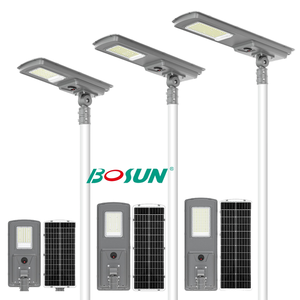
Dusk to Dawn All in One Solar Street Light Outdoor Waterproof
- Integrated Monocrystalline Panel
- LiFePO4 Ultra-Long Cycle Battery
- IP67 Waterproof & Dustproof
Latest news, technical guides, and expert perspectives on smart solar street lights, off-grid infrastructure, and clean energy technology.
Explore our CE & RoHS certified product portfolio engineered for high thermal tolerance, low maintenance, and 3-5 days of continuous power autonomy in off-grid environments.
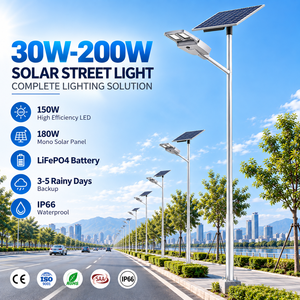
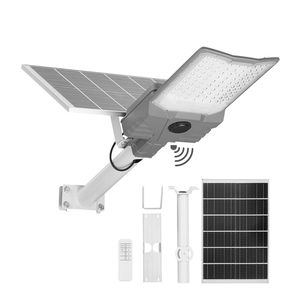
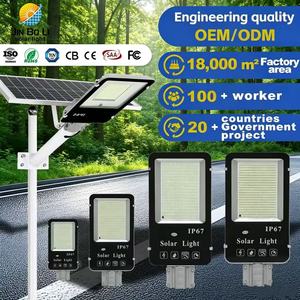

A Comprehensive Analysis of Photovoltaic Performance, Thermal Management, and Quality Compliance for Government Tenders and Infrastructure Development.
Modern rural solar illumination demands N-Type Monocrystalline cells offering conversion efficiencies exceeding 22.5%. By utilizing anti-reflective tempered glass and bypass diodes, systems achieve peak charging even under diffused sunlight and high ambient cloud coverage.
Lithium Iron Phosphate (LiFePO4) chemistry represents the gold standard for off-grid energy storage. Offering 3,000 to 6,000 deep discharge cycles at 80% DoD, these thermal-stable batteries operate reliably between -20°C and +65°C without risk of thermal runaway.
Maximum Power Point Tracking (MPPT) algorithms dynamically adjust voltage and current to maximize solar harvest by up to 30% compared to legacy PWM controllers. Integrated sensor profiles dynamically regulate night-time lumen output for extended autonomy.
Remote installations in equatorial or coastal zones face extreme humidity, saline air, and torrential rainfall. Robust pressure-die-cast aluminum housings with anodized coatings ensure corrosion resistance (C4/C5 rated) and zero water ingress.
Precision LED optics utilize asymmetric Type II and Type III batwing beam angles. This engineered light spread eliminates dark zones between poles, allowing maximum pole-spacing (up to 40 meters) while meeting EN 13201 and IESNA luminance standards.
Full compliance with European Union directives (LVD 2014/35/EU, EMC 2014/30/EU, RoHS 2011/65/EU) guarantees structural safety, electromagnetic compatibility, and hazardous material compliance required for multilateral tenders.
Procurement selection matrix based on solar irradiance, pole height, and geographic location demands.
| Architecture Type | Best Application Profile | Solar Yield Flexibility | Battery Thermal Isolation | Installation & Maintenance Cost | Max System Output |
|---|---|---|---|---|---|
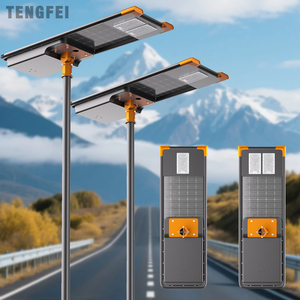
| All-in-One (Integrated) | Village streets, pathways, perimeter lighting | Fixed panel tilt; ideal for equatorial sun paths | Integrated inside luminaire fixture | Lowest labor cost; single-step mounting | Up to 100W LED / 16,000 LM |
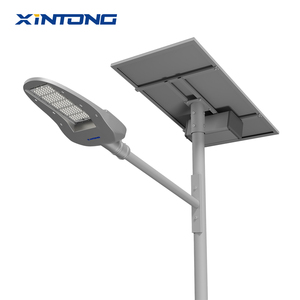
| All-in-Two Modular | Secondary arterial roads, municipal parks | Adjustable tilt solar panel module | Separate battery/luminaire compartment | Moderate labor; plug-and-play connections | Up to 150W LED / 24,000 LM |
| Split-System Heavy Duty | Highways, mining roads, high-latitude zones | 360° rotational tilt for max solar yield | Subterranean or pole-top ventilated box | Requires structural pole wiring | Up to 300W+ LED / 48,000+ LM |
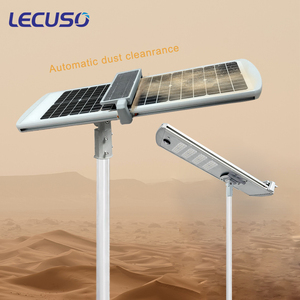
| Self-Cleaning Robotic | Desert highways, dusty agricultural corridors | Optimized glass coating with daily sweep | Protected IP67 internal enclosure | Prevents up to 40% dust-induced yield loss | Up to 150W LED / 24,000 LM |
The Levelized Cost of Electricity (LCOE) and total cost of ownership (TCO) for off-grid lighting are overwhelmingly driven by battery replacement frequency and field maintenance dispatches. By implementing Grade-A LiFePO4 cells paired with intelligent MPPT dimming profiles (e.g., 100% brightness for 4 hours, 30% background with motion detection thereafter), municipal clients extend battery lifespan from 3 years to over 10 years, cutting lifetime operational expenditure by up to 64%.
From US-engineered design standards to rigorous ISO9001 factory testing, we provide reliable, end-to-end solar street light manufacturing for major infrastructure initiatives.
We source exclusively from top-tier component partners, including Lumileds / Bridgelux high-efficacy LED chips (180+ lm/W), CATL/EVE LiFePO4 battery cells, and MeanWell / Custom MPPT electronics, ensuring uncompromised longevity.
Every luminaire model undergoes extensive third-party testing for safety, photometrics, wind resistance, and ingress protection. Test reports (IES files, IP67 certificates, CE declarations) are readily available for tender submission.
Our engineering team delivers bespoke product designs tailored to client requirements: specialized pole heights, customized color temperatures (2700K-6500K), hybrid AC/DC backup controllers, and smart city sensor integration.
Our manufacturing workflow features automated optical inspection (AOI), high-temperature aging chambers for 100% of driver assemblies, dynamic waterproof testing, and solar simulator flash testing before packing.
With over 500 projects executed across 40+ nations, our systems illuminate high-profile installations including municipal highways, coastal resorts, military facilities, and remote off-grid rural communities.
In addition to direct supply, we offer specialized technical support, dialux lighting simulation rendering, spare parts supply kits, and Solar Lighting as a Service (LaaS) financing models for eligible government entities.
Key technological transformations shaping government procurement requirements, environmental sustainability standards, and off-grid smart grid integration over the next decade.
Traditional horizontal solar panels are increasingly giving way to vertical cylindrical solar pole designs. Vertical wrap-around photovoltaic modules prevent dust accumulation, bird droppings, and snow coverage while offering 360-degree ambient and reflected light capture. This innovation virtually eliminates maintenance dispatches in desert and high-latitude rural electrification projects.
Solar street light poles are evolving into autonomous micro-utility hubs. Modern municipal specifications require lighting poles to incorporate cellular or Zigbee/LoRaWAN gateway nodes, environmental sensors (PM2.5, humidity), traffic analytics cameras, and emergency push-to-talk call buttons powered entirely by the integrated solar battery system.
Procurement tenders under UN and World Bank funding frameworks are placing stringent emphasis on lifecycle sustainability. Sodium-ion (Na-Ion) batteries and advanced cobalt-free LiFePO4 systems are gaining traction due to superior thermal stability, reduced heavy metal dependencies, and streamlined end-of-life recycling pathways.
Next-generation MPPT controllers integrate machine learning algorithms that analyze local meteorological forecasts via cloud connectivity. By predicting prolonged periods of rainy or overcast weather, the controller proactively throttles LED current to guarantee 100% light continuous operation without total battery depletion.
Detailed answers to critical technical and logistical questions faced by municipal engineers, EPC contractors, and international project developers.
For European Union compliance and international bank-funded tenders, solar street lights must possess CE certification covering the Low Voltage Directive (LVD 2014/35/EU) and Electromagnetic Compatibility (EMC 2014/30/EU). Additionally, RoHS certification (2011/65/EU) ensures lead-free components, while IEC 62722 (luminaire performance) and IEC 61215 (PV module quality) validate long-term durability in field environments.
System autonomy is calculated using local Peak Sun Hours (PSH) data combined with intelligent battery sizing. By oversizing the battery capacity factor (typically 3.5x to 5x daily depth of discharge) and utilizing smart dimming profiles (motion sensors, timed dimming schedules), our systems store sufficient energy to maintain minimum illumination levels across up to 5 consecutive overcast or rainy days.
High ambient heat is the primary cause of premature battery degradation. We mitigate thermal stress by utilizing high-grade LiFePO4 cells rated for continuous operation up to 65°C, housed inside aluminum alloy enclosures with heat sinks or installed in subterranean thermally insulated battery chambers. Advanced BMS units also regulate charge currents based on real-time temperature sensing.
In arid or agricultural regions, dust, sand, and particulate accumulation can degrade solar panel charging efficiency by up to 5% per week, reducing total yield by over 40% within months. Self-cleaning solar lights incorporate automatic motorized wiper blades programmed to sweep the glass panel surface once or twice daily, preserving 98%+ solar conversion without manual maintenance visits.
Yes. Our in-house optical engineering team provides comprehensive Dialux lighting simulations free of charge for qualified municipal and commercial project inquiries. By submitting road width, pole spacing, height, and target lux/luminance requirements (e.g., M3, M4, P1, P2 standards), we generate complete photometric reports and false-color renderings for official tender documentation.
To protect high-value components in remote rural areas, our luminaires utilize tamper-proof anti-theft screws, internal battery compartment locks, high-mounted integrated All-in-One housings, and impact-resistant IK09/IK10 tempered glass lenses. Optional GPS tracking modules can also be integrated into the BMS system to locate stolen hardware.
Need factory-direct wholesale pricing, OEM customization, or complete tender documentation for your upcoming rural electrification or municipal lighting project?